


Quick Summary: Website development for logistics companies requires specialized features like real-time shipment tracking, API integrations with transportation management systems, and compliance-ready documentation platforms. Modern logistics websites serve as operational hubs that connect shippers, carriers, and customers while meeting regulatory requirements like ELD compliance and DOT regulations. The best implementations balance technical complexity with user-friendly interfaces that build trust across multiple stakeholder groups.
Logistics companies face a unique challenge when building their web presence. The website isn’t just a digital brochure—it’s often the primary interface between complex supply chain operations and customers who demand transparency, speed, and reliability.
Here’s the thing though: most logistics websites miss the mark. They showcase services without connecting those capabilities to the operational tools customers actually need.
A proper logistics website functions as a customer portal, data exchange hub, and trust-building platform rolled into one. That’s not something standard website templates handle well.
Why Logistics Companies Need Specialized Website Development
Generic business websites don’t cut it for logistics operations. The industry operates under strict regulatory frameworks, including Federal Motor Carrier Safety Administration (FMCSA) requirements for electronic logging devices and hours of service tracking.
Beyond compliance, logistics websites must handle real-time data streams from transportation management systems, warehouse management platforms, and carrier networks. According to the PLATO project research published on March 12, 2024, digital transformation in logistics requires sophisticated platform integration.
The ISO has developed multiple standards for e-commerce transactions and supply chain data interchange, including ISO 5909:2026 for electronic bills of lading. These technical standards shape how logistics websites must structure data exchange.
But wait. Regulatory compliance and technical integration alone won’t win customers. The website also needs to communicate reliability to multiple stakeholder groups: shippers evaluating carrier options, existing customers tracking shipments, and partners accessing documentation.
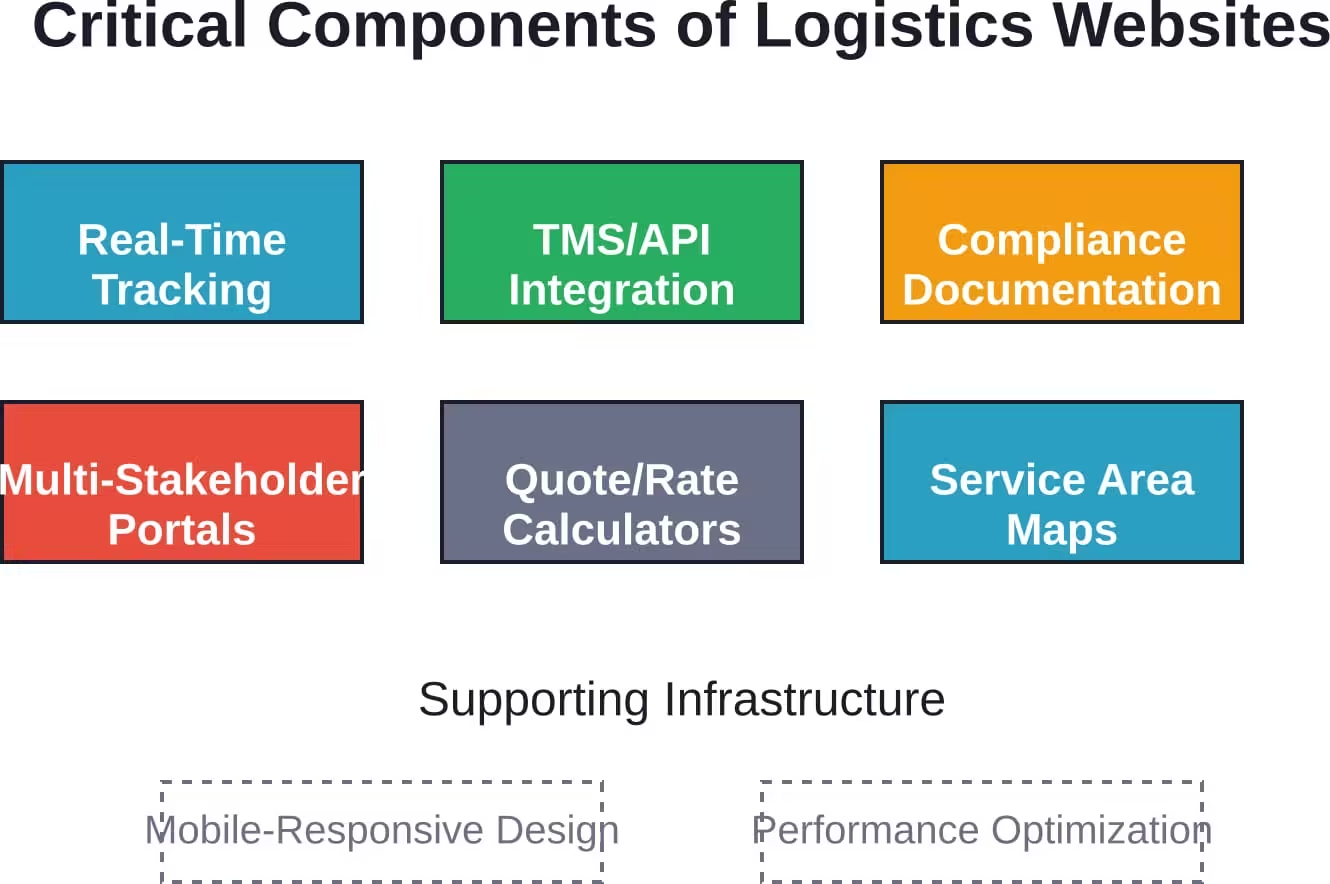
Core Features Every Logistics Website Needs
Real talk: the difference between a logistics website that generates leads and one that doesn’t comes down to specific functionality.
Shipment Tracking Integration
Customers expect to check shipment status without calling or emailing. That means the website needs direct integration with carrier systems and transportation management platforms.
The tracking interface should accept multiple identifier formats—PRO numbers, BOL numbers, purchase order references—and return real-time location data, estimated delivery windows, and exception alerts.
This isn’t just about customer convenience. It reduces call volume to customer service teams and provides transparency that builds trust during the critical delivery window.
Rate Quoting and Service Selection Tools
Potential customers researching logistics providers want instant rate estimates based on origin, destination, weight, and service level. Manual quote requests create friction that sends prospects to competitors.
Dynamic rate calculators pull from the same pricing engines used internally, accounting for fuel surcharges, accessorial charges, and volume discounts. The best implementations save quote history for registered users and convert estimates directly into booking requests.
Customer Portal Architecture
Different user groups need different access levels. Shippers want to view invoices and shipment history. Carriers need to access load assignments and documentation. Internal staff require administrative controls.
Role-based access control keeps sensitive data segmented while providing each stakeholder group exactly what they need. Portal functionality often includes invoice downloads, proof of delivery retrieval, and exception management workflows.
Service Area and Network Visualization
Geographic coverage determines which prospects convert into customers. Interactive maps that show service territories, terminal locations, and partner networks answer the fundamental question: “Can you handle my routes?”
The most effective implementations let visitors enter origin and destination pairs to confirm coverage and view estimated transit times.
Technical Architecture for Logistics Websites
Now, this is where it gets interesting. The frontend polish matters, but the backend architecture determines whether the site actually functions as an operational tool.
API Integration Strategy
Modern logistics operations run on interconnected systems: TMS platforms, warehouse management systems, accounting software, and carrier networks. The website sits at the center of this ecosystem.
RESTful APIs provide the connective tissue. Common integration points include:
- Transportation management system data for shipment status and documentation
- Accounting system connections for invoice generation and payment processing
- Carrier APIs for rate shopping across multiple networks
- Telematics feeds for real-time vehicle location data
- Electronic logging device (ELD) systems for hours of service compliance, as mandated by FMCSA regulations under MAP-21
The FMCSA’s electronic logging device rule specifically aims to create safer work environments for drivers while making records of duty status easier to track and share. Websites that surface this data properly give customers visibility into compliance status.
Database Design Considerations
Logistics websites handle high transaction volumes and complex relational data. Database architecture needs to support shipment records with multiple linked entities: orders, line items, stops, carriers, equipment, and billing details.
Performance matters when customers are tracking time-sensitive shipments. Proper indexing, caching strategies, and query optimization keep response times fast even as data volumes grow.
Security and Compliance Requirements
Logistics data includes commercially sensitive information: shipping volumes, pricing terms, customer identities, and route details. Security architecture must protect this data both in transit and at rest.
SSL/TLS encryption is baseline. Beyond that, look at role-based access controls, audit logging, and regular security assessments. Companies handling regulated cargo need additional safeguards aligned with Department of Transportation and Pipeline and Hazardous Materials Safety Administration (PHMSA) requirements.
The FMCSA publishes regulatory guidance on topics ranging from driver coercion to English language proficiency requirements. While not all directly impact website functionality, compliance-conscious companies often use their websites to demonstrate regulatory knowledge and adherence.
Design Principles for Logistics Company Websites
Technical capability means nothing if users can’t navigate the interface. Design for logistics websites balances professional credibility with functional simplicity.
Multi-Stakeholder User Experience
A single logistics website serves distinct user groups with different goals. Shippers researching carrier options need service descriptions and case studies. Existing customers want quick access to tracking and documentation. Carriers and partners need operational portals.
Navigation structure should segment these pathways clearly. First-time visitors shouldn’t wade through customer portal login screens, and existing customers shouldn’t dig through marketing content to find tracking tools.
Trust Signals and Credibility Markers
Logistics decisions involve significant financial and operational risk. Website design must communicate reliability, stability, and expertise.
Effective trust signals include:
- Industry certifications and safety ratings prominently displayed
- Case studies with verifiable customer names and results
- Terminal and facility photos showing operational capacity
- Equipment fleet details with specifications and availability
- Insurance coverage and liability protection information
Generic stock photos undermine credibility. Real facility images, actual equipment, and specific customer examples build confidence.
Mobile Optimization for Field Users
Drivers, warehouse staff, and field operations teams access logistics websites from mobile devices. Responsive design isn’t optional—it’s foundational.
Mobile interfaces should prioritize high-frequency tasks: shipment status checks, proof of delivery uploads, and exception reporting. Touch targets need adequate sizing, and forms should minimize typing through smart defaults and saved preferences.
Choosing the Right Development Approach
Logistics companies face a fundamental choice: template-based platforms, custom development, or hybrid approaches.
Template Platforms vs. Custom Development
Website builders like Webflow offer logistics templates that handle basic content presentation. These work for companies with straightforward service offerings and minimal integration needs.
The limitation? Templates can’t easily accommodate complex portal functionality, multi-system integrations, or custom workflows. Companies with specialized operations typically hit template boundaries quickly.
Custom development provides complete flexibility but requires larger budgets and longer timelines. Logistics website projects typically range from £10,000 to £150,000 depending on complexity, integration requirements, and geographic scope.
Platform Selection Criteria
The underlying technology stack impacts long-term maintenance costs, scalability, and integration capability. Key considerations include:
| Factor | Considerations | Impact |
|---|---|---|
| Content Management | WordPress, custom CMS, headless architecture | Editorial flexibility and update frequency |
| Hosting Infrastructure | Shared hosting, VPS, cloud platforms, dedicated servers | Performance, uptime, and scalability |
| Development Framework | PHP, Node.js, Python, .NET | Developer availability and integration options |
| Database Technology | MySQL, PostgreSQL, MongoDB | Data structure flexibility and query performance |
Working with Specialized Agencies
Generic web design agencies often struggle with logistics-specific requirements. They understand marketing websites but not operational systems integration.
Specialized agencies bring industry knowledge: they’ve solved TMS integration challenges before, they understand compliance documentation requirements, and they know which features actually drive customer conversion in logistics contexts.
When evaluating agencies, look for portfolio examples that demonstrate technical complexity, not just visual design. Ask specific questions about API integration experience, portal architecture, and performance optimization.
Create a Website That Clearly Explains Your Logistics Services
Logistics websites often list services but don’t make it easy to understand routes, capabilities, or how to start working together. When that clarity is missing, potential clients leave without taking the next step. Lengreo builds websites with a focus on structure and usability, making sure services and value are presented clearly. Their work connects website development with broader marketing efforts, so the site aligns with how leads are generated.
Launch a Reliable Logistics Website to Increase Requests
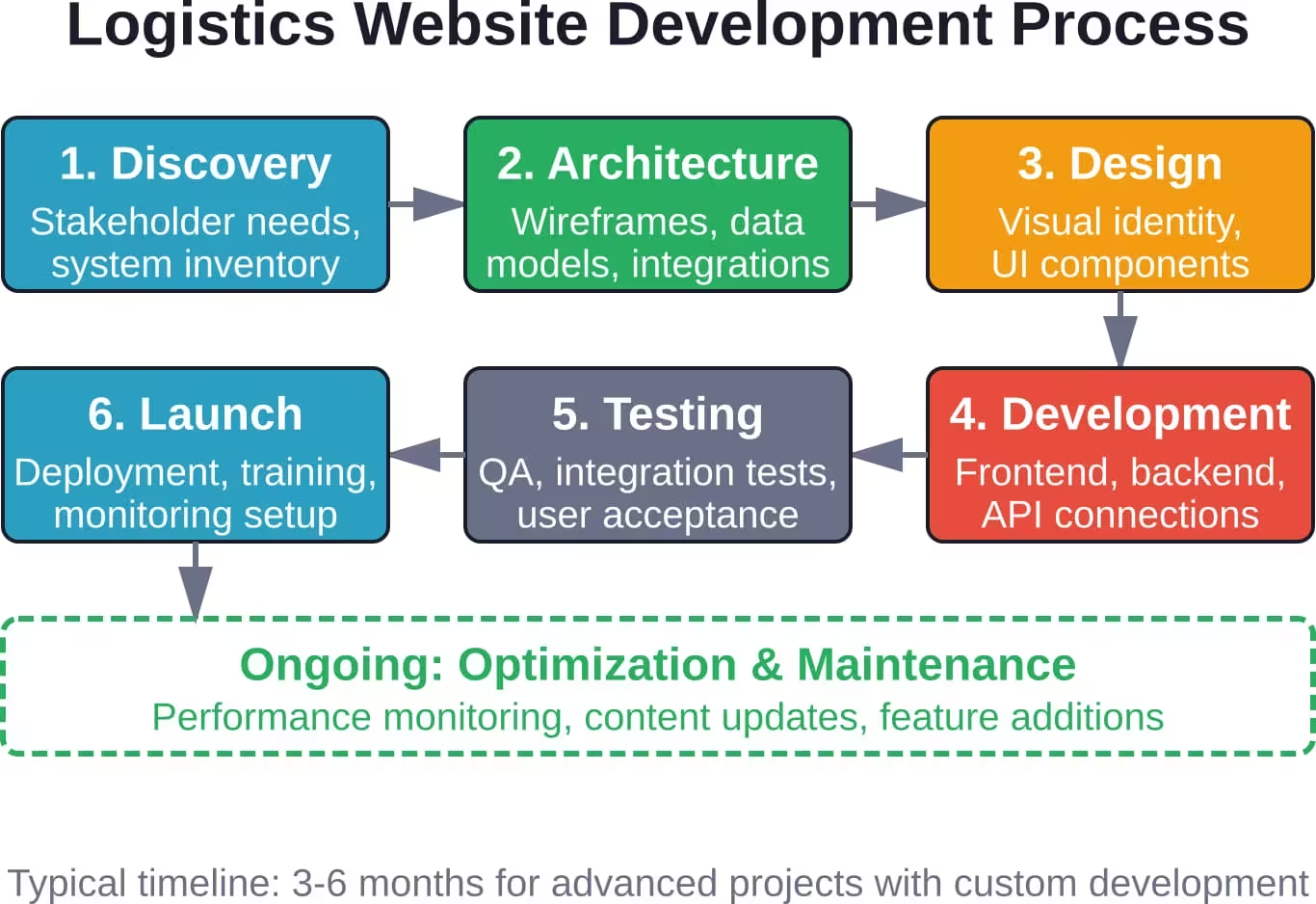
Lengreo handles website development as a full process, where each stage is tied to your business needs:
- Defining website goals, structure, and requirements at the start
- Creating and refining design through prototypes and demos
- Building the website step by step with front-end and back-end development
- Running quality checks before the site goes live
- Providing short-term support after launch for final updates
If your logistics website isn’t bringing in consistent requests, talk to Lengreo and build one that does.
Optimizing for Lead Generation and Customer Acquisition
So what separates logistics websites that generate consistent leads from those that don’t?
Service Differentiation and Niche Positioning
Many logistics companies offer similar core services: freight brokerage, warehousing, final mile delivery. Generic service descriptions don’t capture attention or build preference.
The most effective logistics websites emphasize specialization: vertical industry expertise (automotive, pharmaceuticals, retail), geographic concentration (regional networks, cross-border specialists), or service innovations (temperature-controlled transport, white glove delivery).
Specific capabilities matter more than broad service lists. A detailed explanation of cold chain monitoring protocols tells potential pharmaceutical customers more than a bullet point listing “temperature-controlled shipping.”
Content Strategy for Supply Chain Audiences
Procurement teams and supply chain managers research logistics partners extensively before making contact. They’re looking for expert signals and operational details.
Content that demonstrates depth includes:
- Technical guides on regulatory compliance topics
- Case studies with specific metrics and problem-solving approaches
- Network maps showing coverage and transit time data
- Equipment specifications and handling capabilities
- Technology stack explanations for integration-focused prospects
This content also supports search engine visibility for industry-specific queries beyond generic “logistics services” searches.
Conversion Path Optimization
Logistics buying cycles vary dramatically. Some prospects need immediate capacity for a time-sensitive shipment. Others are conducting six-month evaluations for contract logistics partnerships.
Website conversion paths should accommodate both scenarios. Quick quote forms and instant rate calculators serve high-urgency needs. Detailed RFP templates, capabilities presentations, and consultation scheduling support longer evaluation processes.
Clear calls to action appear throughout the site, but they match context. Service description pages should offer relevant next steps—schedule a facility tour for warehousing prospects, request a rate comparison for freight services.
Performance and Technical SEO Considerations
Search visibility matters, but logistics SEO differs from consumer-focused industries.
Local and Geographic Targeting
Logistics services are inherently geographic. Companies serve specific regions, operate terminals in particular cities, and target businesses in defined markets.
Location-specific landing pages should target “[service] + [city/region]” queries. These pages need actual local presence signals—terminal addresses, local phone numbers, area-specific service details—not just keyword-stuffed templates.
Structured data markup helps search engines understand service areas, business locations, and operational details.
Technical Performance Metrics
Slow-loading websites frustrate users and impact search rankings. For logistics sites with mapping interfaces, tracking portals, and data-heavy tables, performance optimization requires discipline.
Critical metrics include:
- First Contentful Paint under 1.8 seconds
- Time to Interactive under 3.5 seconds
- Cumulative Layout Shift below 0.1
Achieving these targets often requires lazy loading for below-fold content, optimized image delivery, and efficient JavaScript execution. API responses should be cached where appropriate to avoid real-time query delays.
Mobile-First Indexing Implications
Search engines now primarily use mobile versions of websites for indexing and ranking. Logistics sites that hide content or functionality on mobile devices hurt their own visibility.
The mobile experience needs full parity with desktop versions for core content and functionality. Simplified navigation is fine; missing service descriptions or capability details are not.
Common Pitfalls to Avoid
Even well-funded logistics website projects run into predictable problems.
Underestimating Integration Complexity
That “simple” connection to the TMS often turns complicated when dealing with legacy systems, inconsistent data formats, or rate limiting on third-party APIs.
Build buffers into timelines and budgets for integration work. What looks straightforward in planning often requires custom middleware, data transformation layers, or workarounds for system limitations.
Neglecting User Testing with Actual Stakeholders
Designers and developers aren’t logistics professionals. Workflows that seem logical to technical teams often frustrate actual users.
Test portal interfaces with customer service representatives who’ll field support calls. Walk shippers through the quote request process. Have drivers attempt proof of delivery uploads on actual mobile devices in realistic conditions.
Launching Without Content Strategy
Beautiful design can’t compensate for thin content. Service pages need depth, case studies require real customer details, and capability descriptions must go beyond generic statements.
Content development should run parallel to design and development, not get tacked on at the end. Subject matter experts need time to document processes, gather customer approvals for case studies, and create the technical detail that differentiates the site.
Measuring Website Performance and ROI
Logistics website investments need measurable returns. Relevant metrics go beyond standard web analytics.
Lead Generation Metrics
Track quote requests, consultation bookings, and RFP downloads separately by traffic source and user segment. Not all form submissions represent equal opportunity—distinguish between immediate shipping needs and long-term contract discussions.
Conversion rate benchmarks vary by logistics sector, but typical targets range from 2-5% for first-time visitors to 15-25% for returning customers accessing self-service tools.
Operational Efficiency Gains
Portal functionality should reduce manual work. Monitor metrics like:
- Customer service call volume for tracking inquiries
- Time spent processing quote requests
- Documentation retrieval requests handled via self-service
- Manual data entry eliminated through API integrations
These operational savings often justify website investment independent of new customer acquisition.
Customer Satisfaction Indicators
Portal usage rates, feature adoption, and support ticket volume related to website functionality provide insight into user satisfaction.
High portal engagement correlates with customer retention in logistics relationships. Customers who actively use tracking tools and self-service features demonstrate deeper operational integration with the provider.
Future-Proofing Logistics Websites
Technology capabilities and customer expectations evolve rapidly. Smart architecture decisions prevent premature obsolescence.
API-First Architecture
Decoupling the frontend presentation layer from backend systems through well-designed APIs provides flexibility. This approach supports mobile apps, third-party integrations, and future channel expansion without rebuilding core functionality.
Headless CMS platforms take this concept further, treating the website as one of potentially many interfaces to the same content and data repositories.
Scalability Planning
Growing logistics operations generate exponentially more data. The architecture that handles 1,000 monthly shipments may struggle at 10,000.
Cloud hosting with auto-scaling capabilities, database optimization, and efficient caching strategies accommodate growth without performance degradation or expensive platform migrations.
Emerging Technology Integration
Logistics technology evolves constantly. Current trends include blockchain for shipment documentation, IoT sensors for real-time cargo monitoring, and machine learning for route optimization.
Websites don’t need to implement every innovation immediately, but the underlying architecture should accommodate future integrations without fundamental rebuilds.
Regulatory Compliance and Website Requirements
Logistics companies operate under extensive regulatory oversight. Websites often need to support compliance obligations.
DOT and FMCSA Requirements
The FMCSA publishes detailed regulations covering everything from driver qualifications to hazardous materials transport. While most regulations don’t directly mandate website features, operationally mature companies use websites to demonstrate compliance.
Examples include displaying safety ratings, publishing insurance certificate details, and providing access to required documentation. The FMCSA’s April 2026 regulatory guidance on topics like English language proficiency and prohibited coercion of drivers reflects ongoing compliance evolution.
Data Privacy and Protection
Customer shipment data includes commercially sensitive information protected by various regulations depending on jurisdiction and cargo type.
Privacy policies need specificity about data collection, usage, retention, and sharing practices. Cookie consent mechanisms, data access requests, and deletion protocols align with regulatory requirements in operating regions.
Accessibility Standards
While not logistics-specific, accessibility requirements impact all commercial websites. WCAG 2.1 Level AA compliance ensures the site functions for users with disabilities.
Beyond legal compliance, accessible design expands the potential user base and improves overall usability through clearer navigation, better color contrast, and logical content structure.
Making the Investment Decision
Website development represents significant investment for logistics companies. But the alternative—losing business to competitors with better digital infrastructure—costs more.
The best logistics websites don’t just look professional. They function as operational tools that reduce manual work, improve customer satisfaction, and generate qualified leads consistently.
Start by documenting current pain points: What questions do customers repeatedly ask? Which manual processes consume excessive staff time? Where do prospects drop out of the sales process?
Those answers reveal which website features deliver actual ROI versus nice-to-have functionality that inflates budgets without driving results.
Work with development partners who understand logistics operations, not just web design. The right agency asks about TMS platforms, carrier networks, and compliance requirements before discussing color schemes.
Ready to build a logistics website that actually works? Focus on the functionality your customers need, integrate with the systems that power your operations, and create content that demonstrates genuine expertise. That’s how logistics websites become competitive advantages rather than digital brochures.