


Quick Summary: Website development for technology companies requires specialized expertise in presenting complex software solutions, integrating sophisticated tech stacks, and creating sites that convert technical buyers. Successful tech websites combine security frameworks like NIST’s SSDF with responsive design, strategic user journeys, and measurable conversion optimization to generate qualified leads.
Technology companies face a unique challenge. Their websites need to communicate sophisticated technical capabilities to knowledgeable buyers while maintaining the clarity that drives conversions.
Most web development approaches fall short because they treat tech companies like any other business. But selling enterprise software, cloud infrastructure, or managed IT services requires a fundamentally different website strategy.
The stakes are high. A study by Think with Google found that 50% of users would use a website less often if it wasn’t mobile-friendly. For tech companies targeting technical decision-makers who conduct months of research, that’s not just traffic loss—it’s revenue walking away.
Why Technology Companies Need Specialized Website Development
Not all tech companies are the same. ISVs, SaaS vendors, cloud providers, MSPs, and VARs each play different roles in the IT ecosystem and sell in dramatically different ways.
A managed service provider needs to demonstrate reliability and support capabilities. A SaaS platform requires interactive product demonstrations and clear pricing tiers. An enterprise software vendor must communicate complex integration capabilities to technical evaluators.
Generic website templates don’t accommodate these distinctions. They force technology companies into frameworks built for e-commerce, restaurants, or professional services.
Here’s the thing though—technical buyers are different from typical website visitors. They arrive with specific problems, conduct thorough research across multiple sessions, and involve multiple stakeholders in purchasing decisions. The website must support this entire journey.
The Technical Buyer’s Research Process
Technical buyers typically engage in extended evaluation cycles. They compare feature matrices, review documentation, assess security certifications, and validate technical claims before scheduling their first sales call.
Websites for technology companies must serve as self-service research hubs. That means comprehensive technical documentation, detailed feature explanations, security and compliance information, integration capabilities, and transparent pricing or licensing models.
But wait. Information density creates its own challenge. Dense technical content can overwhelm even expert visitors if poorly organized. Strategic information architecture becomes critical.
Core Security and Compliance Frameworks
Technology companies operate in an environment where security isn’t optional—it’s table stakes. Website development must integrate security frameworks from the ground up.
According to NIST, the Secure Software Development Framework (SSDF) provides fundamental practices for developing secure software. NIST released the initial public draft of version 1.2 on December 17, 2025, establishing updated security baselines for software development.
The NIST Cybersecurity Framework offers comprehensive guidance for managing cybersecurity risk. Technology companies demonstrating adherence to these frameworks signal credibility to security-conscious buyers.
NIST publications include mappings posted April 24, 2026, connecting CSF 2.0 to SP-800-81-r3 and BXAI-OS standards. NIST has published CSF 2.0 mappings including OWASP-LLM-Top10, reflecting the growing importance of AI security considerations.
Implementing Security in Website Development
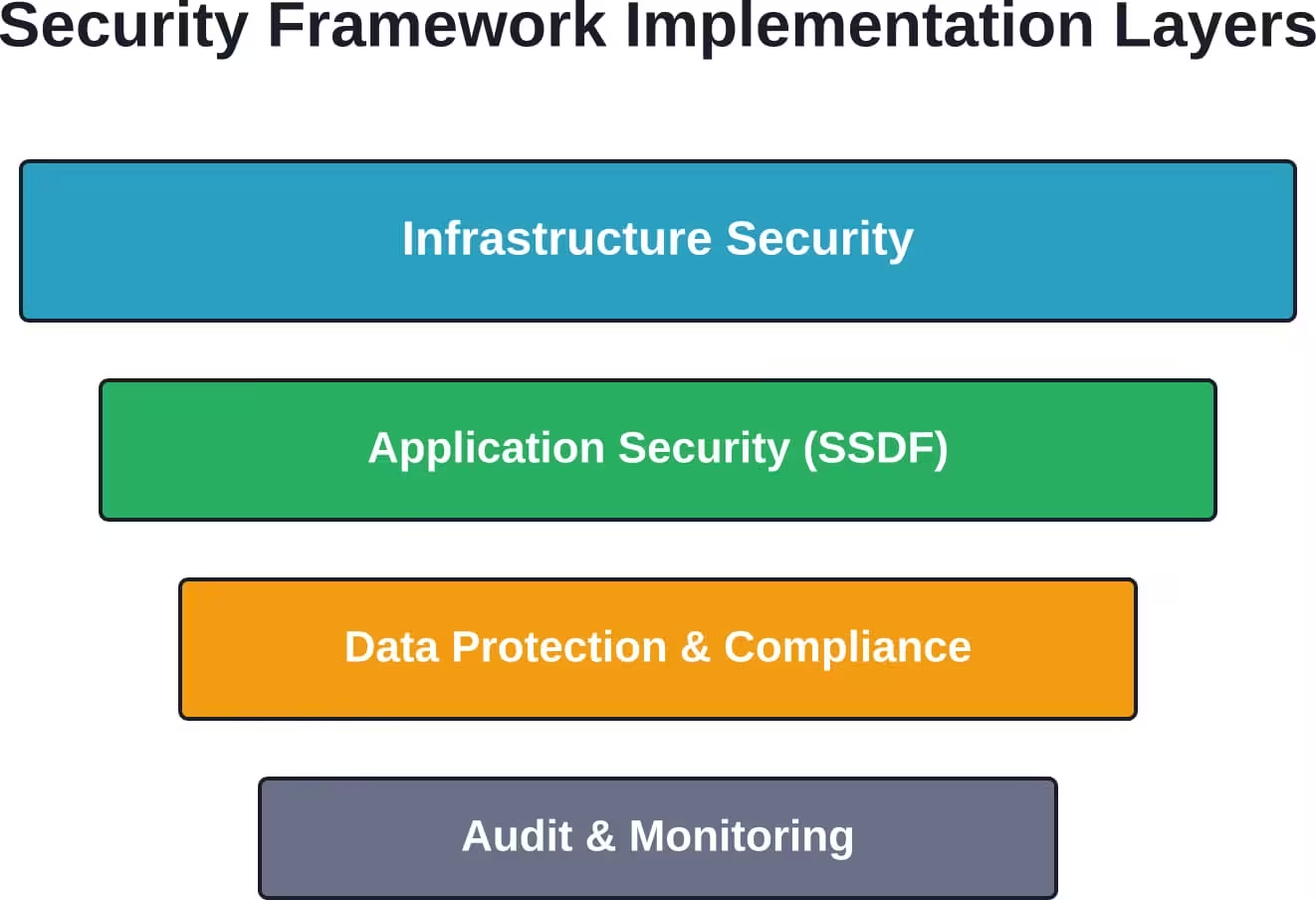
Security implementation extends beyond backend systems. Modern tech websites require HTTPS encryption, secure authentication for gated content, protection against common vulnerabilities, regular security audits and updates, and compliance with data protection regulations.
For technology companies serving regulated industries, demonstrating compliance becomes a differentiator. A fintech platform implementation achieved a 96% reduction in MTTR while supporting 280,000 session-level logs for compliance through sophisticated frontend architecture.
Essential Website Content Types for Tech Companies
Technology websites require specific content page types that support the technical buyer’s journey. Each serves distinct purposes in the evaluation process.
Product and Feature Pages
Product pages for technology companies differ fundamentally from typical service descriptions. They must communicate technical specifications, integration capabilities, performance benchmarks, and use cases simultaneously.
Effective product pages segment information by audience. Executives need business value propositions. Technical evaluators need architecture diagrams and API documentation. Implementation teams need deployment guides.
Technical Documentation and Resources
Documentation represents a critical conversion asset. Technical buyers evaluate documentation quality as a proxy for product maturity.
Comprehensive documentation includes API references, integration guides, troubleshooting resources, best practices, and version-specific release notes. These resources should be searchable, version-controlled, and regularly updated.
Security and Compliance Information
Dedicated security pages demonstrate commitment to data protection. They should detail certifications held, compliance frameworks followed, security testing practices, incident response procedures, and data handling policies.
This information directly addresses questions from security teams and compliance officers involved in purchasing decisions.
Case Studies and Customer Stories
Technical buyers trust peer validation. Case studies should focus on specific technical challenges solved, measurable outcomes achieved, and integration details.
Generic success stories don’t resonate with technical audiences. Specific metrics, implementation details, and technical hurdles overcome carry far more weight.
| Content Type | Primary Audience | Key Elements | Conversion Impact |
|---|---|---|---|
| Product Features | Technical Evaluators | Specs, integrations, architecture | High – drives qualified leads |
| Documentation | Developers, Implementers | API docs, guides, troubleshooting | Medium – builds confidence |
| Security Info | Security Teams, Compliance | Certifications, frameworks, policies | Critical – removes blockers |
| Case Studies | Business Decision Makers | Metrics, challenges, outcomes | High – provides validation |
| Pricing | Budget Holders | Tiers, licensing, ROI calculators | Very High – qualifies prospects |
Responsive Design and Mobile Optimization
Technical buyers research from multiple devices across extended evaluation cycles. A study by Think with Google found that 50% of users would use a website less often if it wasn’t optimized for their device.
That said, responsive design for technology companies extends beyond viewport adjustments. Technical content, including code samples, architecture diagrams, and feature matrices, must remain readable and functional on tablets and mobile devices.
Performance Considerations
Google Core Web Vitals directly impact search rankings and user experience. Technology companies competing for visibility in crowded markets cannot afford poor performance scores.
Critical performance metrics include Largest Contentful Paint (page load speed), First Input Delay (interactivity responsiveness), and Cumulative Layout Shift (visual stability). Each affects how quickly visitors can access and interact with technical information.
Look, technical buyers abandon slow websites. When evaluating multiple vendors, performance becomes a differentiator. Fast-loading documentation, responsive product demos, and smooth navigation signal technical competence.
Strategic User Journeys and Information Architecture
User journeys map how different personas navigate through website content toward conversion goals. Technology companies serve multiple personas with distinct objectives.
A CTO evaluating enterprise software follows a different path than a developer assessing API capabilities. The website must accommodate both journeys without creating confusion.
Designing for Multiple Stakeholders
Technology purchases involve multiple stakeholders. A typical B2B software purchase might include technical evaluators, security reviewers, budget holders, end users, and executive sponsors.
Effective information architecture provides clear navigation paths for each role. Menu structures, content tagging, and internal linking should support these varied journeys.
Now, this is where it gets interesting. Rather than forcing all visitors through a single funnel, sophisticated tech websites offer multiple conversion paths tailored to buyer stage and role.
Content Hierarchy and Navigation
Information architecture determines whether visitors find the content they need or bounce in frustration. Technology websites contain substantial content depth—product pages, documentation, resources, case studies, and support materials.
Clear navigation structures prevent overwhelm. Primary navigation should surface main product categories and key user journeys. Secondary navigation can provide access to documentation, resources, and support.
Search functionality becomes critical for technical content. Visitors should be able to quickly locate specific features, integrations, or documentation topics without navigating multiple menu levels.
Integration With Marketing Technology Stacks
Technology companies rely on sophisticated marketing technology stacks for lead generation, nurturing, and conversion tracking. Website development must accommodate these integrations.
Common integrations include customer relationship management platforms, marketing automation systems, analytics and behavior tracking, live chat and support tools, and product usage analytics.
Technical Implementation Considerations
MarTech integrations require careful technical planning. APIs must be implemented securely, data flows mapped accurately, and privacy regulations respected.
Poor integrations create data silos, broken user experiences, and compliance risks. Strong integrations enable sophisticated lead scoring, personalized content delivery, and attribution tracking.
Real talk: technology buyers expect seamless experiences. If a prospect downloads a whitepaper, requests a demo, then returns days later, the website should remember their journey and adjust accordingly.
Conversion Optimization for Technical Audiences
Conversion optimization for technology companies differs from traditional e-commerce or lead generation. Technical buyers resist aggressive sales tactics but respond to value-driven conversion opportunities.
Effective conversion points include product demos, free trials, technical documentation downloads, webinar registrations, and consultation requests. Each serves different stages in the buyer journey.
Proven Conversion Strategies
Data from specialized tech website implementations demonstrates measurable impact. Robin Radar achieved a 48% increase in high-intent leads and a 10% conversion rate increase, along with a 236% increase in sessions for organic search, social, and direct traffic.
Viedoc experienced a 100% conversion rate increase through strategic website optimization.
These results stem from understanding technical buyer behavior. Rather than pushing for immediate contact, successful tech websites provide progressive value exchange—offering valuable technical resources in exchange for contact information.
| Conversion Type | Buyer Stage | Information Exchange | Typical Conversion Rate |
|---|---|---|---|
| Content Download | Awareness | Email only | 3-7% |
| Webinar Registration | Consideration | Email, company, role | 2-5% |
| Product Demo | Evaluation | Full contact details | 1-3% |
| Free Trial | Decision | Business verification | 0.5-2% |
Testing and Optimization
Conversion optimization requires ongoing testing. A/B testing reveals which messaging, layouts, and conversion mechanisms resonate with technical audiences.
But wait. Testing in tech markets requires sufficient traffic volume and longer evaluation cycles. Tests may need to run for weeks or months to achieve statistical significance.
Multivariate testing becomes particularly valuable for optimizing complex product pages with multiple content sections, feature callouts, and conversion points.
Choosing the Right Web Development Partner
Selecting a web development agency for technology companies requires evaluating specialized capabilities beyond general web design expertise.
The short answer? Look for agencies with demonstrable technology industry experience, technical content strategy capabilities, security and compliance knowledge, MarTech integration expertise, and conversion optimization track records.
Evaluation Criteria
Review agency portfolios specifically for technology client work. Generic e-commerce or service business experience doesn’t translate directly to tech company needs.
Ask about their approach to technical content organization, security implementation, and compliance requirements. Agencies unfamiliar with frameworks like NIST SSDF or ISO/IEC standards may struggle with regulated technology markets.
Request case studies with specific metrics. Vague claims about “improved performance” matter less than concrete data showing lead generation increases, conversion rate improvements, or traffic growth.
Warning Signs to Avoid
Several red flags indicate agencies poorly suited to technology company website development. Template-first approaches that force tech companies into generic frameworks rarely succeed.
Agencies that don’t discuss security, compliance, or technical content strategy likely lack necessary expertise. Technology websites require these considerations from project inception, not as afterthoughts.
Lack of technical knowledge among agency teams creates communication gaps and implementation issues. Effective agencies understand technical concepts well enough to organize and present them effectively.
Get a Website Built to Support Complex Tech Products
Technology companies often deal with products that are hard to explain quickly. If the website doesn’t reflect that complexity in a clear way, it slows down decision-making and creates friction before the first conversation even starts. Lengreo builds websites as part of a structured marketing setup, focusing on how services, products, and value are presented. Their approach is based on research, prototyping, and development aligned with real business goals, not just visual design.
Build a Tech Website That Actually Determines How You Sell
Lengreo’s website development is designed to adapt to different requirements and levels of complexity:
- Flexible development using JavaScript or WordPress
- Ability to work with both template-based and fully custom builds
- Structured process from research to implementation
- Quality assurance before launch to ensure everything works as expected
- Short-term post-launch support for final adjustments
If you need a website that can handle complex services and support your growth, talk to Lengreo and get it built the right way from the start.
Website Development Standards and Best Practices
Industry standards provide frameworks for quality website development. The IEEE/ISO/IEC 23026-2023 standard defines systems and software engineering requirements for website lifecycles, covering strategy, design, engineering, testing, validation, management, and sustainment.
These standards apply to organizations managing websites for systems, software, and services information in intranet and extranet environments—directly relevant to technology companies.
Quality Models and Requirements
ISO/IEC 25010 defines system and software quality models including quality in use characteristics. ISO/IEC 25010:2011 has been superseded by ISO/IEC 25010:2023 (Product quality model), ISO/IEC 25019:2023 (Quality-in-use model) and ISO/IEC 25002:2024 (Quality models overview and usage). The fundamental quality principles remain relevant.
Development Lifecycle Standards
ISO/IEC/IEEE 15288 provides comprehensive guidance for systems and software engineering lifecycles. Technology companies benefit from following structured development processes that ensure quality, security, and maintainability.
Standards development follows rigorous processes. IEEE standards require at least 75% of ballots to be returned and at least 75% of those to bear a “yes” vote for passage. If 30% or more of ballots are abstentions, the ballot fails. This ensures genuine consensus.
Emerging Technologies and Future Considerations
Website development for technology companies must anticipate emerging trends and technologies. The landscape evolves rapidly, requiring forward-looking architectures.
AI and Personalization
NIST has finalized SP 800-218A, Secure Software Development Practices for Generative AI and Dual-Use Foundation Models. This publication augments SP 800-218 by adding practices, tasks, recommendations, and considerations specific to AI systems.
Technology companies incorporating AI features into products or websites must follow these evolving security frameworks. AI-powered personalization, chatbots, and recommendation engines introduce new security and compliance considerations.
Advanced Frontend Architectures
Sophisticated implementations demonstrate what’s possible. Research shows modular frontend architectures integrating schema-driven GraphQL feature flags with Webpack Module Federation enable dynamic, per-user UI component versioning and runtime resolution.
Implemented in a high-regulation fintech platform, such systems achieved a 96% reduction in MTTR while supporting 280,000 session-level logs for compliance. These architectures represent the cutting edge of tech website development.
Privacy and Data Protection
Privacy regulations continue tightening globally. Technology companies must build privacy into website architecture from the start, not retrofit it later.
Cookie consent management, data minimization, user data access and deletion capabilities, and transparent privacy policies have shifted from nice-to-have to mandatory. Non-compliance creates legal liability and damages trust with security-conscious buyers.
Measuring Website Success
Technology company websites require specific success metrics beyond typical vanity metrics like total traffic.
Lead Quality Metrics
Total lead volume matters less than lead quality. Track metrics including marketing qualified leads (MQLs), sales qualified leads (SQLs), sales accepted leads (SALs), and conversion to opportunity.
High-intent lead increases like the 48% improvement achieved by Robin Radar demonstrate meaningful business impact. These leads enter sales pipelines with clear intent and budget authority.
Engagement Metrics
Time on site, pages per session, and return visitor rates indicate content effectiveness. Technical buyers conducting research should engage deeply with content across multiple sessions.
Documentation usage metrics reveal whether technical resources support evaluation processes. If developers aren’t accessing API documentation or integration guides, either the content isn’t discoverable or it doesn’t meet needs.
Conversion Rate Optimization
Track conversion rates for each funnel stage. Documentation downloads, demo requests, trial signups, and sales meetings each represent distinct conversion points.
The 100% conversion rate increase achieved by Viedoc demonstrates the impact of systematic optimization. Small improvements at each funnel stage compound into substantial business results.
| Metric Category | Key Metrics | Target Benchmarks | Optimization Priority |
|---|---|---|---|
| Traffic Quality | Organic traffic, referral sources, returning visitors | 60%+ organic, 40%+ returning | High |
| Engagement | Time on site, pages/session, bounce rate | 3+ min, 4+ pages, <50% bounce | Medium |
| Lead Generation | MQLs, SQLs, demo requests | Industry-specific | Very High |
| Conversion Rates | Visitor-to-lead, lead-to-opportunity | 2-5%, 20-40% | Very High |
| Performance | Core Web Vitals, load time | All green, <2 sec | High |
Common Mistakes to Avoid
Technology companies frequently make predictable mistakes in website development. Avoiding these pitfalls accelerates time to value.
Overemphasizing Design Over Function
Visually striking designs that obscure information or slow performance hurt more than they help. Technical buyers prioritize content access and functionality over aesthetic flourishes.
That doesn’t mean tech websites should be ugly. Clean, professional design that supports content consumption and clear navigation serves users better than elaborate animations that impede performance.
Hiding Technical Information
Some technology companies hide technical details behind forms or sales contacts, fearing information disclosure to competitors. This backfires with technical buyers who won’t engage with vendors unwilling to provide basic technical information upfront.
Competitors can reverse-engineer products, attend trade shows, or talk to customers. Hiding information from prospects only slows their evaluation process and pushes them toward more transparent competitors.
Neglecting Content Updates
Stale content signals neglect. Technology companies with outdated case studies, obsolete product information, or broken documentation links erode trust.
Website development isn’t a one-time project—it’s an ongoing process. Content management, security updates, performance optimization, and feature additions require sustained investment.
Ignoring Mobile Users
Technical buyers research from multiple devices. A study by Think with Google found that 50% of users would use a website less often if it wasn’t mobile-friendly.
Complex technical content requires particular attention to mobile optimization. Code samples, architecture diagrams, and feature comparison tables must remain readable and usable on smaller screens.
Building for Scale and Growth
Technology companies experience rapid growth. Websites must scale alongside business expansion without requiring complete rebuilds.
Scalable Technical Architecture
Content management systems should support growth in content volume, traffic, and functionality. Choosing platforms designed for enterprise scale prevents painful migrations later.
Cloud hosting provides elasticity to handle traffic spikes from product launches, media coverage, or marketing campaigns. Infrastructure should scale automatically without manual intervention.
Content Scalability
As product portfolios expand, content structures must accommodate new products, features, and use cases without breaking existing organization.
Taxonomy and tagging systems enable flexible content relationships. Well-structured content models allow the same content to appear in multiple contexts—product pages, use case descriptions, industry solutions, and technical documentation.
Team and Process Scalability
Website management grows from a single person to entire teams. Version control, approval workflows, and publishing processes must support distributed teams and multiple content contributors.
Documentation of technical implementation, content processes, and design systems enables team transitions without institutional knowledge loss.
Conclusion
Website development for technology companies requires specialized expertise that extends far beyond generic web design. Technical buyers demand comprehensive information, robust security, and seamless user experiences that support complex evaluation processes.
The most successful technology websites combine security frameworks like NIST’s SSDF with strategic content organization, responsive design, and conversion optimization. They serve multiple stakeholders with distinct needs while maintaining coherent information architecture.
Evidence shows specialized approaches deliver measurable results. Robin Radar achieved a 48% increase in high-intent leads and 236% growth in organic, social, and direct traffic sessions. Viedoc experienced a 100% conversion rate increase. These outcomes stem from understanding technical audiences and building websites specifically for their needs.
Technology companies evaluating website development partners should prioritize agencies with demonstrated technology industry experience, security and compliance knowledge, technical content expertise, and proven conversion optimization capabilities. Standards like IEEE/ISO/IEC 23026-2023 provide frameworks for systematic website lifecycle management.
Sound familiar? Your website represents your first impression with technical buyers conducting months of research. Generic approaches leave revenue on the table. Specialized website development built on security frameworks, strategic content architecture, and conversion optimization turns your website into a lead generation engine.
Ready to transform your technology company website? Partner with specialists who understand technical buyers, implement security best practices, and deliver measurable business results. Your website should work as hard as your sales team.