Quick Summary: Website development for education creates digital platforms that facilitate learning, communication, and administrative tasks for schools, colleges, and universities. Modern educational websites must balance accessibility, mobile responsiveness, user-friendly design, and robust content management systems to serve diverse stakeholders including students, parents, faculty, and administrators.
Educational institutions face a unique challenge. Their websites aren’t just marketing tools—they’re comprehensive ecosystems serving students, faculty, parents, donors, and the broader community simultaneously.
And the stakes? Higher than ever. A school’s website is the number one marketing tool and the primary digital gateway for prospective students. But most educational websites struggle with outdated designs, difficult maintenance, and messaging that doesn’t resonate.
Here’s the thing though—website development for education doesn’t have to be overwhelming. This guide breaks down what matters most.
Why Educational Websites Need a Different Approach
Educational institutions operate differently from businesses. A single website must simultaneously recruit prospective students, support current learners, engage alumni, and provide administrative resources.
That complexity demands specialized development strategies. Generic website builders fall short because they can’t accommodate the multifaceted needs of schools and universities.
Consider the data: according to the National Center for Education Statistics, 94% of children ages 3-18 had a computer at home. These access disparities mean educational websites must prioritize lightweight designs that work on varying connection speeds and devices. Real talk: if the website doesn’t load quickly on older devices or slower connections, institutions exclude a significant portion of their community.
Build a Clear Education Website With Lengreo
Lengreo builds and improves websites, then connects them with SEO, paid ads, tracking, and lead generation. For education businesses, schools, courses, and training providers, this means a website that makes programs, services, application steps, and contact options easy to find.
The focus is not only on design. Lengreo can help organize the structure, key pages, and traffic setup so the website supports real inquiries instead of just storing information.
Need a Website That Guides Visitors Better?
Lengreo can help with:
- building or redesigning your website
- improving SEO and paid traffic setup
- setting up tracking and website structure
- refining program, service, and inquiry pages
👉 Contact Lengreo to discuss your website and setup.
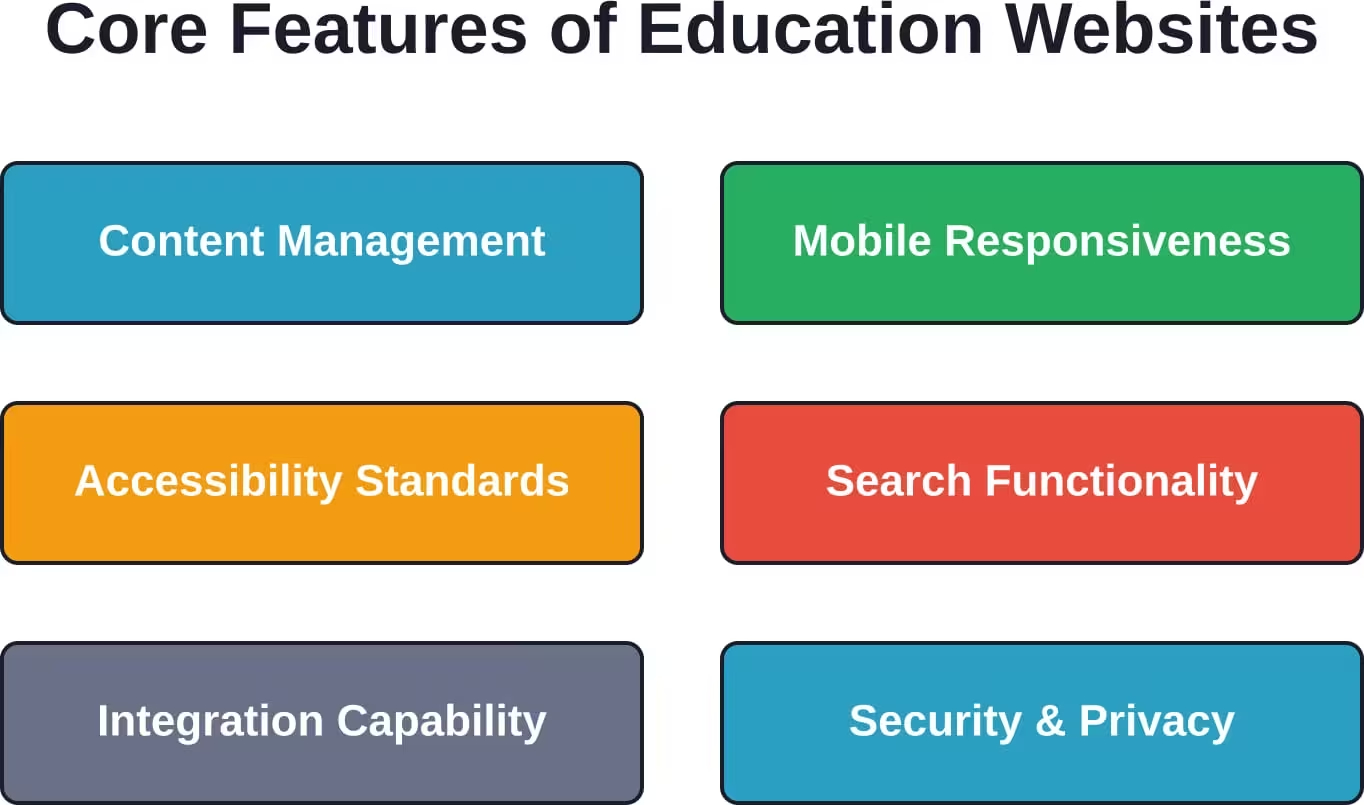
Essential Features for Modern Education Websites
What separates effective educational websites from mediocre ones? Specific functionality that addresses real institutional needs.
Content Management Systems
Faculty and staff need to update content without developer intervention. The best education website builders provide intuitive interfaces where non-technical users can publish news, update course information, and maintain calendars.
Look for systems that support role-based permissions. Department heads should control their sections without accessing unrelated areas. This granular control prevents accidental changes while empowering distributed content ownership.
Integration With Learning Platforms
Digital learning platforms have become fixtures in classrooms. According to research from the Institute of Education Sciences, the SEERNet initiative aims to facilitate the education research field’s ability to leverage existing digital learning platforms for rigorous education research.
Educational websites must integrate seamlessly with learning management systems, student information systems, library databases, and communication tools. Siloed systems create frustration and reduce adoption.
Accessibility Compliance
Educational institutions have legal and ethical obligations to ensure websites work for users with disabilities. WCAG compliance isn’t optional—it’s mandatory.
That means proper heading hierarchies, alt text for images, keyboard navigation, sufficient color contrast, and screen reader compatibility. Testing with actual assistive technologies reveals issues automated scanners miss.
Choosing the Right Development Approach
Schools face a critical decision: custom development, template-based builders, or something in between?
| Approach | Best For | Considerations |
|---|---|---|
| Custom Development | Large universities with unique needs | Higher cost, full control, longer timeline |
| Education-Specific Builders | K-12 schools, small colleges | Pre-built features, faster launch, limited customization |
| WordPress with Education Themes | Mid-size institutions | Balance of flexibility and ease, requires maintenance |
| Headless CMS | Tech-forward institutions | Maximum flexibility, technical expertise required |
Budget constraints often push schools toward template-based solutions. But wait. The cheapest option upfront frequently costs more long-term through limited scalability and expensive workarounds.
Design Principles for Educational Websites
Effective education web design balances aesthetics with function. Prospective students expect modern, visually engaging experiences. Faculty need efficient tools. Parents want quick access to essential information.
The short answer? Prioritize user journeys over institutional organizational charts.
Audience-Centric Navigation
Higher education websites particularly struggle with navigation. Universities organize content by department, but prospective students think in terms of majors, campus life, and financial aid.
The best approach provides multiple entry points—audience-based navigation for prospective students, task-based navigation for current students and staff, and traditional organizational navigation for those who need it.
Visual Hierarchy and Branding
Educational institutions possess strong brand identities. Website development must reflect that identity consistently across every page while maintaining usability.
Typography, color schemes, imagery, and spacing all communicate institutional values. A technical university projects different values than a liberal arts college, and design choices should reinforce those distinctions.
Digital Learning Resources and Website Integration
Research from ERIC on web-based learning using interactive media for science education highlights the importance of interactive content in education websites. The study emphasizes that traditional learning methods bore students, and web-based learning accessible anywhere helps engagement.
Schools increasingly provide digital learning resources, making website platforms critical infrastructure. However, the National Center for Education Statistics research reveals barriers remain. Access disparities based on race and socioeconomic status mean schools can’t assume universal home connectivity. Hybrid approaches that work both online and offline become essential.
Interactive Learning Features
Static content doesn’t cut it anymore. Students expect interactive elements—videos, simulations, quizzes, and collaborative tools.
Research from Stanford’s Accelerator for Learning found that the effectiveness of digital learning products varied considerably, depending on particular features of the interventions and the skills they targeted. The technology itself matters less than how it’s integrated into pedagogy.
That means website development must consider pedagogical goals, not just technical capability. Features should support specific learning outcomes rather than existing because the platform allows them.
Security and Privacy Considerations
Educational websites handle sensitive data—student records, financial information, health details, and more. Security isn’t an afterthought.
Compliance requirements like FERPA, COPPA, and GDPR impose strict obligations. Data breaches carry legal, financial, and reputational consequences that can devastate institutions.
Best practices include regular security audits, encrypted connections, secure authentication, role-based access controls, and staff training on data handling. Third-party integrations must meet the same security standards as core systems.
Mobile-First Development
Students access educational websites primarily through mobile devices. Desktop-first design creates friction for the majority of users.
Mobile-first development starts with the smallest screen and progressively enhances for larger displays. This approach ensures core functionality works everywhere, with additional features layered on when space allows.
Touch targets need adequate spacing. Text must remain readable without zooming. Navigation should work with thumbs. Forms need simplification for small keyboards.
Performance Optimization
Page load speed directly impacts user experience and search rankings. Educational websites often suffer from performance issues due to large images, unoptimized code, and excessive third-party scripts.
Technical optimizations include image compression, lazy loading, content delivery networks, browser caching, and code minification. Monitoring tools identify bottlenecks that slow performance.
The goal? Pages loading in under 1.5 seconds on mobile connections. Anything slower drives users away, particularly prospective students comparing institutions.
Measuring Success
How do institutions know if website development efforts succeed? Metrics matter.
| Metric | What It Measures | Target Benchmark |
|---|---|---|
| Page Load Time | Technical performance | Under 3 seconds |
| Bounce Rate | Content relevance | Below 50% |
| Conversion Rate | Inquiry/application effectiveness | Varies by institution type |
| Task Completion | Usability for specific actions | Above 80% |
| Accessibility Score | WCAG compliance | AA standard minimum |
Analytics platforms track quantitative metrics, but qualitative research reveals why numbers change. User testing, surveys, and feedback sessions expose pain points data alone doesn’t explain.
Working With Development Partners
Many institutions lack in-house expertise for comprehensive website development. Partnering with specialized agencies fills capability gaps.
The best education web design agencies bring sector-specific experience. They understand institutional politics, compliance requirements, and the unique challenges schools face.
When evaluating partners, examine portfolios of actual education clients. Ask about their development process, timeline expectations, and ongoing support models. References from similar institutions provide realistic expectations.
Agencies should demonstrate understanding of mission-aligned digital strategy—not just technical implementation, but how the website advances institutional goals.
Future Trends in Education Website Development
Looking ahead, several trends will shape education website development. Artificial intelligence enables personalized content delivery based on user behavior. Voice interfaces expand accessibility options. Progressive web applications blur the line between websites and native apps.
The ISTE Standards provide frameworks for educators to create high-impact learning experiences with technology. As standards evolve, websites must adapt to support new pedagogical approaches.
Institutions that treat websites as ongoing strategic assets rather than occasional projects will maintain competitive advantages. The landscape changes too quickly for set-and-forget approaches.
Conclusion
Website development for education requires specialized expertise that balances technical excellence with deep understanding of institutional needs. Schools and universities face unique challenges—serving diverse audiences, meeting accessibility requirements, integrating complex systems, and advancing educational missions through digital platforms.
The best educational websites don’t just look good. They function as comprehensive ecosystems supporting recruitment, learning, communication, and community building. They embrace mobile-first design, prioritize accessibility, and evolve continuously based on user needs and institutional goals.
Whether choosing template-based builders or custom development, institutions must align website strategy with educational mission. The investment in thoughtful, user-centered development pays dividends through improved student experiences, operational efficiency, and institutional competitiveness.
Ready to transform the digital presence of an educational institution? Start by auditing current website performance, identifying stakeholder needs, and defining clear goals. Partner with experienced education website specialists who understand the sector’s unique requirements. The result will be a platform that truly serves the learning community.