Quick Summary: Website development for dentists involves creating HIPAA-compliant, mobile-responsive sites optimized to attract new patients through search engines while building trust through professional design and clear communication of services. Effective dental websites balance technical SEO requirements with patient-focused features like online booking, treatment information, and accessible contact methods—all while adhering to federal communication regulations that can impose penalties up to $53,088 per violation.
The relationship between a dental practice and its online presence has evolved into something far more critical than a digital business card. A well-developed website now serves as the primary touchpoint where potential patients form first impressions, research treatment options, and ultimately decide whether to book an appointment.
Yet many dentists still struggle with outdated designs, poor mobile experiences, and compliance blind spots that can expose practices to significant legal risks.
Here’s what actually matters when developing a website for a dental practice in 2026—and what you can safely ignore.
Why Dental Websites Require Specialized Development
Dental practices face unique challenges that general business websites don’t encounter. The regulatory environment alone creates substantial complexity.
According to guidance from the American Dental Association, practices must navigate strict communication laws when contacting patients. The Telephone Consumer Protection Act (TCPA) imposes statutory damages of $500 per violation, which can be tripled to $1,500 only in cases of willful or knowing violations, while the Telephone Sales Rule can levy civil penalties of up to $53,088 per violation for marketing messages that don’t comply.
These regulations extend to web-based communication systems. Any automated appointment reminders, marketing texts, or email campaigns triggered through a website must obtain proper written consent.
Beyond compliance, the doctor-patient relationship itself demands careful consideration in website development. The ADA emphasizes that creating and nurturing positive patient relationships starts with how practices manage the patient experience—and that experience increasingly begins online.
The Patient Trust Equation
Research on dentist-patient communication shows it sits at the core of providing quality dental care. Websites that communicate clearly, provide transparent information about procedures, and make accessibility a priority demonstrate respect for patients before the first appointment.
Sound familiar? That’s because dental website development isn’t primarily a technical challenge—it’s a communication challenge wrapped in technical requirements.
Core Features Every Dental Website Needs
Not every dental website requires elaborate custom development. But certain features have become table stakes for practices that want to compete for new patients.
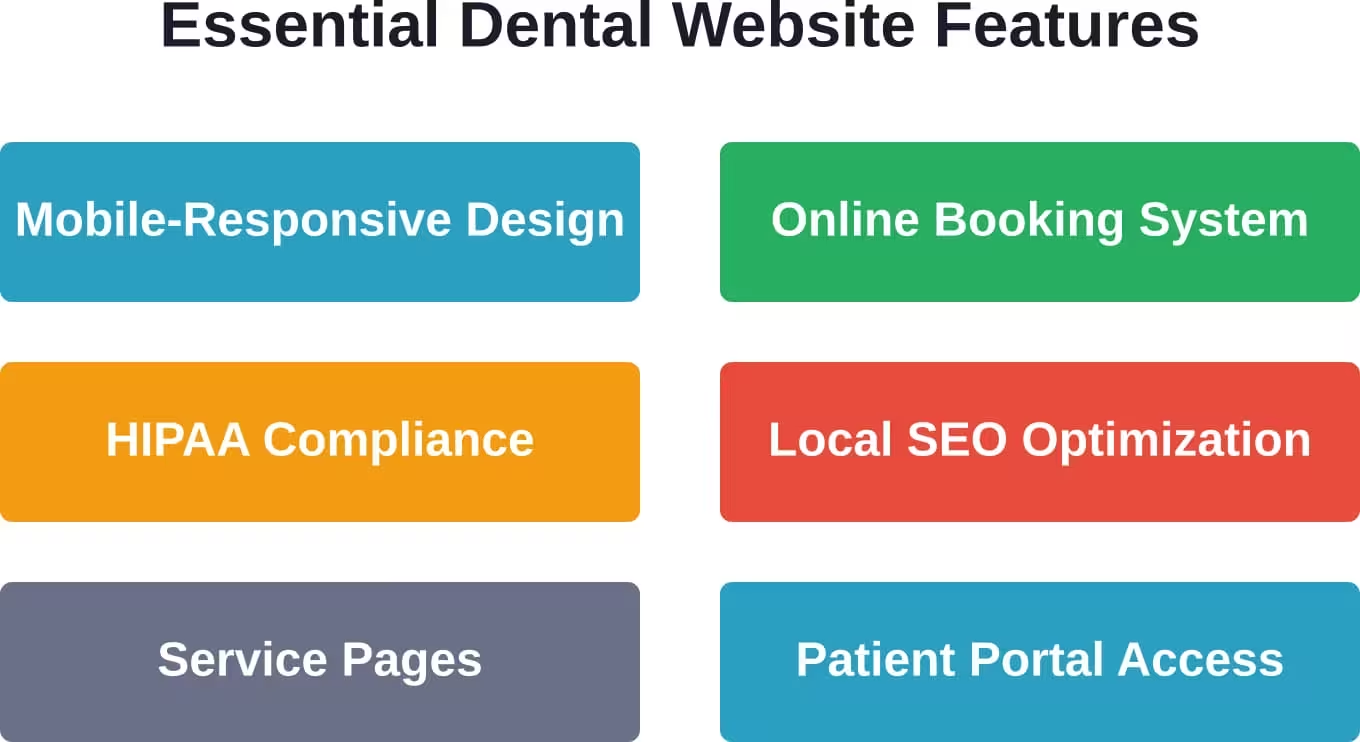
Mobile-Responsive Design
The majority of potential patients now search for dental services on mobile devices. A design that doesn’t adapt seamlessly to smaller screens creates immediate friction.
But mobile-responsiveness goes beyond simply resizing elements. Touch-friendly buttons, readable text without zooming, and fast load times on cellular connections all factor into whether a visitor converts into a scheduled appointment.
Integrated Booking Systems
Forcing potential patients to call during business hours creates unnecessary barriers. Modern dental websites incorporate scheduling systems that integrate directly with practice management software.
The best implementations show real-time availability, allow patients to select their preferred hygienist or dentist, and send automated confirmations through properly consented channels.
HIPAA-Compliant Communication
Any web form that collects patient health information must meet HIPAA security standards. This includes contact forms asking about dental concerns, medical history questionnaires, and patient portals.
Development teams specializing in dental websites understand these requirements and implement encrypted data transmission, secure form processing, and proper Business Associate Agreements with hosting providers.
Design Elements That Actually Convert Visitors
The ADA’s guidance on website design cuts through the noise: practice websites don’t need all the latest bells and whistles to be effective. They should be visually appealing, communicate the practice’s mission, and appeal to the demographics of patients the practice wants to treat.
That simplicity proves harder to execute than it sounds.
Visual Appeal vs. Visual Overwhelm
Dental websites often fall into two extremes—sterile medical designs that feel cold and impersonal, or over-designed sites with so many animations and effects that the actual content gets buried.
Effective design balances professional credibility with approachability. Clean layouts, high-quality photography of the actual practice and team, and strategic use of whitespace all contribute to visitor comfort.
The goal isn’t to impress other dentists with cutting-edge web design. It’s to make nervous patients feel confident about their choice.
Content That Builds Trust
Content development for dental websites requires a specific approach. Patients searching for dental services often experience anxiety about procedures, costs, and pain management.
Websites that address these concerns directly—with clear explanations of what to expect, transparent pricing information where possible, and reassuring details about comfort options—perform significantly better than sites that simply list services.
| Content Type | Purpose | Best Practices |
|---|---|---|
| Service Pages | Explain treatments | Patient-friendly language, expected outcomes, procedure steps |
| Team Bios | Build personal connection | Photos, credentials, personal interests, philosophy of care |
| Patient Testimonials | Social proof | Specific results, authentic voices, before/after when appropriate |
| FAQ Section | Address concerns | Common anxieties, insurance questions, new patient process |
| Blog Content | SEO + education | Oral health tips, procedure explanations, practice updates |
SEO Strategy for Dental Practices
Search engine optimization for dentists centers on local visibility. Most patients search for dental care within a specific geographic area—”dentist near me,” “family dentist [city name],” or “emergency dental care [neighborhood].”
Website development must account for these patterns from the foundation up.
Technical SEO Fundamentals
Fast page load speeds, clean URL structures, proper schema markup for local businesses, and mobile optimization all contribute to search rankings. But these technical elements only create the foundation.
Content remains the primary ranking factor. Dental websites need comprehensive service pages targeting specific procedures, location-based content for each office location, and regularly updated blog posts addressing patient questions.
Local Search Optimization
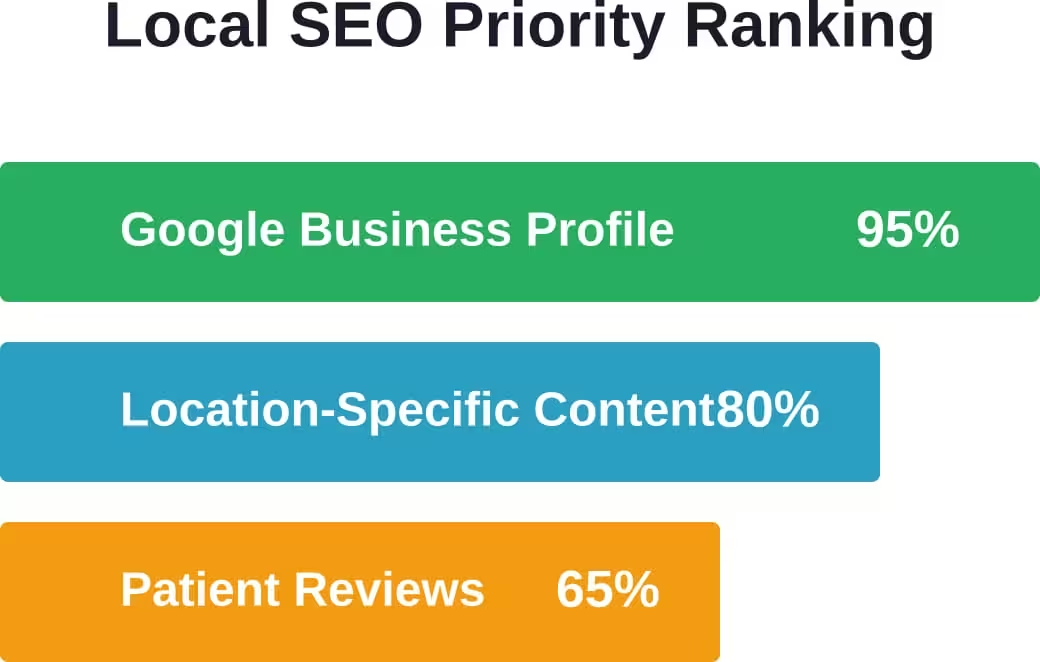
Google Business Profile integration, consistent NAP (name, address, phone) information across the web, location pages for multi-practice groups, and embedded maps all signal local relevance to search engines.
The most effective dental websites build location-specific content that goes beyond simply inserting city names into templates. Neighborhood-specific oral health concerns, community involvement, and local partnerships all provide authentic local signals.
Development Approach: Custom vs. Template-Based
Dentists face a fundamental choice when building or redesigning their website: invest in custom development or use industry-specific templates.
Neither approach is inherently superior. The right choice depends on practice size, growth goals, and available budget.
Template-Based Solutions
Specialized dental website platforms offer pre-designed templates built specifically for dental practices. These solutions typically include integrated booking systems, HIPAA-compliant forms, and dental-specific content frameworks.
The advantages include faster deployment, lower upfront costs, and proven designs that already convert visitors. Some platforms also bundle ongoing SEO services, content updates, and technical maintenance.
The limitations center on differentiation. When dozens of practices in a market use similar templates, standing out becomes harder. Customization options exist but often within constrained parameters.
Custom Development
Fully custom websites offer complete design freedom and unique brand expression. For practices focused on premium services, cosmetic dentistry, or specialty procedures, this differentiation can justify the higher investment.
Custom development also allows for unique features—advanced before/after galleries, treatment cost calculators, smile simulation tools, or specialized patient education modules.
But custom development requires larger budgets, longer timelines, and more ongoing maintenance. Finding developers who understand both modern web standards and healthcare compliance adds another layer of complexity.
| Consideration | Template Platform | Custom Development |
|---|---|---|
| Typical Cost | Monthly subscription (varies by provider) | Varies significantly by scope |
| Launch Timeline | 2-6 weeks | 3-6 months |
| Design Uniqueness | Limited | Complete control |
| HIPAA Compliance | Built-in | Must specify and audit |
| Ongoing Maintenance | Usually included | Requires separate agreement |
Patient Communication Features
The ADA has emphasized touchless communication strategies, particularly following heightened patient safety awareness. These digital communication tools now form core website functionality rather than optional add-ons.
Automated Appointment Reminders
Systems that send automated text or email reminders reduce no-shows significantly. But implementation must account for compliance requirements.
The Telephone Consumer Protection Act requires specific consent before sending automated messages. Website development should incorporate clear consent language during appointment booking or new patient registration.
Two-Way Messaging
Patients increasingly expect the ability to ask questions, request prescription refills, or communicate concerns through digital channels rather than phone calls.
Secure messaging systems integrated into dental websites must encrypt communications and store them according to HIPAA standards. The system should also route messages appropriately—clinical questions to dental staff, billing inquiries to the front office, and urgent concerns flagged for immediate attention.
Patient Portal Integration
Research into federated identity solutions in healthcare has explored reducing the account proliferation problem. When patients have multiple healthcare providers—primary care physicians, dentists, specialists—they often manage numerous separate logins.
Federated identity solutions remain in pilot stages in healthcare. Dental websites can reduce friction by offering single sign-on options, biometric authentication on mobile devices, and persistent login sessions with appropriate security timeouts.
Measuring Website Performance
Website development doesn’t end at launch. Continuous monitoring and optimization separate high-performing dental websites from digital brochures.
Conversion Tracking
The primary metric that matters: new patient appointments generated through the website. Tracking requires proper goal configuration in analytics platforms, phone call tracking for practices that still receive primarily voice inquiries, and attribution modeling to understand which marketing channels drive the most valuable traffic.
User Behavior Analysis
Heat mapping tools show where visitors click, how far they scroll, and where they abandon the booking process. This behavioral data reveals friction points that written feedback often misses.
High exit rates on pricing pages might indicate sticker shock—or might simply mean the information wasn’t clear enough. Abandoned booking forms could result from asking for too much information upfront, technical errors, or inconvenient available appointment times.
Search Performance Monitoring
Regular tracking of keyword rankings, organic traffic trends, and search visibility helps dental practices understand whether their SEO investment delivers results.
Local search performance requires particular attention. Rankings can vary significantly by neighborhood within a city, and competitors’ optimization efforts constantly shift the landscape.
Common Development Pitfalls to Avoid
Certain mistakes appear repeatedly in dental website projects. Awareness helps practices avoid wasted investment.
Neglecting Content Quality
Many dental practices invest heavily in design but populate their site with thin, generic content. Search engines increasingly prioritize comprehensive, authoritative content that genuinely serves user intent.
A beautiful website with shallow content will underperform an average-looking site with detailed, helpful information.
Ignoring Accessibility Standards
Web accessibility isn’t just good practice—it’s increasingly a legal requirement. Websites that don’t accommodate users with disabilities face potential ADA compliance lawsuits.
Proper development includes alt text for images, keyboard navigation support, sufficient color contrast, clear heading hierarchy, and compatibility with screen readers.
Overlooking Load Speed
High-resolution images make dental websites visually appealing but can create punishingly slow load times. Every additional second of load time correlates with measurable drops in conversion rates.
Proper image optimization, efficient code, content delivery networks, and browser caching all contribute to acceptable performance.
Choosing a Development Partner
For dentists without technical expertise, selecting the right development partner determines project success.
Industry Specialization Matters
General web developers might create technically sound websites but lack understanding of dental-specific requirements. HIPAA compliance, patient communication patterns, treatment page structure, and dental SEO all benefit from specialized experience.
Platforms and agencies focused exclusively on dental websites bring proven templates, established compliance frameworks, and benchmark data from hundreds of similar projects.
Questions to Ask Potential Partners
How many dental websites have they launched? Can they provide references from practices similar in size and specialty? What’s their process for ensuring HIPAA compliance? Do they offer ongoing support, or is their relationship purely project-based?
Understanding the full scope of services—hosting, maintenance, security updates, content updates, SEO services—prevents surprise costs down the line.
Establish a Dental Website That Supports Real Patient Requests
Patients don’t spend much time figuring out a dental website. If something isn’t clear right away, they leave. That’s usually not about design – it’s about how the site is built. Lengreo handles website development as a custom build tailored to specific requirements, not a fixed setup. This allows the website to be developed based on how services are presented and what functionality is needed, without relying on pre-built structures.
Add What Your Dental Website Needs From the Start
With Lengreo, the website is developed with the right setup in place from the beginning:
- Custom-built pages based on your services
- Ability to include functionality beyond standard website features
- Direct integration with internal systems without relying on plugins
- Flexible setup that allows changes without full rebuilds
Contact Lengreo and get a website built to match your clinic’s requirements.
Future Trends in Dental Website Development
Digital dentistry continues evolving, and websites must keep pace with changing patient expectations.
AI-Powered Chat Assistants
Chatbots that handle initial patient inquiries, provide basic information about services, and facilitate appointment scheduling are becoming standard features. The best implementations feel conversational rather than robotic and escalate complex questions to human team members.
Virtual Consultations
Web-based video consultation tools gained significant traction and continue expanding. For new patients uncertain about treatment, quick virtual consultations lower the barrier to that first appointment.
Enhanced Visual Treatment Planning
Smile simulation tools, virtual try-ons for cosmetic procedures, and interactive treatment animations help patients visualize outcomes. These features particularly benefit practices focused on elective cosmetic dentistry.
Making the Investment Worthwhile
Website development for dentists represents a significant investment—whether measured in direct costs for custom development or ongoing subscription fees for platform-based solutions.
That investment pays returns when the website functions as an active patient acquisition tool rather than a static information repository. The difference lies in strategic planning, patient-focused design, technical excellence, and ongoing optimization.
Practices that view their website as core infrastructure rather than a one-time project see the best results. Regular content updates, continuous SEO refinement, conversion rate optimization, and adaptation to changing patient expectations all contribute to sustained performance.
The dental practices that dominate their local markets in 2026 share a common trait: websites that genuinely serve patient needs while adhering to healthcare compliance standards and modern technical requirements.
Start by auditing current website performance against the features and standards outlined here. Identify gaps, prioritize improvements based on potential patient impact, and develop a realistic timeline for implementation. Whether that means upgrading an existing site or building from scratch, the investment in effective website development remains one of the highest-return marketing decisions a dental practice can make.