


Quick Summary: Website development for ecommerce involves designing, building, and optimizing an online store to sell products or services. The process includes selecting a platform, implementing secure payment systems, creating user-friendly navigation, and ensuring mobile responsiveness. Key considerations include compliance with regulations like the INFORM Consumers Act, robust security measures, and performance optimization to deliver seamless shopping experiences that drive conversions.
With over 27 million online stores operating worldwide, the ecommerce landscape has become fiercely competitive. Standing out requires more than just listing products—it demands exceptional website development that combines functionality, security, and user experience.
Ecommerce development refines the technical aspects of how a website functions, processes payments, responds to user actions, and delivers overall performance. But here’s the thing: poor development choices can sink even the most promising online business. Studies have found that on average, 32% of online customers wouldn’t shop from a brand after one bad experience, and an additional 59% of online customers would quit shopping from a brand after several bad experiences.
This guide breaks down everything needed to build, launch, and scale an ecommerce website in 2026.
What Is Ecommerce Website Development
Ecommerce website development encompasses the entire process of designing, building, and fine-tuning an online store to improve performance, drive sales, and create a destination customers actually want to visit.
The technical scope goes beyond aesthetics. Development involves architecture decisions, database management, payment processing integration, inventory systems, security protocols, and performance optimization. Each element impacts how quickly pages load, whether transactions complete successfully, and whether the site can scale during traffic spikes.
Real talk: millions of ecommerce websites exist, and billions of consumers use them daily. Many flounder because of poor development choices—slow load times, clunky checkout processes, or inadequate mobile optimization.
Core Components of Ecommerce Development
Strong ecommerce development balances several interconnected components:
- Frontend development creates what customers see and interact with—product pages, navigation menus, search functionality, and checkout flows
- Backend development handles the server-side logic, databases, and business logic that power inventory management, order processing, and customer data
- Payment integration connects secure gateways that process credit cards, digital wallets, and alternative payment methods
- Security infrastructure protects customer data through SSL certificates, PCI compliance, and fraud prevention systems
- Performance optimization ensures fast page loads, efficient database queries, and responsive design across devices
The Federal Trade Commission enforces consumer protection regulations that directly impact ecommerce development. Under the INFORM Consumers Act—effective June 27, 2023—online marketplaces must verify and disclose information about high-volume third-party sellers.
Platform Selection for Ecommerce Development
Choosing the right platform fundamentally shapes development possibilities, costs, and long-term flexibility. Platform decisions affect everything from time-to-market to customization capabilities.
Hosted Ecommerce Platforms
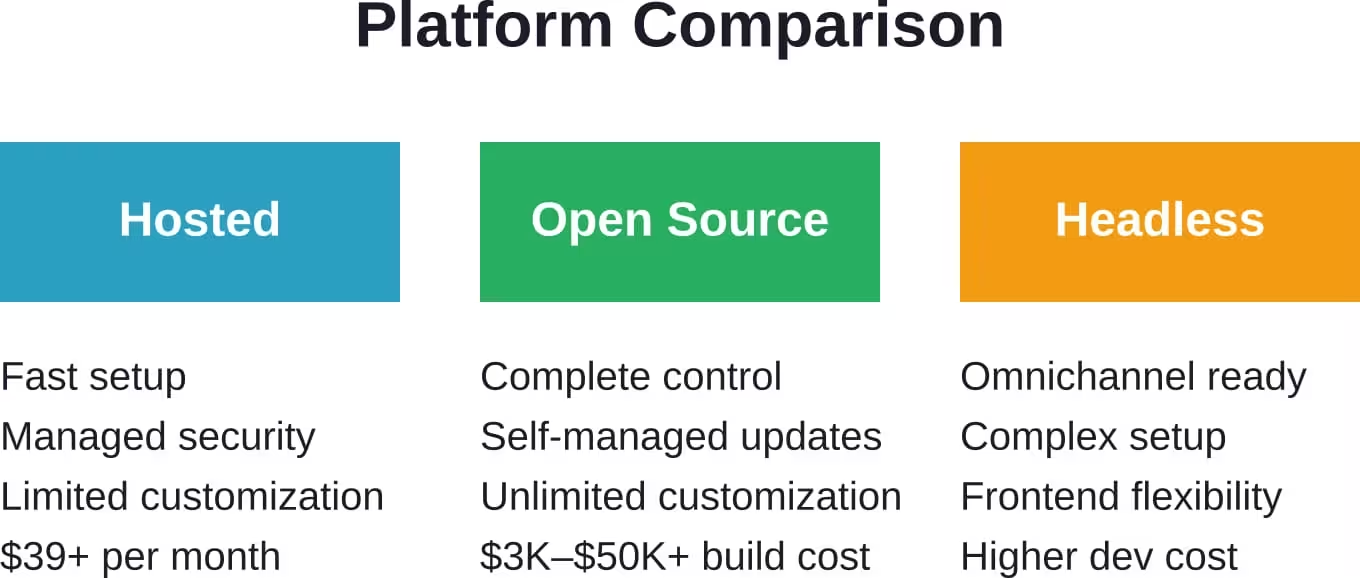
Hosted solutions provide complete infrastructure, handling servers, security, and basic maintenance. Using a platform like Shopify can cost as little as $39 per month (if billed monthly) or $29 (if billed yearly), plus transaction fees.
These platforms deliver several advantages. Infrastructure is managed, security updates happen automatically, and many compliance requirements are handled by the platform provider. Templates and themes accelerate initial development, making it possible to launch functional stores quickly.
The trade-off? Customization constraints. While templates offer starting points, deep customization often requires specialized theme development or working within platform limitations.
Open-Source Ecommerce Solutions
Open-source platforms provide complete control over code, database structure, and server configuration. This flexibility comes with responsibility—developers handle security, updates, hosting, and all technical maintenance.
Custom-built websites from professional developers can cost anywhere from a few thousand to tens of thousands of dollars, depending on complexity and required features.
Open-source excels when businesses need unique functionality that doesn’t fit standard platform capabilities. Complete database access enables custom reporting, specialized integrations, and tailored business logic.
Headless Ecommerce Architecture
Headless separates the frontend presentation layer from backend commerce functionality. APIs connect the two, allowing developers to build custom frontends using modern frameworks while leveraging robust backend commerce engines.
This architecture shines for omnichannel strategies—powering websites, mobile apps, voice interfaces, and IoT devices from a single commerce backend. Development teams can iterate on customer-facing experiences without touching core commerce logic.
Essential Features in Ecommerce Website Development
Certain functionality isn’t optional—it’s foundational to creating viable online stores that convert browsers into buyers.
Product Catalog Management
Robust catalog systems handle simple products, variants, bundles, and digital goods. Development must support product attributes, custom fields, and relationships between items.
Search and filtering capabilities directly impact conversion rates. Customers expect to narrow options by price, color, size, brand, and custom attributes. Faceted search that updates results dynamically requires careful frontend and backend coordination.
Image management deserves special attention. Multiple images per product, zoom functionality, and responsive images that load appropriate resolutions based on device and screen size all require deliberate development choices.
Shopping Cart and Checkout
Cart functionality seems straightforward until developers account for edge cases. Carts must persist across sessions, handle inventory changes, apply complex discount rules, calculate shipping based on weight and destination, and manage tax calculations across jurisdictions.
Checkout flow design dramatically affects completion rates. Multi-step checkouts with progress indicators, guest checkout options, saved payment methods for returning customers, and real-time validation all reduce friction.
Address validation and autocomplete prevent shipping errors. Integration with address verification services catches mistakes before orders ship.
Payment Gateway Integration
Payment processing represents one of the most critical development components. Integration must handle multiple payment methods—credit cards, debit cards, digital wallets, buy-now-pay-later services, and potentially cryptocurrency.
PCI compliance governs how payment data is handled. Using tokenization, where sensitive card data never touches your servers, simplifies compliance significantly. Payment gateway APIs handle secure transmission while returning tokens for transaction processing.
Failed payment handling requires thoughtful development. Clear error messages, retry mechanisms, and alternate payment method prompts help recover potentially lost sales.
Inventory Management
Real-time inventory tracking prevents overselling and manages customer expectations. Development must sync inventory across sales channels, handle backorders, support dropshipping workflows, and trigger reorder alerts.
For businesses with physical locations, inventory visibility across warehouses and stores enables features like ship-from-store and buy-online-pickup-in-store.
Order Management
After purchase, order management systems track fulfillment status, generate packing slips, create shipping labels, send tracking notifications, and handle returns.
Integration with shipping carriers automates rate calculation, label generation, and tracking updates. Multi-warehouse logic routes orders to optimal fulfillment locations based on inventory and proximity to customers.
Customer Account Features
Customer accounts store order history, saved payment methods, shipping addresses, and preferences. Wishlists, product reviews, and loyalty program integration enhance repeat purchase rates.
Account creation must balance security with convenience. Password requirements, email verification, and optional two-factor authentication protect customer data without creating excessive friction.
Security and Compliance in Ecommerce Development
Security isn’t a feature—it’s a fundamental requirement that protects both business operations and customer trust.
SSL Certificates and HTTPS
Secure Socket Layer certificates encrypt data transmitted between browsers and servers. Every ecommerce site must operate over HTTPS, protecting customer information during browsing and checkout.
Beyond encryption, HTTPS affects search rankings. Search engines prioritize secure sites, making SSL implementation both a security and SEO requirement.
PCI DSS Compliance
The Payment Card Industry Data Security Standard sets requirements for organizations that handle credit card information. Compliance involves network security, access controls, encryption, monitoring, and regular security testing.
Using payment gateway tokenization significantly reduces PCI scope. When card data never touches your servers, compliance requirements narrow to securing the checkout page where customers enter payment information.
Data Protection and Privacy
Privacy regulations govern customer data collection, storage, and usage. Development must include consent mechanisms, data access requests, and deletion capabilities.
The Children’s Online Privacy Protection Act (COPPA) imposes specific requirements when collecting information from children under 13. Sites directed at children or with actual knowledge of child users must obtain parental consent and follow stringent data handling rules.
The INFORM Consumers Act Requirements
For marketplace platforms, the INFORM Consumers Act—enforced by the Federal Trade Commission—requires verification and disclosure of high-volume third-party sellers.
The law defines high-volume third-party sellers with specific sales and revenue thresholds. Marketplaces must verify these sellers’ identity, contact information, and tax identification.
High-volume sellers meeting defined revenue thresholds require disclosure on product listing pages. Platforms must verify and maintain seller information according to INFORM Consumers Act requirements.
Development teams building marketplace platforms need systems tracking seller transaction volumes, revenue thresholds, verification status, and disclosure requirements. The lookback period for calculating seller thresholds is specified by the INFORM Consumers Act requirements.
Fraud Prevention
Ecommerce fraud takes multiple forms—stolen credit cards, account takeovers, return fraud, and chargeback abuse. Development should incorporate fraud detection tools that analyze transaction patterns, device fingerprints, and behavioral signals.
Address verification systems, card security code requirements, and velocity checks that limit transaction frequency from single accounts all reduce fraud exposure.
Step-by-Step Ecommerce Development Process
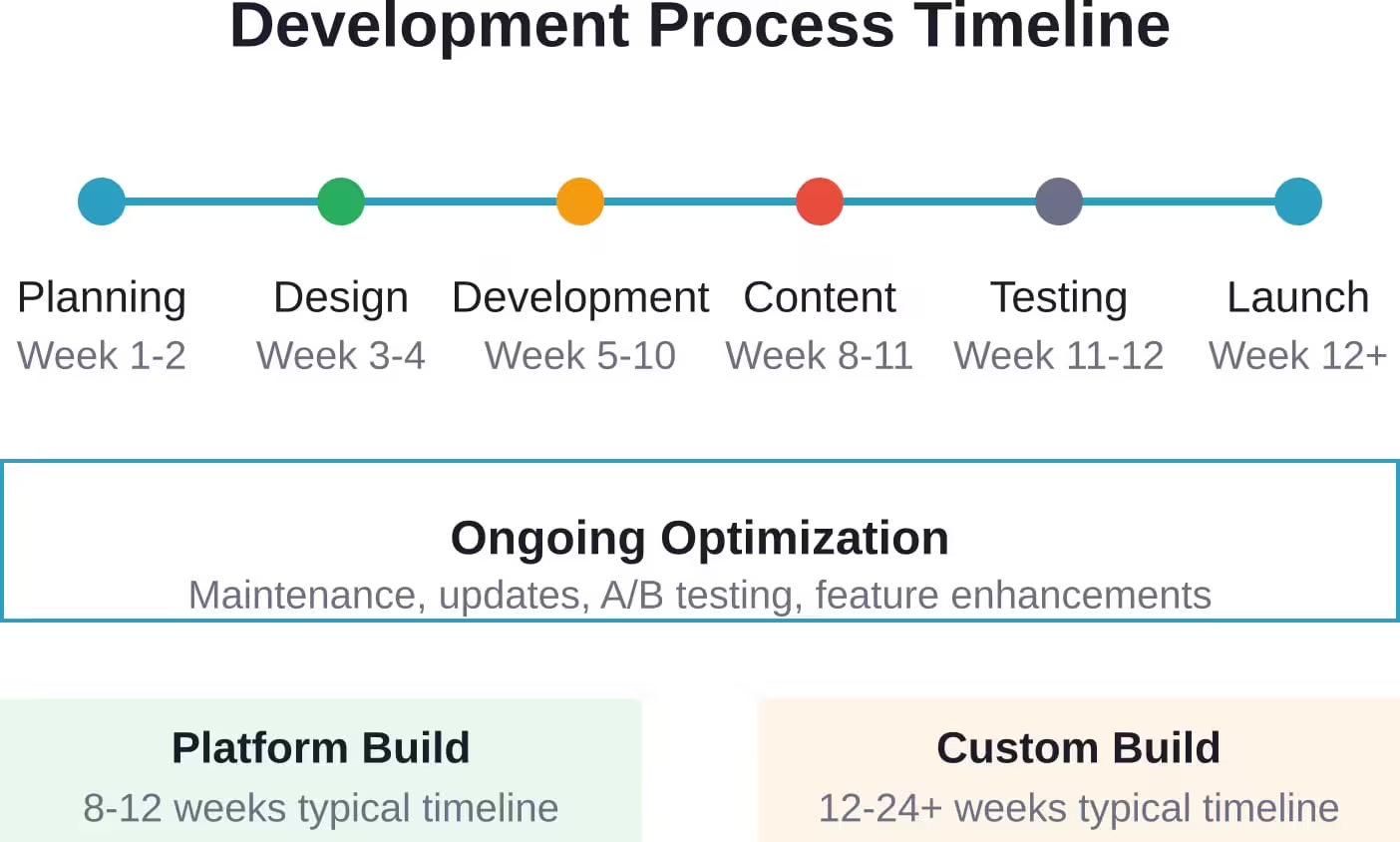
Building an ecommerce website follows a structured process that moves from planning through launch and ongoing optimization.
Step 1: Requirements and Planning
Development starts with defining business requirements. What products will the store sell? Who are the target customers? What’s the expected transaction volume? Which payment methods must be supported?
Technical requirements flow from business needs. Integration requirements with existing systems—ERP, CRM, accounting software—shape architecture decisions. Regulatory compliance needs based on industry and geography inform security and data handling approaches.
Budget and timeline constraints influence platform selection and feature prioritization. A minimum viable product approach identifies essential functionality for initial launch versus enhancements planned for later phases.
Step 2: Platform Selection and Setup
Based on requirements, teams select appropriate platforms and infrastructure. Domain registration, hosting configuration, and development environment setup establish the foundation.
For hosted platforms, account creation and plan selection come first. For self-hosted solutions, server provisioning, database setup, and base software installation prepare the environment.
Step 3: Design and User Experience
Design work addresses both aesthetics and usability. Wireframes map out page layouts and user flows. Design mockups establish visual direction—color schemes, typography, imagery style.
Mobile-first design ensures experiences work well on smartphones and tablets, not just desktop computers. Responsive design techniques adapt layouts to different screen sizes.
Accessibility considerations make sites usable for customers with disabilities. Proper heading hierarchy, alt text for images, keyboard navigation support, and sufficient color contrast all matter.
Step 4: Development and Integration
Frontend development translates designs into working interfaces using HTML, CSS, and JavaScript. Dynamic functionality requires frontend frameworks that handle state management, routing, and component architecture.
Backend development builds the application logic, database schema, and API endpoints that power the site. Shopping cart logic, checkout processing, order management, and admin interfaces all take shape during this phase.
Third-party integrations connect payment gateways, shipping carriers, email service providers, analytics platforms, and marketing tools.
Step 5: Content Population
Product data entry includes descriptions, images, pricing, variants, and inventory quantities. Category organization and navigation structure help customers find products.
Content creation for informational pages—about, FAQ, shipping policies, return policies—sets customer expectations and builds trust.
Step 6: Testing
Comprehensive testing catches issues before customers encounter them. Functional testing verifies features work as intended. Checkout flow testing confirms orders process correctly and payment integration functions properly.
Performance testing identifies slow pages and bottlenecks. Load testing simulates traffic spikes to ensure infrastructure scales appropriately.
Security testing includes vulnerability scanning, penetration testing, and code review to identify exploitable weaknesses.
Cross-browser and cross-device testing ensures consistent experiences across different browsers, operating systems, and devices.
Step 7: Launch and Monitoring
Launch involves DNS configuration, final data migration, and switching from development to production environments. Monitoring tools track site performance, error rates, and transaction success.
Post-launch attention focuses on identifying issues quickly. Analytics reveal how customers navigate the site, where they drop off, and which products perform best.
Build an eCommerce Website Without Platform Limits
Many eCommerce websites rely on templates and platforms that start to slow things down as the business grows. Limited features, extra plugins, and rigid structures often create friction that directly impacts sales. This is where Lengreo comes in. They focus on custom web development for eCommerce businesses, building storefronts tailored to specific products, users, and growth goals. Instead of adapting your business to a platform, they build the website around your needs, removing unnecessary limitations and improving how the store performs.
Move Beyond Templates and Build a Store That Performs
Lengreo helps eCommerce businesses replace platform constraints with custom-built solutions:
- Custom storefront development built from scratch
- Checkout flow optimization to reduce cart abandonment
- Platform migration without losing data or sales
- Mobile-first design for modern shoppers
- Integration with CRM, inventory, and other systems without plugin limits
Get a custom eCommerce setup that fits your business — talk to Lengreo and plan your next step.
Mobile Optimization for Ecommerce
Mobile commerce continues growing as a percentage of total ecommerce transactions. Development must prioritize mobile experiences, not treat them as afterthoughts.
Responsive Design Implementation
Responsive design uses CSS media queries and flexible layouts to adapt interfaces to different screen sizes. Grid systems and flexible images ensure content flows naturally regardless of viewport width.
Touch-friendly interface elements accommodate finger taps rather than precise mouse clicks. Buttons need adequate size and spacing to prevent mis-taps.
Mobile Performance
Mobile networks often deliver slower speeds than broadband connections. Image optimization, code minification, and lazy loading techniques reduce data transfer and improve load times.
Progressive Web App techniques enable offline functionality, push notifications, and app-like experiences without requiring native app development.
Mobile Payment Methods
Digital wallets like Apple Pay and Google Pay streamline mobile checkout. Customers authenticate using biometrics and complete purchases with saved payment credentials, eliminating manual data entry.
Integration with mobile payment platforms requires supporting the specific APIs and authentication flows each provider mandates.
Performance Optimization
Site speed directly impacts conversion rates and search rankings. Slow sites lose customers and revenue.
Frontend Performance
Image optimization reduces file sizes without sacrificing quality. Modern formats like WebP deliver better compression than traditional JPEGs. Responsive images serve appropriately sized versions based on device screens.
Code minification removes unnecessary characters from CSS and JavaScript files. Compression algorithms further reduce file sizes during transmission.
Content delivery networks cache static assets at edge locations worldwide, serving files from servers geographically close to customers.
Backend Performance
Database query optimization prevents slow queries from bottlenecking response times. Proper indexing, query caching, and eliminating N+1 queries improve database performance.
Application-level caching stores frequently accessed data in memory, reducing database hits. Page caching generates static HTML for pages that don’t require personalization.
Server infrastructure choices affect performance capabilities. Adequate CPU, memory, and bandwidth prevent resource constraints during traffic spikes.
Monitoring and Metrics
Performance monitoring tools track key metrics like Time to First Byte, First Contentful Paint, and Time to Interactive. These metrics quantify user experience and identify optimization opportunities.
Real user monitoring collects performance data from actual customer sessions, revealing how different network conditions, devices, and geographic locations affect experience.
SEO Considerations in Ecommerce Development
Search engine visibility drives organic traffic and reduces customer acquisition costs. Development choices directly impact SEO effectiveness.
Technical SEO
Clean URL structures using descriptive keywords help search engines understand page content. Avoid session IDs and unnecessary parameters in URLs.
XML sitemaps list all important pages and help search engines discover content efficiently. Product feeds formatted for Google Shopping enable product listings in search results.
Structured data markup using Schema.org vocabulary provides explicit signals about product names, prices, availability, ratings, and reviews. Search engines use this data to create rich snippets in results.
Content Strategy
Unique product descriptions avoid duplicate content issues. While manufacturer descriptions are convenient, creating original content improves rankings.
Category pages benefit from descriptive content beyond just product listings. Informative content about the category and buying considerations adds value.
Blogging and resource content attract informational searches earlier in the customer journey, building awareness before purchase intent forms.
Site Architecture
Logical hierarchy and internal linking help search engines understand site structure and pass authority to important pages. Breadcrumb navigation provides both user experience and SEO benefits.
Faceted navigation systems that generate unique URLs for every filter combination create massive duplicate content problems. Parameter handling and canonical tags prevent these issues.
Analytics and Conversion Optimization
Data-driven optimization requires tracking customer behavior and testing improvements systematically.
Essential Analytics
Ecommerce tracking captures transaction data, revenue, product performance, and conversion funnels. Understanding where customers drop off identifies optimization opportunities.
Event tracking monitors specific interactions—add to cart, wishlist additions, video plays, form submissions. These micro-conversions provide insight into engagement.
Customer segmentation analyzes behavior differences across acquisition channels, device types, geographic locations, and customer types.
A/B Testing
Systematic testing compares variations to identify which performs better. Test elements like call-to-action copy, button colors, page layouts, and checkout flows.
Statistical significance ensures test results reflect genuine differences rather than random variation. Running tests long enough to reach significant sample sizes prevents false conclusions.
Conversion Rate Optimization
Small improvements compound over time. Optimizing product pages, streamlining checkout, improving search relevance, and reducing friction all incrementally boost conversion rates.
Session recording tools show exactly how customers interact with pages. Watching sessions reveals usability issues, confusion points, and unexpected behavior.
| Optimization Focus | Common Issues | Solutions |
|---|---|---|
| Product Pages | Insufficient images, missing details, unclear pricing | Multiple high-quality images, detailed specs, prominent pricing and availability |
| Checkout Flow | Forced account creation, lengthy forms, unexpected costs | Guest checkout, form autofill, upfront shipping and tax display |
| Site Search | Poor relevance, no results, limited filtering | Synonym handling, autocomplete, comprehensive filtering options |
| Navigation | Unclear categories, deep hierarchy, poor mobile menu | Logical grouping, limit depth to 2-3 levels, hamburger with clear labels |
| Trust Signals | No reviews, missing contact info, unclear policies | Customer reviews, visible contact methods, clear return and shipping policies |
Ongoing Maintenance and Updates
Launch isn’t the finish line—it’s the starting line for continuous improvement and maintenance.
Security Updates
Regular updates patch vulnerabilities in platform software, plugins, themes, and dependencies. Security monitoring detects potential breaches early.
Backup systems protect against data loss from hardware failures, hacking, or human error. Regular backup testing ensures recovery procedures actually work.
Feature Enhancements
Customer feedback and analytics identify enhancement opportunities. Prioritization balances business impact against development effort.
Platform updates introduce new capabilities worth adopting. Staying current with platform features prevents technical debt accumulation.
Content Management
Product catalogs require ongoing updates—new products, discontinued items, price changes, inventory adjustments. Seasonal content and promotions need regular refreshes.
SEO content benefits from updates reflecting current information and search trends. Refreshing older content maintains rankings and relevance.
Performance Monitoring
Continuous monitoring catches performance degradation early. Growing product catalogs, increased traffic, and accumulated data can slow sites over time without proactive optimization.
Emerging Trends in Ecommerce Development
Technology evolution creates new development opportunities and customer expectations.
AI and Personalization
Artificial intelligence powers product recommendations based on browsing history, purchase patterns, and similar customer behavior. Personalized experiences can show different products, content, and offers to different customer segments.
Natural language processing enables smarter search that understands customer intent beyond keyword matching. Visual search lets customers find products using images rather than text descriptions.
Voice Commerce
Voice assistants change how customers search and shop. Optimizing for voice queries requires natural language content and featured snippet optimization.
Voice ordering integration lets customers reorder frequently purchased items through voice commands, reducing friction for repeat purchases.
Augmented Reality
AR features let customers visualize products in their spaces before purchasing. Furniture retailers enable seeing how pieces look in rooms. Fashion retailers offer virtual try-on capabilities.
AR implementation requires 3D product models and integration with AR frameworks supported by mobile operating systems.
Sustainability Features
Carbon footprint calculations and eco-friendly shipping options appeal to environmentally conscious customers. Product sustainability certifications and transparent sourcing information build trust.
Development accommodates displaying environmental impact data and filtering by sustainability criteria.
Common Development Challenges and Solutions
Anticipating obstacles helps teams prepare appropriate solutions and contingency plans.
Scalability Concerns
Traffic spikes during promotions or seasonal peaks can overwhelm infrastructure. Cloud hosting with auto-scaling capabilities adds capacity automatically during high-demand periods.
Database optimization and caching reduce server load per transaction, enabling existing infrastructure to handle more concurrent users.
Integration Complexity
Third-party services often have API quirks, rate limits, and error conditions requiring careful handling. Robust error handling, retry logic, and fallback mechanisms maintain functionality when integrations fail.
Middleware layers abstract integration details from core business logic, making it easier to swap providers or add new integrations.
Cross-Browser Compatibility
Different browsers interpret standards differently. Comprehensive testing across browsers and versions catches rendering issues and JavaScript errors.
Progressive enhancement builds baseline functionality that works everywhere, then adds enhanced experiences for modern browsers.
Technical Debt
Rushed development or quick fixes accumulate technical debt that slows future development. Regular refactoring improves code quality and maintainability.
Automated testing catches regressions when refactoring code. Unit tests, integration tests, and end-to-end tests provide confidence that changes don’t break existing functionality.
Choosing Development Partners
When internal expertise is limited, partnering with experienced developers or agencies accelerates development.
Evaluating Development Teams
Portfolio review shows previous ecommerce projects and capabilities. Look for experience with similar business models, product types, and technical requirements.
Technical expertise in relevant platforms, languages, and frameworks ensures teams can execute effectively. Understanding of ecommerce-specific concerns—payment processing, inventory management, security—is essential.
Communication style and project management approaches affect collaboration success. Clear processes, regular updates, and responsiveness prevent misunderstandings.
In-House vs. Agency vs. Freelance
In-house teams provide ongoing support and deep product knowledge but require full-time salaries and benefits. Agencies bring diverse experience and complete teams but typically cost more per hour. Freelancers offer flexibility and specialized skills but may have availability constraints.
Hybrid approaches combine strengths—agencies for initial build, in-house for maintenance, freelancers for specialized needs.
Project Scope and Contracts
Detailed project scopes prevent misunderstandings about deliverables, timelines, and costs. Clearly defined requirements, acceptance criteria, and milestones keep projects on track.
Fixed-price contracts work well for clearly defined projects. Time-and-materials arrangements provide flexibility for evolving requirements but require careful budget management.
Budget Considerations
Understanding cost drivers helps allocate budget effectively across development phases.
Platform Costs
Hosted platforms charge monthly subscription fees based on transaction volume or feature tiers. Transaction fees typically range from 0.5% to 2.5% depending on payment processing arrangements.
Self-hosted solutions require server costs, which scale with traffic and resource needs. Domain registration, SSL certificates, and premium plugins add recurring costs.
Development Costs
Custom development costs vary widely based on complexity, customization needs, and developer rates. Simple platform-based stores might cost a few thousand dollars. Complex custom builds can reach tens of thousands or more.
Ongoing maintenance typically runs 15-20% of initial development costs annually.
Third-Party Services
Payment gateway fees typically include per-transaction charges plus percentage fees. Email marketing platforms, customer support tools, and analytics services add monthly subscription costs.
Shipping integrations, tax calculation services, and fraud prevention tools provide valuable functionality but increase operational costs.
Hidden Costs
Content creation—product photography, descriptions, category content—requires significant time or outsourcing expense. Marketing to drive traffic complements development investment.
Training staff on platform administration, order processing, and customer service tools takes time and resources.
| Cost Category | Platform-Based | Custom Development |
|---|---|---|
| Initial Setup | $2,000 – $10,000 | $15,000 – $100,000+ |
| Monthly Platform | $29 – $500+ | $50 – $500+ (hosting) |
| Transaction Fees | 0.5% – 2.5% per sale | Payment gateway only (1.5-3%) |
| Annual Maintenance | $1,000 – $5,000 | $5,000 – $30,000+ |
| Third-Party Tools | $100 – $1,000/month | $100 – $1,000/month |
Conclusion
Ecommerce website development combines technical expertise, strategic planning, and continuous optimization. Success requires more than just putting products online—it demands thoughtful architecture, robust security, seamless user experiences, and ongoing refinement based on data.
Platform selection shapes development possibilities and constraints. Security and compliance aren’t optional extras—they’re fundamental requirements protecting both business and customers. Performance optimization directly impacts conversion rates and search visibility.
The development process doesn’t end at launch. Monitoring analytics, testing improvements, updating content, and adapting to emerging technologies all contribute to long-term success in competitive markets.
Whether building with platform tools or custom development, focusing on customer experience, site performance, and security creates foundations for growth. Start with clear requirements, choose appropriate technology, execute carefully, and optimize continuously.
Ready to build your ecommerce presence? The technical landscape offers more accessible tools than ever before, but success still requires strategic thinking and disciplined execution. Define your requirements, evaluate options thoroughly, and commit to ongoing improvement after launch.