Quick Summary: Unique content is essential for SEO because search engines prioritize original, valuable information that serves user intent. Content that stands out from competitors earns higher rankings, builds authority, attracts natural backlinks, and creates lasting search visibility. Without content uniqueness, websites risk duplicate content penalties and invisible search presence.
Search engines exist for one purpose: connecting people with information that solves their problems. That’s why unique content forms the backbone of every successful SEO strategy.
But here’s the thing—unique doesn’t just mean plagiarism-free. According to Google’s developer documentation on canonical URLs, search engines actively consolidate duplicate content and choose a single version to rank. The content that stands apart earns the visibility.
The digital landscape in 2026 presents new challenges. AI tools can generate thousands of articles daily. Copy-pasted material floods search results. Yet search engines have become remarkably sophisticated at identifying truly original content.
Original content that offers fresh perspectives, unique data, or novel solutions gets rewarded with rankings that stick. Generic content gets buried.
What Unique Content Actually Means for Search Engines
Defining unique content requires more than understanding plagiarism checkers. Search engines evaluate content through multiple lenses simultaneously.
Unique content presents information, perspectives, or data not readily available elsewhere on the web. This goes beyond changing a few words or restructuring sentences. True uniqueness means offering something new to the conversation.
Search engines like Google examine content through sophisticated algorithms. According to their structured data guidelines, content must provide substantive value beyond what exists in their index. Surface-level rewrites don’t cut it anymore.
The Difference Between Unique and Original Content
These terms often get used interchangeably, but they have distinct meanings. Original content comes directly from the source—first-hand research, proprietary data, direct experiences, or novel insights.
Unique content might build on existing information but presents it in a new way. A comprehensive guide that synthesizes multiple sources while adding unique analysis qualifies as unique, even if the underlying facts aren’t original.
Both types matter for SEO. Original content typically carries more weight because it introduces new information to the web. But unique presentations of existing information serve users who need different formats, depths, or perspectives.
How Search Engines Detect Content Uniqueness
Modern search algorithms employ multiple methods to evaluate content uniqueness. According to Google’s documentation on how search works, web crawlers regularly scan content, comparing it against massive indexes.
The process isn’t just about word-for-word matching. Search engines analyze:
- Semantic similarity across phrases and concepts
- Information structure and presentation patterns
- The ratio of common versus novel information
- Citation patterns and reference diversity
- User engagement signals that indicate value
When content appears too similar to existing material, search engines must choose which version deserves ranking. They typically favor the earliest published version with the strongest authority signals.
Create Unique Content That Drives Rankings
Unique content is essential for SEO because it helps search engines understand relevance and value. Low quality or duplicate content limits growth and visibility.
LENGREO builds content strategies focused on originality, search intent, and conversion. Every piece is designed to support rankings and business goals.
- content planning based on search intent
- original, high quality content creation
- optimization for rankings and conversions
If you want content that stands out and performs, contact LENGREO to learn more.
Why Search Engines Prioritize Content Uniqueness
Understanding why search engines care about uniqueness reveals how to align content strategy with algorithmic preferences.
Search engines maintain user trust by delivering diverse, valuable results. When users search for information, seeing ten versions of identical content frustrates them. They expect varied perspectives, different depths of coverage, and multiple approaches to problems.
This user-centric focus drives algorithmic priorities. According to Search Engine Journal, Google sends 64% of all website referrals in the U.S. Maintaining that dominance requires consistently satisfying user expectations.
The Trust and Authority Connection
Unique content signals expertise and authority. Sites that consistently publish original insights demonstrate subject matter mastery that generic content mills cannot replicate.
Search engines track patterns over time. A website publishing unique perspectives across dozens or hundreds of articles builds domain authority. That authority translates to better rankings across all content on the site.
Generic or duplicated content does the opposite. It signals a lack of genuine expertise, undermining trust signals that algorithms use to determine rankings.
Content Freshness and Information Diversity
According to Search Engine Journal’s analysis, 16 to 20 percent of queries that get asked every day have never been asked before, supporting the need for fresh content. Users searching for recent events, current trends, or updated information need the latest content.
Unique content naturally tends toward freshness. Creating original perspectives requires engaging with current information, recent developments, and emerging trends. This freshness signals relevance to algorithms prioritizing timely results.
But freshness alone doesn’t guarantee rankings. The content must also provide unique value—a fresh take on old information matters as much as new information itself.
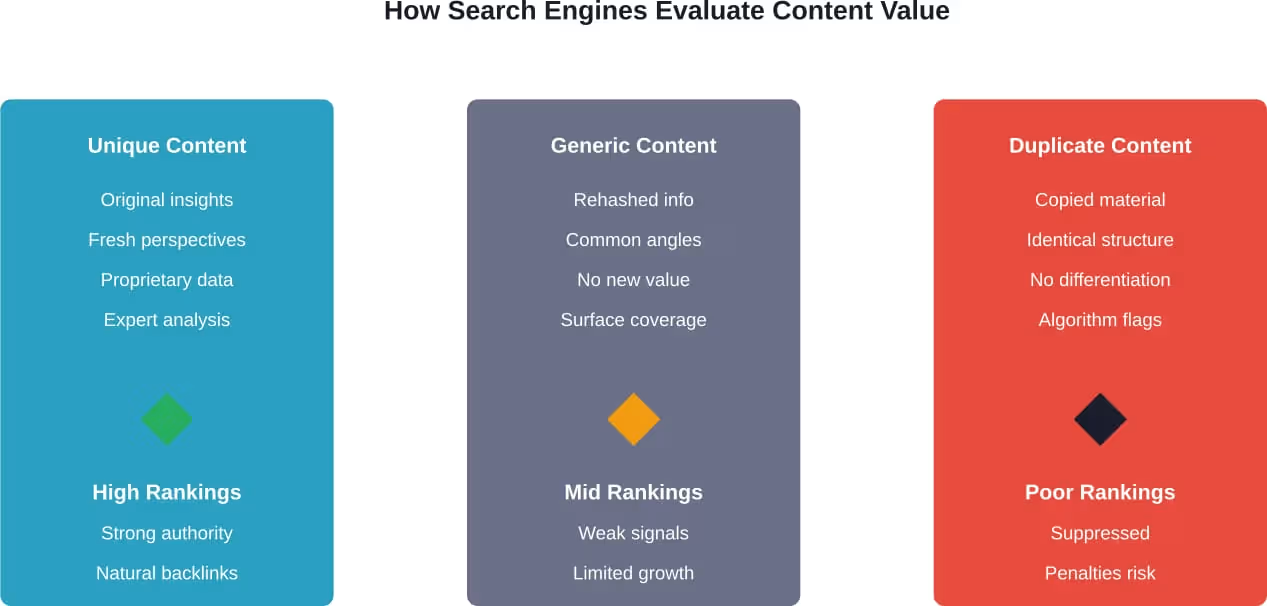
The Direct Impact on Search Rankings
Content uniqueness affects rankings through multiple algorithmic pathways. Understanding these mechanisms helps prioritize content creation efforts.
In 2026, the average CTR for the first organic result has shifted to approximately 28-32% due to the prevalence of AI Overviews, while Google Ads CTR has increased to 4-5% through improved AI targeting. Ranking in that top position requires content that search algorithms deem most valuable.
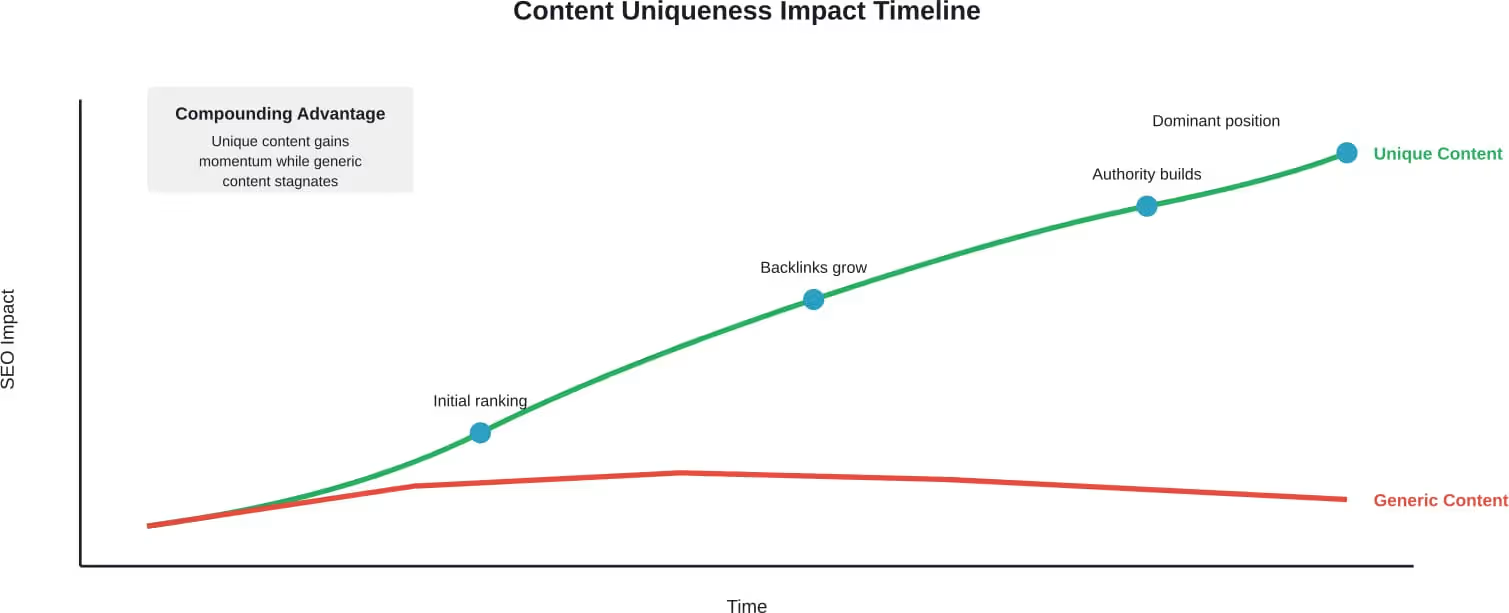
Unique content advantages compound over time. Sites that consistently publish original material see rankings improve not just for new content, but for existing pages as well.
Duplicate Content Penalties and Suppression
Google’s spam policies explicitly address duplicate content issues. While not always resulting in manual penalties, duplicate content faces algorithmic suppression.
When search engines detect identical or substantially similar content across multiple URLs, they make canonicalization decisions. According to Google’s documentation, they choose one version to display in search results while filtering out duplicates.
This means even legitimate content loses visibility when it resembles existing material too closely. The suppression happens automatically, without warning, and can persist indefinitely.
User Engagement Signals and Ranking Algorithms
Unique content typically generates stronger engagement signals. Users spend more time reading novel information, share valuable insights, and return to sites that consistently deliver unique perspectives.
These behavioral signals feed into ranking algorithms. According to Search Engine Journal’s analysis of user experience factors, content that delivers meaningful experiences attracts engagement patterns that algorithms interpret as quality signals.
Engagement metrics that unique content influences include:
- Time on page and scroll depth
- Bounce rate and pogo-sticking patterns
- Social sharing and discussion generation
- Return visitor frequency
- Direct traffic growth over time
Generic content struggles to generate these engagement patterns. Users quickly recognize rehashed information and leave, sending negative signals to search algorithms.
How Unique Content Builds Domain Authority
Beyond individual page rankings, content uniqueness contributes to overall domain authority—the aggregate trust and expertise signals that elevate entire websites.
Search engines evaluate sites holistically. A domain publishing consistently unique, valuable content across dozens or hundreds of pages accumulates authority signals that generic sites cannot match.
This authority manifests in multiple ways. New content from authoritative domains ranks faster and higher. Competitive keywords become accessible. Overall search visibility expands across the domain.
The Backlink Attraction Factor
Unique content naturally attracts backlinks—the single most powerful ranking factor that remains beyond direct manipulation. Other sites link to original research, unique perspectives, and novel insights because these resources provide value to their audiences.
According to community discussions among SEO professionals, unique content generates backlinks at rates far exceeding generic material. A single piece of original research might attract dozens or hundreds of natural links.
These backlinks serve multiple functions. They directly improve rankings through authority transfer. They drive referral traffic that can convert. And they signal to search engines that content provides unique value worth highlighting.
E-E-A-T Signals and Content Uniqueness
Google’s quality guidelines emphasize Experience, Expertise, Authoritativeness, and Trustworthiness. Unique content naturally demonstrates these qualities.
Experience shows through first-hand accounts and original observations. Expertise manifests in unique analysis and novel connections. Authoritativeness builds when others cite and reference the content. Trustworthiness develops through consistent accuracy and transparency.
Generic content struggles to demonstrate E-E-A-T. It lacks the distinctive signals that establish credibility. Search algorithms increasingly prioritize these quality indicators when determining rankings.
| Content Type | Ranking Potential | Backlink Attraction | Authority Building | Long-term Value |
|---|---|---|---|---|
| Original Research | Very High | Excellent | Strong | Compounds |
| Unique Analysis | High | Good | Moderate | Sustained |
| Synthesized Insights | Moderate | Fair | Limited | Temporary |
| Generic Content | Low | Poor | Minimal | Declining |
| Duplicate Content | Very Low | None | Negative | Harmful |
Creating Unique Content in an AI-Dominated Landscape
The proliferation of AI content tools presents both challenges and opportunities. Standing out requires strategic approaches that AI alone cannot replicate.
AI tools can generate thousands of articles daily. But these tools draw from existing information, recombining patterns already present in training data. True uniqueness requires going beyond pattern recombination.
The most effective strategies combine AI efficiency with human insight, original research, and unique perspectives that only experience can provide.
Proprietary Research and Data Collection
Nothing establishes uniqueness more effectively than original research. Conducting surveys, analyzing proprietary data, or testing hypotheses creates information that exists nowhere else.
This research doesn’t require massive resources. Small-scale surveys of target audiences, analyses of publicly available but poorly understood data, or documented testing of methods all qualify as original research.
The key lies in publishing findings that competitors cannot duplicate without conducting their own research. This creates a sustainable competitive advantage in search results.
Expert Interviews and First-Hand Accounts
Direct quotes from industry experts, case study subjects, or practitioners add unique value that content mills cannot replicate. These first-hand perspectives provide insights unavailable through secondary sources.
Interviews serve multiple purposes. They generate quotable material that others may cite. They establish relationships with influencers who might share the content. And they signal to search engines that content includes original reporting.
Even brief email interviews or short conversations can yield unique quotes and perspectives that differentiate content from competitors.
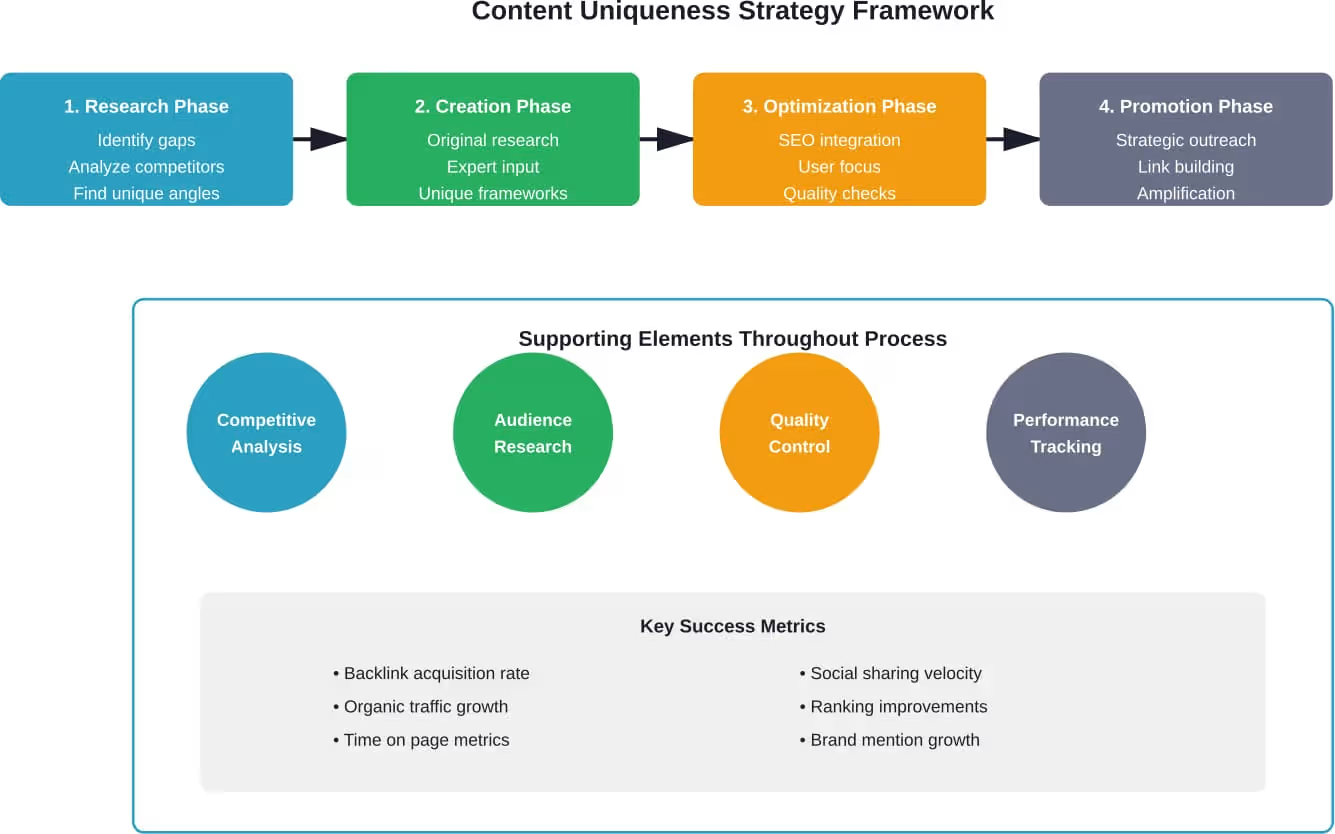
Unique Frameworks and Methodologies
Developing proprietary frameworks, methodologies, or systems creates unique intellectual property that distinguishes content. These approaches become associated with the site, building brand recognition alongside search visibility.
Frameworks don’t need complexity. Simple step-by-step systems, memorable acronyms, or visual models that clarify complex topics all qualify. The key is presenting information in a structure that competitors haven’t used.
Over time, these frameworks can become industry references, attracting citations and backlinks that compound authority.
Avoiding Common Content Uniqueness Pitfalls
Even well-intentioned content strategies can stumble into uniqueness traps. Recognizing these pitfalls helps maintain the quality standards search engines reward.
The Synonym Spinning Trap
Early SEO tactics involved taking existing content and replacing words with synonyms. Modern algorithms detect this immediately. Semantic analysis identifies conceptual similarity regardless of specific word choices.
This approach wastes resources while generating no SEO benefit. Search engines suppress spun content just as aggressively as exact duplicates.
True uniqueness requires new ideas, not new words expressing old ideas.
The Template Content Problem
Many sites use content templates that generate repetitive structures. Product descriptions, location pages, or service pages often follow identical patterns with only minor details changing.
Search engines recognize these patterns. Pages using template structures struggle to rank individually because they provide minimal unique value compared to similar pages.
The solution involves adding substantial unique content to each page—case studies, local insights, specific applications, or detailed variations that differentiate each page meaningfully.
The AI Content Detection Issue
Search engines have become sophisticated at identifying AI-generated content that lacks human refinement. Pure AI output typically exhibits patterns—repetitive sentence structures, generic phrasing, lack of specific examples—that algorithms can detect.
According to Google’s spam policies, the issue isn’t AI usage itself but whether content provides genuine value. AI-generated content that lacks unique insights faces suppression regardless of its technical uniqueness.
The effective approach combines AI efficiency with human expertise, original research, and genuine insights that only experience provides.
Measuring Content Uniqueness and SEO Impact
Tracking uniqueness requires both qualitative assessment and quantitative metrics. The most successful content strategies measure both dimensions.
Technical Uniqueness Checks
Several methods assess technical content uniqueness:
- Plagiarism detection tools that scan the web for similar content
- Content similarity analyzers that compare against competitor pages
- Search engine cache comparisons that reveal how algorithms view content
- Manual competitive analysis that evaluates information overlap
These technical checks establish baseline uniqueness but don’t capture value uniqueness—whether content offers perspectives, frameworks, or insights unavailable elsewhere.
Performance Metrics That Indicate Uniqueness Value
The ultimate measure of content uniqueness comes from performance data. Metrics that indicate successful uniqueness include:
- Backlink acquisition patterns, especially from authoritative sites
- Social sharing velocity compared to site averages
- Direct traffic growth indicating brand recognition
- Rankings for competitive keywords where generic content struggles
- Time on page and scroll depth exceeding site averages
- Featured snippet and position zero captures
- Mentions and citations across the web
Content that scores well across these metrics demonstrates uniqueness that algorithms and humans both value.
Long-Term Content Strategy for Sustained Uniqueness
Maintaining content uniqueness requires systematic approaches that prevent quality erosion over time.
Content Calendars Focused on Uniqueness
Effective content calendars prioritize unique angles over volume. Rather than publishing daily generic content, strategic calendars schedule less frequent but consistently unique material.
This approach involves identifying content gaps competitors haven’t filled, planning original research projects, scheduling expert interviews, and allocating resources for depth over breadth.
The result: fewer pieces that generate significantly better results than higher volumes of generic content.
Continuous Competitor Monitoring
Content uniqueness exists in context. What’s unique today becomes generic as competitors copy successful approaches. Continuous monitoring helps identify when differentiation erodes.
Regular competitive audits reveal emerging patterns, new approaches competitors are testing, and opportunities for continued differentiation. This intelligence informs ongoing content strategy adjustments.
Content Refresh and Update Cycles
According to Search Engine Journal’s analysis of content freshness, maintaining rankings often requires updating existing content with new information, perspectives, or data.
Strategic refresh cycles revisit top-performing content regularly, adding new research, updating statistics, incorporating recent developments, and expanding depth. This maintains uniqueness even as competitors try to replicate initial success.
The most effective refresh strategies prioritize content that already ranks well, adding new unique elements that extend competitive advantages.
| Content Approach | Publication Frequency | Uniqueness Level | Resource Investment | SEO ROI |
|---|---|---|---|---|
| Original Research | Monthly | Very High | High | Excellent |
| Expert Interviews | Bi-weekly | High | Moderate | Very Good |
| In-Depth Guides | Weekly | Moderate-High | Moderate | Good |
| Curated Analysis | 2-3x/week | Moderate | Low-Moderate | Fair |
| Generic Content | Daily | Low | Low | Poor |
Industry-Specific Uniqueness Strategies
Different industries face unique challenges in creating distinctive content. Tailored approaches address these specific obstacles.
E-Commerce and Product Content
E-commerce sites struggle with duplicate manufacturer descriptions. Creating unique product content requires going beyond specifications.
Effective strategies include detailed usage guides, comparison analyses, customer story features, video demonstrations, application-specific recommendations, and styling or pairing suggestions that manufacturers don’t provide.
These additions transform basic product pages into unique resources that rank independently while serving customer needs more effectively.
Local Service Businesses
Local businesses often face template content problems—multiple pages targeting different locations with minimal variation. True uniqueness requires location-specific depth.
Strategies include neighborhood guides, local case studies, area-specific regulations or considerations, community involvement documentation, and hyper-local expertise demonstrations that generic competitors cannot replicate.
Technical and B2B Content
Technical industries can leverage specialized expertise to create uniquely valuable content. Deep technical explanations, implementation guides, troubleshooting resources, and architectural comparisons provide value that generalist content cannot match.
The key lies in assuming audience expertise rather than writing down to lowest common denominators. Technical depth becomes a competitive advantage when it serves knowledgeable audiences.
The Economics of Unique Content Creation
Budget considerations influence content uniqueness decisions. Understanding the economics helps optimize resource allocation.
Investment Versus Volume Trade-Offs
Creating truly unique content requires more resources than generic material. Original research takes time. Expert interviews need coordination. Deep analysis demands expertise.
But the ROI calculation favors quality over quantity. According to community discussions among SEO professionals, one piece of high-quality unique content often generates more traffic and backlinks than dozens of generic articles.
The efficient strategy invests in fewer, better pieces rather than maximizing volume with generic content that generates minimal returns.
Outsourcing and Quality Control
Many organizations outsource content creation to maintain volume. This approach risks uniqueness unless quality controls prevent generic output.
Effective outsourcing requires detailed briefs emphasizing unique angles, source material that contractors can’t easily access elsewhere, expert review processes that verify uniqueness, and revision cycles that eliminate generic patterns.
Without these controls, outsourced content typically defaults to generic patterns that harm SEO performance.
Future-Proofing Content Strategy
Search algorithms continue evolving. Future-proof strategies emphasize principles that transcend specific algorithmic implementations.
User Intent Over Keyword Targeting
Modern search increasingly prioritizes user intent satisfaction over specific keyword matching. Unique content that thoroughly addresses user needs ranks even when it doesn’t perfectly match traditional keyword patterns.
This shift rewards comprehensive, unique coverage over keyword-optimized generic content. Strategies that prioritize solving user problems build sustainable visibility.
Multi-Format Content Diversification
Uniqueness extends beyond text. Original video content, podcasts, interactive tools, and visual resources all provide unique value that search engines increasingly surface.
Diversifying formats creates multiple discovery pathways while establishing expertise across content types. This multi-format presence compounds authority signals.
Building Cited Resources
The most sustainable uniqueness strategy creates resources so valuable that others naturally cite them. Original research, comprehensive data sets, definitive guides, and authoritative frameworks become industry references.
These citation magnets generate backlinks indefinitely, compound authority continuously, and remain relevant far longer than timely content. They represent the highest ROI investments in content uniqueness.
Conclusion: Making Unique Content Your Competitive Advantage
Content uniqueness represents the most sustainable competitive advantage in SEO. While technical optimization, link building, and site architecture all matter, none generate compounding returns like consistently unique content.
Search engines exist to connect users with valuable information. That fundamental purpose means algorithms will always prioritize content that offers something new—original research, unique perspectives, novel frameworks, or comprehensive synthesis that existing results don’t provide.
The investment in content uniqueness pays dividends that generic content cannot match. Higher rankings that persist over time. Natural backlinks that compound authority. User engagement that signals quality. Brand recognition that drives direct traffic.
But here’s the thing—creating truly unique content requires commitment. It means choosing depth over volume, investing in original research, developing genuine expertise, and resisting the temptation to take shortcuts with AI-generated generic material.
The organizations that embrace this commitment build search visibility that competitors cannot easily replicate. They become industry authorities that search engines consistently recommend. And they generate organic traffic that converts because it comes from users finding exactly what they need.
Start by auditing existing content for uniqueness gaps. Identify where content resembles competitors too closely. Look for opportunities to add original research, expert perspectives, or proprietary frameworks. Prioritize improving high-potential content that already ranks but could differentiate further.
Then build systematic processes that ensure future content maintains uniqueness standards. That might mean conducting regular surveys, scheduling expert interviews, developing proprietary data collection, or simply committing to depth over breadth.
The SEO landscape will continue evolving. Algorithms will change. New technologies will emerge. But the fundamental value of unique content won’t change. Search engines need it. Users demand it. And the sites that consistently deliver it will dominate search visibility for years to come.
Ready to transform content strategy? Focus on what competitors cannot easily replicate—original insights, proprietary research, genuine expertise, and comprehensive resources that become industry references. That’s where sustainable SEO success lives.