Quick Summary: No, Google does not use meta keywords as a ranking factor and has completely ignored them since 2009. Google officially announced this policy in September 2009 after widespread abuse of the tag for keyword stuffing. While meta keywords are irrelevant for Google, other meta tags like meta descriptions and robots tags remain important for SEO.
The meta keywords tag was once a staple of SEO strategy. Webmasters would stuff this hidden HTML tag with relevant search terms, hoping to signal what their pages were about. But those days are long gone.
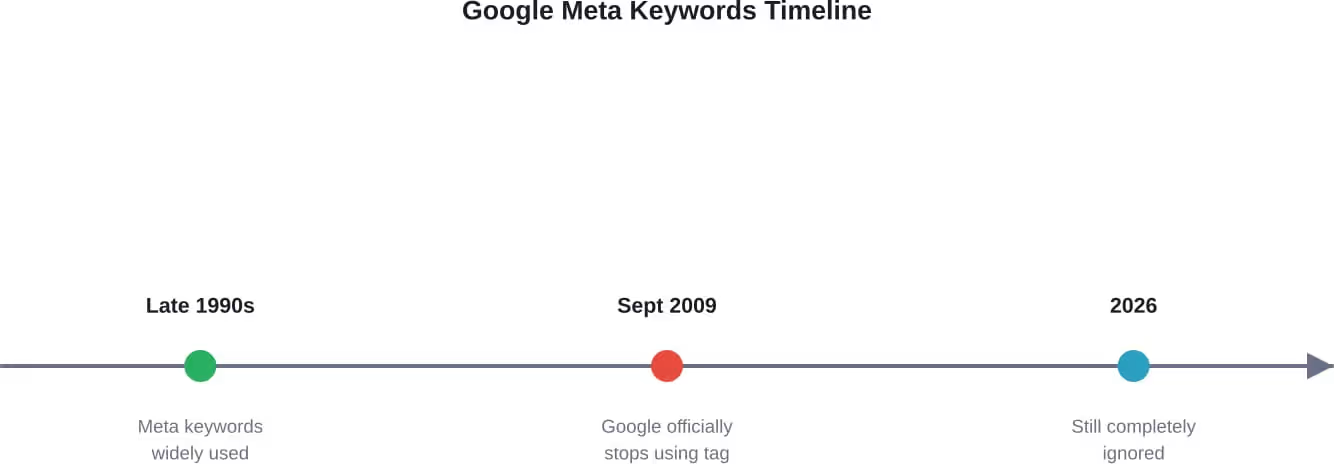
Google made it crystal clear back in September 2009 that they don’t use the keywords meta tag in web ranking. Not for indexing. Not for ranking. Not at all.
So why does this question keep coming up seventeen years later? Because the tag still exists in countless website templates, and confusion persists about what actually matters for search rankings.
What Is the Meta Keywords Tag?
The meta keywords tag is an HTML element that sits in the head section of a webpage. It looks like this:
<meta name=”keywords” content=”your, keywords, here”>
Back in the early days of search engines, this tag helped crawlers understand page content. Webmasters would list relevant terms, and search engines would factor those keywords into ranking decisions.
The problem? Massive abuse. Site owners stuffed irrelevant keywords into the tag to manipulate rankings. Someone selling gardening tools might add “mortgage, insurance, viagra” just to capture unrelated traffic.
Search engines had to evolve beyond trusting what site owners claimed their pages were about.
Google’s Official Stance on Meta Keywords
According to Google Search Central, Google does not use the keywords meta tag in web ranking. The announcement came on September 21, 2009, and nothing has changed since.
Google’s reasoning was straightforward. Years of keyword stuffing had made the tag unreliable. More importantly, Google had developed sophisticated algorithms to analyze actual page content, links, user behavior, and hundreds of other signals.
The keywords meta tag became redundant—and misleading.
Google’s official documentation on meta tags and attributes explicitly lists the keywords meta tag as unsupported. The platform states: “The meta-keyword tag is not used by Google Search, and it has no effect on indexing and ranking.”
Why Did Google Stop Using Meta Keywords?
Three primary reasons drove Google’s decision:
Keyword stuffing destroyed reliability. When every page claimed to be about everything, the signal became noise. Competitors can see what terms site owners included in meta keywords by viewing page source code, potentially gaining insight into keyword strategies.
Better signals emerged. Google developed sophisticated natural language processing to understand content directly. Page text, headings, semantic context, and topical authority became far more accurate indicators than self-reported keywords.
User experience metrics proved superior. Click-through rates, dwell time, bounce rates, and engagement signals told Google what users actually found valuable—something no meta tag could fake.
The tag had simply outlived its usefulness.
Build an SEO Strategy That Works Today
While meta keywords are no longer relevant, LENGREO builds modern SEO strategies focused on content quality, authority, and technical performance. Today, success in search depends on how well your content answers user intent and how strong your overall site structure is.
- content strategy and optimization
- technical SEO setup
- authority and link building
If you want to stay competitive in search results, contact LENGREO to learn more.
What About Other Search Engines?
Google captures the vast majority of global search traffic, so their stance matters most. But what about Bing, Yahoo, and other engines?
| Search Engine | Uses Meta Keywords? | Notes |
|---|---|---|
| No | Officially ignored since 2009 | |
| Bing | No | Not a ranking factor; may flag spam |
| Yahoo | No | Uses Bing’s search technology |
| Yandex | Possibly | Some evidence of minor consideration |
| Baidu | Possibly | Limited documentation available |
Even Bing has stated that meta keywords aren’t used as a ranking factor. In fact, Bing has indicated that heavy use of meta keywords might be interpreted as a spam signal.
The consensus across major search engines: meta keywords don’t matter.
Which Meta Tags Actually Matter in 2026?
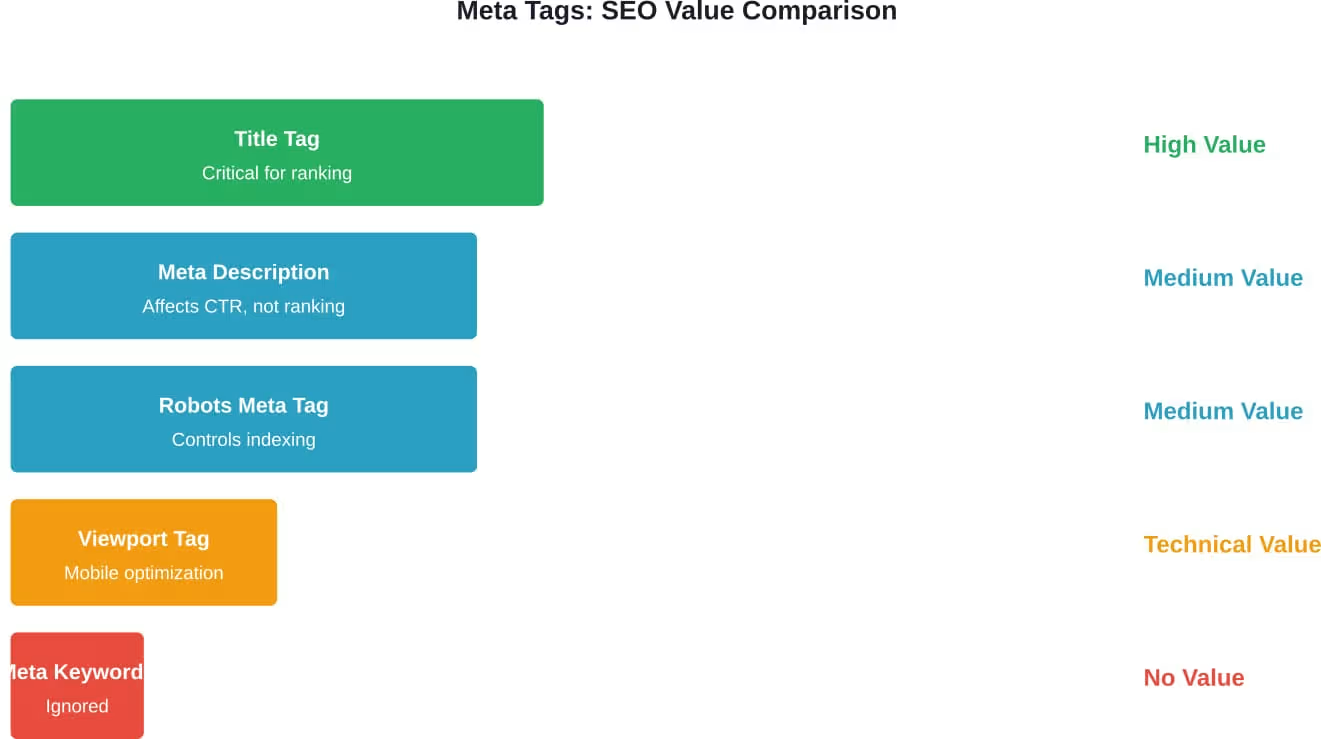
Just because meta keywords are dead doesn’t mean all meta tags are useless. Several remain important for SEO:
- Meta description tag. While not a direct ranking factor, meta descriptions influence click-through rates by appearing in search snippets. Google supports this tag and often uses it to generate result descriptions.
- Robots meta tag. This controls whether search engines index and follow links on a page. Commands like “noindex” and “nofollow” are critical for managing crawl behavior.
- Viewport meta tag. Essential for mobile optimization, this tag tells browsers how to adjust page dimensions on different devices.
- Title tag. Technically not a meta tag, but the title element remains one of the most important on-page SEO factors Google uses for ranking.
Should Meta Keywords Be Removed From Websites?
Here’s the thing—leaving meta keywords in place won’t hurt rankings. Google simply ignores them. But there are reasons to consider removal:
- Competitor intelligence. Competitors can see what terms site owners included in meta keywords by viewing page source code, potentially gaining insight into keyword strategies.
- Clean code. Removing obsolete tags keeps HTML lean and easier to maintain. Why clutter the head section with useless elements?
- Avoiding confusion. New team members might waste time updating meta keywords, thinking they matter. Removing them eliminates that possibility.
That said, removal isn’t urgent. Focus energy on elements that actually impact rankings.
What Google Actually Uses for Ranking
If meta keywords don’t matter, what does Google rely on? According to Google’s documentation on ranking systems, modern search uses hundreds of signals including:
- Page content quality and comprehensiveness
- Backlink profile and domain authority
- User engagement metrics and behavior patterns
- Mobile-friendliness and Core Web Vitals
- Page speed and technical performance
- HTTPS security and site safety
- Structured data markup
- Content freshness and update frequency
- Expertise, Experience, Authoritativeness, Trustworthiness signals
Google’s algorithms analyze actual visible content—headings, body text, images with alt attributes, and semantic relationships between topics. Machine learning models understand context, intent, and topical depth far beyond what any meta tag could communicate.
The Bottom Line on Meta Keywords
Meta keywords are dead for Google SEO. They’ve been dead since 2009, and there’s no sign of resurrection.
Google’s sophisticated algorithms analyze hundreds of ranking factors—actual content, user experience, technical performance, and authority signals. A hidden list of keywords can’t compete with those real-world indicators of page quality and relevance.
Stop wasting time on meta keywords. Focus instead on creating comprehensive content that genuinely helps users, earning quality backlinks, optimizing page speed, and building topical authority. Those strategies actually move the needle on search rankings.
The meta keywords tag represents SEO’s past. Modern search success demands understanding what signals actually matter in 2026 and beyond.