


Quick Summary: A successful SEO campaign in 2026 demands a strategic shift from traditional tactics to revenue-focused optimization, entity-based authority building, and AI-readiness. Success requires diagnosing your specific bottleneck—whether technical, content, or conversion—and allocating resources accordingly. The most effective campaigns now prioritize clarity over keyword density, adapt to zero-click search realities, and build topical authority that AI systems can parse and cite.
Search isn’t what it was two years ago. AI overviews handle discovery, zero-click results dominate informational queries, and traditional ranking metrics no longer correlate with business outcomes the way they once did.
Running a successful SEO campaign in 2026 requires understanding which fundamentals still matter—and which are quietly draining resources without delivering return. The gap between visibility and revenue has never been wider, and campaigns that optimize for the wrong signals waste time chasing metrics that don’t convert.
This guide breaks down the strategic framework, tactical priorities, and execution approach that drive measurable SEO results in an AI-first search environment.
The Strategic Shift: From Rankings to Revenue
Traditional SEO measured success through rankings, organic traffic, and domain authority. Those metrics still appear in reports, but they no longer predict business outcomes reliably.
Here’s what changed: Only about 36% of searches result in clicks. AI overviews, featured snippets, and knowledge panels answer queries directly in the SERP. Traffic volume stopped being a proxy for success because a thousand visitors who bounce in three seconds don’t help the business. A hundred visitors who convert at 8%? That’s a different conversation.
The strategic shift means diagnosing where the bottleneck actually sits. Is it technical? Are search engines unable to crawl or index pages properly? Is it content? Does topical coverage lack depth or authority? Or is it conversion? Do pages rank and attract traffic but fail to move prospects through the funnel?
Most campaigns waste budget solving the wrong problem. A site with strong technical foundations and decent rankings doesn’t need another technical audit—it needs better conversion optimization or more strategic content targeting commercial intent.
Diagnosing Your Campaign Bottleneck
Start by auditing three areas systematically:
- Technical health: Can search engines crawl, render, and index pages without friction? Check Core Web Vitals, mobile usability, structured data implementation, and crawl efficiency. Google’s Search Console flags most critical technical issues directly.
- Content authority: Does the site demonstrate topical authority in its niche? Map existing content against customer journey stages and competitor coverage. Look for gaps in commercial intent keywords and supporting content that builds entity relationships.
- Conversion path: Do ranking pages convert traffic into leads or revenue? Analyze behavior flow, exit rates, and conversion rates by landing page. A 40% traffic increase means nothing if conversion rate drops from 3% to 1.2%.
The bottleneck determines where to allocate time and budget. Technical issues block everything else—fix those first. Content gaps limit topical authority and entity recognition—address those next. Conversion problems mean the SEO campaign already succeeded at its primary job, and the focus should shift to CRO and messaging.
Get Broader SEO Support From Lengreo
A successful SEO campaign in 2026 usually depends on more than rankings alone. Lengreo offers SEO alongside strategy consulting, website development, paid ads, lead generation, demand generation, and content marketing. That broader mix can be useful when an SEO campaign needs support across technical work, content, traffic acquisition, and conversion, not just keyword targeting.
Need Support With SEO?
Lengreo can help with:
- SEO
- website audits and optimization
- content strategy and planning
- website development
- paid ads and lead generation support
👉 Contact Lengreo to discuss the structure of your SEO campaign and the support it may need.
Entity-Based Optimization and Topical Authority
Search engines moved beyond keywords to entities years ago, but 2026 marks the point where entity optimization became non-negotiable for competitive niches.
An entity is a distinct, identifiable thing—a person, place, concept, or brand. Google’s Knowledge Graph connects entities through relationships, and ranking systems reward content that clearly establishes entity context and relationships.
Building topical authority requires comprehensive coverage of a subject domain, not just targeting individual keywords. A site that publishes one article about “project management software” competes against established authorities with hundreds of interlinked pages covering project management methodologies, team collaboration, workflow automation, and related concepts.
How to Build Entity-Based Authority
Map the entity landscape for the target niche. Identify core entities (primary topics), supporting entities (related concepts), and relationship entities (how they connect). A financial advisory firm’s core entity might be “retirement planning,” with supporting entities like “401(k) optimization,” “Roth conversions,” “Social Security strategies,” and relationship entities connecting these through tax implications and income planning.
Create content clusters that establish these relationships explicitly. Each cluster needs a pillar page that provides comprehensive overview and supporting pages that go deep on specific aspects. Internal linking between cluster pages signals topical coherence to search systems.
Implement structured data using Schema.org markup. Article, FAQ, HowTo, and Organization schemas help search engines parse content meaning and extract featured snippet candidates. Breadcrumb markup clarifies site hierarchy and topical organization.
According to Google Search Central documentation, search systems reward content that demonstrates expertise and clear topical focus. Building comprehensive coverage signals authority more effectively than isolated keyword targeting.
Technical SEO Foundations That Still Matter
Technical SEO fundamentals haven’t changed—they’ve just gotten less forgiving. Search engines expect fast, mobile-friendly, properly structured pages as baseline requirements.
Core Web Vitals measure loading performance (Largest Contentful Paint), interactivity (Interaction to Next Paint), and visual stability (Cumulative Layout Shift). According to Google’s documentation on page experience, these metrics influence ranking systems as part of broader experience signals.
But here’s the thing: perfect Core Web Vitals on pages that lack quality content won’t rank. Technical optimization removes barriers; it doesn’t create ranking power by itself.
Technical Priorities for 2026 Campaigns
- Mobile-first indexing: Google indexes the mobile version of pages. Desktop-only content doesn’t exist in the index. Test mobile rendering in Search Console and verify that all content, structured data, and internal links appear in mobile views.
- Crawl efficiency: Large sites waste crawl budget on low-value pages. Use robots.txt and noindex strategically to focus crawl activity on pages that matter. Eliminate infinite scroll pagination, fix redirect chains, and remove orphaned pages.
- Structured data: Schema markup helps search engines extract specific data types for rich results. Implement Article schema for blog content, FAQ schema for Q&A sections, and Organization schema for brand entity recognition.
- HTTPS and security: Non-secure sites get flagged in browsers and penalized in rankings. This should be resolved by now, but surprisingly many sites still serve mixed content or have certificate issues.
Technical audits should be quarterly events, not ongoing projects. Fix foundational issues once, then shift resources to content and authority building.
Content Strategy for AI Search and Zero-Click Results
AI overviews and featured snippets changed content strategy fundamentally. Traditional advice said “create comprehensive content that keeps users on-page.” Now? Search systems extract and display answers directly, bypassing the click entirely.
Zero-click optimization sounds counterintuitive—optimizing to not get traffic—but it builds brand authority and creates awareness at the top of the funnel. Getting cited in AI overviews positions the brand as a trusted source, even when users don’t click through immediately.
Writing for Clarity and AI Parsing
AI systems parse content for factual claims, expert citations, and clear explanations. Content optimized for AI readability follows specific patterns:
- Direct answers first: State the core answer in the first paragraph. AI systems extract opening sentences for summary content. Don’t bury the lead with background or context—answer the query immediately, then provide supporting detail.
- Structured formatting: Use lists, tables, and clear subheadings. AI parsing works better with structured content than dense paragraphs. Break complex topics into discrete, labeled sections.
- Factual precision: Avoid hedging language and vague qualifiers. “Studies suggest” is weaker than “Research from [specific organization] found [specific result].” When citing data, include source attribution that AI systems can verify.
- Cognitive ease: High-performing content in 2026 prioritizes clarity over keyword density. Write at an 8th-grade reading level for most B2C content, 10th-grade for B2B. Short sentences, active voice, concrete nouns.
According to Google Search Central guidance on helpful content, ranking systems reward material that demonstrates first-hand expertise and provides satisfying answers to searcher intent. Generic, surface-level content recycled from competitors doesn’t meet that threshold.
| Content Type | Best Use Case | Optimization Focus | Expected Outcome |
|---|---|---|---|
| Pillar Pages | Comprehensive topic overviews | Entity relationships, internal linking | Topical authority, cluster organization |
| How-To Guides | Process and instruction queries | Step-by-step formatting, HowTo schema | Featured snippets, AI overview citations |
| Comparison Posts | Commercial research intent | Structured tables, clear criteria | High-intent traffic, conversion opportunities |
| Case Studies | Bottom-funnel decision support | Specific outcomes, data points | Conversion optimization, trust building |
| FAQ Content | Question-based queries | FAQ schema, direct answers | People Also Ask features, voice search |
Strategic Keyword Targeting in 2026
Keyword research methodology hasn’t fundamentally changed, but interpretation of keyword metrics shifted significantly.
Search volume remains a useful indicator of topic interest, but it no longer predicts traffic potential accurately. Zero-click results mean high-volume keywords often deliver disappointing click-through rates. Meanwhile, lower-volume keywords with commercial intent and low AI overview saturation can drive disproportionate business value.
Beyond Search Volume: Intent and Conversion Potential
Prioritize keywords based on three factors:
- Intent alignment: Does the keyword indicate research, comparison, or purchase intent? Map keywords to funnel stages. Top-of-funnel informational keywords build authority; bottom-of-funnel commercial keywords drive revenue.
- SERP features: What appears in results for this keyword? Heavy AI overview presence means low click potential. If featured snippets, People Also Ask, and knowledge panels dominate, optimize for extraction rather than click-through.
- Competitive gap: What do competitors rank for that the site doesn’t? Use competitive gap analysis to identify topics where existing authority can extend easily.
Long-tail keywords matter more now than in previous years. Specific, detailed queries tend to bypass AI overviews and drive qualified traffic. “Project management software” gets an AI overview; “project management software for construction teams under 50 people” doesn’t.
Link Building and Off-Site Authority
Backlinks remain a significant ranking factor, despite recurring predictions of their declining importance. What changed is how links get valued and which link-building tactics actually work.
Traditional outreach for “guest posts” and “resource page links” generates diminishing returns. Sites that accept those pitches typically have low authority themselves, and search systems discount links from obvious link schemes.
Authority Building That Works
- Digital PR and expert roundups: Contributing expert insights to journalist queries and industry roundups builds legitimate editorial links. Sites like HARO connect sources with journalists actively working on stories.
- Original research and data: Publishing proprietary research, survey data, or industry benchmarks attracts natural links from sites citing the findings. Data-driven content generates links passively over time.
- Strategic partnerships: Co-marketing initiatives, webinar partnerships, and integration partnerships create opportunities for contextual links from relevant sites in the same industry.
- Podcast appearances: Being featured on industry podcasts generates show notes links, transcription links, and social amplification. These links come with brand visibility and audience building as side benefits.
Quality beats quantity overwhelmingly. Ten links from authoritative, topically relevant sites outperform a hundred links from low-quality directories and blog networks.
Measurement and Adaptation Framework
SEO campaigns that succeed in 2026 measure outcomes that matter and adapt quarterly based on data.
Traditional metrics like average position and domain authority don’t predict business results reliably. Better metrics tie directly to revenue and qualified lead generation.
Revenue-Focused SEO Metrics
- Organic revenue: Track revenue attributed to organic search traffic in analytics. This metric matters more than any other. If organic traffic increases but revenue doesn’t, the campaign isn’t working.
- Conversion rate by landing page: Which organic landing pages convert visitors into leads or customers? Double down on content types and topics that drive conversions, not just traffic.
- Rankings for commercial intent keywords: Track positions for keywords with purchasing or lead generation intent. Informational keyword rankings matter for authority building, but commercial rankings drive revenue directly.
- Branded search growth: Increasing branded search volume indicates successful authority building and awareness. Track branded query volume as a leading indicator of demand generation.
- Engagement depth: Scroll depth, time on page, and pages per session indicate content quality and topical relevance. Traffic that bounces immediately suggests intent mismatch or poor content.
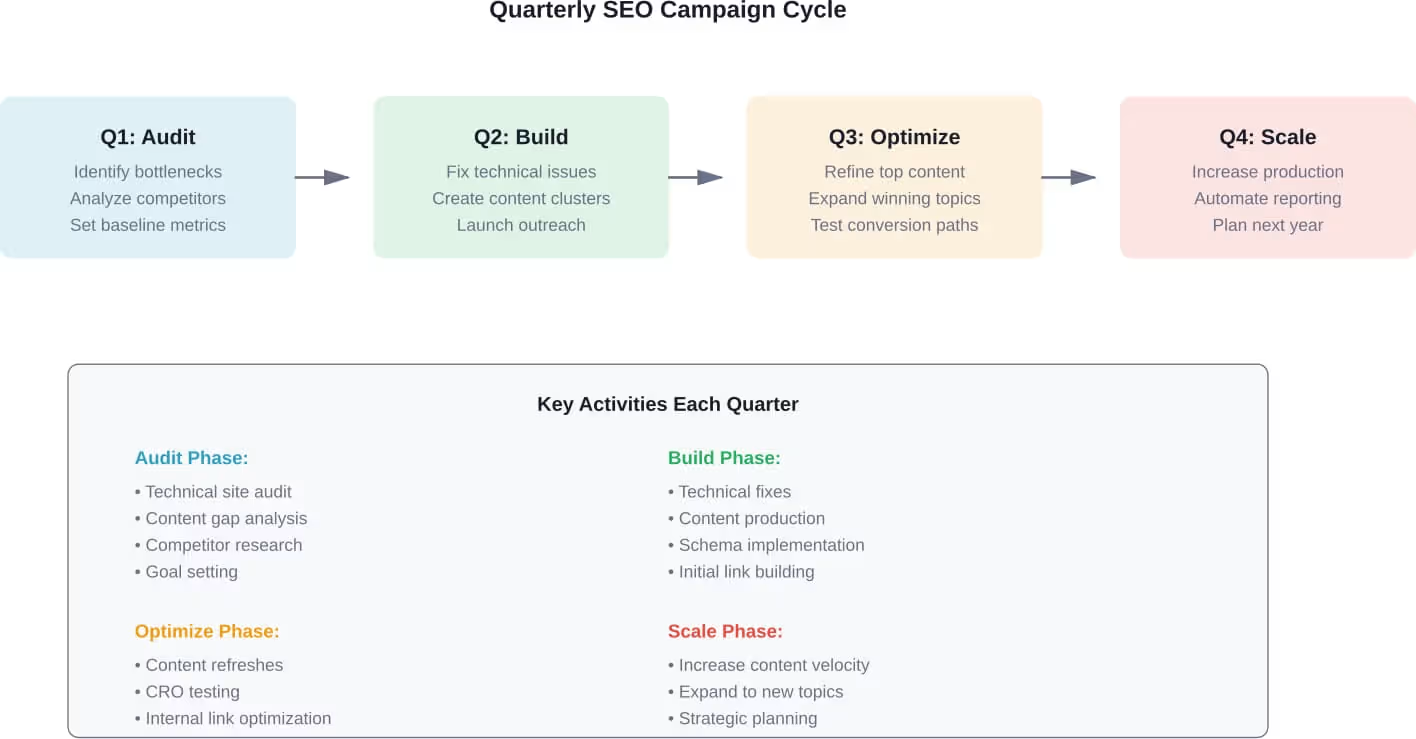
Quarterly Review and Iteration
Effective campaigns review performance quarterly and adjust strategy based on what’s working:
- Quarter 1: Audit current state, identify bottlenecks, establish baseline metrics, and set quarterly goals. This is diagnostic work—understand what’s broken before building solutions.
- Quarter 2: Execute foundational improvements. Fix technical issues, create initial content clusters, implement structured data, and launch authority-building initiatives.
- Quarter 3: Optimize based on data. Refresh top-performing content, expand winning topics, improve conversion paths, and refine targeting based on actual performance.
- Quarter 4: Scale what works. Increase content production velocity, expand to adjacent topics, automate reporting and maintenance, and plan strategy for the following year.
Adaptation happens continuously within this framework. Monthly reviews catch emerging issues; quarterly reviews shift strategic direction.
Common Campaign Pitfalls to Avoid
Most SEO campaigns fail predictably. Here are the patterns that derail results:
Optimizing for the Wrong Metrics
Chasing keyword rankings and organic traffic without connecting those metrics to revenue wastes resources. A 22% traffic drop sounds catastrophic—until revenue data shows sales increased 15% from higher-quality leads. Traffic is a means, not an end.
Ignoring the Conversion Path
Ranking for competitive keywords means nothing if landing pages don’t convert. Test calls-to-action, reduce friction in forms, and optimize for mobile conversion. SEO delivers traffic; conversion optimization turns that traffic into business outcomes.
Spreading Resources Too Thin
Trying to rank for everything dilutes authority and slows progress. Focus on a defined topic area, build comprehensive coverage there, then expand. Topical authority compounds; scattered content doesn’t.
Neglecting Technical Maintenance
Sites degrade over time. Pages get orphaned, redirects break, and new content creates crawl bloat. Quarterly technical audits catch issues before they impact rankings.
Following Tactics Without Strategy
Publishing blog posts because “content marketing works” without a strategic framework for topics, intent mapping, and funnel alignment produces content that ranks but doesn’t convert. Every piece of content should serve a specific strategic purpose.
AI Search and Generative Engine Optimization
AI search changed discovery fundamentally. Traditional search required users to evaluate links and click through to sources. AI search synthesizes answers directly, citing sources within the response.
Getting cited by AI systems—what’s called generative engine optimization or GEO—requires different optimization than traditional SEO.
How to Get Cited in AI Responses
- Authoritative structure: AI systems prefer content with clear credentials and expertise signals. Author bios, organizational authority, and citation of reputable sources all increase citation likelihood.
- Factual precision: AI extracts specific claims and data points. Vague generalizations don’t get cited; concrete facts with clear attribution do.
- Clear attribution: When referencing data or research, cite the source explicitly within the content. AI systems check claim verifiability and prefer content that cites authoritative sources.
- Structured answers: Content formatted as clear answers to specific questions gets extracted more readily than exploratory or narrative content. FAQ sections, definition boxes, and step-by-step instructions all perform well.
According to Search Engine Land analysis (January 28, 2026), AI search now handles discovery, decisioning, and increasingly transactions. Getting brand visibility in AI responses matters for top-of-funnel awareness even when direct traffic doesn’t result immediately.
The Role of Internal Organizational Dynamics
One of the biggest threats to SEO success in 2026 isn’t technical or algorithmic—it’s organizational.
According to Search Engine Land (published March 24, 2026), internal issues like AI overreliance, fragmented data, and poor collaboration quietly undermine SEO performance more than external competitive factors.
Organizational Barriers to Address
- Siloed data and teams: SEO works best when integrated with content marketing, product, sales, and customer success. Siloed teams produce disconnected experiences. Break down data silos and create cross-functional visibility into SEO performance and priorities.
- AI tool overreliance: AI writing tools accelerate content production but often generate generic, surface-level content that lacks differentiation. Use AI for research, outlining, and drafting—but invest human expertise in adding unique insights, data, and perspective.
- Short-term pressure: SEO compounds over time, but organizational pressure for immediate results pushes teams toward tactics that show quick wins without building durable authority. Resist pressure to chase trending topics that don’t align with strategic positioning.
- Lack of executive buy-in: SEO requires sustained investment and patience. Without executive understanding of timelines and expected outcomes, campaigns get defunded before they reach maturity. Educate stakeholders on realistic expectations and tie SEO metrics to business outcomes they care about.
Getting Started: First 90 Days
Starting a new SEO campaign requires focused effort on high-impact activities. Here’s what to prioritize in the first three months:
Month 1: Audit and Strategy
Conduct a technical audit using Search Console, crawl the site with Screaming Frog or similar tools, and identify critical issues blocking indexing or crawling. Review Core Web Vitals and page speed. Analyze current rankings, traffic sources, and conversion rates to establish baselines.
Map competitor content and identify topical gaps. What do competitors cover comprehensively that the site doesn’t? Where are opportunities to differentiate with unique perspective or better depth?
Document strategic focus areas based on bottleneck diagnosis. Allocate resources to technical, content, or conversion priorities based on where the biggest obstacles sit.
Month 2: Foundation Building
Fix critical technical issues identified in the audit. Resolve indexing problems, implement schema markup, improve mobile experience, and optimize Core Web Vitals where possible.
Create content briefs for initial content cluster. Identify pillar topic and supporting subtopics. Begin content production focused on filling the most critical gaps.
Establish tracking and reporting infrastructure. Set up conversion tracking, configure Search Console properly, and create baseline reports for key metrics.
Month 3: Execution and Measurement
Publish initial content cluster and implement proper internal linking structure. Monitor indexing and initial ranking movement.
Begin outreach for authority building. Identify podcast opportunities, journalist queries, and partnership possibilities.
Review first 90 days of data and refine strategy based on early signals. What’s working? What needs adjustment? Set quarterly goals for the next phase.
Tools and Technology Stack
Running an effective SEO campaign requires the right tools, but tool sprawl wastes budget and creates analysis paralysis.
Essential SEO Tools
- Google Search Console: Free, authoritative data directly from Google about indexing, performance, and technical issues. This is the foundation—everything else is supplementary.
- Analytics platform: Google Analytics 4 or alternative analytics for tracking traffic, behavior, and conversions. Connect to Search Console for integrated reporting.
- Keyword research: Ahrefs, SEMrush, or similar tools for keyword research, competitor analysis, and backlink monitoring. Pick one—features overlap significantly between platforms.
- Technical auditing: Screaming Frog, Sitebulb, or OnCrawl for comprehensive site crawling and technical issue identification. Run quarterly at minimum.
- Rank tracking: Automated rank tracking for target keywords. Less critical than it once was, but useful for monitoring progress on priority terms.
- Schema markup: Schema.org markup generator tools or plugins for CMS platforms to implement structured data without hand-coding JSON-LD.
Avoid tool sprawl. More tools create more data that requires analysis and interpretation. Focus on a core stack that provides actionable insights.
Future-Proofing Your SEO Campaign
Search changes constantly, but some principles remain stable across algorithm updates and interface evolution.
- Build for humans, optimize for machines: Content that serves user needs and provides genuine value withstands algorithm changes better than content optimized primarily for ranking signals.
- Diversify beyond organic search: Organic search shouldn’t be the only traffic source. Build email lists, social followings, and direct traffic channels that provide insulation from search volatility.
- Focus on owned platforms: According to Moz’s 2026 SEO Trends featuring 20 industry experts (published November 12, 2025), AI search is shifting discovery patterns significantly. Building owned audiences and direct channels reduces dependence on any single traffic source.
- Invest in brand: Branded search volume and direct traffic insulate against algorithm changes. Strong brands get more lenient treatment from ranking systems and higher click-through rates in SERPs.
- Stay informed but don’t chase trends: Every new search feature or algorithm update generates panic and hot takes. Understand changes, evaluate impact on your specific situation, and respond strategically—not reactively.
Conclusion: Strategy Over Tactics
Running a successful SEO campaign in 2026 requires strategic thinking over tactical execution. The fundamentals haven’t disappeared—technical optimization, quality content, and authority building still matter. But the way those fundamentals get applied shifted significantly.
Diagnose the actual bottleneck before allocating resources. Build topical authority through comprehensive entity-based coverage rather than chasing individual keywords. Optimize for AI readability and citation while maintaining focus on commercial intent that drives revenue. Measure outcomes that matter—revenue, conversions, and qualified traffic—not vanity metrics like keyword count or domain authority.
The campaigns that succeed in 2026 adapt quarterly based on data, maintain strategic focus rather than chasing trends, and tie every optimization activity back to business outcomes. SEO stopped being a purely technical discipline years ago. Success now requires understanding how search fits within broader marketing strategy and optimizing for business results, not just rankings.
Ready to build an SEO campaign that drives actual business growth? Start with an honest audit of where the current bottleneck sits. Fix what’s broken, build strategic authority, and measure what matters. The compound returns make the investment worthwhile—but only when executed with clear strategy and realistic expectations.