


Quick Summary: Creating an SEO content strategy involves defining goals and audience, conducting keyword research, analyzing competitors, developing a content calendar, optimizing on-page elements, and continuously measuring performance. This strategic approach ensures content ranks well in search engines while serving user intent and business objectives.
Throwing blog posts at the wall and hoping something sticks isn’t a strategy. It’s chaos dressed up as productivity.
An SEO content strategy transforms random content creation into a systematic approach that attracts organic traffic, builds authority, and converts visitors into customers. According to Google Search Central, creating helpful, reliable, people-first content remains the foundation of search visibility. But helpful content alone won’t cut it if nobody can find it.
The difference between content that ranks and content that disappears into the void comes down to strategy. Search engines prioritize content that matches user intent, demonstrates expertise, and follows technical best practices. This guide walks through the seven main steps that turn content creation from guesswork into a repeatable process that drives measurable results.
Build Content Strategy With Lengreo
An SEO content strategy usually works better when keyword research, competitor analysis, and content planning are handled together. Lengreo includes content strategy and planning within its SEO services, rather than treating content as a separate add-on. The company also provides social media and content marketing services, including website and blog content. Alongside that, it handles audits, keyword research, competitor analysis, and link building, which makes it relevant when content planning needs to be connected to search performance and site growth.
Looking for Support With SEO Content Strategy?
Lengreo can help with:
- content strategy and planning
- website and blog content
- keyword research and competitor analysis
- SEO audits and optimization
- link building
👉 Contact Lengreo to discuss your SEO content strategy and planning needs.
Step 1: Define Clear Goals and Target Audience
Strategy without goals is just busy work. Before writing a single word, establish what success looks like.
SMART goals provide the framework: Specific, Measurable, Achievable, Relevant, and Time-bound. Instead of “increase brand awareness,” a proper goal reads “generate 50 new qualified leads per month through organic search within six months.” The specificity matters because it determines every subsequent decision.
Identify Business Objectives
Content strategy must align with broader business objectives. An e-commerce site needs product pages that convert. A SaaS company requires educational content that nurtures prospects through a long sales cycle. A local service business wants content that drives phone calls and appointments.
According to academic research from the University of Georgia, keyword research should be the first step on the SEO journey because it helps plan content strategy and provides an overview of niche topics the audience finds interesting.
Common business objectives that content supports include:
- Lead generation and customer acquisition
- Brand awareness and thought leadership
- Customer education and support
- Product or service promotion
- Community building and engagement
Research and Document Target Audience
Generic content for “everyone” resonates with no one. According to research from the University of Mississippi, the goal of keyword research isn’t just to increase traffic, but to attract the right kind of visitors. High traffic means nothing if only 2% of users actually want or need the content.
Effective audience research answers:
- What problems does the audience face?
- What questions do they ask before making decisions?
- What language and terminology do they use?
- Where do they search for information?
- What content formats do they prefer?
Demographics matter, but psychographics matter more. Understanding motivations, pain points, and decision-making criteria shapes content that connects. Look at existing customer data, conduct surveys, analyze support tickets, and monitor community discussions to build accurate audience profiles.
Step 2: Conduct Comprehensive Keyword Research
Keywords bridge the gap between what audiences search for and what content delivers. Strategic keyword research identifies opportunities where content can rank and drive meaningful traffic.
Google’s indexing and ranking systems prioritize content that uses words people actually search for, placed in prominent locations like titles and main headings. But keyword research goes deeper than finding high-volume terms.
Balance Search Volume and Competition
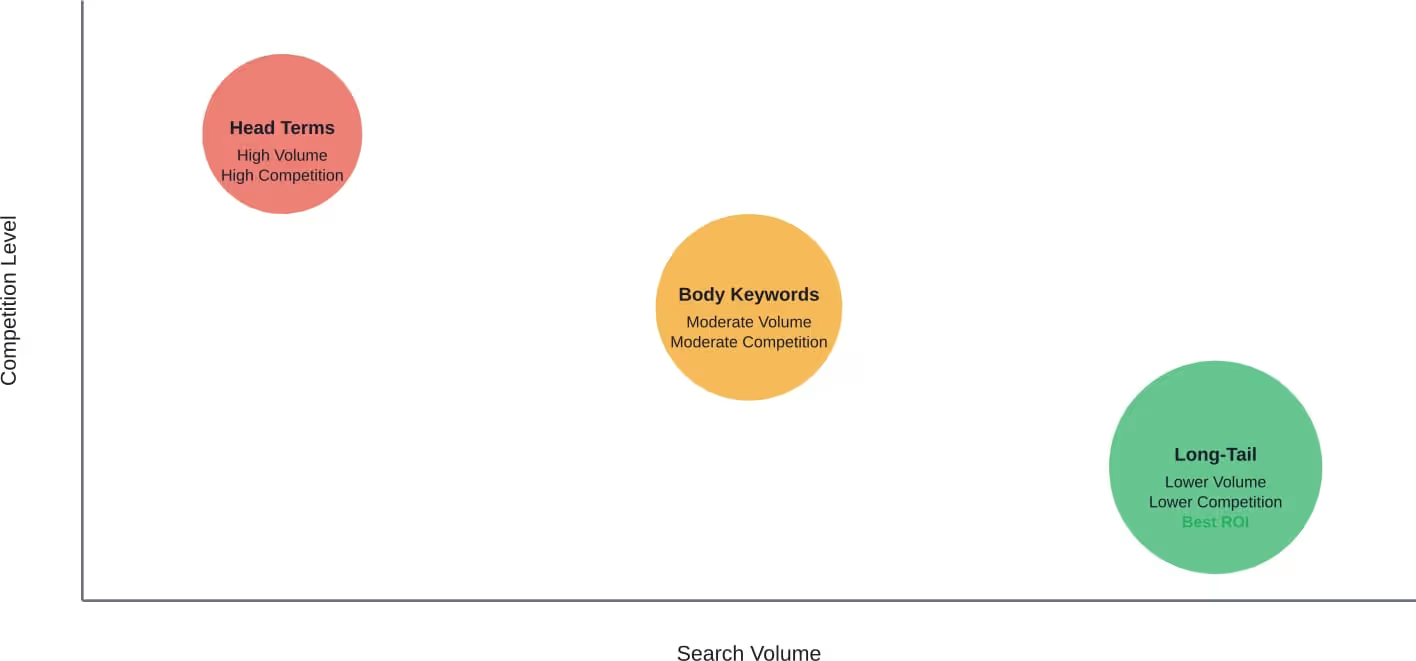
High-volume keywords attract everyone, which means intense competition. A new site targeting “SEO” (high volume, high competition) faces an uphill battle against established authorities. Strategic keyword selection focuses on terms where ranking is achievable.
Consider these keyword types:
- Head terms: Broad, high-volume keywords (1-2 words)
- Body keywords: Moderate volume, more specific (2-3 words)
- Long-tail keywords: Lower volume, highly specific (4+ words)
Long-tail keywords often convert better because they capture specific intent. Someone searching “what is SEO” might be browsing. Someone searching “how to fix crawled currently not indexed pages” has a specific problem and higher conversion intent.
Understand Search Intent
Google’s ranking systems have evolved to prioritize content that matches what users actually want when they search. Four primary intent types exist:
- Informational: Users want to learn something (“what is keyword research”)
- Navigational: Users want to find a specific site (“google search console login”)
- Commercial: Users research before buying (“best SEO tools 2026”)
- Transactional: Users are ready to take action (“buy semrush subscription”)
Mismatching intent kills rankings. Creating a product page for an informational query won’t rank because Google recognizes the mismatch. Similarly, writing a 3,000-word guide for a transactional query misses the mark.
Analyze the current top-ranking pages for target keywords. If they’re all listicles, Google expects a listicle. If they’re all in-depth guides, that’s what ranks. The search results themselves reveal intent.
Tools and Methods for Keyword Discovery
Keyword research tools provide data, but strategic thinking provides direction. Effective research combines multiple sources:
- Google Search Console shows queries already driving traffic
- Competitor analysis reveals keywords driving their traffic
- Google’s autocomplete suggests related searches
- Forums and community discussions expose language real users employ
- Customer support queries identify common questions
Document keywords in a spreadsheet with columns for search volume, competition level, intent type, and priority. This becomes the foundation for content planning.
Step 3: Analyze Competitor Content
Competitors already solved the problem of what ranks. Learning from their successes and gaps accelerates strategy development.
Competitive analysis isn’t about copying. It’s about understanding the baseline quality and coverage required to compete, then identifying opportunities to do better.
Identify Content Gaps
Rarely do competitors cover every angle of a topic comprehensively. Gaps represent opportunities. Look for:
- Subtopics mentioned briefly but not explored in depth
- Questions asked in comments that content doesn’t answer
- Outdated information that needs refreshing
- Technical depth that’s either too basic or too advanced
- User experience issues like poor formatting or missing visuals
According to a case study published on Moz, re-optimizing existing content proved to be one of the main SEO strategies that increased blog traffic from 20,000 to 200,000 monthly visitors over three years. Finding and filling gaps in existing content often delivers better ROI than creating entirely new pieces.
Evaluate Content Quality and Structure
Ranking content typically shares common characteristics:
- Comprehensive coverage that thoroughly answers the query
- Clear structure with descriptive headings and subheadings
- Supporting elements like images, tables, and examples
- Authoritative tone backed by evidence or experience
- Technical optimization including proper HTML structure
Take notes on average word count, heading structures, use of multimedia, and depth of coverage. This establishes benchmarks for content that needs to compete.
Step 4: Develop a Strategic Content Calendar
Random publishing creates random results. A content calendar transforms keyword research into an execution plan.
Strategic planning answers when to publish what, ensuring consistent output aligned with business priorities and seasonal opportunities.
Prioritize Content Based on Impact
Not all content deserves equal priority. Prioritization frameworks help focus resources on high-impact opportunities:
| Priority Level | Characteristics | Timeline |
|---|---|---|
| High | High business value, achievable ranking, strong search volume | Immediate |
| Medium | Moderate business value or ranking difficulty, decent volume | 30-60 days |
| Low | Lower business value or high difficulty, smaller volume | 90+ days |
Consider factors like keyword difficulty, existing domain authority, content creation resources, and business objectives when prioritizing. Quick wins build momentum while long-term plays develop authority.
Balance Content Types and Formats
Variety serves different user preferences and search intents. A balanced content mix includes:
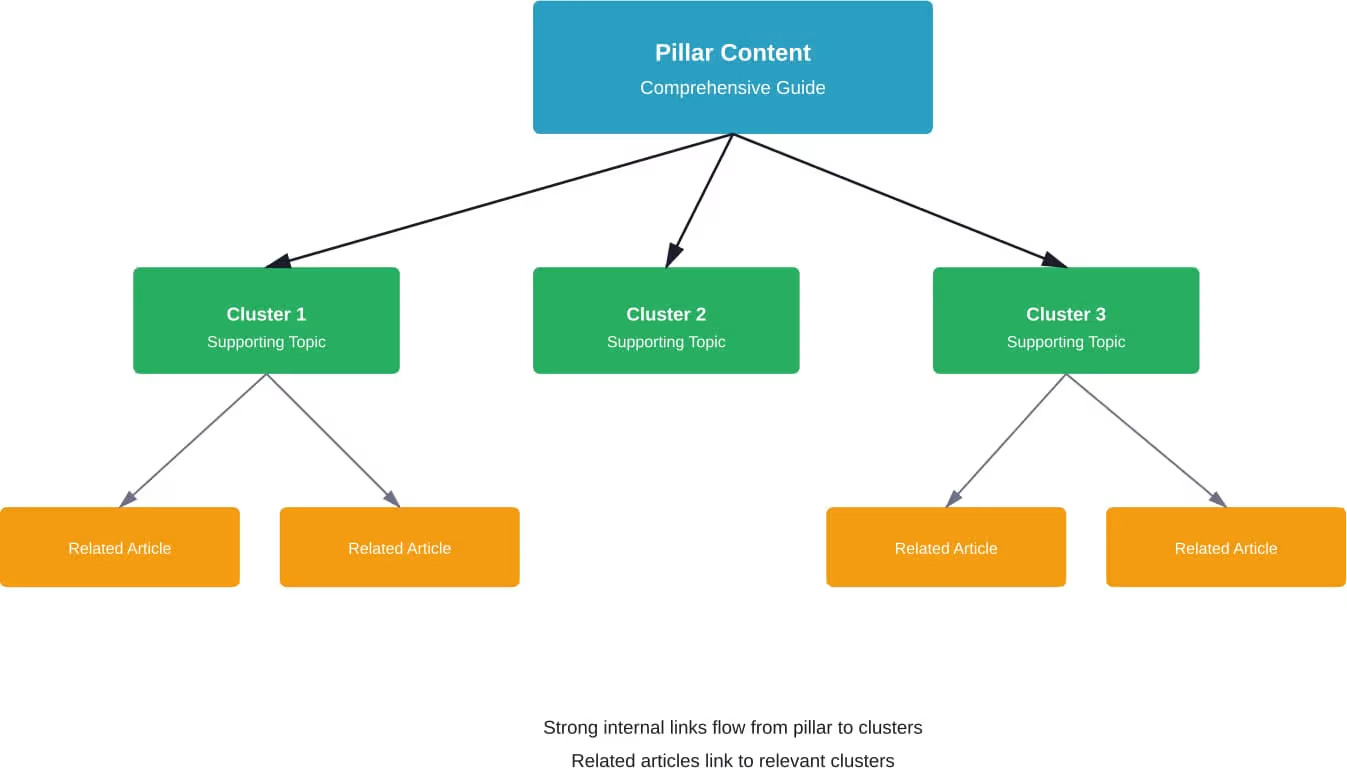
- Pillar content: Comprehensive guides covering core topics
- Cluster content: Detailed pieces exploring specific subtopics
- Comparison content: Side-by-side evaluations helping decisions
- How-to guides: Step-by-step instructions solving problems
- List posts: Curated collections of tools, tips, or resources
The content calendar should specify topic, target keyword, content type, word count estimate, and publication date. This creates accountability and ensures consistent output.
Account for Content Refresh Cycles
Content doesn’t end at publication. Google favors fresh, updated content. Build refresh cycles into the calendar:
- Update statistics and data annually
- Refresh product information when features change
- Expand top-performing content with additional depth
- Revise content that dropped in rankings
According to practices documented in content marketing strategy guides, re-optimizing existing content often delivers better ROI than creating new content because established pages already have ranking advantages like age and backlinks.
Step 5: Optimize On-Page SEO Elements
Content quality matters, but technical optimization helps search engines understand and rank that content. On-page SEO ensures maximum visibility.
Google Search Central emphasizes that while creating helpful content is paramount, using words people search for and placing them in prominent locations like titles and headings helps search engines understand relevance.
Craft Compelling Title Tags and Meta Descriptions
Title tags are the first impression in search results. Effective titles include the target keyword, stay under 60 characters, and promise clear value.
Meta descriptions don’t directly impact rankings but influence click-through rates. According to Google Search Central documentation, creating good quality meta descriptions helps users understand what the page offers before clicking.
Best practices include:
- Front-load target keywords naturally
- Write for humans first, search engines second
- Include a clear value proposition or benefit
- Use active voice and actionable language
- Stay within character limits (60 for titles, 155-160 for descriptions)
Structure Content with Proper Heading Hierarchy
Headings provide structure for both users and search engines. Proper hierarchy (H1 → H2 → H3) creates a logical outline that’s easy to scan and understand.
Each page should have one H1 tag containing the primary keyword. H2 tags divide the content into major sections covering key subtopics. H3 tags break down H2 sections into specific points.
Clear heading structure improves user experience and helps search engines understand content organization and topic relationships.
Optimize Images and Multimedia
Images enhance user experience but need optimization to avoid performance issues. According to Google’s SEO Starter Guide, images should use descriptive filenames and alt text that helps search engines understand visual content.
Image optimization checklist:
- Use descriptive filenames (seo-content-strategy-process.jpg vs. IMG_1234.jpg)
- Write specific alt text describing image content and context
- Compress images to reduce file size without quality loss
- Use appropriate formats (WebP for photos, SVG for diagrams)
- Implement lazy loading for below-the-fold images
Implement Internal Linking Strategy
Internal links help search engines discover pages and understand site structure. According to Google Search Central, making links crawlable helps search engines find other pages through links on existing pages.
Strategic internal linking:
- Links related content together with descriptive anchor text
- Distributes page authority throughout the site
- Creates topic clusters around pillar content
- Helps users discover additional relevant information
- Improves crawl efficiency for search engines
Avoid generic anchor text like “click here” or “read more.” Descriptive anchor text helps both users and search engines understand linked page content.
Step 6: Create High-Quality, People-First Content
Technical optimization means nothing without content that serves real user needs. Google’s core ranking philosophy centers on helpful, reliable, people-first content.
According to Google Search Central, the most important factor for improving content ranking is creating helpful, reliable, people-first content that demonstrates expertise and provides genuine value.
Write for Humans, Optimize for Search Engines
The best SEO content doesn’t feel like SEO content. It reads naturally, provides value, and happens to include relevant keywords in logical places.
Writing principles for effective SEO content:
- Start with the user’s question or problem
- Provide clear, actionable answers early
- Use conversational language that matches how people speak
- Break up text with subheadings, bullets, and short paragraphs
- Include examples, data, and evidence supporting claims
- Address objections and alternative viewpoints
Keyword stuffing damages both user experience and rankings. Modern search algorithms detect unnatural keyword usage. Instead, focus on using keywords naturally in introductions, headings, and where they fit contextually.
Demonstrate Expertise and Authority
Google’s Search Quality Rater Guidelines emphasize E-E-A-T: Experience, Expertise, Authoritativeness, and Trustworthiness. Content should demonstrate knowledge and credibility.
Ways to build content authority:
- Cite credible sources for claims and statistics
- Share specific examples from real experience
- Include original research, data, or case studies
- Acknowledge limitations and uncertainties honestly
- Update content regularly to maintain accuracy
Thin, generic content that rehashes information available everywhere else won’t rank. Depth, originality, and unique perspectives create differentiation.
Format for Readability and Engagement
Online readers scan before reading. Content structure should accommodate scanning behavior:
- Use descriptive headings that preview section content
- Keep paragraphs short (2-4 sentences)
- Include bullet points and numbered lists for easy scanning
- Add visual elements like images, diagrams, and tables
- Use bold text sparingly to highlight key points
- Include a table of contents for long-form content
Readability impacts both user experience and SEO. Clear writing at an appropriate reading level ensures content accessibility for target audiences.
Step 7: Measure, Analyze, and Iterate
Publishing content is the beginning, not the end. Continuous measurement and optimization drive long-term success.
According to Google Search Central, crawling and indexing take time and rely on many factors. Monitoring progress using Google Search Console helps understand what’s working.
Track Key Performance Indicators
Different goals require different metrics. Align KPIs with the business objectives defined in step one:
| Goal Type | Key Metrics | Tools |
|---|---|---|
| Traffic Growth | Organic sessions, page views, unique visitors | Google Analytics |
| Ranking Improvement | Keyword positions, impression share, click-through rate | Google Search Console |
| Engagement | Time on page, bounce rate, scroll depth, pages per session | Google Analytics |
| Conversions | Lead submissions, sales, sign-ups, downloads | Google Analytics, CRM |
Focus on metrics that connect to business outcomes. Traffic alone doesn’t matter if it doesn’t convert. Rankings don’t matter if they’re for keywords with no business value.
Identify Content Performance Patterns
Regular analysis reveals what’s working and what isn’t. Look for patterns across content:
- Which topics drive the most traffic?
- What content types generate the most engagement?
- Which pieces convert visitors at the highest rates?
- What keywords are gaining or losing visibility?
- Where are users dropping off or bouncing?
Google Search Console provides valuable insights into search performance, including queries driving traffic, average positions, and click-through rates. The Page Indexing report shows which pages Google has indexed and identifies issues preventing indexing.
Optimize Based on Data
Data without action wastes opportunity. Use insights to inform optimization:
- Expand high-performing content with additional depth
- Update declining content with fresh information
- Improve low click-through rates with better titles and descriptions
- Add internal links to important but underperforming pages
- Consolidate or redirect thin content that adds little value
According to a case study from Moz, re-optimizing underperforming content can deliver significant results. One case study documented how an SEO strategy increased a client’s search visibility by 375% through consistent optimization.
Stay Current with Algorithm Updates
Search algorithms evolve continuously. Google releases core updates several times per year, and smaller updates happen constantly. Staying informed about algorithm changes helps explain ranking fluctuations and guides strategy adjustments.
Google’s Search Status Dashboard provides updates on core algorithm changes. When rankings drop after an update, analyze impacted pages for quality issues rather than trying to game specific ranking factors.
Common SEO Content Strategy Mistakes to Avoid
Even experienced practitioners make mistakes that undermine strategy effectiveness. Awareness of common pitfalls helps avoid them.
Focusing Only on Keywords, Not Intent
Keyword targeting without intent matching creates content that doesn’t satisfy user needs. Google has gotten better at understanding what users want, not just what words they typed.
A keyword like “apple” could mean the fruit, the company, or the Beatles record label. Context and surrounding query terms reveal intent. Content optimized for the wrong interpretation won’t rank regardless of keyword density.
Neglecting Technical SEO Foundation
Great content on a technically broken site won’t rank. According to Google Search Central, common reasons pages aren’t indexed include blocking via robots.txt, noindex tags, poor site connectivity, and crawling difficulties.
Technical issues that sabotage content strategy:
- Slow page load speeds hurting user experience
- Mobile responsiveness problems
- Broken internal links preventing crawling
- Duplicate content without proper canonicalization
- Missing or poorly configured XML sitemaps
Address technical foundation before scaling content production. Otherwise, effort gets wasted on content search engines can’t properly crawl and index.
Publishing Without Promotion
“Build it and they will come” doesn’t work. New content needs visibility signals to gain traction. According to Google’s SEO Starter Guide, being active in communities and telling people about content helps drive initial traffic and potential links.
Content promotion strategies include:
- Sharing on relevant social media platforms
- Outreach to industry publications or newsletters
- Email distribution to existing subscribers
- Engaging in relevant online communities
- Building relationships with influencers in the niche
Initial engagement signals help search engines recognize content value and accelerate ranking.
Ignoring Existing Content Performance
Many organizations keep creating new content while neglecting existing pieces. Updating and improving existing content often delivers better ROI than creating new content because established pages already have ranking advantages like age and backlinks.
Regular content audits identify optimization opportunities. Look for pages with declining traffic, good impressions but low clicks, or outdated information that needs refreshing.
Advanced Considerations for Scaling Content Strategy
As strategy matures, advanced tactics help scale efficiently and maintain quality.
Implementing Content Clusters and Pillar Pages
Topic clusters organize content around pillar pages that comprehensively cover broad topics, supported by cluster content diving deep into specific subtopics. All cluster content links back to the pillar, creating strong topical authority signals.
This structure helps search engines understand topic expertise and provides users with comprehensive resources. It also concentrates ranking power around strategic topics rather than scattering it across disconnected pages.
Leveraging User-Generated Content
Community-generated content like reviews, comments, and forum discussions creates fresh content and improves engagement signals. It also captures long-tail keyword variations users naturally employ.
Platforms that successfully incorporate user-generated content often see improved search visibility for niche topics where the community provides detailed answers to specific questions.
Building a Content Team or Process
Scaling content production requires systems and potentially team expansion. Documented processes ensure consistency across multiple contributors:
- Content brief templates specifying target keywords, structure, and requirements
- Editorial calendars coordinating content across teams
- Quality checklists ensuring optimization standards
- Approval workflows maintaining brand voice and accuracy
- Performance review processes informing future content
Whether working with in-house teams, freelancers, or agencies, clear processes prevent quality degradation as volume increases.
Taking Your SEO Content Strategy Forward
An effective SEO content strategy isn’t a one-time project but an ongoing process of creation, optimization, and refinement.
The seven steps covered—defining goals and audience, conducting keyword research, analyzing competitors, developing a content calendar, optimizing on-page elements, creating quality content, and measuring performance—create a framework that transforms content from random output to strategic asset.
Success comes from consistency and iteration. Not every piece will rank on page one. Some keywords prove more competitive than anticipated. Algorithm updates shift rankings unexpectedly. But systematic execution of these fundamentals, combined with continuous learning and optimization, builds compounding results over time.
Start with the foundation: clear goals aligned with business objectives, thorough understanding of target audience needs, and comprehensive keyword research. Build on that foundation with strategic planning, technical optimization, and quality content creation. Then iterate based on performance data, doubling down on what works and adjusting what doesn’t.
The sites that dominate organic search didn’t get there accidentally. They got there through strategic, sustained execution of the fundamentals. Now it’s time to apply these steps to build your own content authority.