

Quick Summary: An SEO audit in 2026 typically costs between $500 and $5,000, depending on website size, complexity, and the depth of analysis required. Most small to mid-sized businesses pay $750 to $2,500 for a comprehensive audit, while larger enterprise sites may invest $3,000 to $5,000 or more. Pricing varies based on factors like the number of pages audited, technical depth, competitor analysis, and whether the audit includes actionable implementation plans.
Figuring out what an SEO audit should cost feels like navigating a minefield. Some agencies quote $300. Others want $7,000. And that freelancer on Fiverr? They’re promising a “complete audit” for $50.
Here’s the thing though—not all audits are created equal. The gap between a $500 checklist and a $5,000 strategic analysis is massive. And in 2026, with AI search platforms like ChatGPT, Perplexity, and Google’s AI Overviews reshaping how people discover content, the stakes are higher than ever.
According to BrightEdge internal tracking, AI agents now account for roughly 33% of organic search activity. That means a proper audit can’t just look at traditional ranking factors anymore. It needs to assess how your site performs across AI discovery systems, answer engines, and generative search experiences.
This guide breaks down real 2026 pricing benchmarks, what determines cost, and how to spot the difference between a legitimate audit and a waste of money.
What Is an SEO Audit?
An SEO audit is a comprehensive evaluation of how well a website is optimized for search engines. It identifies technical issues, content gaps, backlink problems, and opportunities to improve visibility.
Think of it as a health check for your site. The audit examines everything from page speed and mobile responsiveness to keyword targeting and site architecture.
But in 2026, SEO audits have evolved beyond traditional blue-link rankings. A thorough audit now includes:
- Technical SEO analysis (crawlability, indexation, Core Web Vitals)
- On-page optimization review (content quality, keyword usage, metadata)
- Backlink profile assessment (toxic links, authority gaps)
- Competitor benchmarking
- AI visibility analysis (how your content performs in AI Overviews, ChatGPT, and other answer engines)
- User experience evaluation
According to Semrush documentation, a complete SEO audit should be the first step when working on a new site. It establishes a baseline and uncovers quick wins that can drive immediate results.
How Much Does an SEO Audit Cost in 2026?
Across the industry, most SEO audits cost between $500 and $5,000. The majority of companies pay between $1,000 and $2,500 for a professional audit.
Here’s the pricing breakdown by audit type and business size:
| Audit Type | Typical Price Range | Best For |
|---|---|---|
| Basic Technical Audit | $500 – $1,500 | Small sites (under 100 pages), startups |
| Standard Comprehensive Audit | $1,000 – $3,000 | Small to mid-sized businesses (100-1,000 pages) |
| Enterprise Audit | $3,000 – $5,000+ | Large sites (1,000+ pages), e-commerce, complex architectures |
| Backlink-Only Audit | $400 – $1,400 | Sites with suspected link penalties or profile issues |
| On-Page Audit | $300 – $2,500 | Content-focused sites needing optimization guidance |
Data from Clutch confirms these ranges, showing ballpark pricing of $100–$5,000 for technical audits, $375–$2,500 for on-page work, and $399–$1,399 for backlink audits.
Real talk: if someone quotes you $99 for a “full SEO audit,” run. That’s an automated tool report, not an actual analysis.
Get an SEO Audit From Lengreo
The cost of an SEO audit matters, but so does what happens after the audit is done. Lengreo provides SEO services that go beyond audit reports. The company handles website audits and optimizations, keyword research, competitor analysis, link building, and content planning as part of its SEO offering. It also provides website development, which can be useful when audit findings need real technical changes rather than just recommendations on paper.
Need Help With an SEO Audit?
Lengreo can help with:
- SEO audits and optimizations
- keyword research and competitor analysis
- link building
- content strategy and planning
- website development support
👉 Contact Lengreo to discuss your SEO audit requirements.
What Determines SEO Audit Pricing in 2026?
Several factors influence how much you’ll pay for an audit. Understanding these helps you evaluate whether a quote is reasonable or inflated.
Website Size and Complexity
A 20-page local business site takes far less time to audit than a 10,000-page e-commerce platform. More pages mean more URLs to crawl, more content to evaluate, and more technical elements to review.
Sites with complex architectures—multiple subdomains, faceted navigation, JavaScript frameworks—require deeper technical expertise. That expertise costs more.
Depth of Analysis
Not all audits go the same depth. Some agencies run automated scans and hand you a report. Others manually review critical pages, analyze competitor strategies, and provide custom recommendations.
The difference shows in the deliverable. A shallow audit might list 200 issues with no context. A strategic audit prioritizes the 15 problems that actually matter and explains how to fix them.
Experience Level of the Auditor
An SEO specialist with 10 years of experience and a track record of scaling organic traffic charges more than someone who learned SEO six months ago.
You’re not just paying for time. You’re paying for pattern recognition—the ability to spot issues faster and recommend solutions that actually work.
Geographic Location
Location affects pricing significantly. According to industry data, regional SEO pricing varies widely:
- US, UK, Canada, Western Europe: Averages cluster around $1,000 to $2,500 per month for ongoing SEO, with audits typically priced at $750–$3,000
- India and emerging markets: Many reputable agencies offer audits starting at $300–$800
Lower prices don’t automatically mean lower quality, but the talent pool, overhead costs, and market rates differ by region.
AI and Generative Search Analysis
This is new for 2026. Traditional audits focused exclusively on Google’s traditional search results. But with AI Overviews appearing on nearly half of all tracked queries (according to BrightEdge data), audits now need to assess AI visibility.
That includes:
- Whether your content gets cited in AI Overviews
- How your brand appears in ChatGPT, Perplexity, and other answer engines
- Content structure optimization for AI extraction
Agencies that include generative engine optimization (GEO) analysis typically charge $500–$1,000 more than those offering traditional audits only.
What’s Included in a Professional SEO Audit?
The deliverables vary, but a legitimate professional audit should include most of these components:
Technical SEO Analysis
This examines the foundation of your site. Key areas include:
- Crawlability and indexation status
- Site speed and Core Web Vitals
- Mobile responsiveness
- HTTPS implementation and security
- XML sitemap and robots.txt configuration
- Structured data markup
- Duplicate content issues
- Redirect chains and broken links
Technical problems often cause the biggest visibility drops. Fixing them can produce immediate ranking improvements.
On-Page SEO Review
This focuses on content optimization:
- Title tag and meta description analysis
- Heading structure (H1, H2, H3 usage)
- Keyword targeting and density
- Content quality and depth
- Internal linking structure
- Image optimization (alt text, file size)
According to Industry experts including those cited in Moz’s 2026 predictions note that high-performing content will prioritize clarity and cognitive ease. That means audits now evaluate readability scores and content structure for both human readers and AI systems.
Backlink Profile Assessment
This evaluates the quality and health of your link profile:
- Total backlinks and referring domains
- Authority and trust metrics
- Toxic or spammy links that could trigger penalties
- Anchor text distribution
- Competitor link gap analysis
Backlink-only audits typically cost $400–$1,400, depending on the size of your link profile.
Competitor Benchmarking
A strategic audit compares your site to competitors ranking for your target keywords. This includes:
- Keyword gap analysis
- Content depth comparison
- Backlink opportunity identification
- Technical performance benchmarks
Understanding where competitors beat you reveals the fastest path to competitive rankings.
AI and Generative Search Visibility
New for 2026, this analyzes how your content performs in AI-powered search experiences.
Conductor’s 2026 AEO/GEO Benchmarks Report emphasizes that AI visibility is becoming a critical new currency for long-term digital success. The report analyzed 10 key industries to measure AI referral traffic and AI search market share.
A comprehensive audit now checks:
- Whether your content appears in Google AI Overviews
- Citation rates in ChatGPT, Perplexity, and other answer engines
- Content structure optimization for AI extraction
- Schema markup for better AI understanding
BrightEdge data shows that 34% of AI citations come from PR and media coverage, making reputation management part of modern SEO strategy.
Actionable Recommendations
The best audits don’t just list problems. They prioritize issues by impact and provide step-by-step implementation guidance.
Look for deliverables that include:
- Prioritized action plan (high, medium, low impact)
- Specific instructions for fixing issues
- Expected timelines for implementation
- Projected impact on traffic and rankings
An audit without clear next steps is just an expensive checklist.
SEO Audit Pricing Models
Agencies structure audit pricing in different ways. Understanding the models helps you compare quotes accurately.
One-Time Flat Fee
Most common for audits. You pay a fixed price for a complete deliverable.
Typical range: $500–$5,000 depending on scope and site size.
Pros: Clear cost upfront, no ongoing commitment.
Cons: No implementation support unless you pay separately.
Hourly Rate
Some consultants charge by the hour for audit work.
Typical range: $50–$300 per hour, with most experienced specialists charging $100–$200/hour.
A comprehensive audit might take 10–30 hours depending on site complexity. That translates to $1,000–$6,000 at $100/hour.
Pros: Flexible scope, pay only for time spent.
Cons: Final cost can be unpredictable.
Bundled with Monthly Retainer
Many agencies include an initial audit as part of ongoing SEO services.
For example, a $2,000/month retainer might include a free audit in month one.
According to industry data, monthly SEO retainers range from $500 to $15,000+ depending on business size and competition level. Small businesses typically invest $500–$2,500 per month, while companies targeting national markets budget $2,500–$10,000+ monthly.
Pros: Audit plus implementation support.
Cons: Requires ongoing commitment and higher total investment.
How Long Does an SEO Audit Take?
Timelines vary based on site size and audit depth:
- Small sites (under 100 pages): 1–2 weeks
- Mid-sized sites (100–1,000 pages): 2–3 weeks
- Large sites (1,000+ pages): 3–6 weeks
Automated tools can generate reports in hours, but manual review and strategic analysis take time. Rush jobs often miss critical issues.
Be wary of agencies promising comprehensive audits in 24–48 hours. That’s usually automated output with minimal human review.
Red Flags: How to Spot a Low-Quality Audit
Not all audits deliver value. Watch for these warning signs:
Unrealistically Low Pricing
If someone quotes $50–$150 for a “complete SEO audit,” they’re running automated tools and handing you a report. There’s no actual analysis happening.
Quality audits require human expertise. That expertise costs money.
Guaranteed Rankings
Any agency promising “page 1 rankings” or “guaranteed results” is either lying or using black-hat tactics that’ll eventually get you penalized.
Legitimate agencies focus on process improvements and traffic growth, not specific ranking positions.
Generic Recommendations
If the audit reads like it could apply to any website—”improve page speed,” “add more content,” “get more backlinks”—it’s template garbage.
A real audit provides site-specific insights tied to your actual data.
Overwhelming Issue Lists
Some audits list 500+ “issues” to justify their fee. But most of those problems have zero impact on rankings.
Strategic audits prioritize the 15–20 changes that actually move the needle.
No AI Visibility Analysis
In 2026, ignoring AI search platforms is a major blind spot. If an audit doesn’t mention AI Overviews, answer engines, or generative search, it’s already outdated.
According to BrightEdge internal tracking, these agents now account for roughly 33% of organic search activity. That’s too significant to ignore.
How Often Should You Get an SEO Audit?
The frequency depends on your site’s rate of change and competitive landscape.
General guidelines:
- Small, stable sites: Once per year
- Growing businesses: Every 6 months
- E-commerce or high-traffic sites: Quarterly
- After major site changes: Immediately (redesigns, platform migrations, content overhauls)
Search evolved quickly throughout 2025 as AI systems became a primary route for information discovery. According to Search Engine Journal analysis, this reduced the consistency and predictability of traditional organic traffic for many brands.
That volatility makes regular audits more important. What worked six months ago might not work today.
DIY vs Professional Audit: Cost Comparison
Can you audit your own site? Sure. But there’s a real cost-benefit tradeoff.
DIY Approach
Tools you’ll need:
- Screaming Frog (free up to 500 URLs, $259/year for unlimited)
- Google Search Console (free)
- Google Analytics (free)
- Ahrefs or Semrush ($99–$399/month)
- PageSpeed Insights (free)
Total tool cost: $100–$500/month depending on subscriptions.
Time investment: 15–40 hours for a thorough audit if you know what you’re doing. More if you’re learning.
Pros: Lower monetary cost, builds internal knowledge.
Cons: Steep learning curve, easy to miss critical issues, no external perspective.
Professional Audit
Cost: $500–$5,000 one-time fee.
Time investment: 1–2 hours reviewing the deliverable and asking questions.
Pros: Expert analysis, pattern recognition from seeing hundreds of sites, actionable recommendations, saves 20–40 hours of your time.
Cons: Higher upfront cost.
For most businesses, the professional route delivers better ROI. A good auditor spots revenue-impacting issues that inexperienced reviewers miss entirely.
Is an SEO Audit Worth the Investment?
The short answer? Yes, if it’s a quality audit from someone who knows what they’re doing.
A proper audit identifies problems that actively cost you traffic and revenue. Fixing those problems delivers measurable ROI.
Consider this scenario: A $2,000 audit identifies technical issues causing 30% of your product pages to be unindexed. Fixing those issues brings 500 pages back into Google’s index. If those pages collectively generate 5,000 monthly visits worth $3 per visitor in average order value, that’s $15,000 in monthly revenue recovered.
The audit paid for itself in less than a week.
Now, this is where it gets interesting. Research on SEO pricing found that small businesses spend anywhere between $100 to $5,000 per month on SEO services. Within that investment, the initial audit represents a fraction of total SEO cost but often delivers the highest concentration of quick wins.
But here’s the catch: an audit only creates value if someone implements the recommendations. A $5,000 audit that sits in a folder unused is wasted money. A $1,000 audit that gets executed systematically delivers compounding returns.
How to Choose the Right SEO Audit Provider
When evaluating agencies or consultants, ask these questions:
What’s Included in Your Audit?
Get specifics. Does it cover technical SEO, on-page, backlinks, competitor analysis, and AI visibility? Or just automated tool output?
Can I See a Sample Audit?
Reputable providers share anonymized examples. This shows you the depth and format of their deliverable.
What Tools Do You Use?
Professional auditors combine multiple tools—Screaming Frog, Ahrefs, Semrush, Google Search Console, custom scripts. Relying on just one tool misses critical data.
Who Actually Performs the Audit?
Is it the senior strategist who sold you, or a junior analyst following a checklist? Experience level matters enormously.
How Do You Prioritize Recommendations?
The best auditors categorize fixes by effort vs. impact. High-impact, low-effort wins should be clearly called out.
Do You Include AI Visibility Analysis?
In 2026, this is non-negotiable. If they don’t mention AI Overviews, answer engines, or generative search optimization, keep looking.
What Happens After Delivery?
Do they offer implementation support? A follow-up call to review findings? Ongoing access for questions?
SEO Audit Costs by Business Type
Different business models have different audit needs and typical price ranges.
| Business Type | Typical Audit Cost | Key Focus Areas |
|---|---|---|
| Local Service Business | $500 – $1,500 | Google Business Profile, local citations, review management, localized content |
| Small E-commerce | $1,000 – $2,500 | Product page optimization, category structure, faceted navigation, duplicate content |
| SaaS/Tech Company | $1,500 – $4,000 | Technical SEO, content strategy, competitor analysis, conversion optimization |
| Enterprise E-commerce | $3,000 – $5,000+ | International SEO, massive site architecture, JavaScript rendering, AI visibility |
| Content Publishers | $1,500 – $3,000 | Content quality, topical authority, AI citation analysis, monetization optimization |
The Impact of AI Search on Audit Pricing
AI search platforms have fundamentally changed what a comprehensive audit must include.
According to BrightEdge analysis from January through August 2025, AI search is experiencing double-digit growth rates month over month. Yet while AI search grows rapidly, organic search still drives the majority of traffic for most sites.
This creates a dual challenge: maintain traditional SEO performance while building AI visibility.
Modern audits now assess:
- Citation potential: Is your content structured for AI extraction?
- Authority signals: Do you have the brand recognition and quality signals that AI systems trust?
- Answer completeness: Does your content directly answer questions in formats AI can parse?
- Schema implementation: Are you using structured data that helps AI understand your content?
Agencies adding comprehensive AI visibility analysis typically charge $500–$1,000 more than traditional-only audits. But according to Conductor’s benchmarks, AI visibility is becoming a critical new currency for long-term digital success.
Skipping this analysis in 2026 is like ignoring mobile optimization in 2015—technically possible, but strategically shortsighted.
Real-World Audit Pricing Examples
To ground these ranges in reality, here are typical scenarios:
Scenario 1: Local Plumbing Company
- Site size: 25 pages
- Audit type: Technical + local SEO focus
- Cost: $750
- Includes: Technical crawl, Google Business Profile optimization review, citation audit, local competitor analysis
Scenario 2: Regional E-commerce Store
- Site size: 400 product pages
- Audit type: Comprehensive
- Cost: $2,200
- Includes: Technical audit, category structure review, product page optimization, backlink analysis, basic AI visibility check
Scenario 3: National SaaS Platform
- Site size: 1,200 pages
- Audit type: Enterprise-level strategic audit
- Cost: $4,500
- Includes: Deep technical review, content strategy analysis, competitor intelligence, complete AI visibility assessment, custom implementation roadmap with ROI projections
Common Audit Pricing Mistakes to Avoid
These traps catch businesses regularly:
Choosing Based on Price Alone
The cheapest audit usually delivers the least value. And the most expensive isn’t always the best.
Evaluate based on scope, experience, and deliverables—not just the number on the invoice.
Paying for Audits You Can’t Implement
If you lack development resources or budget to act on recommendations, a comprehensive audit might be overkill.
Start with a focused audit on areas you can actually address.
Skipping the Follow-Up
An audit creates a roadmap. But roadmaps only matter if someone drives.
Before paying for an audit, have a plan for who will implement the recommendations and when.
Expecting Instant Results
An audit identifies problems. Fixing those problems takes time. And ranking improvements take more time after that.
Set realistic expectations: 2–3 months to implement major fixes, 3–6 months to see meaningful traffic impact.
Setting Your SEO Audit Budget in 2026
Here’s a practical framework for budgeting:
- Assess your site size: Under 100 pages? 100–1,000? 1,000+?
- Determine audit depth needed: Basic health check or strategic analysis?
- Factor in competition: Highly competitive industries justify higher investment
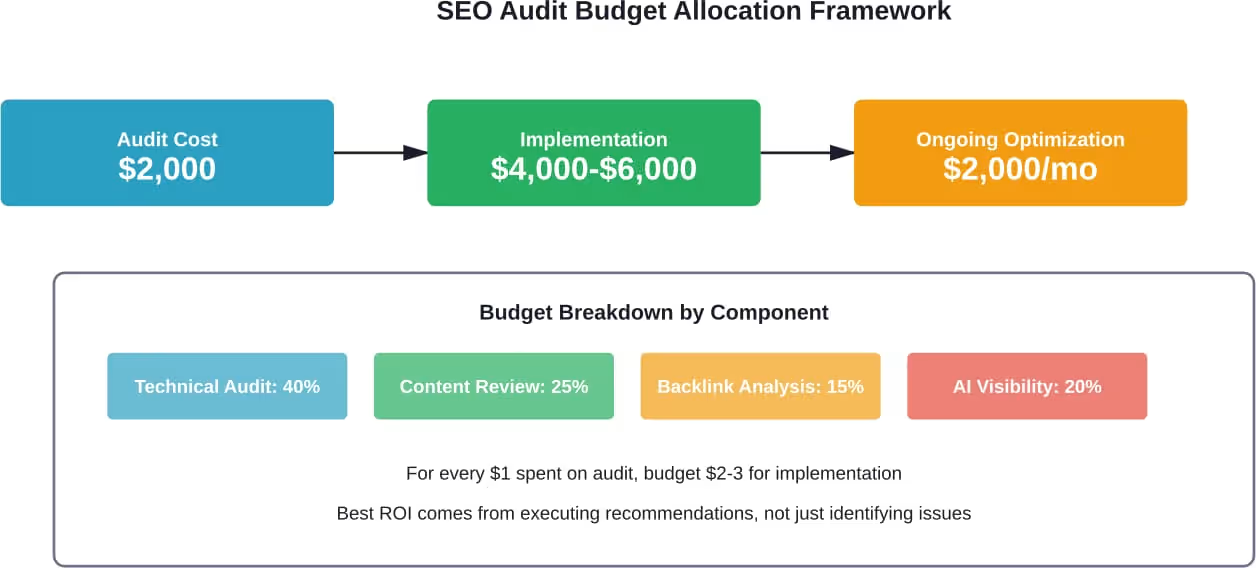
- Include AI analysis: Add $500–$1,000 for comprehensive AI visibility assessment
- Plan for implementation: Budget 2-3x the audit cost for actually fixing issues
Most businesses should budget $1,000–$2,500 for a professional audit that delivers actionable insights and covers modern search requirements including AI visibility.
Enterprise sites in competitive markets should budget $3,000–$5,000 for the strategic depth required to compete effectively.
Conclusion: Making Smart Audit Investment Decisions
SEO audit pricing in 2026 reflects real complexity—not just in analyzing traditional search performance, but in assessing visibility across AI-powered discovery systems that are reshaping how people find information.
For most businesses, a professional audit in the $1,000–$2,500 range delivers the best balance of depth and value. That investment identifies technical issues, content gaps, and opportunities that typically deliver measurable traffic improvements within 3–6 months of implementation.
Enterprise sites and businesses in highly competitive markets benefit from premium audits ($3,000–$5,000+) that include strategic competitor analysis, comprehensive AI visibility assessment, and detailed implementation roadmaps.
But remember: the audit is just the blueprint. Real ROI comes from executing the recommendations systematically.
Before investing in an audit, ensure you have resources allocated for implementation—whether internal team capacity, development budget, or ongoing agency support. An unimplemented audit is wasted money, regardless of how thorough or insightful it might be.
The search landscape will continue evolving rapidly. AI systems are growing more sophisticated. Algorithm updates keep coming. And the gap between sites that adapt and those that don’t keeps widening.
A comprehensive, modern SEO audit gives you the visibility and roadmap to compete effectively across all search channels—traditional and AI-powered alike.
Ready to understand what’s holding your site back? Start by defining what you need from an audit, setting a realistic budget, and finding a provider who understands both traditional SEO and the AI search landscape reshaping discovery in 2026.