

Quick Summary: Digital transformation in the chemical industry involves adopting advanced technologies like AI, IoT, and data analytics to optimize operations, reduce costs, and improve sustainability. Industry data shows that digitalization can increase production yields by 15-25%, reduce maintenance costs by 15-30%, and cut unplanned downtime by 30-50%. The shift addresses critical challenges including dark data utilization, legacy system modernization, and competitive market pressures.
The chemical industry stands at a critical juncture. While chemistry remains fundamental to driving research, innovation, and economic growth, traditional operations struggle with inefficiencies that drain resources and slow progress.
Here’s the thing though—the sector generates massive amounts of data but uses only a fraction of it. According to ISA research, process industries use less than 5 percent of collected data, with the remaining 95 percent either siloed, dark, or inconsistently applied. This unstructured information, accounting for approximately 55% of all stored data, significantly slows research and innovation.
Digital transformation offers a pathway forward. But what does that actually look like in practice?
What Digital Transformation Means for Chemical Companies
Digital transformation in the chemical sector isn’t about adopting technology for its own sake. It’s about fundamentally restructuring how companies operate, innovate, and compete.
The shift involves integrating artificial intelligence, Industrial Internet of Things (IIoT), big data analytics, and virtual reality into core processes. These technologies transform production planning, quality control, supply chain management, and research workflows.
Chemical companies face unique operational challenges. Knowledge often resides in experts’ heads rather than systems. When experienced professionals leave, valuable tacit knowledge disappears with them. Production depends on individuals, not repeatable processes.
Digitalization addresses this by systematically capturing, structuring, and leveraging information across the organization.
Transform the Chemical Industry With LENGREO
Digital transformation in the chemical industry involves improving efficiency and adopting modern technologies. Growth depends on reaching the right clients and partners.
LENGREO supports chemical companies with marketing strategies designed to generate leads and drive business results.
Capabilities include:
- SEO and content strategy
- targeted outreach and lead generation
- paid campaigns
- funnel optimization
If you want to combine transformation with measurable business growth, contact LENGREO to get started.
Measurable Business Impact: The Numbers Behind Digitalization
The economic case for digital transformation is compelling. Real-world implementations show concrete returns across multiple operational areas.
Production optimization through AI algorithms delivers yield increases of 15 to 25% depending on processes. These algorithms continuously analyze production data to identify inefficiencies that human operators might miss.
Predictive maintenance represents another major value driver. According to McKinsey, digital solutions reduce maintenance costs by 15-30% while increasing overall productivity by up to 10%. The approach uses data analytics and IIoT to anticipate equipment failures before they occur, cutting unplanned downtime by 30 to 50%.
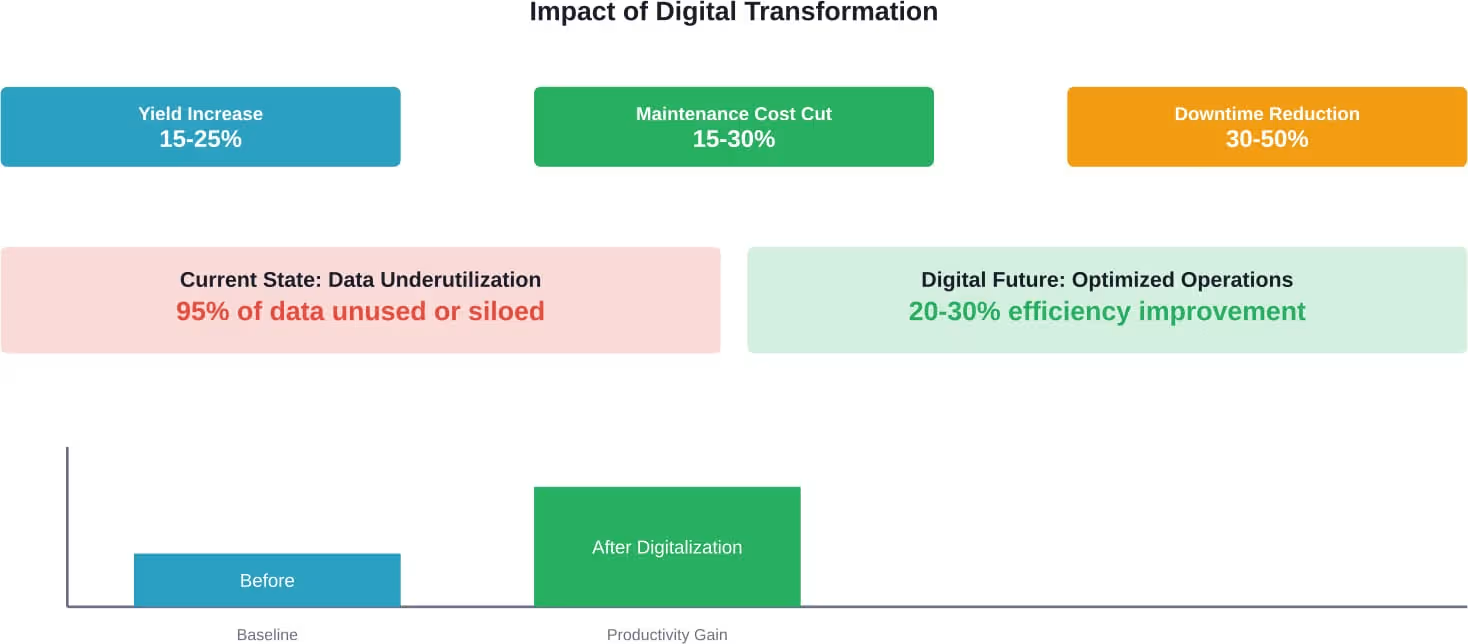
Operational advantages extend further. Companies implementing comprehensive digital strategies report 20-30% improvements in efficiency and production cost reduction. That’s not incremental change—it’s transformational.
Core Technologies Driving the Transformation
Several technology categories work together to enable digital transformation in chemical operations.
Artificial Intelligence and Machine Learning
AI powers predictive analytics, quality control, and process optimization. Algorithms detect patterns humans can’t see and make real-time adjustments that maximize efficiency and minimize waste.
Advanced manufacturing technologies including robotics, 3D printing, and digital tools are increasingly deployed in manufacturing environments to optimize production and reduce costs.
Industrial Internet of Things
IIoT connects equipment, sensors, and systems across facilities. This connectivity provides real-time visibility into operations and enables data-driven decision making.
ISA emphasizes that digitalization, IoT, and big data collectively improve industrial process operation by supporting collaboration at all levels and enabling high-performance work around the clock.
Digital Twins and Simulation
Recent partnerships demonstrate how digital twin technology is becoming more accessible. LSU partnered with FUEL and Syngenta (announced September 16, 2025) to develop low-cost digital twins for chemical processing facilities. The approach transforms real-world complexity into digital clarity—from phone scans to virtual replicas with informational overlays showing current conditions and performance metrics.
Digital twins allow companies to test scenarios, optimize processes, and troubleshoot issues in virtual environments before implementing changes in physical plants.
Implementation Challenges and How to Address Them
Manufacturing digitization involves multiple challenges including cybersecurity, legacy systems integration, and skills gaps that chemical companies must navigate.
Cybersecurity represents a critical concern. As organizations connect more systems and devices, they expand their attack surface. Small and medium manufacturers face particular vulnerability without dedicated security teams.
Legacy systems pose another obstacle. Many chemical facilities operate equipment and software that’s decades old. Integrating modern digital solutions with these systems requires careful planning and often significant investment.
| Challenge | Impact | Mitigation Approach |
|---|---|---|
| Dark Data | 55% of data unused | Implement structured capture systems |
| Cybersecurity Risks | Increased attack surface | Layered security architecture |
| Legacy Systems | Integration complexity | Phased modernization strategy |
| Skills Gap | Limited digital expertise | Training and strategic hiring |
| Data Silos | Fragmented information | Enterprise data platforms |
Organizational resistance shouldn’t be underestimated. Knowledge workers in process operations often spend excessive time searching for data in information silos rather than analyzing it. Changing these entrenched workflows requires change management, not just technology deployment.
Strategic Roadmap for Chemical Companies
Successful digital transformation follows a structured approach rather than ad-hoc technology adoption.
Assessment comes first. Companies need to understand their current digital maturity, identify capability gaps, and prioritize opportunities based on business impact.
Pilot projects allow organizations to test approaches, build internal expertise, and demonstrate value before committing to large-scale rollouts. Starting with high-impact, lower-risk applications builds momentum and secures stakeholder buy-in.
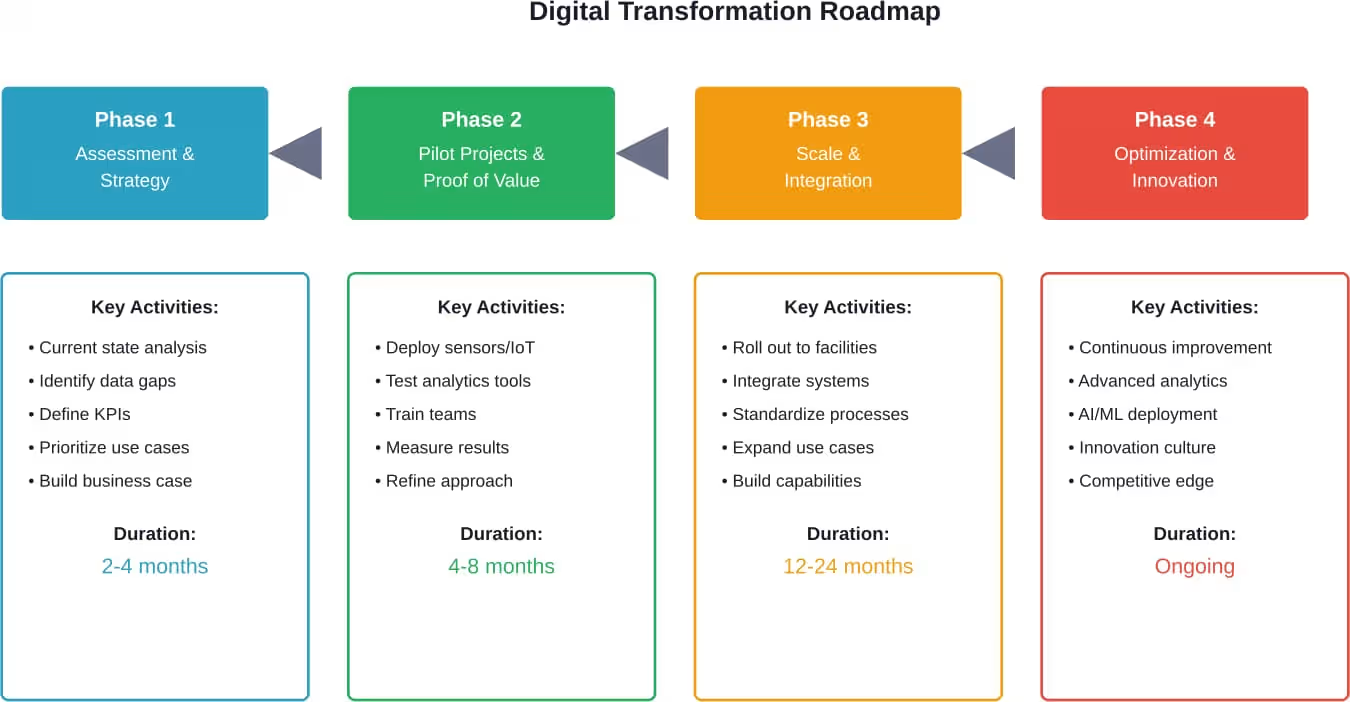
Scaling successful pilots across the organization requires robust change management. Technology is only part of the equation—process redesign, training, and cultural shifts determine whether digital initiatives deliver sustained value.
Continuous optimization ensures companies don’t treat digital transformation as a one-time project. The most successful organizations embed innovation into their operating model.
Sustainability and Digital Innovation
Environmental imperatives increasingly drive digital adoption in the chemical sector. The industry contributes significantly to climate change through greenhouse gas emissions and hazardous substance production.
Digital technologies enable more sustainable operations in several ways. Real-time monitoring reduces waste and energy consumption. Advanced analytics optimize formulations to use fewer raw materials. Supply chain visibility helps companies source more responsibly and reduce transportation emissions.
The convergence of sustainability goals and digital capabilities creates opportunities to simultaneously improve environmental performance and operational efficiency.
Future Outlook: From Tacit Knowledge to AI-Driven Ecosystems
The chemical industry is progressing from human-dependent operations to AI-driven ecosystems. This evolution happens in stages, with companies at different maturity levels.
Early-stage organizations still rely heavily on tacit knowledge—information in experts’ heads rather than accessible systems. Innovation depends on individuals, and knowledge walks out the door when people leave.
Mature digital operations systematically capture expertise, structure data, and deploy intelligent systems that learn and improve over time. Interconnected labs, factories, and data platforms create sustainable, data-centric chemistry operations.
The competitive gap between digital leaders and laggards will widen. Companies that effectively leverage digitalization will outmaneuver competitors by anticipating and responding to market dynamics faster and more efficiently.
Taking Action on Digital Transformation
The chemical industry’s digital future is unfolding now. Companies that act strategically will capture significant competitive advantages through improved efficiency, reduced costs, and enhanced innovation capabilities.
Success doesn’t require transforming everything overnight. Start by assessing current capabilities, identifying high-impact opportunities, and launching focused pilots that demonstrate value. Build from there systematically.
The data speaks clearly: digitalization delivers measurable improvements in yields, maintenance costs, downtime, and operational efficiency. The question isn’t whether to pursue digital transformation—it’s how quickly chemical companies can execute the transition and capture the benefits before competitors do.