


Quick Summary: Digital transformation in higher education involves integrating emerging technologies like AI, data analytics, and cloud systems to revolutionize teaching, learning, and institutional operations. According to recent data, over 67% of students access coursework on mobile devices, while institutions increasingly adopt digital materials to replace print. Successful transformation requires addressing change management, faculty development, infrastructure investment, and student experience enhancement across both online and on-campus environments.
Higher education stands at a crossroads. Traditional teaching methods clash with students who’ve grown up with smartphones. Budget constraints tighten while technology costs climb. And faculty members wonder whether all this digital change actually improves learning.
But here’s the thing—digital transformation isn’t just about buying new software or moving classes online. It’s about fundamentally rethinking how institutions operate, teach, and serve students in an increasingly connected world.
According to the Digital Learning Pulse Survey conducted by Bay View Analytics, higher education in the United States has been undergoing digital transformation for over a decade. The research examined community colleges specifically and found massive changes that forced faculty, administrators, and students to adjust how they conduct day-to-day operations.
What Digital Transformation Actually Means for Higher Education
Digital transformation represents more than swapping textbooks for tablets. It’s the comprehensive integration of digital technologies into every aspect of an institution—from how professors design courses to how registrars process applications.
Think about how Netflix transformed entertainment. The company didn’t just digitize video rentals. They changed what customers expected, how content got delivered, and what “watching TV” even means. Research shows that 89% of video streaming subscribers use Netflix, with 25% of single-service subscribers using only Netflix for streaming.
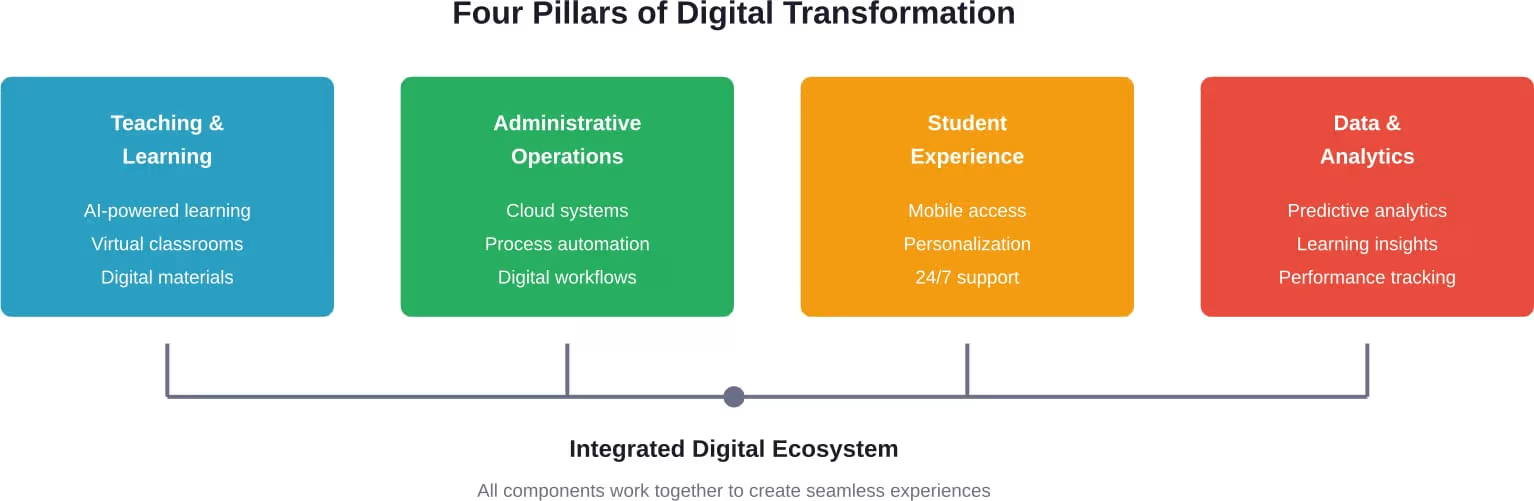
Higher education’s transformation follows a similar pattern. It touches four critical areas:
- Teaching and learning methods – Moving beyond lecture halls to personalized, technology-enhanced experiences
- Administrative operations – Streamlining processes from admissions to graduation
- Student engagement – Creating seamless digital experiences across all touchpoints
- Data utilization – Leveraging analytics to improve outcomes and institutional effectiveness
Research on digital competencies emphasizes that teaching and learning processes should be continuously developed due to changes in educational requirements as well as social and technological changes.
Why Digital Transformation Matters Now More Than Ever
External pressures aren’t letting up. Enrollment patterns shift. Competition intensifies from both traditional institutions and new online providers. And students arrive with expectations shaped by consumer tech experiences.
The National Science Foundation’s Improving Undergraduate STEM Education program recognizes this reality. Their initiatives seek to improve the quality of science, technology, engineering, and mathematics education for all undergraduate students, with particular emphasis on projects that have the potential to transform undergraduate STEM education through widespread adoption of effective classroom practices.
The Mobile Learning Reality
Mobile technology has fundamentally changed student expectations. Research indicates that 67% of students have undertaken higher education work on their mobile devices. That’s not a future trend—it’s current reality.
Students don’t just want mobile access. They expect it. They expect to check grades while commuting, submit assignments from coffee shops, and collaborate with classmates through messaging apps.
The Print-to-Digital Shift
According to the Digital Learning Pulse Survey, one major aspect of transformation involves moving from print to digital materials. This shift impacts course material costs, accessibility for students with disabilities, and the speed at which content can be updated.
Digital materials allow professors to incorporate interactive elements, embed videos, and update content in real-time as fields evolve. But the transition requires infrastructure, training, and careful change management.
Budget Pressures and Efficiency Demands
Higher education providers face tightening budgets while regulatory requirements grow. Digital transformation offers a path to increased operational efficiency—but only when implemented thoughtfully.
Automation can reduce administrative burden. Data analytics can identify at-risk students earlier. Cloud systems can lower IT infrastructure costs. Yet these benefits only materialize with proper planning and execution.
Scale Higher Education Transformation With LENGREO
Digital transformation in higher education involves modernizing systems and expanding digital programs. Institutions also need effective marketing to reach prospective students.
LENGREO helps institutions build marketing strategies that generate qualified leads and support long term growth.
Capabilities include:
- SEO and content for academic programs
- outreach and lead generation
- paid media campaigns
- full funnel strategy
If you want to turn transformation into measurable enrollment growth, get a free consultation with LENGREO.
Key Technologies Driving Transformation
Several emerging technologies are redefining how institutions operate and benefit distinct educational groups. Here’s what’s actually making a difference.
Artificial Intelligence and Machine Learning
AI enables tailored learning experiences and remote access to educational resources. Machine learning algorithms can analyze student performance patterns, predict who might struggle with specific concepts, and recommend personalized study materials.
But AI isn’t magic. It requires quality data, thoughtful implementation, and human oversight to avoid perpetuating biases or making inappropriate decisions.
Virtual Reality and Immersive Learning
Virtual reality creates opportunities for experiential learning that would be impossible or impractical otherwise. Medical students can practice procedures. Architecture students can walk through their designs. History students can explore ancient civilizations.
The technology has matured enough that costs have dropped significantly, making VR accessible to more institutions than just elite research universities.
Big Data and Predictive Analytics
Data analytics transforms how institutions understand student success. Predictive models can identify students likely to drop out, struggle academically, or need additional support—often before traditional warning signs appear.
Predictive analytics also helps with enrollment management, resource allocation, and strategic planning. The challenge lies in collecting data ethically and using it responsibly.
Cloud Computing and Infrastructure
Cloud systems provide scalability and flexibility that on-premises infrastructure can’t match. They enable remote learning at scale, support collaboration tools, and reduce capital expenditure on hardware.
Cloud adoption also facilitates integration between different systems—student information systems, learning management systems, and administrative platforms can share data more seamlessly.
| Technology | Primary Benefits | Implementation Complexity | Time to Value |
|---|---|---|---|
| Cloud Infrastructure | Scalability, cost reduction, accessibility | Medium | 6-12 months |
| Learning Analytics | Student success insights, early intervention | High | 12-18 months |
| AI-Powered Tools | Personalization, automation, efficiency | High | 12-24 months |
| Mobile Platforms | Accessibility, engagement, convenience | Low-Medium | 3-6 months |
| Virtual Reality | Immersive learning, practical skills | Medium-High | 6-18 months |
Real Benefits of Digital Transformation
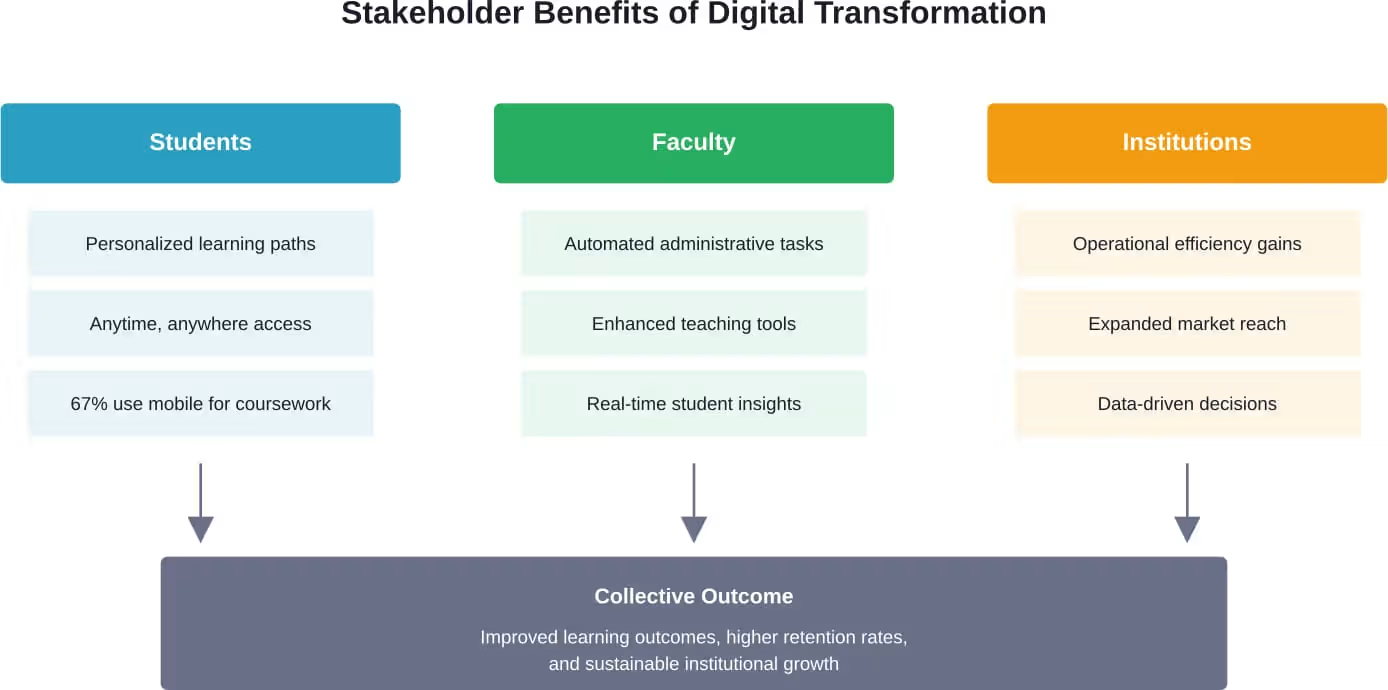
So what do institutions actually gain from successful digital transformation? The benefits extend across multiple stakeholders.
For Students
Students benefit from tailored learning experiences that adapt to their pace and style. They gain remote access to resources, allowing them to learn from anywhere. And they get personalized support through AI-powered tutoring systems and early intervention programs.
Mobile learning empowers students to access educational resources and complete coursework from any location. This flexibility is particularly valuable for non-traditional students juggling work, family, and education.
For Faculty
Faculty gain tools that automate administrative tasks like grading routine assignments or tracking attendance. They access richer data about student understanding and engagement. And they can experiment with innovative teaching methods supported by technology.
Digital materials allow professors to update content quickly, incorporate multimedia elements, and provide interactive learning experiences that weren’t possible with traditional textbooks.
For Institutions
Institutions improve operational efficiency through process automation and data-driven decision making. They enhance their competitive position by meeting student expectations for digital experiences. And they can reach new student populations through flexible delivery models.
The Digital Learning Pulse Survey documented how community colleges increased the proportion of instruction delivered in online and blended formats while making greater use of digital technologies in physical classrooms.
Strategic Approaches to Digital Transformation
Successful digital transformation doesn’t happen by accident. It requires deliberate strategy, careful planning, and sustained commitment.
Start with the Why, Not the What
Too many institutions start by selecting technologies before clarifying goals. That’s backwards. Begin by identifying specific problems to solve or opportunities to capture.
Are retention rates too low? Is administrative overhead consuming too many resources? Do students complain about access to advising? Start with clear objectives, then identify technologies that address them.
Prioritize Change Management
Technology implementation fails more often due to people problems than technical problems. Faculty resistance, administrative inertia, and student confusion can derail even well-designed initiatives.
Effective change management involves clear communication, stakeholder involvement, adequate training, and recognition that transformation takes time. Research consistently shows that people-centric approaches to change management yield better outcomes.
Build Cross-Functional Teams
Digital transformation touches every part of an institution. IT can’t do it alone, nor can academic affairs or student services. Successful initiatives involve representatives from across the organization.
Cross-functional teams bring diverse perspectives, identify integration points, and build organizational buy-in. They also help avoid siloed implementations that create more problems than they solve.
Take an Incremental Approach
Attempting comprehensive transformation overnight is a recipe for failure. Successful institutions take incremental steps, learn from each implementation, and build on successes.
Pilot programs let institutions test technologies and approaches on a smaller scale before committing to institution-wide rollouts. They provide opportunities to refine processes, identify challenges, and demonstrate value.
Invest in Professional Development
New technologies require new skills. Faculty need training on digital teaching methods, not just how to use specific tools. Administrators need to understand data literacy and analytics. IT staff need to develop skills in emerging technologies.
Professional development shouldn’t be a one-time event. Continuous learning opportunities help staff and faculty stay current as technologies and best practices evolve.
Common Challenges and How to Address Them
Digital transformation comes with predictable challenges. Knowing them in advance helps institutions prepare appropriate responses.
Budget Constraints
Higher education budgets rarely have excess capacity for major technology investments. Institutions must make difficult choices about priorities and find creative funding approaches.
The National Science Foundation’s IUSE program provides funding opportunities for institutions working on STEM education transformation. The program estimates making 135 awards annually (50 Level 1 projects, 30 Level 2 and 3 projects, 15 Capacity-Building projects, and 40 others), with various levels of scope and funding available.
Some institutions pursue public-private partnerships, seek grant funding, or use phased implementations to spread costs over multiple budget cycles.
Faculty Resistance
Faculty members may resist digital transformation for legitimate reasons—concern about pedagogical effectiveness, fear of job security, or simple change fatigue. Addressing these concerns requires empathy and evidence.
Institutions that involve faculty early in decision-making, provide robust support, and share data on outcomes see better adoption rates. Highlighting early adopters and their successes also helps build momentum.
Technical Infrastructure Gaps
Many institutions operate with outdated infrastructure that can’t support modern digital experiences. Legacy systems don’t integrate well. Network capacity proves inadequate. Security vulnerabilities multiply.
Infrastructure modernization often becomes a prerequisite for other transformation efforts. Cloud migration can help, but it requires careful planning around data migration, security, and integration.
Data Privacy and Security
Increased digitization creates expanded attack surfaces for cyber threats. Student data privacy regulations add complexity. Institutions must balance accessibility with security.
Robust cybersecurity programs, regular security audits, staff training, and incident response plans become essential components of digital transformation strategy.
Equity and Access Concerns
Digital transformation can exacerbate existing inequities if not carefully managed. Students without reliable internet access or personal devices face barriers. Digital literacy varies widely.
Addressing equity requires intentional effort—device loan programs, on-campus access points, digital literacy training, and careful consideration of technology requirements for courses.
| Challenge | Risk Level | Key Mitigation Strategies |
|---|---|---|
| Budget Constraints | High | Phased implementation, grant funding, ROI demonstration |
| Faculty Resistance | High | Early involvement, robust training, showcase successes |
| Infrastructure Gaps | Medium-High | Cloud migration, modernization roadmap, vendor partnerships |
| Data Security | High | Security frameworks, regular audits, staff training |
| Digital Equity | Medium-High | Device programs, internet access, literacy training |
| System Integration | Medium | API strategies, middleware solutions, data standards |
Measuring Success and ROI
How do institutions know if digital transformation efforts are working? Measurement requires clear metrics tied back to original objectives.
Student Success Metrics
The ultimate measure of educational transformation should be student outcomes. Track metrics like course completion rates, time to degree, graduation rates, and post-graduation employment.
Learning analytics can provide leading indicators—engagement with course materials, assessment performance patterns, and early warning signs of struggle.
Operational Efficiency Metrics
Administrative transformation should yield measurable efficiency gains. Track process completion times, staff hours required for routine tasks, and error rates in administrative processes.
Cost savings matter too, but be realistic about timelines. Initial investments often increase before efficiency gains materialize.
Engagement and Satisfaction
Regular surveys of students, faculty, and staff provide qualitative insight into transformation impact. Are students more satisfied with their experience? Do faculty feel supported? Are staff members less burdened by manual processes?
Competitive Position
External metrics matter for institutional sustainability. Track enrollment trends, application numbers, yield rates, and market perception compared to peer institutions.
The Role of Leadership in Digital Transformation
Leadership makes or breaks transformation efforts. Successful initiatives require active sponsorship from senior leaders, not just permission.
Setting Clear Vision and Strategy
Leaders must articulate why transformation matters and where the institution is headed. Vague statements about “embracing technology” won’t cut it. Specific, compelling vision statements that connect to institutional mission create direction.
Allocating Resources
Leaders demonstrate commitment through budget allocation, staffing decisions, and time investment. Transformation can’t succeed as a side project for already-overworked staff.
Modeling Adoption
When leaders actively use new systems and champion digital approaches, the rest of the institution takes notice. When leaders remain stuck in old patterns, transformation stalls.
Celebrating Progress
Transformation takes years, not months. Leaders must recognize and celebrate incremental wins to maintain momentum and morale.
Looking Ahead: The Future of Digital Higher Education
Digital transformation isn’t a destination—it’s an ongoing process. Technologies will continue evolving. Student expectations will keep shifting. Competition will intensify.
Emerging technologies like advanced AI, blockchain for credentials, extended reality, and Internet of Things applications will create new possibilities and challenges. Institutions that build organizational capacity for continuous adaptation will thrive.
The National Science Foundation’s focus on transformation that brings about widespread adoption of effective classroom practices recognizes this reality. Real transformation changes not just what tools get used, but how teaching and learning fundamentally happen.
Research on digital competencies of learners emphasizes that implementation of technology-supported teaching and learning settings represents both a challenge and an opportunity for preparing students and faculty for ongoing digital change.
Practical First Steps for Getting Started
Institutions at the beginning of their transformation journey often feel overwhelmed. Where should they start?
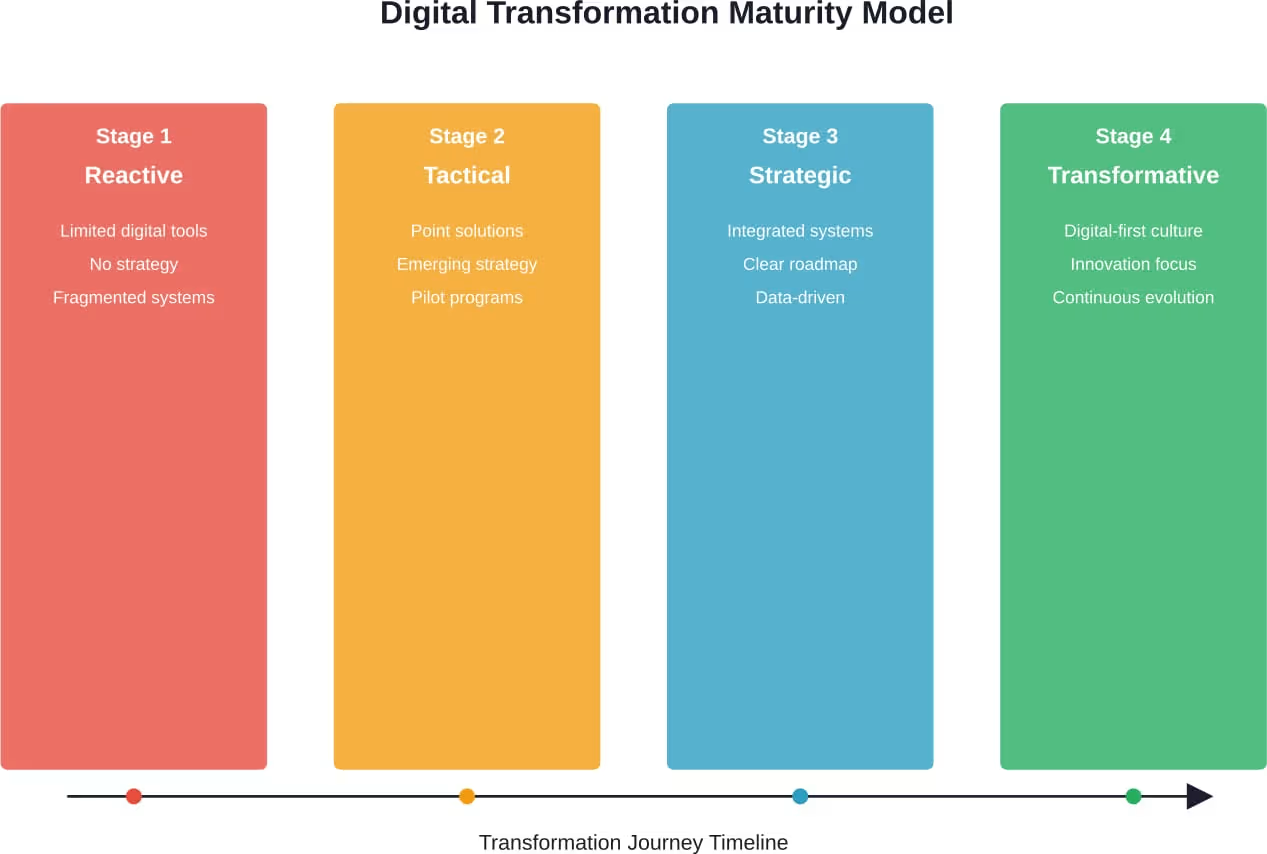
Conduct a Digital Maturity Assessment
Understand your current state before planning the future. Assess technology infrastructure, digital capabilities, data maturity, and organizational readiness for change.
Engage Stakeholders Broadly
Talk to students about their experiences and pain points. Survey faculty about their needs and concerns. Involve staff in identifying administrative inefficiencies. This engagement builds buy-in and surfaces valuable insights.
Identify Quick Wins
Look for high-impact, low-complexity opportunities. Maybe mobile course registration would dramatically improve student experience without requiring massive infrastructure changes. Quick wins build momentum and demonstrate value.
Develop a Multi-Year Roadmap
Map out a realistic timeline for transformation initiatives. Sequence projects logically—some capabilities must exist before others can be built. Be explicit about dependencies and resource requirements.
Establish Governance Structures
Create steering committees, working groups, and decision-making processes. Clarify roles and responsibilities. Establish regular communication channels and reporting mechanisms.
Invest in Foundational Capabilities
Some capabilities underpin everything else—data infrastructure, network capacity, security frameworks, and change management expertise. Investing in foundations enables future initiatives.
Conclusion: Embracing the Digital Future
Digital transformation represents both necessity and opportunity for higher education. Student expectations continue evolving. Technologies keep advancing. Competition intensifies from traditional and non-traditional providers.
But transformation done right isn’t about technology for its own sake. It’s about better serving students, empowering faculty, and ensuring institutional sustainability. It’s about preparing learners for a digital world while maintaining the core educational mission.
The institutions that will thrive are those that approach transformation strategically—with clear vision, stakeholder engagement, incremental progress, and willingness to learn and adapt. They recognize that technology enables change but people drive it.
Real talk: digital transformation is hard. It requires sustained commitment, difficult decisions, and patience as initiatives mature. Yet the alternative—maintaining status quo while the world changes—poses far greater risk.
Start where you are. Assess your current capabilities honestly. Identify high-priority opportunities. Build cross-functional teams. Invest in both technology and people. Measure progress. Celebrate wins. Learn from setbacks. And keep moving forward.
The future of higher education is digital—not exclusively online, but fundamentally integrated with technology in ways that enhance learning, improve operations, and expand access. The question isn’t whether to transform, but how to do it thoughtfully and effectively.