


Quick Summary: Digital transformation in pharma involves integrating AI, cloud computing, IoT, and data analytics across drug discovery, manufacturing, and patient care. According to research published in 2026, the digital pharmacy market is expanding at 14.42% annually, with pharmaceutical innovation labs showing 98% collaboration activity and 92% university partnerships. Real-world examples include AI systems identifying drug candidates in under 18 months—a process that typically takes years.
The pharmaceutical industry is undergoing a seismic shift. Traditional approaches to drug development, manufacturing, and patient engagement are being replaced by digital-first strategies that promise faster innovation and better outcomes.
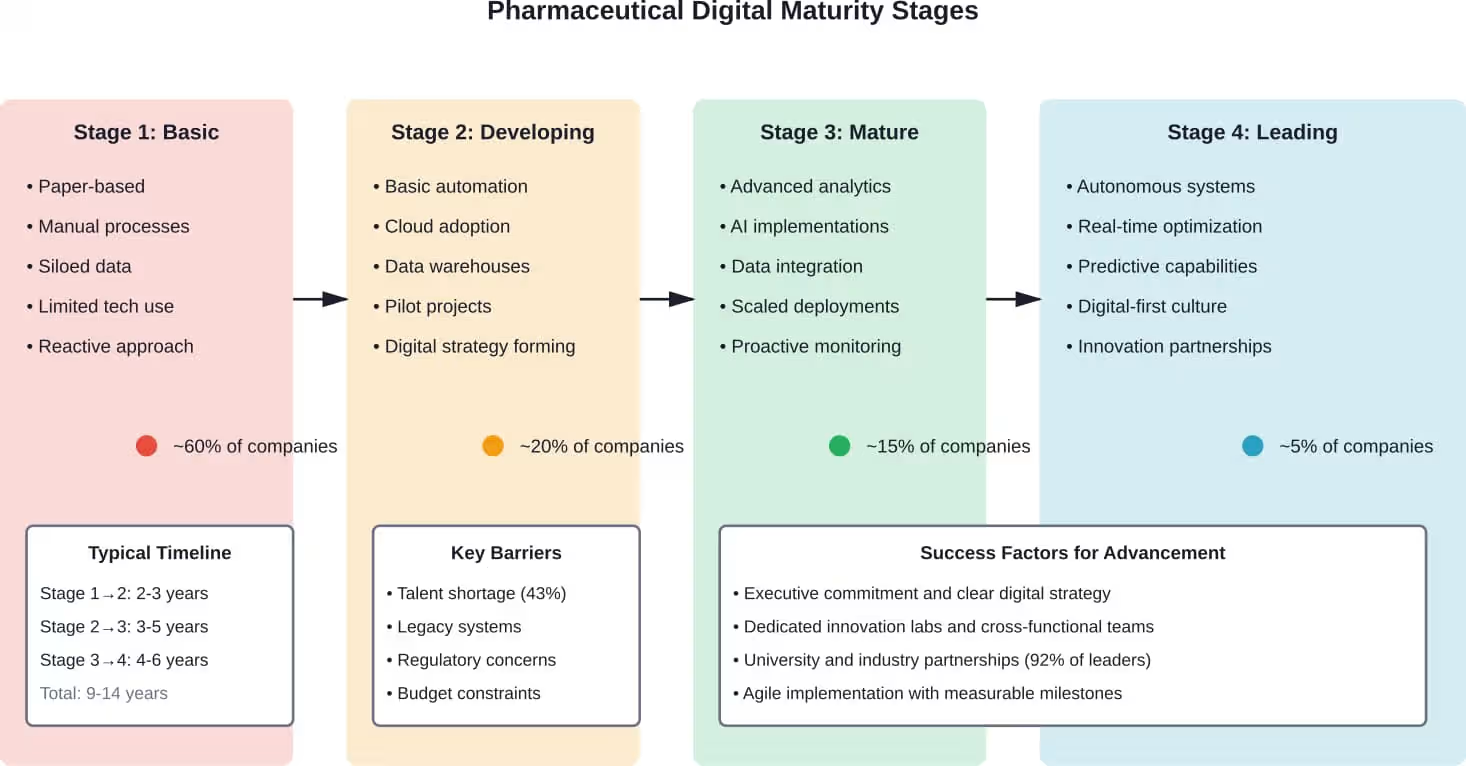
But here’s the thing—only about 20 percent of biopharma companies are digitally mature. The gap between early adopters and laggards is widening fast.
This guide examines how pharmaceutical companies are implementing digital transformation, what technologies are driving change, and which real-world examples demonstrate measurable success. Drawing from FDA guidance, recent academic research, and industry case studies, here’s what’s actually working in 2026.
Understanding Digital Transformation in the Pharmaceutical Industry
Digital transformation goes beyond simply adopting new software. It represents a fundamental rethinking of how pharmaceutical companies operate across the entire value chain.
According to the European Federation of Pharmaceutical Industries and Associations, health systems produce huge amounts of data from electronic health records, disease registries, post-authorization surveillance systems, reimbursement systems, mobile health apps, and wearable technologies. However, around 80% of this data remains untapped.
The pharmaceutical sector’s digital transformation addresses this challenge by integrating technologies that enable:
- Faster drug discovery through AI-powered molecule screening
- Predictive analytics for clinical trial optimization
- Real-time manufacturing monitoring with IoT sensors
- Personalized patient care through digital biomarkers
- Automated regulatory compliance systems
Research published in the Indian Journal of Pharmacology (2026) highlights how pharmaceutical companies are supporting patient care through expertise in key therapy areas, leveraging telemedicine and digital health platforms. These platforms offer quick solutions for health management, aligning with the growing trend of utilizing online tools.
Why Digital Transformation Matters Now
Pharmaceutical companies typically spend 10 to 15 years developing, validating, and marketing a new product. The COVID-19 pandemic demonstrated that this timeline can be dramatically compressed when digital tools are properly deployed.
The digital pharmacy market is expanding significantly with a predicted 14.42% annual growth rate, according to research from 2024. This growth reflects both market demand and proven ROI from digital investments.
Organizations that embrace digitalization early gain competitive advantages through:
- Reduced time-to-market for new therapies
- Lower R&D costs through better resource allocation
- Improved regulatory compliance and audit readiness
- Enhanced patient outcomes and engagement
- Stronger data security and intellectual property protection
Transform Pharma Growth With LENGREO
Digital transformation in pharma focuses on improving communication, compliance, and digital engagement. Companies also need effective ways to generate qualified leads.
LENGREO supports pharma companies with marketing strategies designed to increase visibility and drive business opportunities.
Services include:
- SEO and content for healthcare and pharma
- outreach campaigns and lead generation
- paid acquisition and campaign management
- funnel optimization and analytics
If you want to combine transformation with consistent lead generation, get a free consultation with LENGREO.
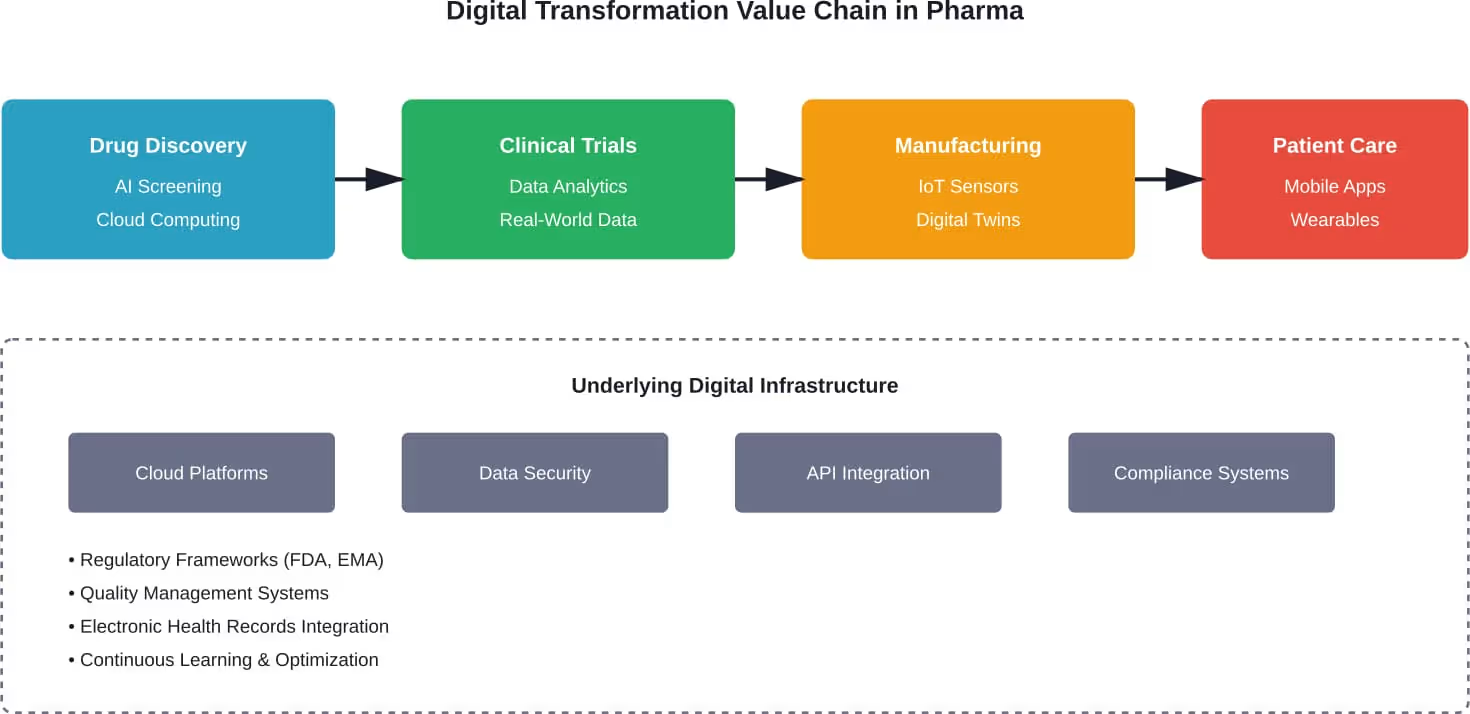
Key Technologies Driving Pharmaceutical Digital Transformation
Several core technologies form the backbone of digital transformation efforts across the pharmaceutical industry.
Artificial Intelligence and Machine Learning
AI and machine learning technologies have the potential to transform healthcare by deriving new insights from the vast amount of data generated during healthcare delivery, according to the FDA. Medical device manufacturers are using these technologies to innovate products and better assist healthcare providers.
Insilico Medicine’s AI system identified a promising fibrosis treatment candidate in under 18 months—a timeline that typically takes years to achieve. The AI model designed and validated a preclinical drug candidate in record time.
Research published in Drug Design, Development and Therapy in 2026 confirms that AI is increasingly being implemented in pharmaceutical sciences and has the potential to improve efficiency across the value chain, from drug candidate discovery to manufacturing, quality monitoring, and regulatory processes.
AI applications in pharma include:
- Molecular screening and drug candidate identification
- Predictive toxicology and safety profiling
- Clinical trial patient selection and stratification
- Manufacturing quality control and anomaly detection
- Supply chain optimization and demand forecasting
Cloud Computing Platforms
Cloud infrastructure enables pharmaceutical companies to scale computing resources dynamically, collaborate across global teams, and maintain regulatory compliance.
Cloud platforms support:
- Massive dataset storage and processing for genomic research
- Real-time collaboration between research sites
- Secure data sharing with regulatory authorities
- Disaster recovery and business continuity
- Cost-effective infrastructure for startups and smaller companies
GlaxoSmithKline deployed AI-integrated labs that leverage cloud computing for vaccine and drug development, enabling advanced analytics and R&D optimization.
Internet of Things and Smart Manufacturing
IoT sensors and connected devices enable real-time monitoring across pharmaceutical manufacturing environments. Digital twins—virtual replicas of physical systems—allow companies to simulate and optimize production processes before implementing changes.
Smart manufacturing applications include:
- Continuous temperature and humidity monitoring
- Automated quality control with vision systems
- Predictive maintenance for critical equipment
- Real-time batch tracking and genealogy
- Energy consumption optimization
The FDA’s General Principles of Software Validation provides guidance applicable to the validation of medical device software or software used to design, develop, or manufacture medical devices—a critical consideration for digitalized manufacturing systems.
Real-World Data and Digital Biomarkers
Real-world data from wearables, mobile apps, and electronic health records provides insights into how treatments perform outside controlled clinical trial environments.
Digital biomarkers—objective, quantifiable physiological data collected through digital devices—enable:
- Continuous patient monitoring between clinic visits
- Early detection of adverse events or treatment failures
- Personalized dosing based on individual response
- Remote clinical trial participation
- Post-market surveillance and pharmacovigilance
Research shows telemedicine and digital health platforms are supporting patient care through pharmaceutical company expertise in key therapy areas, enabling convenient health management.
Real-World Implementation Examples
Several pharmaceutical companies have demonstrated measurable results from digital transformation initiatives.
AI-Powered Drug Discovery
Insilico Medicine deployed AI systems that identify drug candidates through computational methods. The technology analyzes molecular structures, predicts binding affinity, and simulates biological interactions—all before synthesizing physical compounds.
The result? A fibrosis treatment candidate identified and validated in under 18 months. Traditional discovery timelines for similar compounds span multiple years.
Advanced Analytics for R&D Optimization
Data analytics platforms help pharmaceutical companies make better decisions about which drug candidates to advance, how to design clinical trials, and where to allocate research budgets.
Companies using advanced analytics report:
- Higher success rates in phase transitions
- Reduced patient recruitment timelines
- Better identification of optimal patient populations
- Improved regulatory submission quality
Dark data—past experiment results that become lost in unstructured, unharmonized legacy systems—accounts for an estimated 55% of all organization knowledge. Analytics platforms surface these insights.
Autonomous Laboratory Systems
AI combined with robotics creates autonomous labs capable of designing experiments, executing protocols, and analyzing results with minimal human intervention.
These systems accelerate research by:
- Running experiments 24/7 without fatigue
- Testing hundreds of conditions simultaneously
- Maintaining perfect documentation and traceability
- Identifying patterns humans might miss
- Iterating rapidly based on results
Digital Health Partnerships
Pharmaceutical companies are increasingly partnering with digital health startups and technology companies to access innovation and capabilities.
Research examining pharma innovation labs found that 98% reported collaboration activities, with 92% partnering with universities and 65% collaborating with other industries. Most centers demonstrated a strong digital focus, particularly on digital health solutions and remote patient monitoring.
| Technology Type | Primary Use Case | Key Benefits |
|---|---|---|
| Cloud + AI | Vaccine and drug development | Faster candidate identification, reduced costs |
| Advanced Analytics | R&D optimization | Better decision-making, higher success rates |
| AI + Robotics | Molecule screening | 24/7 operation, perfect documentation |
| Wearables + RWD | Personalized medicine | Continuous monitoring, early intervention |
| IoT + Digital Twins | Smart manufacturing | Real-time quality control, predictive maintenance |
| Mobile Apps | Patient engagement | Better adherence, remote monitoring |
Regulatory Considerations and Compliance
Digital transformation in pharma must navigate complex regulatory requirements. The FDA has established frameworks for software validation and AI-enabled medical devices that pharmaceutical companies must follow.
FDA Guidance on Software Validation
The FDA’s General Principles of Software Validation outlines validation principles applicable to medical device software or software used to design, develop, or manufacture medical devices.
Key validation principles include:
- Requirements traceability throughout development
- Risk-based approach to testing and validation
- Documentation of design controls and change management
- User needs assessment and usability testing
- Ongoing monitoring and maintenance protocols
AI and Machine Learning Regulatory Framework
The FDA recognizes that AI and machine learning involve complex and dynamic processes in development, deployment, use, and maintenance. The agency has developed specific guidance for AI-enabled medical devices that reflects these unique characteristics.
Pharmaceutical companies developing AI systems must consider:
- Algorithm transparency and explainability requirements
- Training data quality and representativeness
- Continuous learning and model updating protocols
- Performance monitoring in real-world deployment
- Bias detection and mitigation strategies
Data Privacy and Security
Digital transformation increases data collection and sharing, raising privacy and security concerns. Pharmaceutical companies must comply with regulations including GDPR in Europe, HIPAA in the United States, and various national data protection laws.
Essential security measures include:
- End-to-end encryption for data in transit and at rest
- Role-based access controls and authentication
- Audit logging and anomaly detection
- Regular security assessments and penetration testing
- Incident response and breach notification procedures
Challenges and Barriers to Digital Adoption
Despite clear benefits, pharmaceutical companies face significant obstacles in digital transformation efforts.
Talent and Skills Gap
A significant barrier to digital adoption is a lack of skills and talent. Research indicates that 43% of stakeholders say the demand for new technology is growing faster than the supply of specialists who can support it.
Pharmaceutical companies need professionals who combine:
- Domain expertise in drug development or manufacturing
- Technical skills in data science, software engineering, or cloud architecture
- Regulatory knowledge and quality management experience
- Change management and business transformation capabilities
This combination is rare. Companies must invest in training existing staff, recruiting from technology industries, and partnering with specialized consultants.
Legacy Systems and Technical Debt
Pharmaceutical companies operate critical systems that have been in place for decades. These legacy systems contain valuable historical data but weren’t designed for integration with modern cloud platforms or AI tools.
Migrating from legacy systems involves:
- Data extraction and cleansing from outdated formats
- Validation of new systems to maintain regulatory compliance
- Running parallel systems during transition periods
- Retraining staff on new interfaces and workflows
- Managing the risk of disruption to ongoing operations
Regulatory Uncertainty
Digital technologies evolve faster than regulatory frameworks. Companies implementing cutting-edge AI or digital health solutions often face uncertainty about approval requirements and validation standards.
The FDA and other regulatory bodies are developing guidance, but gaps remain. Companies must engage proactively with regulators, document their approach thoroughly, and be prepared to adapt as requirements clarify.
Organizational Culture and Change Management
Digital transformation requires more than new technology—it demands cultural change. Organizations must shift from risk-averse, hierarchical structures to more agile, experimental approaches.
Successful transformation requires:
- Executive sponsorship and visible commitment
- Clear communication about why change is necessary
- Involvement of frontline employees in solution design
- Tolerance for controlled experimentation and learning from failures
- Recognition and rewards aligned with digital objectives
Building a Digital Transformation Strategy
Pharmaceutical companies need structured approaches to digital transformation that balance ambition with practical execution.
Assess Current Digital Maturity
Start by understanding where the organization stands today. Map current capabilities across:
- Technology infrastructure and architecture
- Data management and analytics capabilities
- Digital skills and organizational structure
- Innovation processes and partnership models
- Regulatory compliance systems
This assessment reveals gaps and helps prioritize investments.
Define Clear Objectives and Use Cases
Digital transformation should solve specific business problems, not implement technology for its own sake. Identify high-value use cases where digital tools can deliver measurable impact.
Strong use cases have:
- Clear business metrics for success
- Executive sponsorship and adequate resources
- Manageable scope for initial implementation
- Potential to scale across the organization
- Alignment with strategic priorities
Start Small, Scale Fast
Pilot projects allow organizations to test approaches, learn lessons, and build confidence before committing to enterprise-wide deployments.
Effective pilots:
- Focus on a specific problem with defined success criteria
- Include diverse stakeholders from day one
- Document learnings systematically
- Plan for scaling from the beginning
- Celebrate and communicate wins
Build Partnerships and Ecosystems
No pharmaceutical company can develop all required digital capabilities internally. Partnerships accelerate innovation and bring specialized expertise.
Research shows that 98% of pharma innovation labs engage in collaboration activities, with 92% partnering with universities and 65% with other industries. These partnerships focus heavily on digital health solutions and remote patient monitoring.
Partnership models include:
- Strategic alliances with technology companies
- Investment in or acquisition of digital health startups
- Academic collaborations for research and talent development
- Industry consortia for precompetitive work on common challenges
- Engagement with regulatory bodies on guidance development
The Future of Digital Pharma
Digital transformation will continue reshaping pharmaceutical R&D, manufacturing, and patient engagement in the coming years.
Convergence of Technologies
The most powerful applications combine multiple technologies. AI plus cloud computing plus real-world data creates capabilities that exceed what any single technology delivers alone.
Expect to see:
- AI systems that continuously learn from real-world patient outcomes
- Digital twins that simulate entire clinical trial populations
- Automated regulatory submission systems that learn from approval decisions
- End-to-end traceability from molecule to patient
Precision Medicine at Scale
Digital tools make personalized treatment economically viable for larger patient populations. Wearable sensors, genetic testing, and predictive analytics enable tailoring of therapy to individual characteristics.
Precision medicine approaches will expand beyond rare diseases and oncology into chronic conditions affecting millions of patients.
Decentralized Clinical Trials
Digital health technologies enable clinical trials where patients participate from home rather than traveling to research centers. This improves access, reduces costs, and generates more naturalistic data.
Decentralized trials use:
- Telemedicine for investigator visits
- Home health services for sample collection
- Wearable sensors for continuous monitoring
- Electronic consent and patient-reported outcomes
- Direct-to-patient drug shipment
Regulatory Evolution
Regulatory agencies are adapting frameworks to accommodate digital innovation while maintaining safety and efficacy standards. The FDA’s guidance on AI in medical devices represents one example.
Future regulatory developments may include:
- Adaptive approval pathways for AI systems that learn post-market
- Real-world evidence standards for regulatory decisions
- International harmonization of digital health requirements
- Streamlined validation for cloud-based quality systems
Conclusion: Taking the Next Step
Digital transformation isn’t optional for pharmaceutical companies that want to remain competitive. The gap between digital leaders and laggards continues to widen.
Companies that act now can accelerate drug discovery, optimize manufacturing, engage patients more effectively, and navigate regulatory requirements more efficiently. Those that delay risk falling permanently behind as competitors build unassailable advantages.
Start with a clear-eyed assessment of current capabilities. Identify high-value use cases where digital tools can deliver measurable business impact. Build the talent, partnerships, and organizational culture required for sustained digital innovation.
The pharmaceutical industry has tremendous opportunities ahead. Digital transformation is the key to unlocking them.