


Brief Overview: Blogging significantly helps SEO by creating fresh, keyword-targeted content that search engines reward with better rankings. Regular blog posts increase website indexation, build topical authority, attract backlinks, and capture long-tail search traffic that static pages miss.
The question surfaces constantly in marketing discussions: does blogging actually move the needle for search engine optimization? Short answer: absolutely, when done strategically.
But here’s the thing—not all blogging creates equal SEO value. Publishing random articles won’t magically boost rankings. Strategic content that aligns with search intent, targets specific keywords, and serves genuine user needs? That’s what gets results.
According to Google’s Search Central Documentation, their automated ranking systems prioritize helpful, reliable information created to benefit people. Blogging provides the perfect vehicle for demonstrating expertise while capturing search traffic that product pages and static site content simply can’t reach.
Why Search Engines Reward Fresh Blog Content
Search algorithms favor websites that publish fresh, relevant content regularly. Static websites with only product pages or service descriptions leave massive keyword opportunities untapped.
Google’s ranking systems evaluate content freshness as a quality signal. Research from Moz shows that for one competitive query, USA Today updated every 8 minutes, New York Times every 27 minutes, and CNN every 28 minutes. While most businesses don’t need that frequency, the principle holds: fresh content signals an active, maintained website.
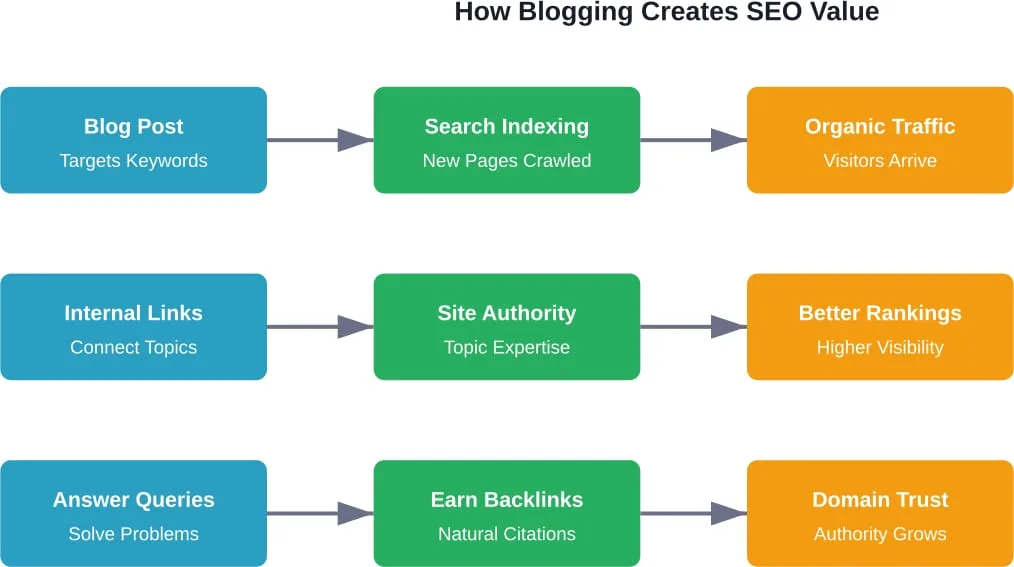
Each blog post creates a new indexed page targeting specific search queries. More indexed pages mean more opportunities to appear in search results for different keyword variations and long-tail searches.
Real talk: product pages can’t answer every question potential customers ask. But blog posts can address “how to,” “what is,” and “why” queries that bring users into the research phase of their customer journey.
The Mechanics: How Blogging Boosts Rankings
Understanding the technical relationship between blogging and search visibility helps clarify why this strategy works consistently across industries.
Expanded Keyword Coverage
Static website pages typically target broad, competitive keywords. Blog content captures mid-tail and long-tail variations that convert at higher rates.
For example, a motorcycle parts retailer targeting “motorcycle handlebars” faces steep competition. But blog posts addressing “how to choose handlebars for long-distance touring” or “best handlebar height for cruiser comfort” capture specific user intent with less competition.
According to practitioners in the field, a motorcycle handlebar company increased search visibility and organic traffic in just a year of SEO blogging.
Internal Linking Architecture
Blog posts strengthen website structure through internal links. Each article can link to relevant product pages, service descriptions, and other blog content, distributing link equity throughout the site.
Practitioners working with internal linking initiatives at scale have observed consistent success with internal links over time. Strategic internal links from blog posts help search engines understand site hierarchy and topic relationships while keeping users engaged longer.
Backlink Attraction
Quality blog content naturally attracts backlinks from other websites. When articles provide genuine value—original research, comprehensive guides, unique insights—other sites reference them.
Research on authoritative links indicates backlinks from trusted domains significantly impact rankings. Blog posts that answer specific questions or solve particular problems earn these citations more readily than product pages.
A single well-researched blog post can generate backlinks that benefit the entire domain’s authority, improving rankings across all pages.
Topical Authority and Expert Positioning
Google’s ranking systems evaluate whether websites demonstrate genuine expertise in their subject matter. Consistent blogging on related topics builds this topical authority.
Publishing multiple blog posts covering different aspects of a subject area signals depth of knowledge. A financial services site covering budgeting, investment basics, retirement planning, and tax strategies demonstrates broader expertise than one with only service pages.
This concept aligns with Google’s focus on helpful, reliable, people-first content. The more comprehensive and authoritative the content collection, the more likely search systems will recognize the site as a trusted resource.
Blogging vs. Static Pages: What’s the Difference?
Understanding the strategic distinction clarifies why both content types matter for comprehensive SEO.
| Aspect | Static Pages | Blog Posts |
|---|---|---|
| Primary Purpose | Convert ready buyers | Attract, educate, build trust |
| Update Frequency | Rarely changed | Regular new content |
| Keyword Focus | Broad, commercial terms | Long-tail, informational queries |
| Content Depth | Concise, focused | Comprehensive, exploratory |
| Search Intent | Transactional | Informational, navigational |
| Backlink Potential | Limited | High for quality content |
Both content types work together. Blog posts bring visitors into the funnel through informational searches, then internal links guide them toward conversion-focused static pages.
Strategic Blogging: What Actually Works
Random blogging won’t deliver results. Strategic content requires research, planning, and alignment with business goals.
Keyword Research First
Effective blog SEO starts with identifying what target audiences actually search for. Tools reveal search volume, competition levels, and question-based queries.
Focus on keywords where the business can realistically rank. Extremely competitive terms require domain authority most sites don’t possess. Mid-competition keywords with clear search intent offer better opportunities.
Answer Real Questions
According to Google’s SEO Starter Guide, content should help users by addressing their actual needs. Blog posts that directly answer common customer questions perform better than promotional content disguised as information.
Customer service teams, sales conversations, and forum discussions reveal what people want to know. Those questions become blog topics that capture search traffic.
Content Depth Matters
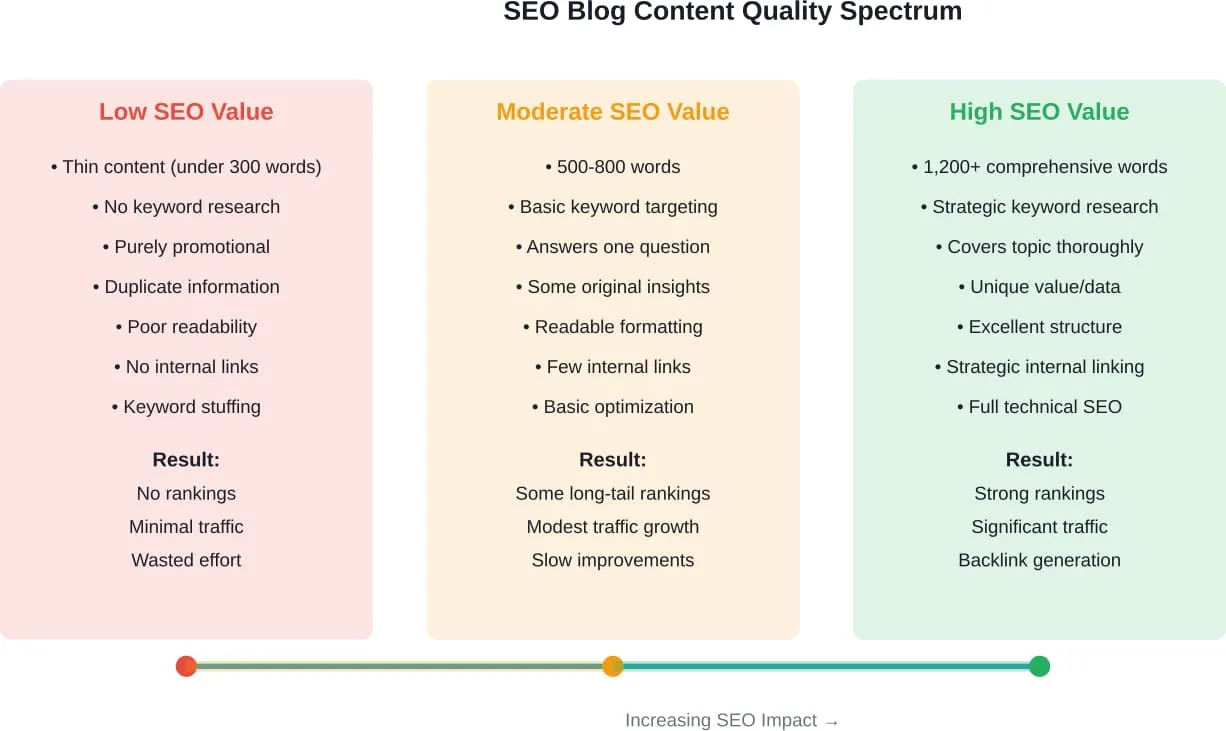
On-page ranking factors research indicates these elements significantly impact search visibility when implemented properly. Thin, superficial blog posts don’t compete with comprehensive articles that thoroughly cover topics.
This doesn’t mean every post needs 3,000 words. But it does mean fully addressing the topic, covering related subtopics, and providing actionable information users can’t easily find elsewhere.
Optimize Technical Elements
Content quality matters most, but technical optimization ensures search engines can properly crawl, understand, and rank blog posts.
Essential technical elements include:
- Title tags with primary keywords near the beginning
- Meta descriptions that encourage clicks from search results
- Header hierarchy (H1, H2, H3) that organizes content logically
- URL structure that’s clean and includes keywords
- Image alt text describing visuals for accessibility and SEO
- Internal links connecting related content strategically
On-page ranking factors research indicates these elements significantly impact search visibility when implemented properly.
Use Blogging as a Structured SEO Tool
Blogging supports keyword targeting, internal linking, and topical authority. Lengreo helps define a content plan based on search intent and competitive gaps. The focus is on measurable traffic growth, not random posting. Content is aligned with business goals.
Ready to Turn Blogging Into SEO Growth?
Talk with Lengreo to:
- build a keyword driven content plan
- structure internal linking properly
- track traffic and ranking impact
👉 Start with an SEO content strategy session with Lengreo.
Common Blogging SEO Mistakes to Avoid
Even well-intentioned blogging efforts can fail when certain mistakes undermine effectiveness.
Publishing Without Strategy
Writing about random topics because they seem interesting doesn’t build search visibility. Each post should target specific keywords with measurable search volume and clear relevance to business goals.
Prioritizing Quantity Over Quality
Publishing five mediocre posts weekly won’t outperform one exceptional post. Google’s systems specifically reward helpful, reliable content created for users, not content created just to manipulate rankings.
Better to publish monthly with genuine depth than churn out thin weekly posts that add little value.
Ignoring Search Intent
Keyword research tools show search volume but don’t always clarify intent. A keyword with high volume might attract visitors who aren’t potential customers.
Analyzing current search results reveals what type of content already ranks. If Google shows listicles for a keyword, an in-depth guide might not rank well. Match content format to what search engines already consider relevant for that query.
Forgetting Mobile Optimization
Google’s page experience signals include mobile-friendliness as a ranking factor. Blog posts that display poorly on mobile devices suffer in rankings regardless of content quality.
Test posts on multiple devices before publishing. Ensure readable font sizes, appropriate spacing, and fast load times on mobile connections.
Measuring Blog SEO Performance
Tracking metrics proves whether blogging efforts generate ROI and reveals what adjustments improve results.
| Metric | What It Measures | Why It Matters |
|---|---|---|
| Organic Traffic | Visitors from search engines | Direct indicator of SEO success |
| Keyword Rankings | Position for target terms | Shows visibility improvements |
| Click-Through Rate | Clicks vs. impressions in search | Indicates title/description effectiveness |
| Backlinks Earned | External sites linking to posts | Builds domain authority |
| Engagement Metrics | Time on page, bounce rate | Signals content quality to search engines |
| Conversions | Actions taken after reading | Ties SEO to business outcomes |
Rank tracking guidance indicates monitoring keyword positions over time helps identify trends and measure strategy effectiveness. Rankings fluctuate, but sustained improvements indicate successful optimization.
Blog Frequency: How Often Should You Publish?
The ideal publishing schedule depends on resources, quality capabilities, and competition levels.
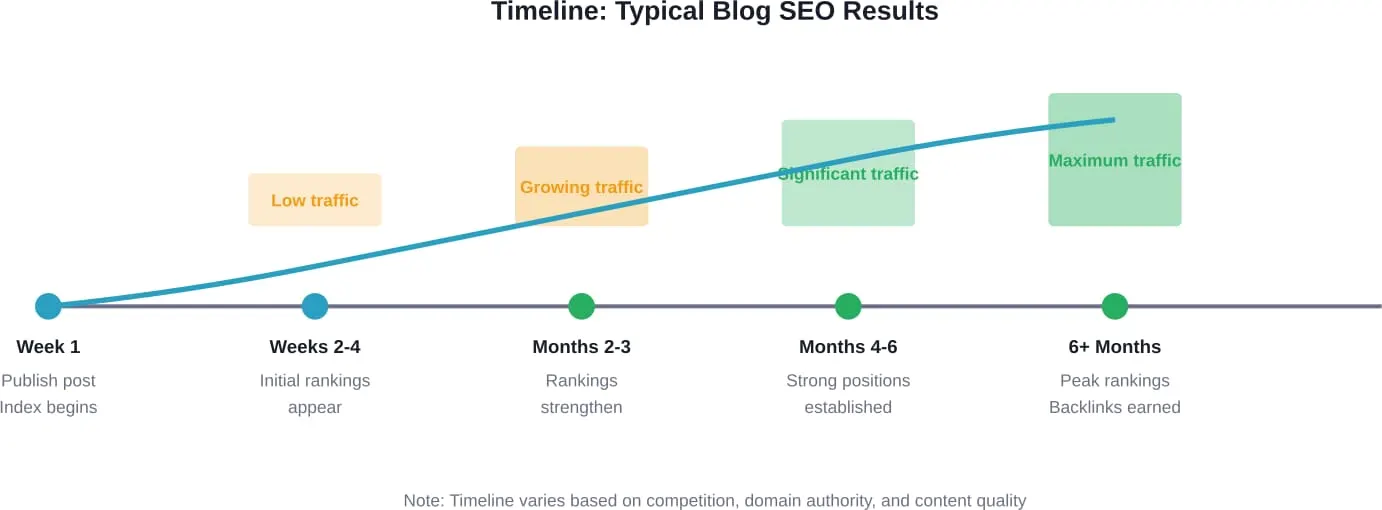
Generally speaking, consistency matters more than frequency. Publishing one quality post monthly on schedule outperforms sporadic bursts of multiple posts followed by months of silence.
Search engines favor sites that demonstrate ongoing activity. A blog with regular updates signals an active, maintained website. But frequency shouldn’t compromise quality—two exceptional monthly posts beat eight mediocre weekly ones.
For most businesses, one to four quality posts monthly strikes the right balance. Highly competitive industries might require more frequent publishing to keep pace with competitors.
Repurposing and Updating Existing Posts
Creating new content isn’t the only way blogging helps SEO. Updating existing posts can deliver significant ranking improvements.
Research on content freshness shows that updating content with new information and improved comprehensiveness can restore or boost rankings, as practitioners working with news publishers have demonstrated.
Audit older blog posts quarterly. Identify posts that once ranked well but have dropped, or posts targeting valuable keywords that never achieved strong rankings. Update them with:
- Current statistics and examples
- Additional sections covering related subtopics
- Improved formatting and readability
- Better internal linking to newer related posts
- Updated title tags and meta descriptions
This approach maximizes ROI from existing content investments while signaling freshness to search engines.
Local SEO Benefits of Blogging
Location-based businesses gain additional SEO advantages through blogging that incorporates local elements.
Blog posts targeting “near me” searches or location-specific keywords help businesses appear in local search results. A plumber writing about “common winter pipe problems in [city name]” captures local search traffic competitors miss.
Local events, community involvement, regional trends, and area-specific advice all provide blogging opportunities that strengthen local search visibility while demonstrating community connection.
Does Blogging Still Work in 2026?
Skepticism surfaces occasionally about whether blogging remains relevant given evolving search technologies.
The reality: blogging’s effectiveness continues because it aligns with how search engines evaluate content. Google’s systems still prioritize comprehensive, helpful information that serves user needs—exactly what strategic blogging delivers.
Changes in search technology actually increase blogging’s importance. AI-powered search features like featured snippets and “People Also Ask” boxes pull content from blog posts that thoroughly answer specific questions.
Community discussions reflect ongoing debate about blogging value. Some practitioners question ROI, especially for retail businesses where readers seem scarce. But this perspective often misses the point—blog success isn’t measured by direct readership but by search visibility and the traffic it generates.
When someone searches “best practices for X” and finds a company blog post answering their question, they might not “read the blog regularly.” But they found the company through search, which wouldn’t happen without that content.
Taking Action: Building Your Blog SEO Strategy
Understanding blogging’s SEO benefits means little without implementation. Building an effective strategy requires several steps.
Start with keyword research identifying opportunities where the business can realistically compete. Tools reveal search volume and competition, but manual analysis of current search results shows what actually ranks.
Create an editorial calendar mapping topics to keywords with clear publication dates. This ensures consistent publishing without last-minute scrambling for ideas.
Establish quality standards before writing begins. Define minimum word counts, required elements (headers, internal links, images), and review processes. Quality consistency matters more than publishing frequency.
Optimize technical elements systematically. Use checklists ensuring every post includes proper title tags, meta descriptions, header hierarchy, and internal linking before publication.
Track performance religiously. Set up analytics to monitor traffic, rankings, and conversions attributable to blog content. Review metrics monthly, adjusting strategy based on what actually works.
The businesses seeing the strongest blog SEO results share common traits: strategic keyword targeting, genuine user focus, consistent quality, and systematic measurement. Random blogging rarely succeeds, but strategic blogging consistently delivers measurable search visibility improvements.
According to Google’s core guidance, search ranking systems reward content created to benefit people. That principle drives successful blog SEO—not manipulation tactics, not keyword stuffing, not promotional fluff. Helpful content that genuinely serves user needs earns rankings naturally.
Start with one well-researched, comprehensively written post. Optimize it properly, publish it, track results. Then repeat. The cumulative effect builds over time, creating expanding search visibility that compounds with each additional quality post.
Blogging helps SEO when done strategically. The question isn’t whether it works—the evidence clearly shows it does. The question is whether businesses will commit to the consistent, quality-focused effort required to generate results.