


Search engine optimization isn’t just a marketing tactic anymore. It’s become essential infrastructure for businesses trying to get found online. That’s created a massive opportunity for entrepreneurs who understand how search engines work and can deliver results for clients.
But here’s the thing—plenty of people jump into the SEO business without the proper foundation. They understand optimization techniques but lack the business fundamentals to build something sustainable. The result? Most SEO businesses struggle to scale beyond a few thousand dollars per month.
This guide walks through everything needed to launch an SEO business that actually grows. From the initial business plan to landing those first clients, these steps create a foundation for long-term success.
Understanding the SEO Business Landscape
Before diving into the mechanics of starting an agency, it’s worth understanding what businesses actually need. Search engines have evolved dramatically, and so have client expectations.
Companies aren’t just looking for keyword rankings anymore. They want qualified traffic that converts into customers. They need content strategies, technical optimization, local search visibility, and increasingly, strategies for AI-powered search platforms.
According to research from MIT CISR published on October 16, 2025, business models are evolving rapidly with AI advancements. SEO businesses need to adapt their strategies to accommodate not just traditional search engines like Google and Bing, but also AI search platforms that are changing how people find information.
The market opportunity is substantial. Businesses of all sizes need SEO help, from local shops trying to attract nearby customers to enterprise companies managing complex websites. The challenge is positioning services effectively and delivering measurable results.
Step 1: Create a Comprehensive Business Plan
Every successful business starts with a plan. According to the U.S. Small Business Administration, a business plan serves as the foundation that guides each stage of starting and managing a business.
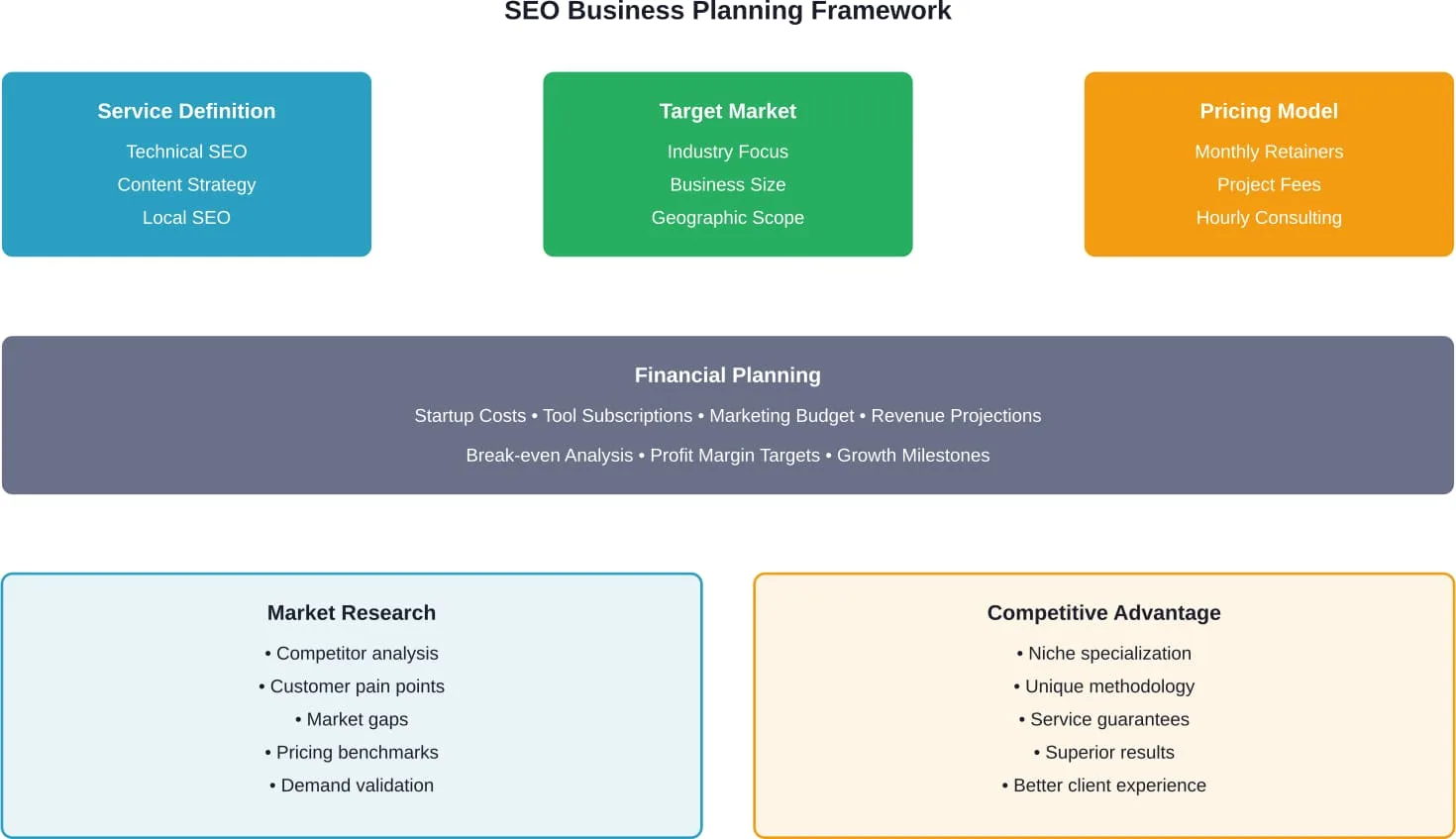
For an SEO business, the plan should cover several critical areas.
Define Service Offerings
What specific SEO services will the business provide?
Options include:
- Technical SEO audits and implementation
- Content strategy and optimization
- Local SEO for businesses serving specific geographic areas
- Link building and authority development
- SEO consulting and training
- Ongoing monthly retainers for comprehensive optimization
Starting with a focused service offering often works better than trying to do everything. Specialization makes marketing easier and helps build expertise faster.
Identify Target Market
Which businesses will benefit most from the services? The U.S. Small Business Administration recommends conducting thorough market research to understand potential customers and businesses already operating in the area.
Consider factors like:
- Industry verticals (healthcare, legal, home services, e-commerce)
- Business size (local businesses, mid-market companies, enterprises)
- Geographic focus (local, regional, national, international)
- Current SEO maturity (businesses with no SEO versus those looking to improve existing efforts)
According to the U.S. Small Business Administration, local businesses typically serve customers within a 75-mile radius. These businesses have specific needs that differ from national e-commerce companies.
Financial Projections and Pricing
How will services be priced?
Common SEO business models include:
- Project-based pricing for specific deliverables (audits, site migrations)
- Monthly retainers for ongoing optimization work
- Hourly consulting rates
- Performance-based pricing tied to results
Research from Crown published on January 6, 2026 emphasizes the importance of aligning SEO strategy with financial goals. If a service has a 50% profit margin while another has only 15%, business development efforts should prioritize the higher-margin offerings.
The business plan should include realistic revenue projections, startup costs, and ongoing expenses for tools, marketing, and operations.
Step 2: Choose the Right Business Structure
The legal structure impacts taxes, liability, and how the business operates. The U.S. Small Business Administration recommends selecting a business structure that provides the right balance of legal protections and benefits.
Common options for SEO businesses include:
| Structure | Best For | Tax Treatment | Liability Protection |
|---|---|---|---|
| Sole Proprietorship | Solo consultants testing the market | Pass-through to personal income | No separation from personal assets |
| LLC | Most SEO businesses and agencies | Pass-through or elect corporate | Personal assets protected |
| S Corporation | Profitable businesses wanting tax optimization | Pass-through with salary requirements | Personal assets protected |
| C Corporation | Businesses seeking outside investment | Corporate tax rates apply | Strongest liability protection |
Most SEO businesses start as either sole proprietorships or LLCs. The LLC provides liability protection without the complexity of corporate structures. As the business grows and becomes more profitable, converting to an S Corporation can offer tax advantages.
Business location matters too. According to the SBA, location determines zoning laws, taxes, and regulations. Even online-based SEO businesses need to register in the state where they operate.
Step 3: Handle Legal Requirements and Paperwork
Starting any business involves completing legal activities and paperwork. For an SEO business, this typically includes:
Business Registration
Register the business name with the appropriate state agency. This protects the name and makes the business official. If operating under a name different from the owner’s legal name, a DBA (Doing Business As) registration may be required.
Tax Identification
Obtain an Employer Identification Number (EIN) from the IRS. This functions like a Social Security number for the business and is needed for tax purposes, hiring employees, and opening business bank accounts.
Licenses and Permits
While SEO businesses typically don’t require special licenses, some localities require general business licenses. Research requirements based on business location.
Business Insurance
Consider professional liability insurance (errors and omissions coverage). This protects against claims that professional advice or services caused financial harm to clients. General liability insurance covers other business risks.
Contracts and Agreements
Develop a solid SEO service agreement that outlines:
- Scope of services and deliverables
- Timeline and milestones
- Payment terms and pricing
- Performance expectations and guarantees
- Confidentiality provisions
- Termination conditions
- Intellectual property ownership
Having clear contracts prevents misunderstandings and protects both the business and clients.
Step 4: Assemble Essential SEO Tools and Resources
SEO businesses need tools to research keywords, analyze competitors, audit websites, track rankings, and report results to clients. The right toolkit depends on service offerings and budget.
Core SEO Tools
Professional SEO work requires access to data that free tools can’t provide. Essential categories include:
- Keyword Research Tools: These help identify search terms potential customers use, search volume data, competition levels, and related keyword opportunities.
- Technical SEO Tools: Crawl websites to identify technical issues like broken links, duplicate content, slow page speeds, mobile usability problems, and indexing issues.
- Backlink Analysis Tools: Monitor link profiles, identify link building opportunities, analyze competitor backlinks, and track domain authority metrics.
- Rank Tracking Tools: Monitor keyword rankings across search engines, track local search positions, and measure visibility changes over time.
- Analytics Platforms: Google Analytics and Google Search Console are free essentials. They provide traffic data, user behavior insights, and search performance metrics.
Moz is trusted by 500,000+ brands and agencies and offers comprehensive SEO tools covering keyword research, link analysis, and rank tracking. Their Beginner’s Guide to SEO contains major sections covering everything from how search engines work to measuring SEO success.
Supporting Business Tools
Beyond SEO-specific software, agencies need:
- Project management platforms for organizing client work
- Communication tools for client interaction
- Reporting software to present results professionally
- Invoicing and accounting systems
- Time tracking for billing and productivity
Starting lean makes sense. Begin with essential tools and add specialized software as the client base grows and revenue increases.
Step 5: Develop Service Packages and Pricing
How services are packaged and priced directly impacts profitability and client acquisition. The goal is creating offers that attract ideal clients while generating sustainable revenue.
Service Packaging Strategies
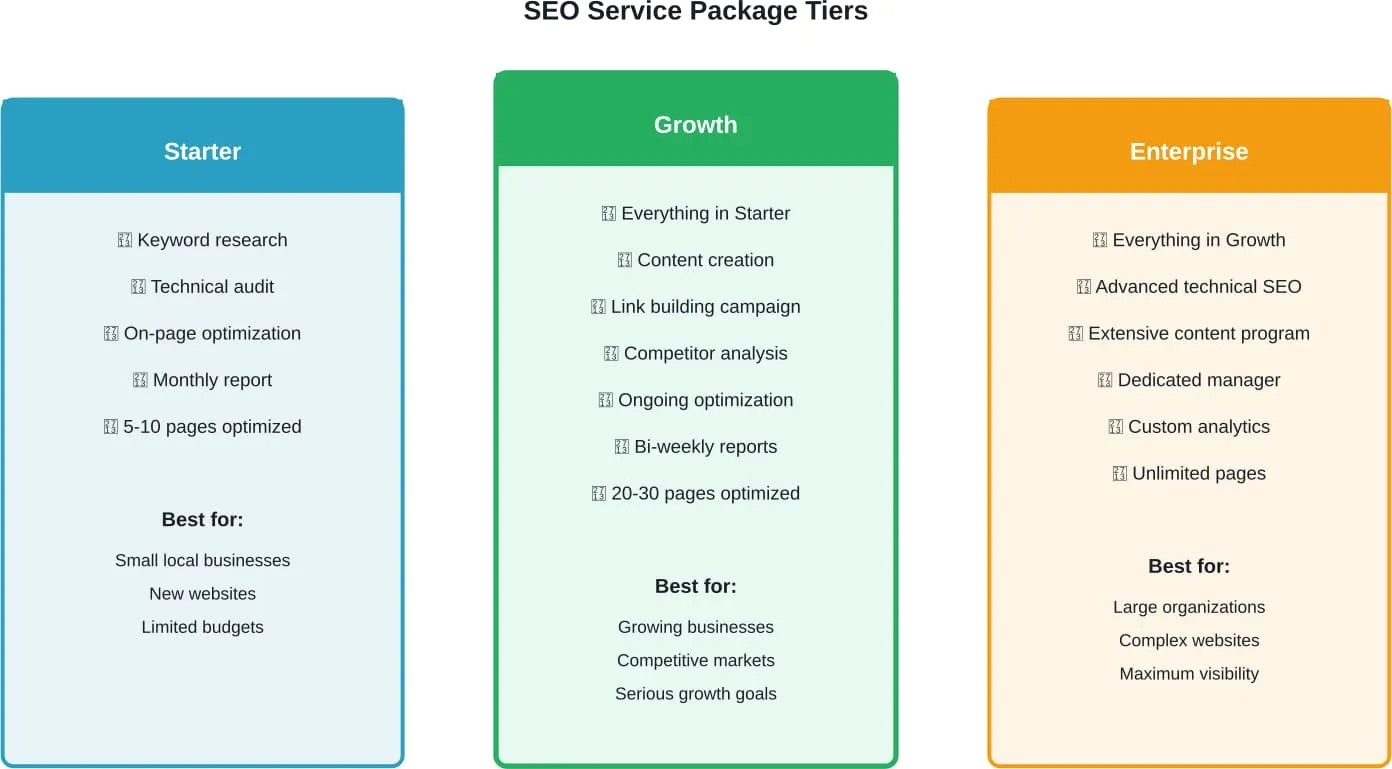
Most successful SEO businesses offer tiered service packages. This might look like:
- Starter Package: Basic optimization for smaller businesses. Includes keyword research, on-page optimization for key pages, technical audit with priority fixes, and monthly reporting.
- Growth Package: Comprehensive optimization for businesses ready to scale. Adds content creation, ongoing optimization, link building, competitive analysis, and more frequent reporting.
- Enterprise Package: Full-service SEO for larger organizations. Includes everything in Growth plus advanced technical SEO, extensive content programs, dedicated account management, and custom analytics.
Packaging services this way gives clients clear options while making the sales process more straightforward.
Pricing Considerations
SEO pricing varies widely based on factors like:
- Market and geographic location
- Service scope and complexity
- Business size and industry
- Expected time investment
- Level of expertise and track record
Pricing too low attracts difficult clients and makes profitability impossible. Pricing appropriately for the value delivered builds a sustainable business. Research from the Ohio State University Fisher College of Business notes that SEO can yield excellent ROI for businesses, justifying professional pricing.
When starting out, focus on delivering exceptional results rather than competing on price. Strong results lead to testimonials, referrals, and the ability to raise rates as expertise grows.
Step 6: Build an Online Presence That Demonstrates Expertise
An SEO business that can’t rank its own website faces immediate credibility issues. The business website serves as both a marketing tool and proof of expertise.
Website Essentials
The business website should include:
- Clear Service Descriptions: Explain what’s offered, who it’s for, and how it helps businesses achieve goals. Avoid jargon and focus on outcomes clients care about.
- Case Studies and Results: Demonstrate success with specific examples. Show the challenges clients faced, strategies implemented, and results achieved. Metrics matter—traffic increases, ranking improvements, conversion growth.
- Educational Content: Publish blog posts, guides, and resources that showcase expertise. This content serves multiple purposes: attracting organic search traffic, educating potential clients, and demonstrating knowledge.
- Trust Signals: Include testimonials from satisfied clients, certifications or credentials, industry affiliations, and contact information that shows legitimacy.
Content Marketing Strategy
According to the U.S. Small Business Administration, a marketing plan describes the actions you’ll take to persuade potential customers to buy your products or services.
For SEO businesses, content marketing is particularly effective because it:
- Attracts organic traffic from people searching for SEO information
- Demonstrates expertise in the field
- Builds authority and trust before sales conversations
- Creates shareable assets for social media and outreach
- Generates long-term compounding value
Focus content on topics potential clients search for: SEO basics, common problems, industry-specific strategies, and guides that address their pain points.
Step 7: Develop a Client Acquisition Strategy
The biggest challenge for new SEO businesses? Landing those first clients. Without a portfolio or testimonials, convincing businesses to trust a new agency requires strategy.
Starting with Warm Connections
The easiest first clients often come from existing networks.
Reach out to:
- Former colleagues and employers
- Personal and professional contacts
- Local business communities and chambers of commerce
- Industry associations and networking groups
Offering initial services at discounted rates in exchange for case studies and testimonials can help build a portfolio quickly.
Local Marketing Strategies
For SEO businesses targeting local clients, the U.S. Small Business Administration published strategies on March 21, 2017 for attracting nearby prospects.
These include:
- Targeting local audiences on social platforms
- Participating in community events and sponsorships
- Building relationships with complementary businesses for referrals
- Optimizing for local search to be found by nearby businesses
The SBA suggests starting with modest budgets—they recommend a $100 test campaign for platforms like Facebook to reach local users.
Outbound Prospecting
Proactive outreach to potential clients includes:
- Cold Email Campaigns: Research businesses that could benefit from SEO, personalize outreach based on specific opportunities identified, and offer genuine value upfront like free audits or insights.
- LinkedIn Outreach: Connect with decision-makers at target companies, engage with their content before pitching, and provide helpful insights that demonstrate expertise.
- Speaking and Events: Present at business groups, host workshops teaching SEO basics, and participate in industry conferences to build visibility and credibility.
Partnership and Referral Programs
Build relationships with businesses that serve similar clients but offer different services:
- Web designers and developers who build sites needing optimization
- Marketing agencies that don’t specialize in SEO
- Business consultants working with companies needing digital visibility
- Accounting and legal firms serving business owners
Offer referral commissions or reciprocal arrangements that make partnerships mutually beneficial.
Step 8: Deliver Results and Retain Clients
Landing clients is one challenge. Keeping them is another entirely. Client retention determines long-term success more than almost any other factor.
Setting Proper Expectations
SEO takes time. Google’s Search Engine Optimization Starter Guide emphasizes that SEO is about helping search engines understand your content and helping users find your site through search engines.
Be honest about timelines. Significant results typically take several months. Setting realistic expectations prevents disappointment and premature cancellations.
Focus on Outcomes That Matter
Rankings are nice, but businesses care about outcomes: more qualified traffic, increased leads, higher revenue. Connect SEO work to business results whenever possible.
Track metrics like:
- Organic traffic growth from target keywords
- Conversion rate improvements from organic visitors
- Lead quality and quantity from search
- Revenue attributed to organic channels
Communication and Reporting
Regular communication keeps clients informed and engaged.
Monthly reports should explain:
- Work completed during the period
- Performance changes and trends
- Insights and opportunities identified
- Plans for the coming period
Make reports visual and easy to understand. Avoid jargon and focus on what clients care about.
Continuous Improvement
Search engines constantly evolve. Strategies that worked last year may be less effective today. Stay current with algorithm updates, industry changes, and emerging best practices.
According to Search Engine Land’s guidance on building SEO into websites from the ground up, published on August 23, 2023, SEO should be infused into each stage of the process from strategy to launch. This principle applies equally to ongoing client work.
Step 9: Scale Operations Strategically
Once the business has clients and consistent revenue, growth becomes the next challenge. But scaling too quickly or in the wrong ways can damage quality and client satisfaction.
Building a Team
At some point, doing all the work personally becomes impossible. Options for expanding capacity include:
- Hiring Employees: Brings people fully into the business with dedicated focus but involves overhead, management responsibilities, and fixed costs.
- Working with Contractors: Provides flexibility and specialized skills for specific tasks without full-time commitments.
- Outsourcing Components: Some SEO businesses outsource specific deliverables like content writing or link building to focus internal resources on strategy and client relationships.
Each approach has tradeoffs. The right choice depends on business goals, available capital, and management preferences.
Systematizing Processes
Growth requires repeatable systems.
Document processes for:
- Client onboarding and project kickoff
- Keyword research and strategy development
- Technical audits and implementation
- Content creation and optimization
- Reporting and client communication
Systems ensure consistent quality regardless of who handles specific tasks. They also make training new team members faster and easier.
Expanding Service Offerings
As expertise grows, consider expanding into related services that clients need:
- Content marketing and strategy
- Pay-per-click advertising management
- Conversion rate optimization
- Social media marketing
- Website development and design
Additional services increase revenue per client and reduce dependence on SEO alone. But avoid spreading too thin—maintain quality in core offerings first.
Scaling Your Agency with Lengreo
Building a sustainable SEO business often requires more than just technical knowledge; it requires a partner who can help you bridge the gap between strategy and execution. At Lengreo, we move beyond pre-packaged solutions to act as your complete marketing and tech partner. Our team specializes in helping agencies scale through white-label SEO, comprehensive website audits, and hyper-personalized lead generation strategies that have historically increased client acquisition for our partners by up to 400%.
Whether you are just starting out or looking to optimize an existing firm, we provide the infrastructure needed to deliver high-impact results. From technical content planning to conversion rate optimization, our goal is to help you nurture meaningful relationships with high-value decision-makers. By integrating our specialized SEO services into your business model, you can focus on high-level consulting while we handle the data-driven optimizations that drive measurable ROI for your clients.
Common Pitfalls to Avoid
Understanding mistakes others make helps avoid them. Some common problems that limit SEO business success:
Underpricing Services
Competing on price attracts difficult clients and makes profitability impossible. Quality SEO requires time, expertise, and investment in tools. Price accordingly.
Overpromising Results
Guaranteeing specific rankings or unrealistic timelines damages credibility when results don’t materialize. Be honest about what’s achievable and the time required.
Poor Client Selection
Not every business is a good fit. Clients with unrealistic expectations, no budget for proper work, or unwillingness to make necessary website changes cause frustration and poor outcomes. Qualify prospects carefully.
Neglecting Business Fundamentals
Being great at SEO doesn’t automatically translate to running a successful business. Cash flow management, contracts, insurance, and proper accounting matter just as much as technical expertise.
Failing to Stay Current
Search algorithms change constantly. Strategies effective years ago may be obsolete today. Continuous learning is essential for staying competitive and delivering results
| Common Mistake | Why It Happens | How to Avoid It |
|---|---|---|
| Underpricing | Trying to compete with established agencies | Focus on value and results, not lowest price |
| Overpromising | Desperation to close deals | Set realistic expectations backed by experience |
| Poor clients | Taking anyone who’ll pay | Qualify prospects and turn down bad fits |
| Weak contracts | Using generic templates | Invest in proper legal agreements |
| Outdated tactics | Not investing in ongoing education | Dedicate time weekly to learning and testing |
Measuring Business Success
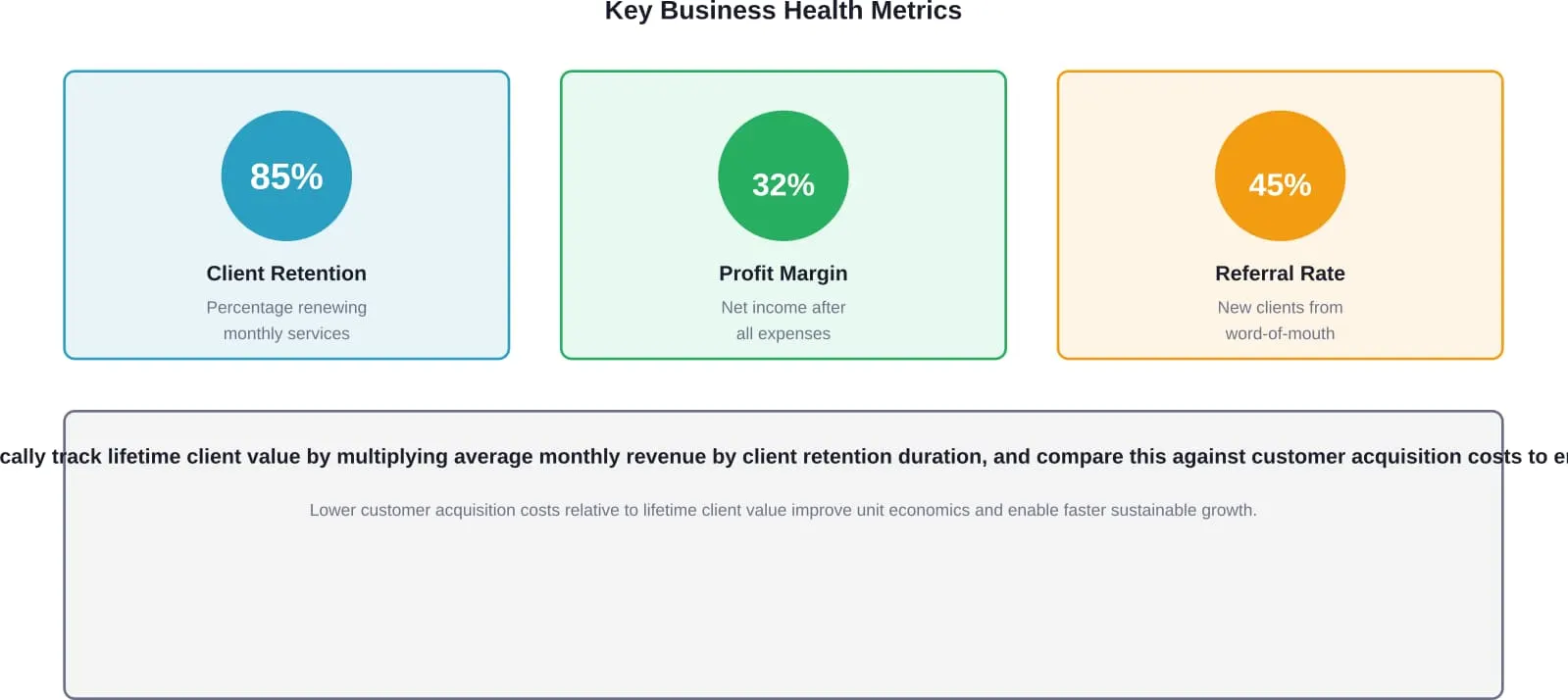
Track metrics that indicate business health beyond just revenue:
- Client Retention Rate: What percentage of clients renew or continue services? High retention indicates satisfied clients and predictable revenue.
- Client Lifetime Value: How much revenue does the average client generate over the entire relationship? Increasing this metric improves profitability.
- Profit Margins: Revenue matters less than what’s kept after expenses. Track margins by service type and client to identify most profitable work.
- Client Acquisition Cost: How much does it cost to land a new client? Lower acquisition costs improve profitability and enable faster growth.
- Referral Rate: What percentage of new clients come from referrals? High referral rates indicate strong satisfaction and reduce marketing costs.
The U.S. Small Business Administration emphasizes in their business guide that running a business successfully requires mastering day-to-day operations and preparing for long-term success. Regular metric reviews help identify problems early and opportunities for improvement.
Conclusion: Building a Sustainable SEO Business
Starting an SEO business offers significant opportunity for those willing to combine technical expertise with solid business fundamentals. The demand for effective search optimization continues growing as businesses recognize that online visibility directly impacts revenue.
Success requires more than understanding how search engines work. It demands careful planning, proper legal structure, appropriate pricing, effective marketing, and relentless focus on client results. According to the U.S. Small Business Administration’s 10-step framework for starting a business, successful launches involve planning, making key financial decisions, and completing necessary legal activities.
The businesses that thrive focus on delivering measurable outcomes for clients while building sustainable operations. They price services appropriately, set realistic expectations, invest in continuous learning, and systematize processes as they scale.
Starting won’t be easy. Competition exists, client expectations can be challenging, and search algorithms constantly change. But for those committed to excellence and willing to invest the necessary effort, building a profitable SEO business remains very achievable in 2026.
Ready to launch? Start with that business plan. Define what services will be offered, identify the target market, and map out the first 90 days of operation. Take action on the legal requirements and assemble the essential tools. Then focus energy on landing those first clients and delivering exceptional results that lead to testimonials, referrals, and sustainable growth.
The businesses that succeed are those that start. Take the first step today.