


Outsourcing SEO sounds simple until you try it. There’s no shortage of agencies and freelancers promising fast wins, but picking the right partner, and knowing what to hand off, is where things get tricky. If you’re juggling ten priorities and SEO keeps slipping to the bottom of your list, this guide is for you. We’ll break down how to outsource SEO properly, what to watch for, and how to keep things aligned with your actual business goals.
What Does It Mean to Outsource SEO?
Outsourcing SEO means hiring someone outside your company to handle parts (or all) of your search engine optimization work. That could be a freelancer, an agency, or a specialist provider. Instead of building an internal team or doing everything yourself, you lean on external expertise.
But outsourcing doesn’t mean handing over control. Done well, it’s a collaboration where you set the direction, and your SEO partner helps you get there.
Why Businesses Outsource SEO
For most companies, it boils down to three things: time, skill, and ROI. You might recognize one of these situations:
- You’re trying to grow traffic but don’t know what to fix first.
- Your in-house team is maxed out.
- You need faster results but don’t want to hire full-time.
SEO is a long game, but certain tasks can be outsourced to speed things up without cutting corners. When you outsource the right way, you stay focused on strategy while experts handle execution.
How We Approach SEO Outsourcing at Lengreo
When companies come to us at Lengreo looking to outsource SEO, it’s usually because they need clarity, not just execution. We step in as an extension of the internal team, starting with a clear understanding of business goals, existing traffic patterns, and where organic search can realistically support growth. Instead of offering fixed packages, we focus on audits, keyword research, and technical reviews to identify what actually needs attention first. That foundation matters, especially when SEO is outsourced and expectations need to stay grounded.
Our SEO work typically sits alongside broader demand generation and lead acquisition efforts. That means we pay close attention to how search traffic converts, not just how it ranks. We handle core SEO tasks like website audits, on-page optimization, local SEO, link building, and content planning, but always in a way that supports qualified leads rather than surface-level metrics. For many clients, outsourcing SEO works best when it connects cleanly with sales funnels, outreach campaigns, and paid traffic insights.
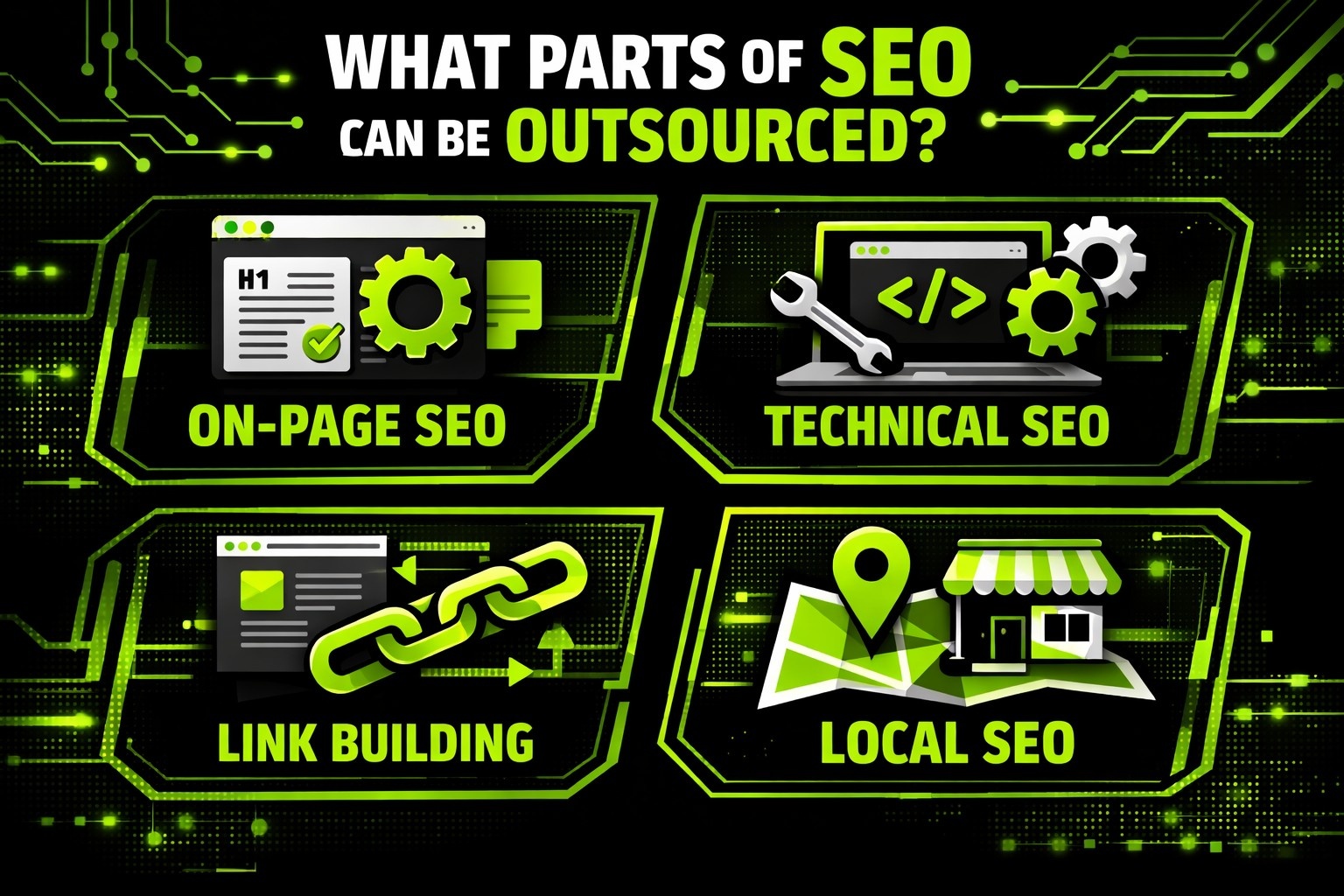
What Parts of SEO Can Be Outsourced?
Let’s be honest, not everything should be handed off. But many tasks are well-suited for outside help, especially if you’re looking for efficiency and scale.
On-Page SEO
This includes optimizing your content, metadata, headers, and internal links. A good provider can also help identify gaps in your current content strategy and clean up old blog posts. Over time, small tweaks in structure and keyword usage can have a big impact on how search engines (and users) interact with your pages.
Technical SEO
Things like crawl issues, slow loading times, duplicate content, or broken links fall here. You don’t need a dev team for this if you find the right partner who understands technical SEO tools. The goal is to make sure search engines can access, understand, and index your site without unnecessary friction.
Link Building
It’s tedious, time-consuming, and easy to mess up. Reputable agencies or freelancers often have established outreach systems to get backlinks from quality sources. Done right, link building helps build authority and trust, but it needs to be strategic, not just a numbers game.
Local SEO
Perfect for brick-and-mortar businesses. Local listings, map pack rankings, review generation – all of it can be handled externally with proper targeting. Local SEO helps your business show up where it matters most: when nearby customers are actively looking.
International SEO
If you’re targeting multiple countries or languages, you’ll need expertise in geo-targeting, content localization, and region-specific keyword research. Definitely a good candidate for outsourcing. Even small missteps with hreflang tags or regional content can hurt visibility across markets.
Keyword Research and Content Planning
A lot of time can be saved by having someone else do the heavy lifting on keyword discovery, content clustering, and SERP analysis. It also helps you avoid creating duplicate or low-impact content that wastes both time and resources.
Content Creation
Writing blog posts, landing pages, and product descriptions is one of the most commonly outsourced SEO tasks. It complements keyword research and helps turn strategy into action. Done well, outsourced content supports rankings, engagement, and lead generation across the funnel.
Analytics and Reporting
Some companies also outsource tracking and analysis. This includes dashboards, performance audits, and progress updates. Having a partner who can not only collect data but interpret it in the context of your goals makes a huge difference over time.
What Should Stay In-House?
Not everything needs to be outsourced. Strategy, brand voice, and key decision-making are best kept in-house. No one knows your customer or product like you do. You should still guide what’s being optimized and why.
Also, if SEO ties directly to your product (like landing page CRO or product-led content), it’s smart to keep a tight feedback loop between your internal team and whoever you outsource to.
When Is the Right Time to Outsource SEO?
It depends on your stage, budget, and priorities. But here are a few clear signs:
- You’ve hit a plateau with traffic or conversions.
- You’re entering a new market or launching a new product.
- You’ve got no time to keep up with SEO trends or algorithm updates.
- Your internal team is spending more time Googling “how to fix SEO” than getting actual work done.
Who Should You Hire: Freelancer, Agency, or In-House?
Let’s break this down realistically.

Freelancers
Best for: Specific tasks like keyword research, blog optimization, or technical audits.
Pros: Affordable, flexible, often easy to test with small projects.
Cons: Limited capacity, inconsistent availability, variable quality.
SEO Agencies
Best for: Full-service support and long-term scaling.
Pros: Access to multiple experts, process-driven, can handle more complex projects.
Cons: Higher costs, less direct control, potential communication layers.
In-House SEO
Best for: Companies with large ongoing SEO needs and long-term budget.
Pros: Full control, fast feedback loops, brand integration.
Cons: Expensive, slow to ramp, requires training and management.
How to Choose the Right SEO Partner
Now the tricky part – picking the right help. It’s not just about skills. It’s about alignment, transparency, and execution.
Here’s what to look for:
- Experience in your niche: SEO for SaaS is not the same as for eCommerce or local services.
- Clear communication: You want updates, not excuses.
- Process transparency: What tools do they use? How do they build links? Are they following best practices?
- Real results: Ask for case studies or specific wins. No vague “we increased traffic” claims.
- Cultural fit: Sounds soft, but if you hate how they work or communicate, the engagement will suffer.
Red Flags to Watch Out For
If an SEO provider promises fast or guaranteed rankings, that’s usually the first warning sign. Search results don’t work on fixed timelines, and anyone claiming otherwise is either cutting corners or setting you up for disappointment. The same goes for unclear pricing or a vague scope of work. If you can’t tell exactly what you’re paying for, it’s hard to hold anyone accountable later.
Another issue to watch for is the lack of proper reporting or defined KPIs. You should always know what’s being tracked and why it matters. Without that visibility, SEO quickly turns into guesswork. Finally, pay attention to communication. If responses are slow, inconsistent, or clearly being passed between too many hands, it often means your project isn’t a priority. Clear, direct communication is not optional when you’re trusting someone with your search presence.
How to Set Expectations and Stay in Control
Outsourcing doesn’t mean checking out. You still need to own the strategy, even if someone else runs the playbook.
What to Do Before You Start
Before bringing in outside help, get clear on what you’re trying to achieve. Are you aiming for more traffic, better conversions, or improved visibility for certain pages? Nail that down first. From there, set a realistic budget and know where you’re willing to adjust. It also helps to define a few key metrics you’ll use to track progress over time, so you’re not left guessing whether the work is paying off.
Once You Choose a Partner
After you’ve picked your SEO provider, lay out a clear scope of work with milestones. Decide how often you’ll check in and what type of updates you expect. Make sure they have the access they need to do their job, and set up a shared space to keep track of tasks and timelines. This keeps both sides aligned and makes collaboration a lot smoother.

What Success Looks Like
SEO results don’t show up overnight. That’s one of the hardest truths for anyone hiring help. But good work compounds.
In the first 1-3 months, you should expect to see:
- Clear communication.
- A site audit or roadmap.
- Improvements in technical SEO and content structure.
- Early keyword movements.
After 4-6 months, you should start to see:
- Traffic growth from organic.
- Higher rankings for key terms.
- More pages indexed and crawled.
- Stronger domain authority (if link building is involved).
By month 6+, it’s fair to expect:
- Conversion improvements.
- Content ranking on Page 1.
- Measurable ROI from your SEO spend.
How to Measure the ROI of Outsourced SEO
Not all metrics are created equal. Vanity stats like “number of backlinks” don’t matter if they don’t move your business goals forward.
Focus on:
- Organic traffic to priority pages.
- Keyword rankings (branded and non-branded).
- Bounce rate and time on page.
- Click-through rate (from SERPs).
- Conversions (sales, leads, signups).
- Cost per lead from organic vs. paid.
Your SEO partner should help you connect these dots with reporting that makes sense.
Final Thoughts
Outsourcing SEO can take real pressure off your team and unlock results you simply couldn’t reach alone. But it’s not magic. It’s a partnership. You still have to steer the ship. Just make sure the crew you hire knows how to sail.
If you define your goals, vet providers carefully, and stay involved throughout the process, outsourcing SEO won’t just save you time – it’ll pay off in results that last.
Let your team focus on what they do best. Let the SEO pros handle the heavy lifting. Just don’t go in blind.