

Search is still one of the most reliable ways to reach ready-to-buy customers but the rules have changed. In this guide, we’ll walk through what B2C SEO really means in 2026, how buyer behavior is evolving, and which strategies actually lead to conversions. It’s not about chasing trends. It’s about building a system that works even as the landscape shifts.
What B2C SEO Really Is and Why It Still Works
B2C SEO is about helping everyday consumers find what they’re ready to buy. Unlike B2B, where decisions stretch over weeks, B2C buyers move fast. They search, compare, decide – often in the same session. Good SEO gets your product in front of them right at that moment.
What’s changed is how those moments look. It’s not just search boxes anymore. It’s Reddit threads, AI summaries, voice queries. And showing up in those moments means optimizing for more than just rankings; it means being useful, fast, and built around intent.
Done right, B2C SEO doesn’t just bring traffic. It turns that traffic into conversions. From long-tail keywords to fast-loading pages and mobile UX, it’s a system that quietly works in the background, delivering sales without draining your ad budget.
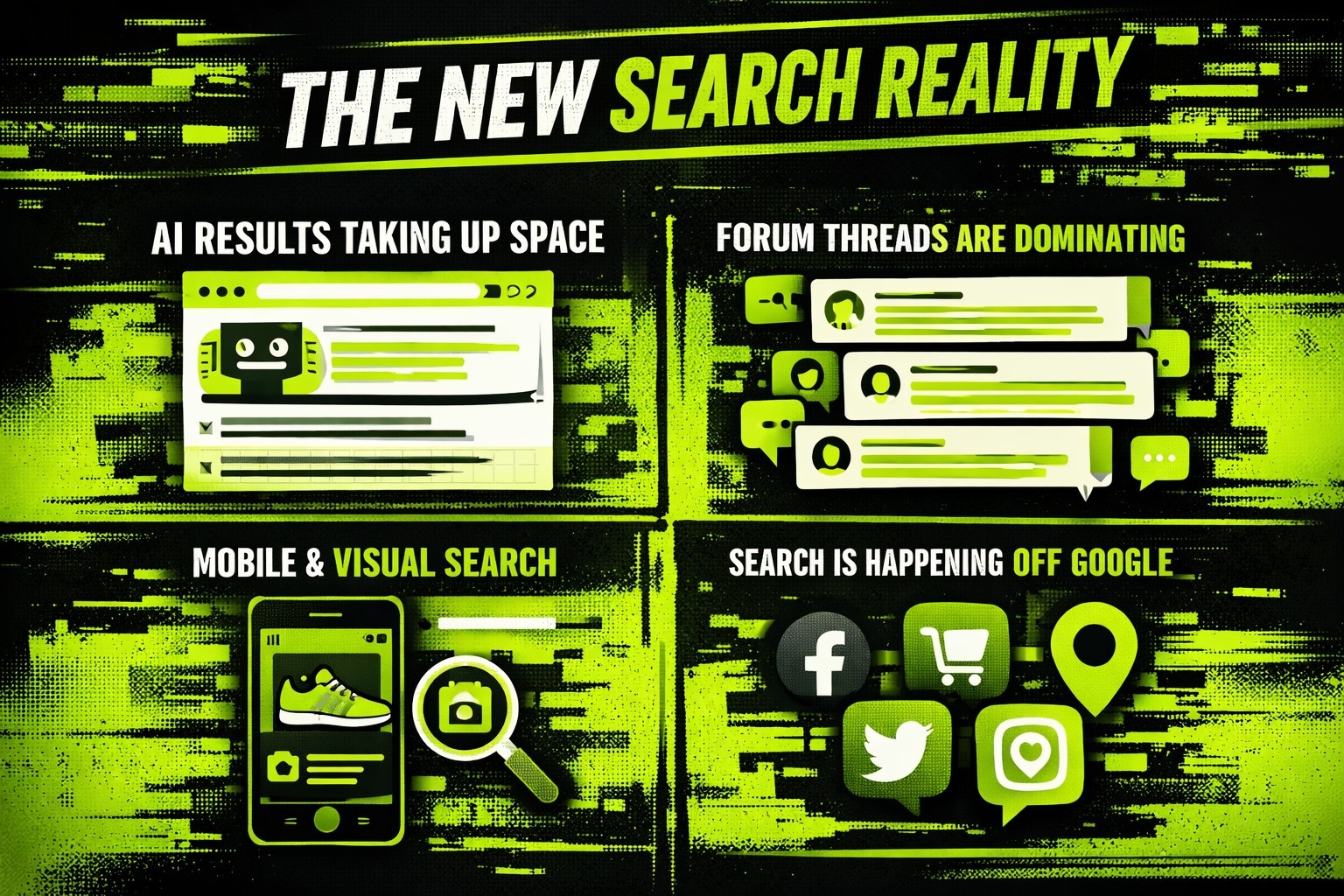
The New Search Reality: What’s Driving B2C SEO Forward
Search today isn’t just about keywords and blue links. It’s about context, platforms, and how fast people move from question to decision. For B2C brands, visibility now stretches across AI summaries, community threads, voice prompts, and image-driven search and that shift changes how SEO needs to work.
In 2026, the brands seeing real growth are the ones adapting early. They’re building strategies around how people actually discover products today – not how they used to five years ago. Here’s what’s actively reshaping the B2C SEO landscape right now.
AI Results Are Taking Up the Space That Used to Be Yours
Search engine results pages are no longer just a list of links. Now, AI summaries (like Google’s AI Overviews) are taking the top spot – before the organic listings even appear. That means your content isn’t just competing for position one. It’s competing for visibility inside the answer itself.
- Pages need to be structured and informative enough to be cited in AI responses.
- E-E-A-T matters more than ever (Experience, Expertise, Authority, Trust).
- If you’re not optimizing for AI-readability, you’re not even on the page.
Forum Threads Are Dominating Commercial Queries
Search for almost anything with the word “best,” and Reddit’s there. Google’s prioritizing community-based content for product-related searches. This doesn’t mean ditching your blog – it means learning how to blend brand authority with user trust.
- Reddit, Quora, and niche forums are climbing rankings.
- Threads with authentic discussion often beat polished brand content.
- You either join the conversation – or you risk being left out of it entirely.
Mobile and Visual Search Is Now the Baseline
Over 60% of consumer searches happen on mobile. Add to that the rise of Google Lens, Pinterest Lens, and Instagram-style product discovery – and you’ve got a world where search often starts with an image, not a query.
- Product pages must be fast, responsive, and visual-first.
- Schema, alt text, and image file structure directly impact rankings.
- If your visuals aren’t optimized, you’re invisible in the places people actually shop.
Search Is Happening Off Google – and It Still Impacts You
AI chat tools like Perplexity, ChatGPT, and Gemini are increasingly where people ask product questions. This isn’t replacing Google – it’s sitting beside it. SEO now includes how well your brand content shows up across multiple answer engines.
- AI platforms use RAG to surface specific, high-signal content – not just top-ranked pages.
- Structured, topical content increases chances of citation.
- The best B2C brands are building for multi-platform discoverability.
These aren’t abstract trends. They’re active shifts. And the brands adjusting fast – rewriting content for AI, tightening mobile UX, and leaning into visual search – are the ones still winning organic growth without watching ad spend spiral.
How Lengreo Builds B2C SEO That Scales With the Business
At Lengreo, we approach B2C SEO as a growth system, not a standalone marketing task. Our work starts with understanding how people actually search, compare, and decide in consumer markets. From there, we align SEO with content, UX, and conversion paths so traffic doesn’t just arrive but turns into action. The focus is always on intent and usability, not surface‑level optimization.
We don’t treat SEO in isolation. Strategy, development, and content work together so search visibility supports the full customer journey, from first click to conversion. When SEO is built into the structure of the site and the content plan, results tend to hold up over time.
Our LinkedIn and Instagram also play a supporting role. We use them to strengthen brand presence, distribute content, and stay close to audience behavior. Together with search, these channels help reinforce visibility and trust rather than operate separately.
B2C SEO Playbook: 9 Tactics Driving Real Results This Year
There’s no shortage of SEO advice out there – but most of it feels built for blogs, not brands. B2C SEO needs to move faster, convert better, and scale without fluff. These eight tactics aren’t theoretical. They’re grounded in what we’ve seen drive measurable growth across consumer brands in 2025–2026.
1. Prioritize Intent Over Volume (Always)
Not every search is equal. The difference between someone searching “best hiking shoes” vs. “salomon x ultra 4 review” is miles wide in intent – and so is the potential ROI. In B2C, targeting high-intent, low-volume keywords pays off more than fighting for broad vanity terms. These searches may not get 10,000 impressions, but they convert.
Content should be structured around moments of decision, not just general curiosity. The more aligned your page is to the real question a buyer is asking, the more likely it is to drive action.
2. Build Pages That Don’t Need a Second Visit
Your product or category page should feel like the end of a buyer’s search journey – not a placeholder that sends them back to Google. Think of every product page as a mini-conversion funnel:
- Start with a clear hook: what this solves and for whom.
- Address objections (shipping, fit, guarantees) before they form.
- Add proof: reviews, testimonials, trust badges, FAQs.
- End with frictionless CTA: make it easy to act without thinking.
When users land, linger, and buy – you’re doing it right.
3. Design Content Hubs That Mimic Buyer Thought Patterns
SEO content should do more than rank – it should guide. Instead of publishing disconnected blog posts, build topic clusters that mirror how your audience researches. Start with a pillar guide (e.g., “How to Choose a Skincare Routine”), then branch into focused articles on ingredients, product types, and routines by skin type.
These internal funnels keep users moving through your site, signal topical authority to search engines, and reduce bounce rate by offering next-step answers.
4. Don’t Ignore “Low SEO” Pages That Convert
Some of the highest-converting pages won’t rank – and that’s fine. Pages like comparison tables, pricing breakdowns, FAQ explainer pages, or post-purchase guides might not bring traffic, but they help traffic convert. Good B2C SEO isn’t just about bringing people in – it’s about what they do once they’re there. Make sure these pages exist:
- Product vs. competitor breakdowns
- Shipping and returns policies
- Loyalty and referral program info
- In-depth sizing and fitting help
Use internal linking and navigation to lead users into these assets.
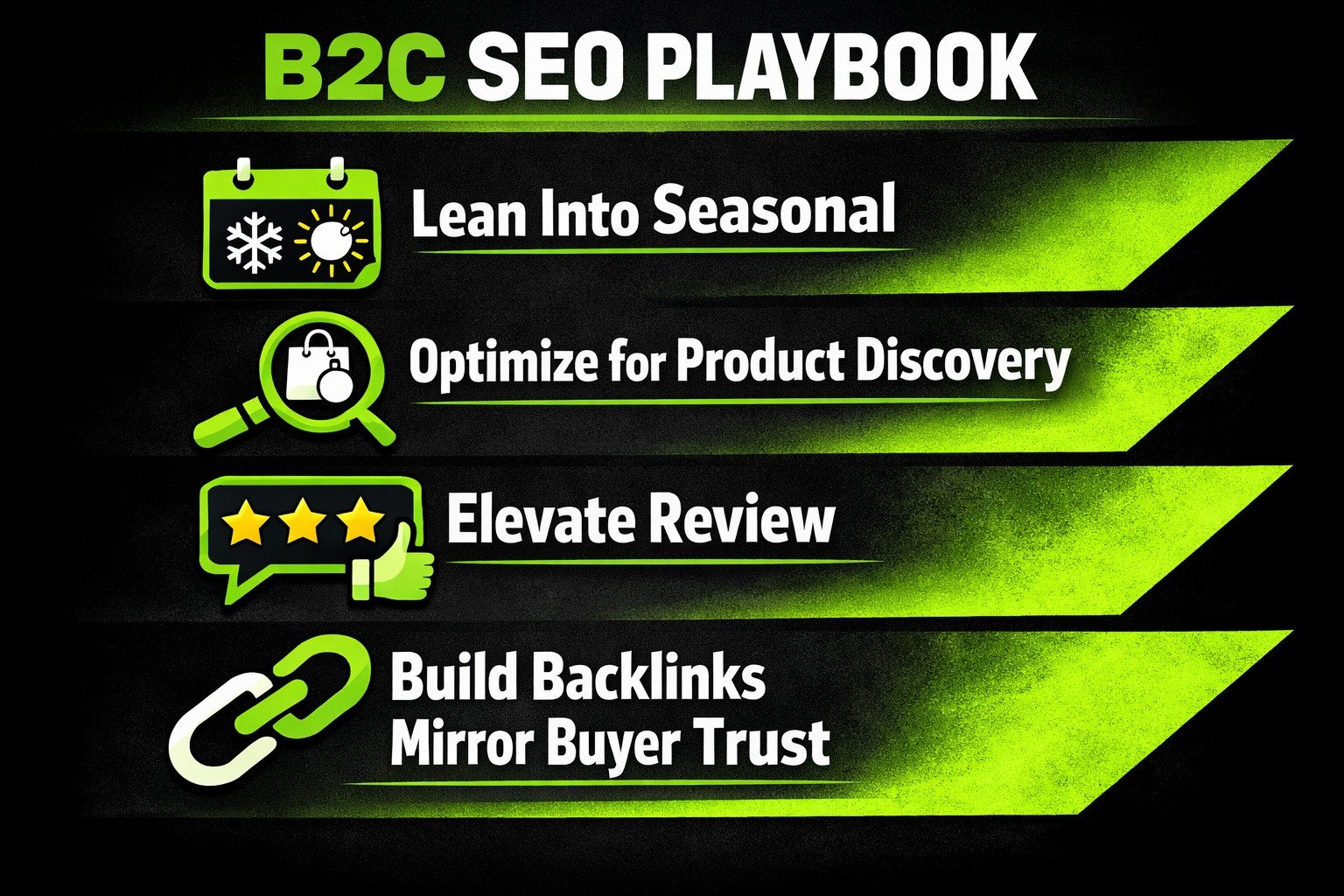
5. Lean Into Seasonal and Lifecycle Search
B2C buying is cyclical. Search demand spikes around seasons, events, and personal milestones. Smart brands don’t just ride those waves – they plan for them. Ways to do this:
- Build seasonal landing pages early (Spring skincare, Back to School shoes, etc.)
- Create content that speaks to gifting, holidays, or “first-time buyer” needs
- Refresh and reuse existing seasonal URLs each year for SEO compounding
If you know when your audience buys, you should know when they search – and show up first.
6. Optimize for Product Discovery, Not Just Queries
Not every buyer starts with a search. Sometimes they start with a scroll or a swipe. B2C SEO today includes optimizing for discovery engines like Google Images, Pinterest, Instagram search, and visual search tools. Make it work:
- Use clean image naming and structured alt text
- Add schema markup for products and reviews
- Ensure fast-loading mobile performance for image-heavy pages
- Create image-focused content (lookbooks, style guides, how-to visuals)
You’re not just showing up in blue links anymore. You’re competing on shelves made of thumbnails.
7. Elevate Review and UGC Pages for SEO Gain
User-generated content (UGC) – especially reviews – is powerful for both trust and search visibility. Yet many brands hide this gold behind tabs or scripts Google can’t easily crawl. To fix that:
- Make review content crawlable (no JS-only rendering)
- Create indexable pages for top-rated products or review highlights
- Allow filtering and sorting that creates useful long-tail pages (“best moisturizing cleansers for oily skin”)
- Link from blog content into relevant review sections
When customers do the talking, and you structure it well, it boosts both conversions and rankings.
8. Build Backlinks That Mirror Buyer Trust
The best B2C backlinks don’t come from “SEO blogs” – they come from where your buyers actually hang out. That could be lifestyle publications, niche communities, or even product roundups from micro-influencers. Key approaches:
- Pitch your product for inclusion in gift guides, “best of” lists, and seasonal buyer guides
- Build relationships with writers in your niche (not just link builders)
- Repurpose influencer or ambassador content on your site for added credibility
The goal is to be seen and cited where your future buyers are already looking.
9. Treat FAQs Like Conversion Assets, Not Just Help Sections
FAQs are often treated as an afterthought – buried in footers or bloated with generic info. But smart B2C brands treat them like strategic landing pages. When done right, FAQ content doesn’t just answer questions – it pulls in organic traffic, addresses objections, and nudges users closer to purchase. Practical ways to level up your FAQs:
- Turn top search queries into stand-alone FAQ pages (e.g., “Is X product cruelty-free?”)
- Use clear subheadings and structured markup to earn featured snippets
- Embed CTAs and product links where relevant (don’t just answer – guide)
- Keep answers concise, conversational, and buyer-focused
This is especially useful in categories where customers want reassurance – health, skincare, supplements, fashion fit – but applies across the board. FAQs can rank, reduce support load, and convert. Triple win.
How to Audit and Improve Your B2C SEO
Most teams don’t need more SEO tactics – they need clarity on what’s actually working. That’s where a proper audit comes in. It’s not about ticking off technical boxes. It’s about understanding whether your site is bringing in the right traffic, converting that traffic, and supporting the way your buyers actually search. A strong audit connects performance with purpose. Rankings are nice, but revenue is better.
Start with visibility: which keywords are driving clicks, and are they the ones that matter for your product? Then check the structure. Are your pages fast, clean, and mobile-ready – or are they slowing people down? Dive into your content. If it’s not aligned with buyer intent, it’s just noise. From there, look at internal links, conversion paths, local presence, and backlinks. Each piece should support the next. SEO isn’t a collection of tricks – it’s a system. And when that system clicks, growth doesn’t stall. It compounds.
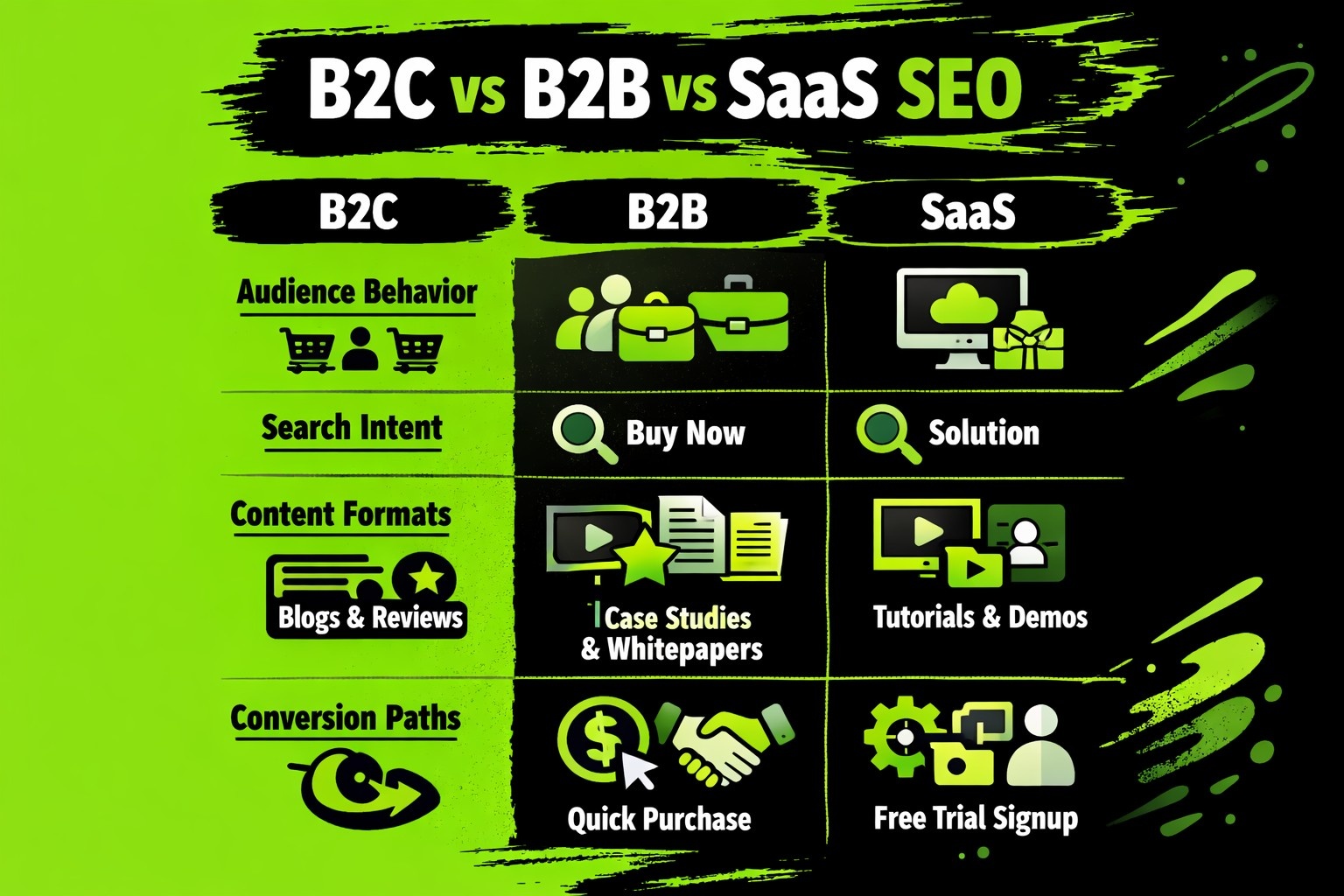
B2C vs B2B vs SaaS SEO: What Actually Changes
SEO isn’t one-size-fits-all. The way you approach it depends entirely on who you’re selling to and how they make decisions. Here’s how B2C SEO stands apart from B2B and SaaS – not just in strategy, but in real-world execution.
- Audience behavior: B2C buyers act fast. They search, compare, and purchase – sometimes all within five minutes. B2B and SaaS buyers move slower, with layers of approvals, research, and risk analysis baked into every decision.
- Search intent: In B2C, the search is emotional and urgent: “best hiking boots under $100.” In B2B and SaaS, it’s informational and structured: “how to improve sales pipeline efficiency” or “CRM for enterprise teams.”
- Content formats: B2C leans on product pages, comparison guides, and seasonal content. B2B and SaaS rely more on whitepapers, case studies, and long-form explainers that build authority over time.
- Conversion paths: B2C wants clicks, carts, and checkouts. B2B/SaaS wants lead forms, demo bookings, and long nurture sequences. Different goals mean different funnels.
- Metrics that matter: For B2C, it’s mostly revenue per visitor, cart value, and bounce rate. For SaaS and B2B, it’s pipeline influence, lead quality, and cost per SQL. If you’re tracking the wrong stuff, you’re optimizing in the dark.
B2C SEO is faster-paced and brutally competitive – but when it’s dialed in, the payoff is immediate. You’re not trying to win a committee. You’re trying to win the moment.
Why B2C SEO Needs to Be Cross-Team, Not Siloed
Too many SEO strategies fall flat because they’re built in isolation. One team owns content. Another handles UX. Paid media’s off doing its own thing. Meanwhile, SEO becomes a checklist someone’s expected to “optimize” after the fact. That approach doesn’t hold up anymore – especially in B2C, where search behavior changes fast and every detail of the user journey matters.
To actually move the needle, SEO has to be baked into how the whole team works. Content teams need to know what’s ranking and why. Developers need to understand how site structure and speed affect visibility. Designers need to build with mobile-first indexing in mind. Even paid teams benefit when organic data feeds campaign targeting. The brands getting ahead aren’t those doing “more SEO” – they’re the ones connecting it to every touchpoint, from discovery to checkout. That’s where compound growth comes from. Not from doing more, but from doing it together.
Conclusion
B2C SEO isn’t some legacy channel that’s slowly fading out. It’s still one of the most reliable, scalable ways to bring in high-intent customers without paying for every click. But the way we do it has changed. You’re not just optimizing for Google anymore – you’re optimizing for how people think, search, and decide in real life.
When B2C SEO is done right, it doesn’t feel like “traffic growth.” It feels like your sales team just got sharper. Your product pages pull more weight. Your blog stops acting like a side project and starts driving revenue. That’s the point. Not rankings. Not vanity metrics. Real, compounding growth that stacks over time. But only if you treat SEO like part of the engine, not a bolt-on.