


For IT companies – whether focused on managed services, cybersecurity, custom software development, cloud migration, or enterprise solutions – appearing in relevant search results directly influences pipeline quality and volume.
SEO for IT companies differs from general business SEO because of the technical complexity of services, longer sales cycles, multiple stakeholders, and predominantly B2B intent. Ranking requires deep topical authority, precise technical implementation, and content that satisfies both informational and commercial search intent.
This guide consolidates proven tactics that consistently work for technology service providers and software vendors. The focus remains practical: what to do, in which order, and why each element matters in the context of IT marketing.
Why SEO Remains Essential for Technology Service Providers
The buyer journey in IT services is research-heavy. Technical evaluators read documentation, compare architecture, review case studies, and assess integration capabilities long before budget discussions begin. Strong SEO positions the company at every stage of that evaluation rather than only at the final RFP moment.
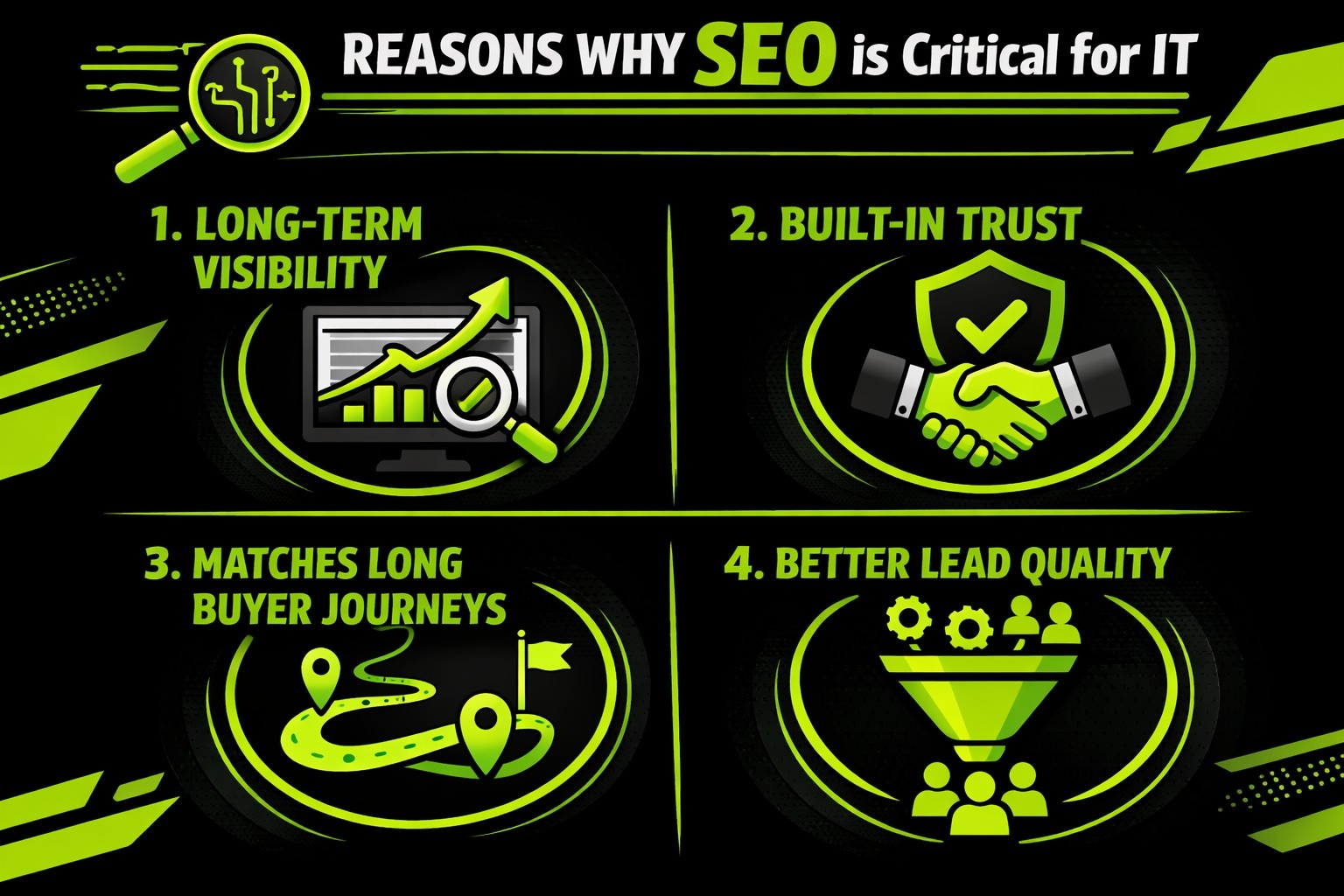
Key Reasons Why SEO Is a Critical For IT:
- Long-term visibility: Organic rankings keep generating traffic even after budget cuts, unlike PPC.
- Built-in trust: Top organic positions signal credibility and expertise to technical buyers.
- Matches long buyer journeys: IT prospects research deeply for months; SEO reaches them at every stage.
- Better lead quality: Organic visitors come with strong, self-identified intent and convert more effectively.
Our Experience Helping IT Companies Grow Through SEO
At Lengreo, we’ve worked with IT companies for years – from US software teams and cybersecurity providers to European SaaS startups. The right SEO approach can turn a quiet website into the main source of qualified leads.
One US client increased annual client acquisitions by 400% after we rebuilt their keyword strategy and service pages around real buyer searches. That result came from focused intent mapping, topic clusters, and deep technical content – the same principles used throughout this guide.
If you want more predictable organic leads without endlessly raising ad spend, we’re happy to take a quick look at your site and share our first honest recommendations – no pressure, no strings attached.
How to Build an SEO Strategy for IT Companies That Actually Works
Let’s be honest: most SEO guides for IT companies either drown you in technical jargon or skip the steps that really bring qualified leads. What you actually need is a straightforward roadmap built around how technical buyers (developers, CTOs, IT managers) search, evaluate, and decide. It’s not about publishing endless blog posts or cramming keywords everywhere. It’s about appearing exactly where your prospects are looking and providing the precise technical depth, proof, and clarity they need to move forward in long B2B sales cycles.
Here is a practical breakdown of the essential steps to create an SEO strategy for IT companies that is worth your time and actually generates real business results.
Step 1: Know Your Audience and Align Keyword Research
IT companies work with technically skilled clients. Developers search for integration details and setup instructions. CTOs focus on compliance, scalability, and ROI. IT managers look at costs and reliability. When you clearly understand who is searching, you avoid broad keywords that bring irrelevant traffic.
Search Intent Types
- Informational: people want to learn – “how does zero-trust security work,” “best practices for cloud migration”
- Commercial: people compare options – “top antivirus for businesses comparison,” “SaaS security tools review”
- Transactional: people are ready to buy or hire – “managed IT services pricing,” “hire IT support”
- Intent shows the buyer’s stage: early awareness, comparison, or purchase readiness.
Focus on Long-Tail Keywords
Long-tail phrases (3+ words) usually have these advantages:
- Lower competition compared to short, broad keywords
- Higher conversion rates because they attract more qualified traffic
- Often indicate users who already understand their problem and are closer to deciding
Step 2: Build Content That Matches Buyer Intent
Content is the main thing in SEO for IT companies. B2B clients want deep technical information, real examples, and proof that you can deliver – not just general texts.
Start with What the Buyer Needs Right Now
Make content based on the search intent first. Early-stage content answers basic questions and helps people discover you. Use detailed guides, step-by-step instructions, and simple explanations of things like firewall setup or how to speed up a network.
Help with Comparison
When buyers compare options, give them useful content. Write case studies, roundups of products, and clear comparison tables. Add real technical specs, examples of integrations, and results from actual customers to show why your solution fits.
Use Topic Clusters
Build groups of content around one main page. For example, a central page about “cybersecurity for businesses” links to separate articles on different threats, tools, and how to use them. This shows you know the whole topic well.
Add Video Content
Videos make hard topics easier to understand. Record tutorials with walkthroughs of interfaces, setup steps, or feature demos. Put videos on your site with full transcripts and timestamps so search engines can read them. Also upload to YouTube to get extra views.
Step 3: Optimize Product and Solution Pages
Create a separate page for each product or service. This makes it easier for search engines to crawl and index your site, and helps users find exactly what they need without confusion. A dedicated page for something like a cloud security suite lets you cover all details fully without mixing it with other products.
Main Things to Include on These Pages
- Clear descriptions written in simple, straightforward language
- Key features listed with real, practical examples of how they work
- Technical specifications shown in both short summary and full detailed versions
- Information about integrations and what systems or tools it works with
- Direct links to trial versions, demos, or free tests
Extra Technical Improvements
- Add product schema markup to enable rich results in search (prices, ratings, availability)
- Use descriptive file names and accurate alt text for all images
- Include customer testimonials to build trust
- Add comparison tables where they help buyers decide
Step 4: Build a Strong Internal Linking Structure
Internal links are essential for both users and search engines. They pass link value between pages, improve navigation, help search engines discover and understand your content, and keep visitors on the site longer.
Link from product pages to related guides, case studies, or blog posts. Connect blog articles and overviews to deeper technical explanations or product details. Always use clear, descriptive anchor text.
This simple practice improves user exploration, distributes SEO value evenly across the site, and clearly shows search engines how your pages are connected.
Step 5: Eliminate Technical Issues – Quick Checklist
| Issue | Why Critical | How to Fix | Priority |
| Slow loading | Users leave if >3 sec | Compress images, CDN, lazy loading | High |
| Poor Core Web Vitals | Directly affects ranking | Improve LCP, INP, CLS | High |
| Non-responsive mobile | >60% traffic from mobile | Implement responsive design | High |
| No HTTPS | Loss of trust + “not secure” label | Install SSL certificate | High |
| 404 errors / broken links | Wastes crawl budget | Set 301 redirects | Medium |
| Duplicate pages | Confuses search engines | Add canonical tags | Medium |
| Poor indexing | Pages not in search results | Remove noindex, submit sitemap | High |
| JavaScript not rendering | Googlebot sees blank page | Use server-side / dynamic rendering | High |
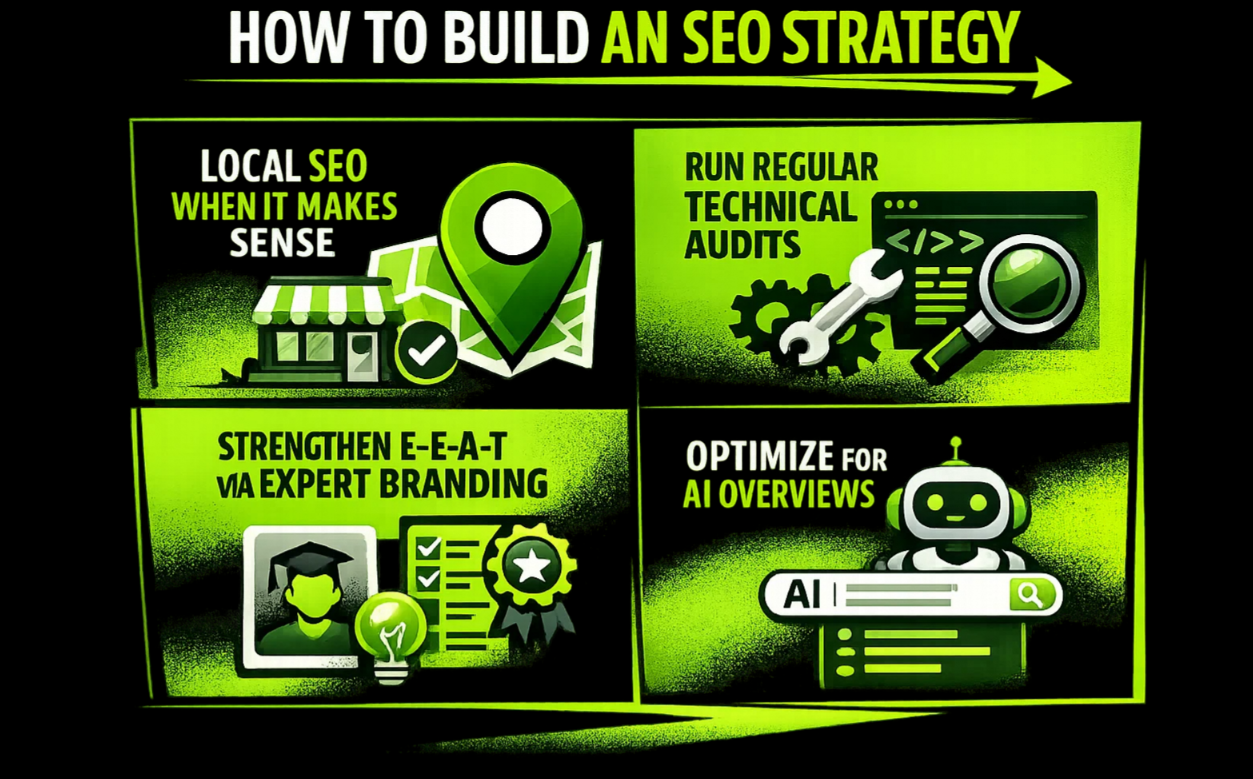
Step 6: Use Local SEO Only When It Actually Makes Sense
Local SEO is not mandatory for every IT company – most SaaS, cybersecurity, or software development businesses are international or fully remote. Use it only if you genuinely serve clients in specific regions.
Local SEO Actions (Only If Relevant)
- Fully complete and regularly update your Google Business Profile with correct address, phone, hours, photos, and services
- Collect real reviews from local clients – fresh, detailed reviews are the biggest local ranking factor
- Add location phrases naturally to relevant service pages
- Create location-specific landing pages only if you have real offices or teams there
If your business is 100% remote or global, skip local SEO completely. Forcing location keywords when they don’t apply hurts relevance and wastes effort. Focus instead on niche industry keywords (fintech, healthcare, manufacturing) – that’s the real “local” for most IT companies.
Step 7: Run Regular Technical Audits and Maintenance
Even a perfectly built website can develop hidden problems over time. Broken links, duplicate content, crawl errors, or pages that stop being indexed quietly damage your rankings without any obvious warning signs.
Perform technical audits at least once a month. Use Google Search Console to monitor indexing status, spot errors, and check coverage issues. Run site crawlers such as Screaming Frog or Sitebulb to detect 404 pages, faulty redirects, slow-loading pages, and duplicate content.
Fix broken links immediately and set up proper redirects where needed. Apply canonical tags to resolve duplicates correctly. Also review your crawl budget to ensure search engines focus on valuable pages instead of wasting time on low-priority or junk content.
Making these quick, consistent fixes stops minor issues from growing into major ranking losses. Regular maintenance keeps the site healthy, and search engines reward that reliability with improved visibility and trust.
Step 8: Strengthen E-E-A-T via Expert Branding
In the AI era, Google prioritizes Experience and Authoritativeness.
- Author Profiles: Assign articles to your CTO or Lead Engineers. Include bios, LinkedIn links, and a portfolio of their technical achievements.
- Expert Insights: Add “Expert Commentary” boxes within articles to provide real-world perspectives that generic AI content cannot replicate.
Step 9: Optimize for AI Overviews (SGE)
In 2026, many users get answers directly from AI at the top of Google.
- Direct Answers: Use clear, concise definitions for technical terms.
- Key Takeaways: Place a summary block at the top of long-form guides to make it easy for LLMs to cite your content.
Conclusion
SEO for IT companies demands a structured, intent-focused approach in a landscape shaped by AI and high buyer expectations. Start with thorough keyword research and audience understanding, then build layered content supported by solid technical foundations. Strengthen E-E-A-T through demonstrated expertise and maintain vigilance with regular monitoring. These elements work together to create lasting visibility and qualified leads without relying on short-term tactics.