


SEO work can feel invisible if you do not track it properly. Rankings shift, traffic changes, leads come in, but without structured reporting, it is hard to tell what is really driving results and what is just noise. That is where SEO reporting comes in. It turns all that scattered data into something you can actually use.
At its core, SEO reporting is about clarity. It shows what is improving, what is stuck, and where effort is paying off. For business owners and marketing teams, it is not just a technical document. It is the link between SEO activity and real business outcomes like traffic quality, inquiries, and revenue potential.
Let’s Get Clear: What SEO Reporting Actually Is
SEO reporting is how the work behind search visibility turns into something you can see, understand, and act on. Without it, SEO is just a series of tasks happening in the background. With it, SEO becomes a trackable process tied to real performance.
At its simplest, SEO reporting is the structured collection and explanation of data related to how a website performs in organic search. That includes traffic from search engines, keyword positions, technical health, backlinks, and most importantly, what those things mean for the business. It is not just charts and numbers. It is context. It answers the question, “Is what we are doing actually moving the needle?”
Good SEO reporting does not drown people in metrics. It filters signal from noise. It highlights changes, patterns, risks, and opportunities. It connects effort to outcomes. If SEO is the engine, reporting is the dashboard.
Why SEO Reporting Exists
Search optimization is not a one-time project. It is ongoing. Pages get updated, competitors publish new content, search behavior shifts, algorithms evolve. Without consistent reporting, it is almost impossible to understand whether progress is happening or if a strategy has quietly stalled.
SEO reporting exists to create visibility into a channel that often feels invisible. Paid ads show immediate spend and clicks. Social media shows engagement in real time. SEO moves more gradually. Reporting fills that gap by showing trends over time.
It also protects businesses from guesswork. Decisions based on opinions or isolated data points usually lead to wasted effort. Reporting introduces structure. It shows where growth is real, where it is temporary, and where there are underlying issues that need attention.
How We Handle SEO Reporting at Lengreo
At Lengreo, we treat SEO reporting as part of the strategy. For us, a report is not a data dump or a monthly ritual. It is how we keep the work tied to real business outcomes. We track organic growth, rankings, leads, and technical signals, but we focus most on what changed and why. If traffic goes up, we show which pages or topics drove it. If performance stalls, we point to the bottleneck and outline what we are adjusting. The goal is simple – clear visibility into how search performance connects to pipeline, conversions, and long term growth.
We also build reporting around people, not just metrics. Marketing teams get insight into content and channel impact. Founders and revenue leaders see how organic search supports acquisition and efficiency. Our job is to translate SEO into business language, so decisions get easier, not more confusing. When reporting works, it creates alignment. Everyone sees the same numbers, understands the story behind them, and knows what we are doing next to move results forward.
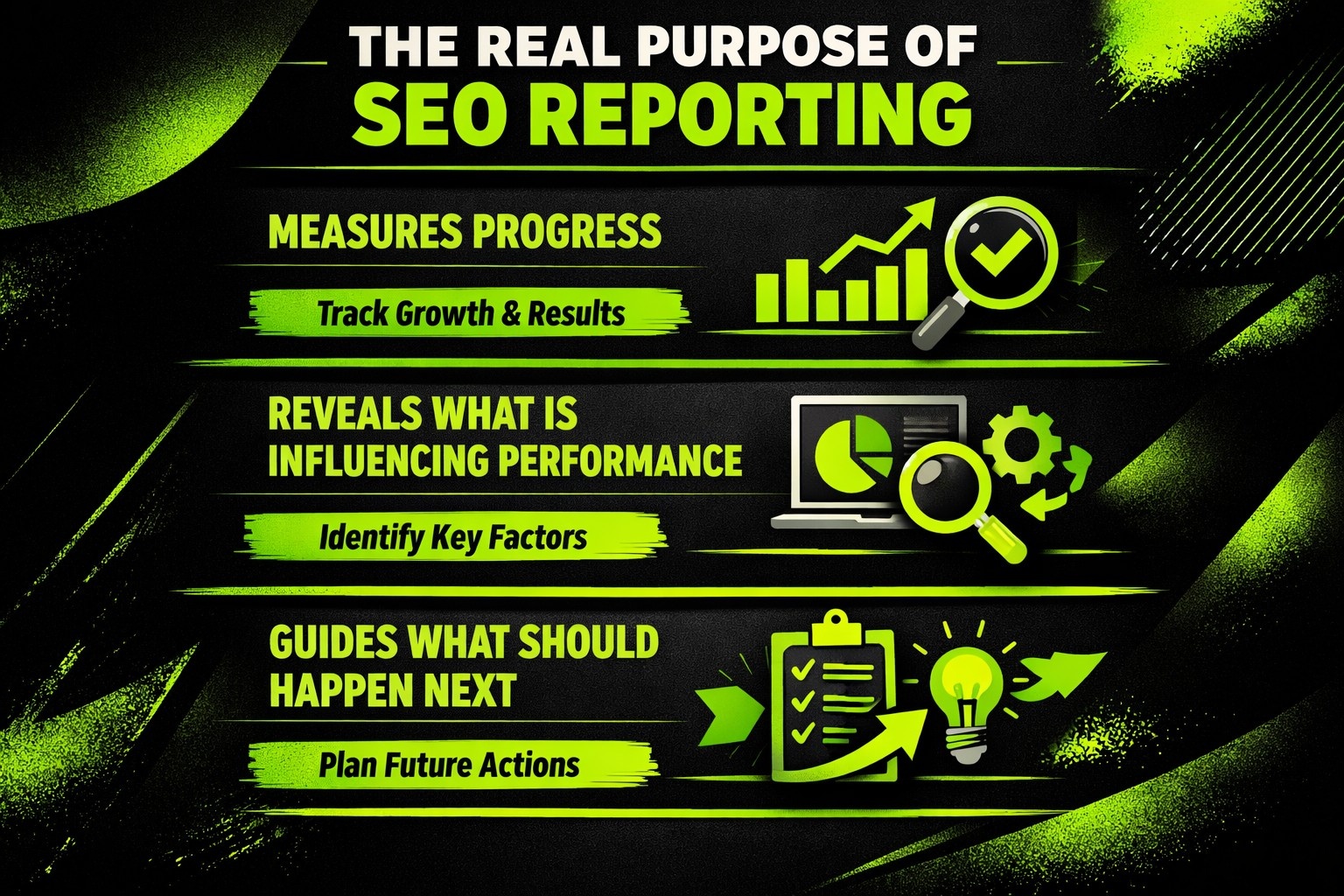
The Real Purpose of SEO Reporting
The core goals of SEO reporting go beyond “look at our traffic”.
At its best, SEO reporting does three main things:
- It measures progress against defined goals
- It reveals what is influencing performance, both positively and negatively
- It guides what should happen next
Reporting is not a scoreboard. It is a decision tool. If traffic increases but conversions drop, reporting surfaces that tension. If rankings improve but only for low-value terms, that becomes visible too. It keeps everyone focused on impact, not vanity metrics.
Another key purpose is alignment. SEO often involves multiple people – content teams, developers, marketing leads, leadership. Reporting keeps everyone looking at the same reality. It reduces misunderstandings and creates a shared reference point for strategy.
What SEO Reports Usually Include
SEO reports are meant to explain performance, not overwhelm with numbers. While formats differ, most solid reports cover a few core areas that together tell the full story of how search is contributing to growth.
1. Organic Traffic and Visibility
This is usually the starting point. How many people are coming to the site from search engines, and how is that changing over time?
Reports often look at:
- Total organic sessions
- Traffic trends month over month and year over year
- Landing pages that attract the most search traffic
- Visibility trends in tools that estimate search presence
Traffic alone does not tell the whole story, but it shows direction. A steady upward trend suggests momentum. Sudden drops signal potential issues. Flat lines over long periods may mean the strategy needs a reset.
2. Keyword Rankings
Rankings show how visible a site is for the queries that matter. This section focuses on where pages appear in search results and how those positions evolve over time.
Reports use rankings to answer a few practical questions. Are priority keywords moving closer to the top of the page? Is the site starting to appear for new, relevant searches? Are important pages stuck just outside the top results where small improvements could unlock more traffic?
Rankings become meaningful when paired with demand and intent. Being number one for a term nobody searches does not drive growth. Reporting always connects positions to real search behavior.
3. Conversions and Business Impact
This is the point where SEO stops being just a visibility play and starts proving its value to the business. Traffic and rankings can look great on paper, but they matter if they lead to action. That is why conversions deserve their own dedicated place in SEO reporting.
How Organic Traffic Turns Into Leads and Revenue:
Reporting focuses on what users from search actually do once they land on the site. That might be filling out a contact form, booking a demo, signing up for a trial, or completing a purchase. Report look at which pages generate those actions, how conversion rates change over time, and whether growth in traffic is translating into meaningful outcomes.
Strong SEO reporting connects these dots clearly. It shows which keywords and pages attract high-intent visitors, where drop-offs happen in the journey, and which optimizations are driving measurable improvements. When conversions are tracked properly, SEO becomes easier to prioritize, easier to explain, and much harder to question as a growth channel.
4. Technical SEO Health Indicators
Behind the scenes, technical factors influence how well search engines can access and understand a site. Reporting often tracks:
- Crawl errors and indexing issues
- Page speed or performance scores
- Mobile usability signals
- Broken links or redirect problems
These metrics do not always change dramatically month to month, but they help prevent small issues from growing into bigger problems that hurt visibility.
5. Backlinks and Authority Signals
Search engines treat links from other sites as votes of confidence. This section looks at how a site’s authority is evolving over time.
Reports often highlight growth or loss of referring domains, notable new links, and broader authority trends. The goal is not just to count links, but to understand reputation. Are credible sites mentioning the brand? Are valuable links being lost? Are there patterns that could become risky later?
When included thoughtfully, backlink reporting adds context to ranking changes and helps explain why some pages outperform others even with similar content.
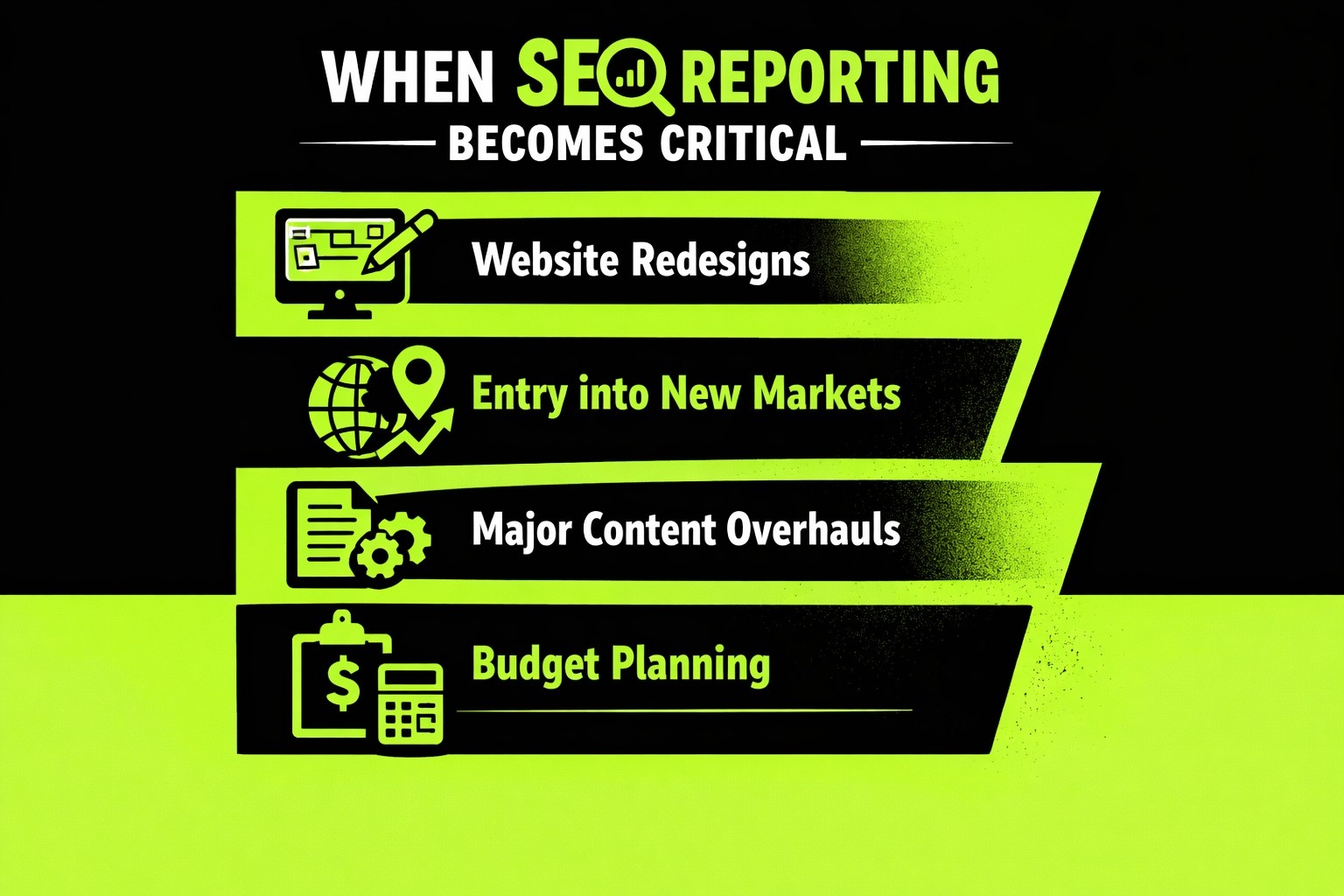
When SEO Reporting Becomes Critical
There are moments when SEO reporting shifts from useful to essential. These are the periods when decisions carry more weight, risks are higher, or opportunities move fast. Without clear reporting, teams are basically operating in the dark.
One of those moments is during growth phases. When traffic starts climbing and more pages gain visibility, it is tempting to just enjoy the numbers. But growth without analysis is fragile. Reporting shows which topics, pages, or search intents are responsible for the lift. That makes it possible to scale what is working instead of guessing. It also helps confirm whether that growth is bringing the right audience, not just more clicks.
The opposite situation is just as important. When traffic drops, rankings slide, or lead volume slows down, reporting becomes the diagnostic tool. It helps answer key questions. Did something break technically? Did competitors push ahead? Was there a seasonal shift? Did search intent change? Without structured reporting, teams often react emotionally and make random changes that do more harm than good.
SEO reporting is also critical during:
- Website redesigns or platform migrations
- Entry into new markets, languages, or regions
- Major content overhauls or structural changes
- Budget planning and resource allocation cycles
In these situations, reporting provides a clear before and after view. It shows baseline performance, tracks what changed after the update, and highlights real impact over time. That context is what allows businesses to say with confidence whether a big move helped, hurt, or simply did not move the needle.
SEO Reporting for Different Audiences
Not everyone needs the same level of detail. One of the biggest mistakes in SEO reporting is sending the same document to everyone.
SEO Teams and Specialists
This group needs depth. They look for patterns, anomalies, and technical signals. Their reports often include granular data, segmented traffic, crawl stats, and keyword-level analysis. The goal is diagnosis and optimization.
Marketing Managers
Managers usually need a balance. They want to see channel performance, campaign impact, and how SEO supports broader marketing goals. Reports for them focus on trends, key wins, and areas that need support from other teams.
Founders and Executives
Leadership cares about outcomes and direction. They want to know:
- Is SEO contributing to growth?
- Is performance improving or declining?
- Are we investing the right amount?
Reports for this audience are concise, results-oriented, and related to revenue, leads, or strategic visibility.
Wrapping It Up
SEO reporting is not about filling slides or exporting dashboards. It is about clarity. It translates search performance into something businesses can understand and use.
It shows where visibility is growing, where it is slipping, and why. It connects rankings and traffic to leads, sales, and real impact. It helps different teams stay aligned and gives decision-makers a grounded view of progress.
Without reporting, SEO is guesswork. With strong reporting, it becomes a guided process. You see what is happening, you understand what it means, and you know what to do next. That is what turns optimization from a collection of tasks into a long-term growth system.