

A website can look great and still bring in almost no traffic. That usually happens when design decisions are made without thinking about how search engines read and rank pages. SEO website design sits right at that intersection, where visual structure, technical setup, and content planning all support visibility, not fight against it.
In simple terms, SEO website design means building a site that works for people and search engines at the same time. It is about how pages are structured, how fast they load, how information is organized, and how easily search engines can understand what each page is about. When this part is done properly, the website does not just exist online, it actually has a chance to attract the right visitors and turn them into leads or customers.
What SEO Website Design Actually Means
SEO website design is the practice of building a website in a way that helps search engines understand it and helps people use it without friction. It is not a layer you add at the end. It is not a plugin. And it is definitely not just about sprinkling keywords into text.
At its core, SEO website design sits at the intersection of three things: structure, usability, and search visibility. It is about how pages are organized, how information flows, how fast things load, and how clearly a site communicates what it is about. If design focuses only on visuals, the site might look impressive but stay invisible. If SEO is added without thinking about design, the site may rank but feel clunky and hard to use. SEO website design brings those two worlds together so they support each other instead of pulling in opposite directions.
In practical terms, it means making design decisions with search and users in mind from day one. Where pages live in the hierarchy, how navigation is built, how content is laid out, how internal links are placed, and how mobile experience works are all part of SEO website design. It is less about tricks and more about clarity. When your site is clear, structured, and easy to use, both search engines and people respond better.
How We Approach SEO Website Design at Lengreo
When we at Lengreo, work on SEO website design, we do not treat it as a final polish. For us, it starts at the foundation. We look at how a site is structured, how pages connect, how content is placed, and how users actually move through the experience. Before we talk about rankings, we ask a simpler question – does this website make sense to a real person who just landed here for the first time. That perspective shapes everything from navigation and internal linking to how service pages are laid out and how fast key sections load.
Our role usually sits between marketing goals and technical execution. We align structure with search intent, but we also design paths that lead somewhere meaningful, like inquiries, demos, or conversations. SEO website design, in our view, is not about forcing keywords into templates. It is about building a system where visibility, usability, and conversion support each other. When those pieces are designed together instead of separately, the website stops being just an online brochure and starts working like a steady growth channel.
How Search Engines Experience Your Website
Most people design a website from the perspective of a visitor. That makes sense. But search engines are also visitors, just very different ones. They do not see your animations, brand colors, or stylish fonts. They experience your site through code, structure, links, and signals that tell them what matters.
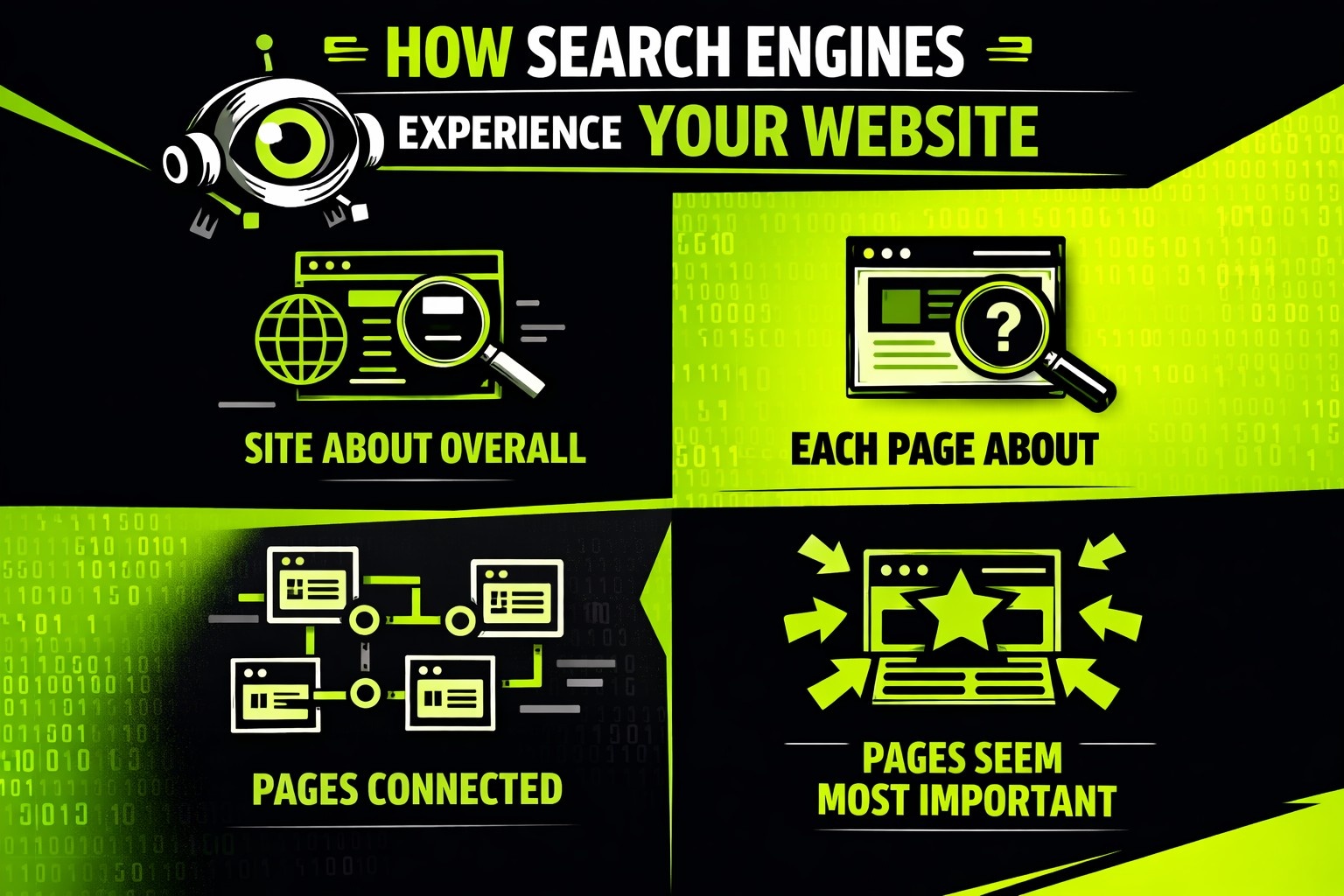
When a search engine crawler lands on your site, it tries to answer a few basic questions:
- What is this site about overall
- What is each page about
- How are pages connected to each other
- Which pages seem most important
- Is the site usable and reliable
If your design hides important content behind scripts, buries key pages deep in the structure, or creates confusing navigation, crawlers struggle. When that happens, your content may exist, but it is not properly understood or prioritized.
Search engines also measure performance and usability signals. They look at loading speed, mobile friendliness, and how stable the page layout is. If your design is heavy, slow, or unstable, that affects how your site is evaluated. SEO website design takes this into account by building a structure and experience that is not just pretty, but readable and accessible to search systems.
The Core Elements of SEO Website Design
This is where theory turns into real decisions. SEO website design shows up in specific parts of how a site is built.
1. Site Structure That Makes Sense (for Humans and Crawlers)
A strong structure is like a map. It tells users and search engines where they are and how everything connects. Pages should be grouped by topic, not randomly.
A clean structure usually means:
- Main categories that reflect your core services or topics
- Subpages that go deeper into specific areas
- URLs that reflect this hierarchy in a simple, readable way
- Important pages not buried five clicks deep
When structure is logical, users find what they need faster. Search engines also understand how different topics relate, which helps them rank pages for the right queries.
2. Navigation That Guides, Not Confuses
Navigation is not just a design feature. It is an SEO tool. Menus, breadcrumbs, and footer links all help shape how both people and crawlers move through your site.
Good SEO-focused navigation clearly surfaces your most important pages, uses descriptive labels that tell users exactly what to expect, and avoids cluttered menus that overwhelm visitors. It also naturally supports internal linking between related sections, helping both users and search engines move through your site with ease.
Confusing navigation increases bounce rates and makes crawling less efficient. Clear navigation improves engagement and helps distribute authority across your pages.
3. Page Speed and Performance by Design
Speed is not only a technical concern. It is a design one too. Heavy images, unnecessary scripts, and complex visual effects can slow a site down significantly.
SEO website design considers performance early:
- Images are optimized without killing quality
- Layouts avoid unnecessary complexity
- Design elements are chosen with loading time in mind
- Pages remain stable while loading
Faster pages improve user experience and reduce abandonment. Search engines also use speed and performance metrics as part of how they evaluate page quality.
4. Visual Hierarchy That Supports Content (Not Hides It)
Design should guide attention, not compete with the message. Visual hierarchy plays a key role in helping both users and search engines understand what matters most on a page.
When the layout is designed to make scanning easy, visitors can quickly grasp the value of the page and decide where to go next. A clear hierarchy leads to longer engagement, smoother navigation, and a structure that search engines can interpret with confidence
5. Internal Linking Built Into the Design
Internal linking is often handled late, but in SEO website design it is planned from the start. The idea is to make sure related pages connect naturally through the content itself, not only through menus or footers. Important pages should be supported by links from multiple relevant sections, so both users and search engines can see their value in context. The design also needs to leave space for these contextual links to feel natural rather than forced. When internal linking is built into the structure like this, it helps search engines understand how topics relate to each other, and it gives users clear paths to continue exploring, which usually leads to stronger engagement and better conversion behavior.
How SEO Design Impacts Conversions (Not Just Traffic)
It is easy to think of SEO design as a way to get more visitors. But traffic alone does not pay the bills. Conversions do.
When SEO and design work together, the user journey becomes smoother. People land on pages that match their search intent, find information quickly, and understand what to do next.
SEO website design improves conversions by:
- Aligning page content with what users actually searched for
- Making calls to action visible and logically placed
- Reducing friction through faster load times and simpler layouts
- Guiding users through internal links to relevant next steps
A site that ranks but frustrates users will struggle to convert. A site designed with SEO in mind brings in relevant traffic and supports those visitors in taking action.
Who Actually Needs SEO Website Design
Not every website owner thinks about SEO during the design phase, but many should. If your website plays any role in attracting customers, leads, or visibility, the way it is built matters more than most people realize.
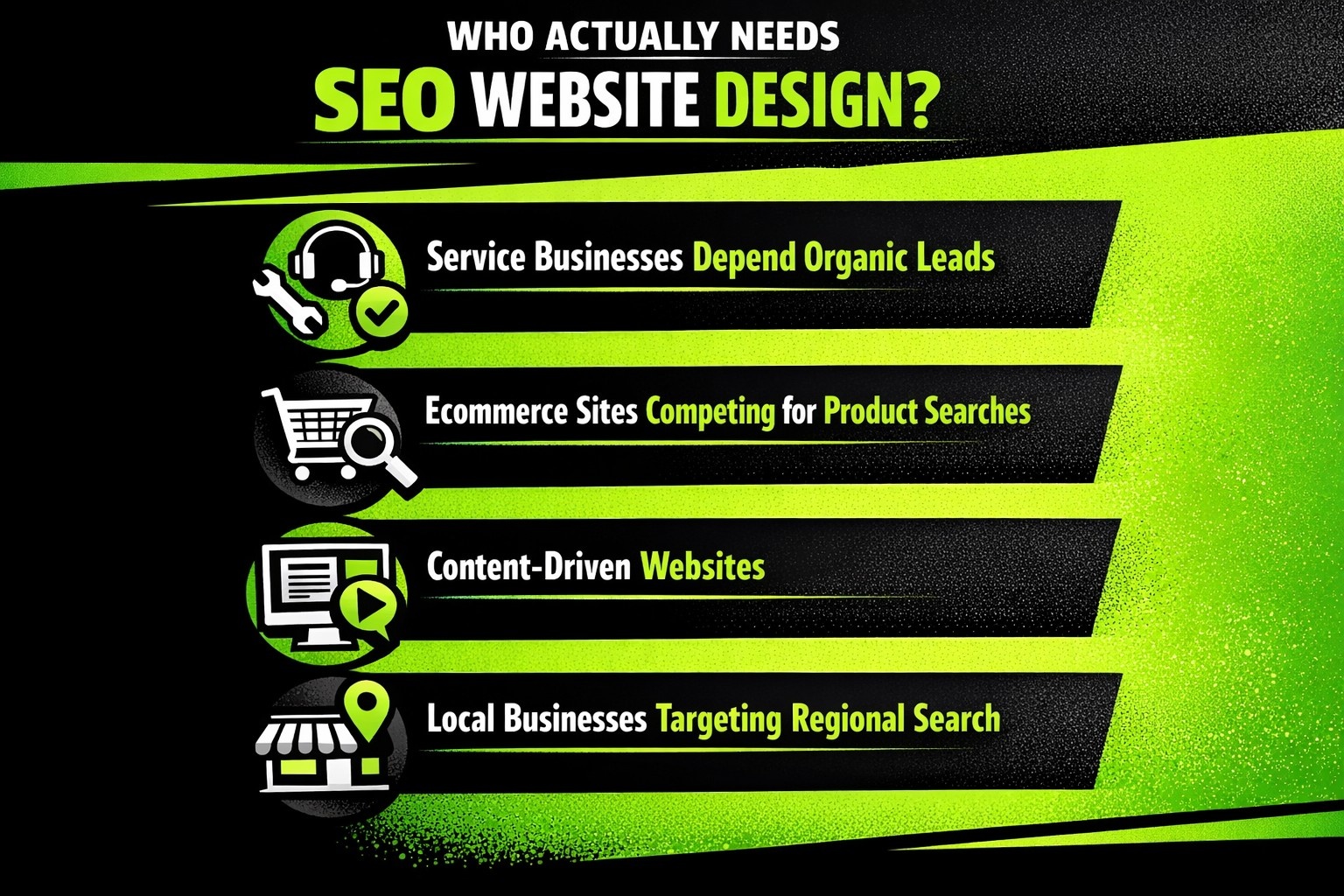
Service Businesses That Depend on Organic Leads
For service-based companies, the website is often the first real interaction a potential client has with the brand. SEO website design helps ensure those service pages are easy to find, clearly structured, and aligned with what people are actually searching for. Without that foundation, even strong services can stay invisible.
Ecommerce Sites Competing for Product Searches
Ecommerce websites live and die by visibility. Product pages, category structures, and internal linking all influence how well a store performs in search results. SEO-focused design makes it easier for search engines to understand what you sell and for users to move smoothly from discovery to purchase.
Content-Driven Websites
Blogs, publishers, and educational platforms rely on content to attract and retain audiences. SEO website design helps organize that content in a way that highlights topic relevance, supports internal linking, and encourages deeper exploration. Without proper structure, even high-quality content can struggle to gain traction.
Local Businesses Targeting Regional Search
For local businesses, SEO design plays a big role in showing up for location-based searches. Clear location signals, service areas, and well-structured pages help search engines connect the business to the right region. This is especially important for companies competing in crowded local markets.
Startups building visibility from scratch
Startups often need traction quickly, and rebuilding a website later can be costly. Designing with SEO in mind from the start gives new businesses a cleaner structure, better scalability, and a stronger chance to gain visibility as they grow. It sets a foundation that supports long-term momentum instead of quick fixes.
If your website is meant to support growth in any meaningful way, SEO website design directly influences how discoverable, usable, and effective your online presence really is.
SEO Website Design vs Traditional Web Design
Traditional web design often puts most of its energy into how a site looks and how the brand is presented. That is not a bad thing. Strong visuals, clean layouts, and consistent branding absolutely matter. The problem starts when those decisions are made without thinking about how the site will be found or how easily search engines can understand it. That is how you end up with a website that looks impressive in a portfolio but struggles to attract meaningful traffic.
SEO website design approaches things differently. Instead of treating search visibility as an add-on, it is part of the design thinking from the beginning. Content is not filler that fits around visuals, it is a core element that shapes layout and structure. Technical performance is not an afterthought, but something considered while design choices are being made. Page hierarchy, navigation, internal linking, and mobile behavior are all handled as part of the same system. The real difference is not style, it is focus. Traditional design may stop at appearance, while SEO website design connects appearance, structure, and discoverability into one process. The strongest websites come from treating design and SEO as one conversation, not two separate phases.
Why SEO Website Design Is a Long-Term Investment
SEO website design is not a quick fix. It is foundational work. The decisions made during design affect performance for years.
A well-structured, search-friendly site:
- Scales more easily as you add new content
- Requires fewer major overhauls later
- Continues to attract traffic over time
- Builds authority through consistent structure and linking
Cutting corners at the design stage often leads to expensive fixes later. Investing in SEO website design upfront creates a platform that supports long-term growth rather than constant patchwork.
Wrapping It Up
SEO website design is about building a site that works on multiple levels at once. It serves people by being clear, fast, and easy to use. It serves search engines by being structured, readable, and technically sound.
It is not about gaming algorithms. It is about clarity, usability, and thoughtful structure. When those things are in place, visibility and performance become a natural outcome. A website designed this way does more than sit online. It actively supports discovery, engagement, and growth over time.