


SEO management isn’t a single task or a quick fix. It’s the ongoing work that keeps a website visible, relevant, and competitive as search engines, users, and markets change.
Most people think of SEO as keywords or rankings. In reality, it’s closer to maintenance and strategy combined. Someone has to decide what to optimize, when to update content, how to respond to algorithm changes, and what actually moves the needle for traffic and conversions. That’s SEO management.
When it’s done well, SEO stops feeling random. You’re not guessing why pages rank or drop. You have a clear direction, measurable goals, and a system that supports long-term growth instead of short-lived wins.
SEO Management Explained In Plain Terms
SEO management is the ongoing process of planning, executing, monitoring, and improving search engine optimization efforts for a website.
That definition sounds simple, but the keyword is ongoing.
SEO is not a one-time setup. It is not something you finish and move on from. Search engines evolve, competitors change strategy, content gets outdated, and user expectations shift. SEO management exists to keep everything aligned as those changes happen.
Instead of treating SEO as a checklist, SEO management treats it as a living process. Someone is responsible for direction, prioritization, execution, and accountability. That role may sit with an in-house specialist, an external agency, or a hybrid team. But without management, SEO becomes fragmented and reactive.
Why SEO Management Exists In The First Place
Many businesses technically do SEO without managing it.
They publish blog posts when there is time. They tweak titles when traffic drops. They install plugins and hope for the best. On the surface, work is happening. Underneath, there is no coordination.
SEO management exists because SEO touches too many moving parts to function without structure.
Content creation affects rankings. Technical issues affect crawlability. Site speed affects engagement. Internal linking affects authority flow. Backlinks affect trust. Analytics affect decision-making. None of these live in isolation.
Management is what turns individual actions into a strategy.
How Lengreo Builds and Manages SEO That Scales
At Lengreo, SEO management is never treated as a side task or a checkbox service. We see it as a long-term growth system that sits at the intersection of strategy, execution, and accountability. That means we do not start with templates or pre-packaged solutions. We start by understanding how your business actually works, how you acquire customers, and where search fits into that picture.
Our role goes beyond rankings. We manage SEO as part of a wider marketing and tech ecosystem, aligning it with lead generation, demand generation, paid media, and sales processes when needed. Sometimes that means focusing heavily on organic growth. Other times it means supporting SEO with outreach, content, or conversion optimization so traffic turns into real opportunities. The strategy is shaped by the goal, not the channel.
What makes our approach different is integration. We do not operate in isolation or disappear behind reports. We work as an extension of your team, staying close to performance data, adjusting quickly, and keeping communication transparent. Whether the objective is scaling B2B lead flow, entering a competitive niche, or fixing growth that has stalled, SEO management at LenGreo is built around measurable outcomes and steady progress, not short-term wins.
The Difference Between Doing SEO and Managing SEO
This distinction matters more than most people realize. Many teams believe they are managing SEO when, in reality, they are only reacting to it. The gap between these two approaches is often the reason results stall or never compound.
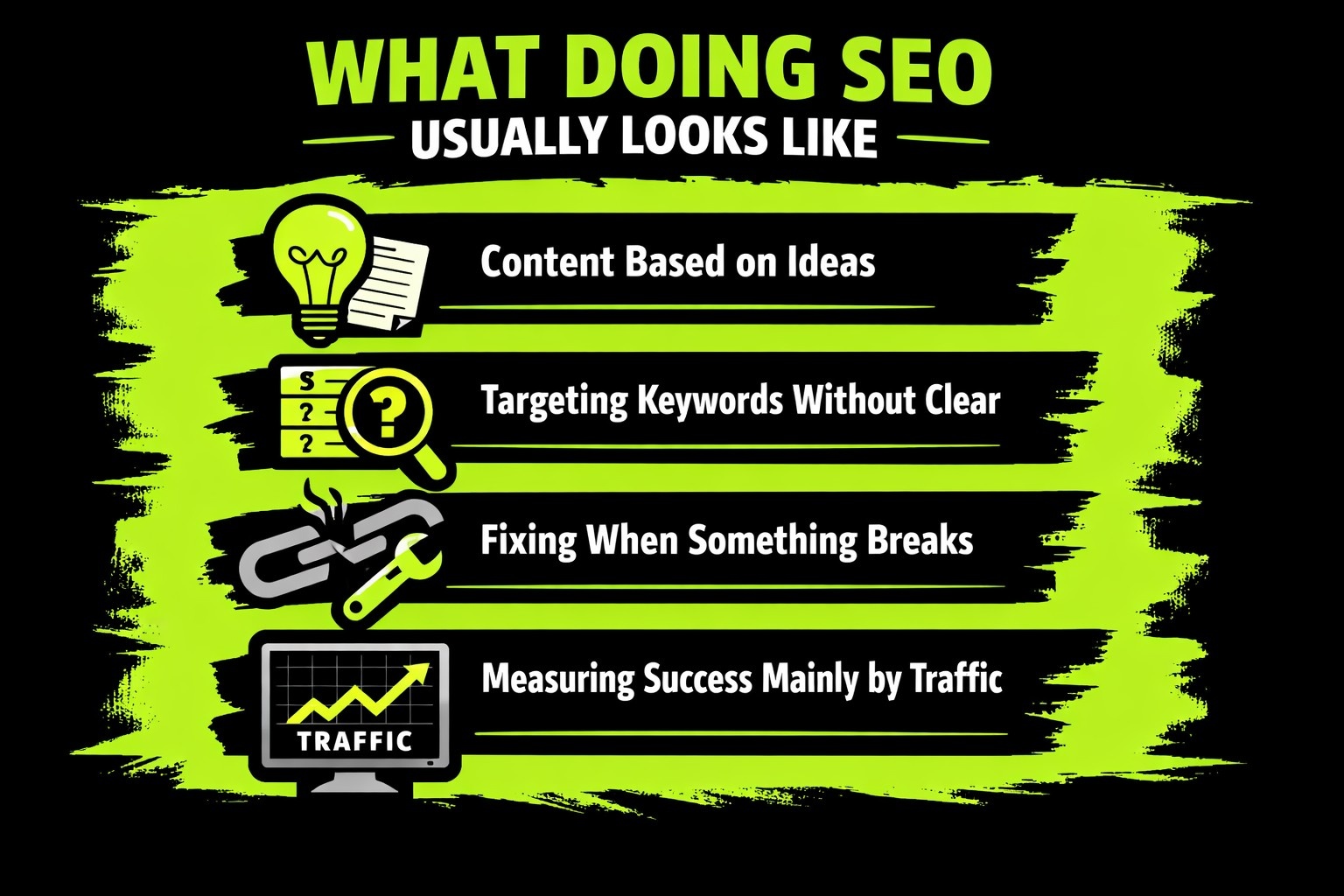
What Doing SEO Usually Looks Like
Doing SEO often happens in bursts. Work gets done, but without a unifying system behind it.
Common Characteristics of Doing SEO
- Writing content based on ideas or trends
- Targeting keywords without clear intent mapping
- Fixing technical issues only when something breaks
- Measuring success mainly by traffic numbers
- Reacting to ranking drops instead of anticipating them
This approach is not useless, but it is fragile. Results depend heavily on timing, luck, or short-term gains rather than consistent progress.
What Managing SEO Looks Like In Practice
Managing SEO is more deliberate. It treats search visibility as an ongoing responsibility, not a collection of isolated tasks.
Core Traits of SEO Management
- Clear goals tied to business outcomes
- Keyword strategy mapped to pages and funnels
- Regular audits and performance reviews
- Proactive technical maintenance
- Decisions driven by data, not assumptions
Instead of reacting to problems, managed SEO plans for them. Changes are expected, measured, and addressed before they cause real damage.
Why The Difference Matters
SEO management is not about doing more work. It is about doing the right work at the right time for the right reason. That shift in mindset is what turns SEO from a maintenance task into a growth channel.
How SEO Management Works In Practice
SEO management follows a cycle rather than a straight line. While every team has its own workflow, the fundamentals stay consistent.
Establishing a Baseline
Every SEO management process starts with understanding reality.
This means auditing the current state of the website. Not just rankings, but structure, content quality, technical health, backlink profile, and user behavior. The goal is not to find faults for the sake of it, but to establish a clear starting point.
Without a baseline, progress cannot be measured honestly. Improvements become assumptions rather than facts.
Defining Goals That Actually Matter
Good SEO management does not start with keywords. It starts with intent.
What does the business need from organic search?
- Qualified leads
- Product sales
- Brand visibility
- Local traffic
- Long-term authority
Different goals require different SEO decisions. A content-heavy strategy may work for brand building but fail at lead quality. Ranking for high-volume keywords may look good on reports while driving the wrong audience.
SEO management connects search goals to real outcomes.
Keyword Strategy as a Management Decision
Keyword research is often treated as a purely technical task. In reality, it is a strategic one, because the keywords you choose shape everything that follows. They influence what content gets created, how pages are structured, and which visitors you attract in the first place.
SEO management looks at keywords from several angles at once. Search intent matters just as much as volume. Competition level determines how realistic a target is. Commercial relevance decides whether traffic turns into leads or sales. Funnel position clarifies where a page fits in the buyer journey, and content effort defines how much work is required to compete effectively.
Instead of chasing every possible keyword, SEO management focuses on coverage and structure. Each page has a clear role, and each group of keywords supports that role without overlapping or competing with other pages. This approach prevents issues like keyword cannibalization, thin content, and wasted effort. More importantly, it creates clarity across the site, both for search engines and for real users.
Content Planning Beyond Just Publishing
Publishing content is easy. Managing content is not.
SEO management treats content as an asset that needs ongoing attention, not something you create once and forget. It involves making deliberate decisions about what content to create, what to update, and what no longer serves a purpose. Topics are chosen based on real search demand, not assumptions or internal preferences, and each piece is placed within a broader structure so it supports the rest of the site.
This approach also helps avoid common problems like duplication, overlap, and internal competition between pages. Instead of constantly adding new articles, SEO management often focuses on improving existing pages, strengthening relevance, and aligning them more closely with user intent. Performance is measured by more than traffic alone, with attention paid to engagement, conversions, and long-term visibility.
Many websites lose rankings not because their content is poor, but because it becomes outdated, unfocused, or disconnected from the rest of the site. SEO management ensures content works as a system rather than a collection of isolated pages.
Technical and Off-Page SEO as Ongoing Management
Technical SEO and off-page SEO are often treated as separate workstreams. In practice, they share the same goal: building stability and trust over time. SEO management brings both under one system, making sure neither is handled as a one-off task.
Technical SEO as Ongoing Maintenance
Technical SEO is often misunderstood as a cleanup phase. Fix the issues, check the boxes, move on. In reality, it requires constant attention because websites never stand still.
Pages are added. Plugins are updated. Designs are refreshed. Tracking scripts are modified. Each change introduces the potential for technical problems that can quietly affect search performance if no one is watching.
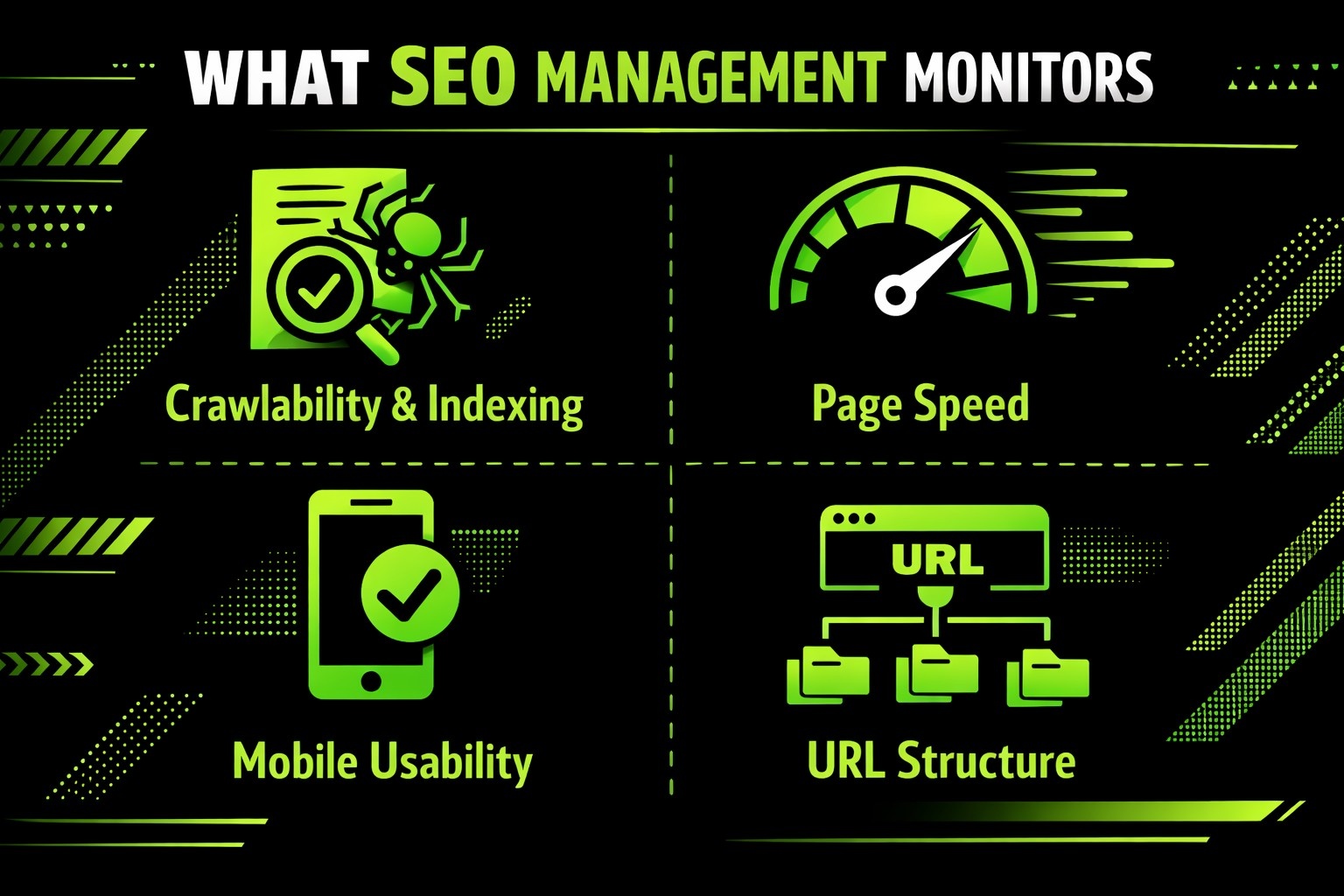
What SEO Management Monitors on the Technical Side
- Crawlability and indexing
- Page speed and overall performance
- Mobile usability and responsiveness
- URL structure and consistency
- Internal linking integrity
- Duplicate content issues
- Structured data validation
The goal here is stability. Search engines reward sites that are reliable, easy to crawl, and technically predictable. When technical SEO is neglected, trust erodes over time, even if the content itself is strong.
Off-Page SEO as Reputation Management
Backlinks still matter, but SEO management approaches them very differently than outdated link-building tactics.
Instead of chasing volume, modern SEO management focuses on credibility. Links are treated as signals of trust rather than commodities to be collected. The emphasis shifts from quantity to context and relevance.
Signals That Matter in Managed Off-Page SEO
- Relevant mentions from trusted sources
- Natural link acquisition over time
- Brand visibility across authoritative platforms
- Consistent and natural anchor text distribution
- Avoiding risky or manipulative practices
Off-page SEO becomes less about chasing links and more about earning authority. That often overlaps with digital PR, partnerships, and content quality. When managed properly, these efforts compound gradually and support long-term growth instead of short-lived spikes.
Measurement That Actually Informs Decisions
One of the most overlooked parts of SEO management is reporting.
Many reports look impressive but fail to answer meaningful questions. Rankings without context. Traffic without intent. Charts without insight.
Effective SEO management focuses on metrics that guide action:
- Which pages are gaining or losing visibility
- Which keywords drive conversions, not just visits
- Where users drop off
- How technical changes impact performance
- What competitors are doing differently
Reporting is not about proving value after the fact. It is about steering the strategy forward.
In-House SEO Management Vs Outsourcing
Both models can work, but SEO management looks very different depending on where it lives. The right choice depends on resources, goals, and how closely SEO needs to integrate with daily operations.
In-House SEO Management
Managing SEO internally gives businesses a high level of control and alignment.
Strengths of In-House SEO Management
An internal SEO manager typically brings a deep understanding of the brand, faster alignment with internal teams, and direct access to decision-makers. This can make collaboration smoother and strategy shifts easier to execute, especially in organizations with complex products or strict brand requirements.
Limitations of In-House SEO Management
At the same time, in-house SEO often requires ongoing training, continuous investment in tools, and coverage across multiple skill sets. SEO rarely fits neatly into one role, particularly in competitive markets where technical expertise, content strategy, and off-page work all need attention. Without enough support, internal teams can become stretched thin.
Outsourced SEO Management
Outsourcing SEO management shifts responsibility to a specialized partner.
Strengths of Outsourced SEO Management
Agencies bring specialized expertise, access to advanced tools, experience across industries, and the ability to scale efforts as needed. Because SEO is their core focus, agencies tend to stay current with algorithm changes and best practices without additional training costs for the client.
Trade-Offs to Consider
The main trade-off is less day-to-day control. Communication can take more structure, and expectations need to be clearly defined. The strongest agency relationships feel collaborative rather than transactional, with both sides aligned around goals, timelines, and accountability.
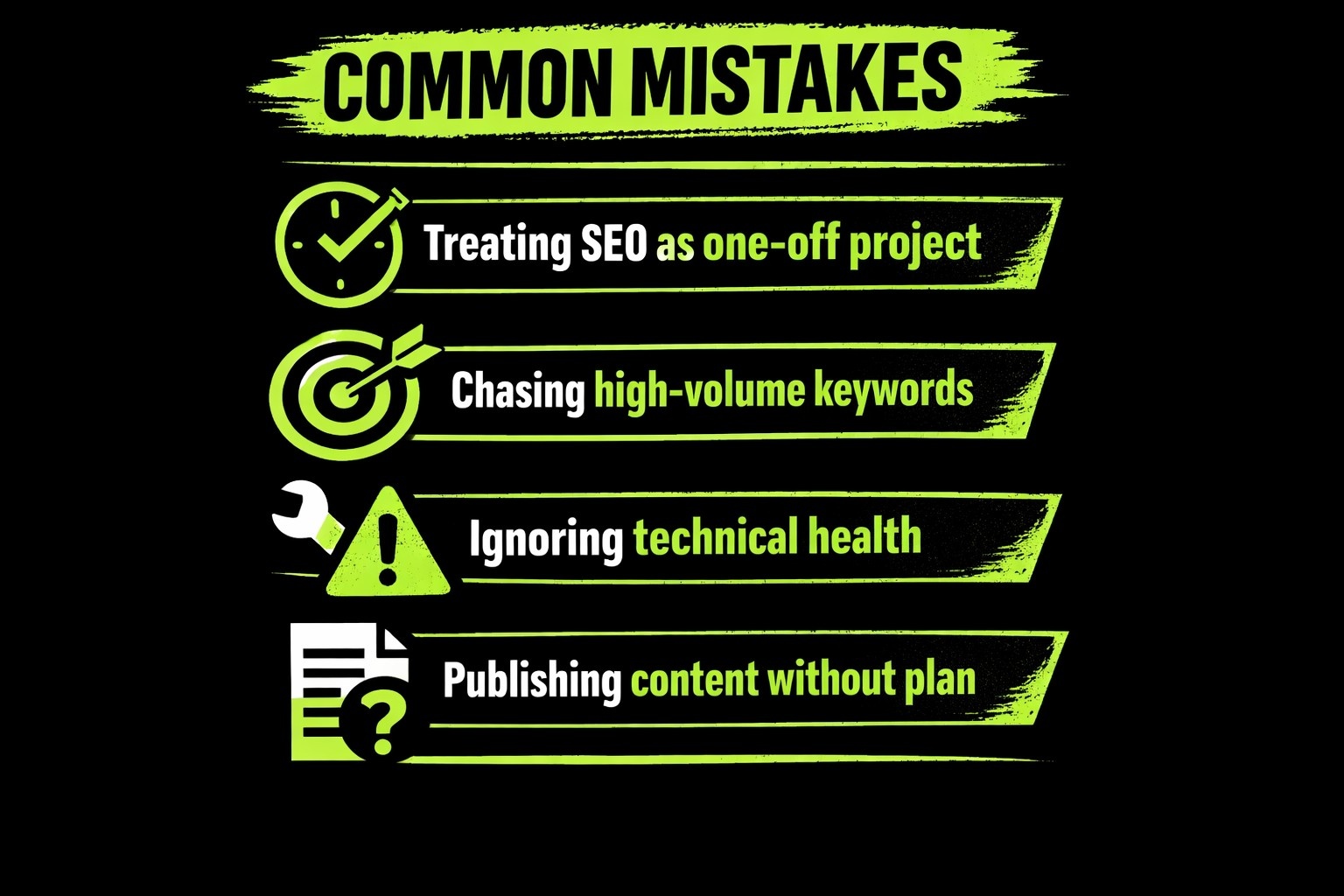
Common Mistakes That Undermine SEO Management
Many SEO efforts fail not because SEO does not work, but because management is missing or flawed.
Some common issues include:
- Treating SEO as a one-off project
- Chasing high-volume keywords without intent
- Ignoring technical health
- Publishing content without a plan
- Measuring success only by traffic
- Reacting emotionally to short-term ranking changes
SEO management exists to prevent these mistakes by providing structure and accountability.
When SEO Management Becomes Essential
Some businesses can survive without formal SEO management, especially early on. Most cannot scale without it. As soon as organic search starts playing a meaningful role in growth, unmanaged SEO stops being a shortcut and starts becoming a risk.
Situations Where SEO Management Is No Longer Optional
SEO management becomes essential when the following conditions apply.
Organic Traffic Is a Primary Growth Channel
When a large share of leads, signups, or sales comes from organic search, SEO can no longer be treated as a background activity. Small ranking drops, technical issues, or content decay can have a direct impact on revenue. Management is needed to protect and grow that channel consistently.
Competition Is High
In competitive markets, standing still usually means falling behind. Competitors are publishing more content, improving site performance, and investing in authority. Without active SEO management, it becomes difficult to defend existing positions, let alone gain new ones.
Content Output Increases
As content production scales, so does complexity. More pages mean more chances for overlap, outdated information, internal competition, and structural issues. SEO management provides the guardrails that keep content aligned, purposeful, and easy to maintain over time.
Multiple Stakeholders Are Involved
Once SEO touches content teams, developers, designers, marketers, and leadership, coordination becomes critical. Without clear ownership and prioritization, work slows down or moves in conflicting directions. SEO management ensures decisions are aligned and execution stays focused.
Revenue Depends on Search Visibility
When rankings influence pipeline, customer acquisition costs, or forecasted growth, SEO is no longer an experiment. It becomes infrastructure. At that point, unmanaged SEO introduces uncertainty that most businesses cannot afford.
Why Unmanaged SEO Becomes A Liability
At this stage, SEO problems are no longer cosmetic. Missed opportunities compound, technical debt grows quietly, and competitors gain ground while no one is clearly responsible for fixing the root cause. SEO management exists to prevent that slow erosion.
Final Thoughts
SEO management is not about tricks, hacks, or shortcuts. It is about discipline.
It brings order to a complex system. It turns scattered effort into sustained progress. It replaces guesswork with strategy.
When SEO is managed properly, growth feels predictable. You understand why things work, where they fail, and what to do next. That clarity is what makes SEO management valuable.
Not because it promises instant results, but because it builds something that lasts.