

Running a small business means competing for attention with limited time, budget, and margin for mistakes. You can have a great product, solid service, and a good-looking website — and still be invisible online. That’s where SEO comes in.
Search engine optimization isn’t about chasing algorithms or gaming Google. For small businesses, it’s about showing up when people are already looking for what you offer. It’s the difference between hoping customers find you and being part of their decision the moment they search.
The Competitive Reality Small Businesses Face Online
The internet did not level the playing field. It changed the rules.
Small businesses now compete not only with local rivals, but with national brands, marketplaces, directories, and content platforms that dominate search results. Many of these competitors have larger budgets, stronger brand recognition, and entire teams dedicated to digital marketing.
What they do not always have is relevance.
SEO allows small businesses to compete where relevance matters more than scale. Search engines reward clarity, usefulness, and intent matching. When done well, SEO lets a smaller company appear in front of the right audience, even when bigger players exist.
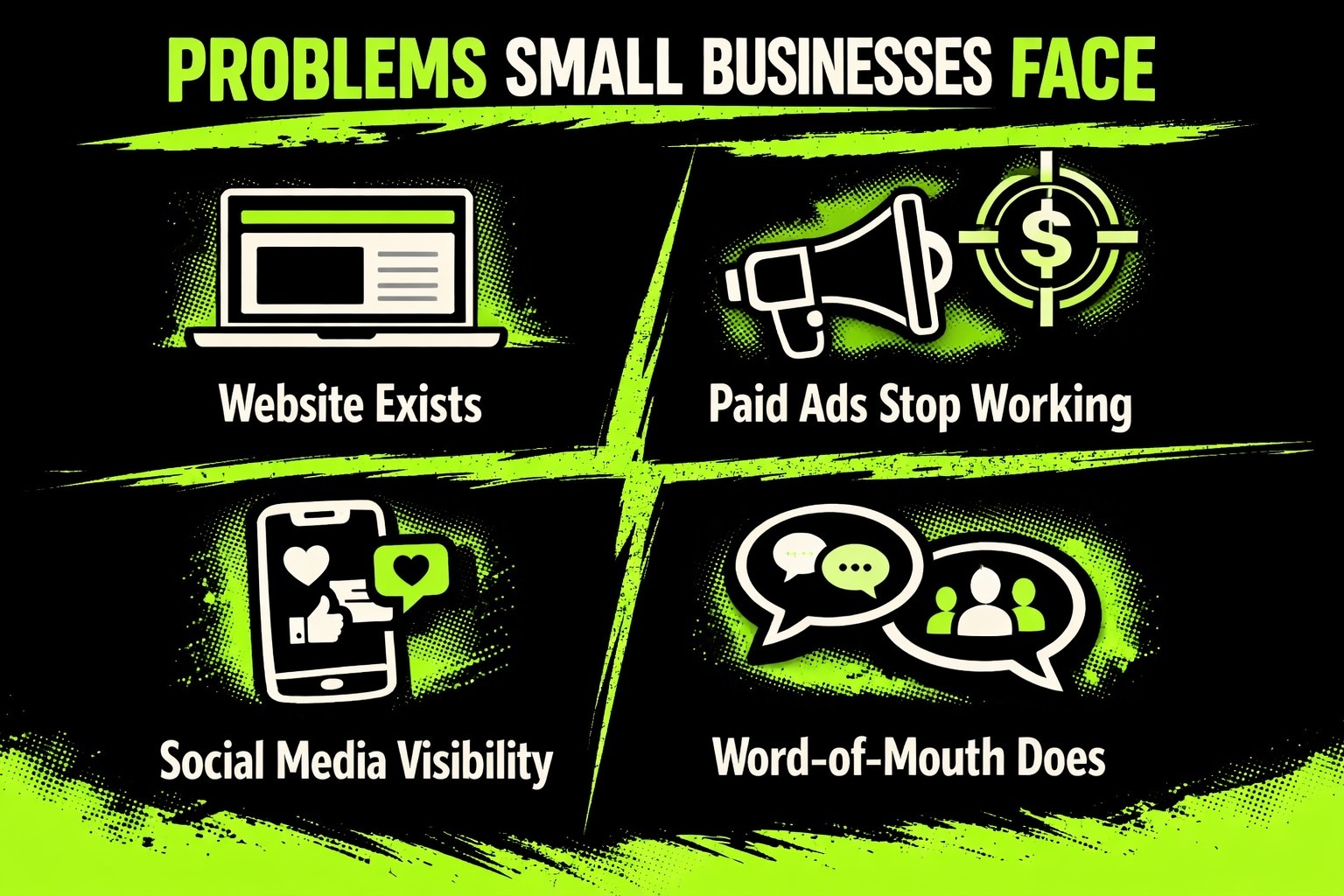
Problems Small Businesses Face
- Their website exists, but gets little to no traffic
- Paid ads stop working the moment the budget runs out
- Social media visibility fluctuates unpredictably
- Word-of-mouth does not scale fast enough
SEO addresses these gaps by creating a steady, compounding source of visibility.
How Lengreo Supports Small Businesses Through Strategic SEO
At Lengreo, we work with small and growing businesses that feel the pressure of competing online every day. Bigger brands dominate ad space, marketplaces crowd search results, and attention is harder to earn than ever. Our job is to turn SEO into a practical growth tool, not a theoretical exercise. We focus on visibility that leads somewhere, not rankings that look good in a report but do nothing for the business.
We approach SEO as a system, not a single tactic. That starts with understanding how a company actually makes money, who it needs to reach, and where competitors are leaving gaps. From there, we build strategies around keyword research, technical optimization, content planning, and link building that support real outcomes. More qualified traffic. Better conversion rates. Stronger pipelines. The results we have achieved across software, architecture, biotech, cybersecurity, and other industries come from aligning SEO with business reality, not chasing trends.
What sets our work apart is execution. We audit sites deeply, fix what holds them back, and build momentum through consistent, data-backed decisions. Whether it’s improving site performance, strengthening local visibility, or scaling SEO through white label partnerships, we focus on long-term growth. SEO is not a one-off project. It is a competitive advantage when done with discipline, clarity, and a clear understanding of what success should look like.
SEO as a Demand-Capture Channel, Not a Promotion Tool
One of the biggest misunderstandings about SEO is treating it like advertising. SEO does not create demand. It captures it. People searching on Google are already looking for something, whether that is a service, a product, a solution, or a clear answer. SEO helps your business appear at that exact moment, instead of trying to interrupt someone who is not ready.
This distinction matters for small businesses because it directly affects conversion quality. Visitors who arrive through search tend to have clearer intent, more patience, and a better understanding of what they need. They are not browsing casually. They are actively evaluating options. Instead of convincing people they need you, SEO puts your business in front of people who have already decided to look.
Why SEO Levels the Playing Field for Smaller Brands
Large companies benefit from name recognition and massive reach. Small businesses usually do not. What they do have is proximity to the customer, deeper knowledge of their niche, and the ability to be specific. SEO rewards exactly that.
Search engines prioritize relevance over size. When a page closely matches what someone is searching for, it has a real chance to rank, even against much bigger competitors.
SEO Rewards Specificity and Real-World Relevance
Local relevance, clear service descriptions, and practical explanations are areas where small businesses often outperform larger brands. They understand their audience better because they work with them directly.
A local service business, for example, can rank for detailed, intent-driven searches like:
- emergency electrician near me
- best accountant for freelancers in London
- custom furniture maker in Brooklyn
These searches reflect real needs at the moment of decision. Large brands rarely optimize for this level of nuance. Small businesses can.
How Small Businesses Use SEO to Compete Smarter
SEO allows smaller companies to focus their efforts where it matters most:
- Targeting long-tail keywords with clear buying intent
- Owning specific local or niche search queries
- Building authority within a focused topic or service area
- Outranking bigger competitors on relevance rather than budget
Competing Without Matching Enterprise Spend
This is how small businesses stay competitive without trying to match enterprise marketing budgets. Instead of spreading resources thin, SEO lets them concentrate on the searches that actually drive inquiries, calls, and sales.
Organic Traffic as a Long-Term Asset
Paid ads are transactional. SEO is cumulative. When a small business invests in SEO, it builds assets that continue working over time. Pages that rank, content that answers real questions, links that reinforce credibility, and technical improvements that support performance all add up.
Unlike ads, organic traffic does not disappear overnight. A well-optimized page can generate traffic for months or even years with minimal maintenance. Over time, this creates a level of predictability that is rare in digital marketing.
Organic traffic also carries advantages that paid channels struggle to match. There is no cost per click, growth compounds as authority builds, users tend to trust organic results more, and the channel aligns naturally with long-term business goals. For businesses with limited budgets, this kind of stability is not just helpful, it is essential.
Local SEO as a Competitive Advantage
For small businesses with a physical location or a defined service area, local SEO is often the most effective way to compete online. When people search for nearby services, they are usually close to taking action. Showing up in those moments can directly impact calls, visits, and bookings.
How Local Search Actually Works
Local search results are shaped by three main factors: relevance, distance, and prominence. Distance is fixed, but relevance and prominence are not. Search engines look at how well a business matches the search intent and how established it appears online.
This means local SEO is not just about being nearby. It is about clearly communicating what you offer, where you operate, and why your business can be trusted.
Why Local SEO Drives High-Intent Traffic
Local searches often happen on mobile devices and come with strong intent. People searching for services nearby are usually looking for immediate solutions, not general information. These searches frequently lead to direct actions, such as phone calls, store visits, or appointment requests.
Because of this, local SEO tends to attract traffic that is more likely to convert compared to broader, non-local searches.
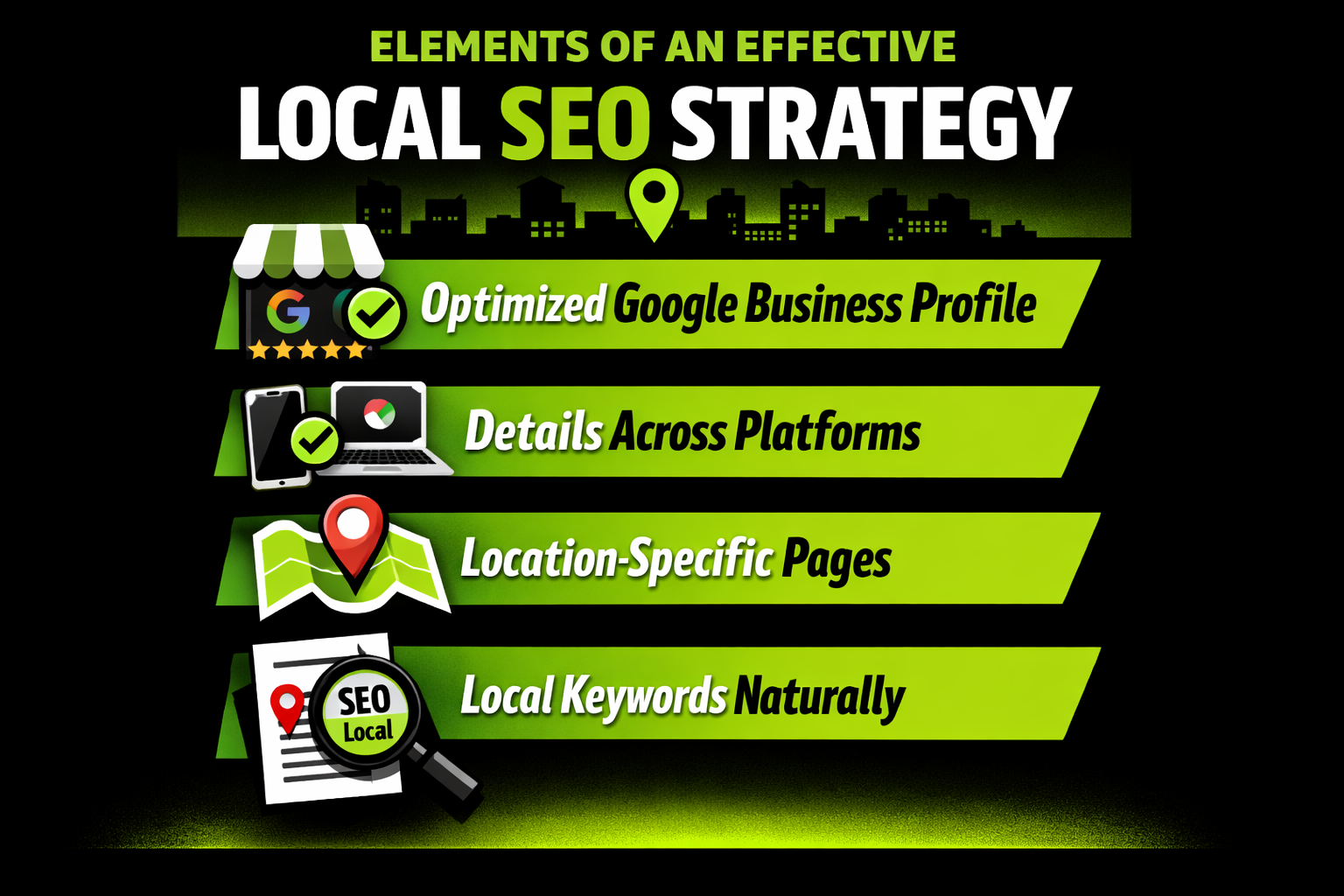
Core Elements of an Effective Local SEO Strategy
Strong local SEO is built on consistency and clarity across several areas:
- An optimized Google Business Profile with accurate and complete information
- Consistent name, address, and phone details across all platforms
- Location-specific pages that reflect actual service areas
- Local keywords integrated naturally into content
- Genuine customer reviews and thoughtful responses
Each of these elements reinforces trust and helps search engines understand where and when your business should appear.
In competitive markets, local SEO often becomes the deciding factor between steady inquiries and long stretches of silence.
SEO Improves Website Quality, Not Just Rankings
SEO is not only about visibility. It directly improves how a website functions for real people. Search engines favor sites that load quickly, are easy to navigate, and perform well on mobile devices. When businesses optimize for SEO, they are often forced to address issues that frustrate users, such as slow pages, unclear structure, weak mobile usability, or content that does not explain things clearly.
As these problems are resolved, the overall experience improves. Visitors stay longer, engage more, and are more likely to take action. Pages become easier to understand, trust increases, and conversion paths feel more natural. In this sense, SEO acts as quality control for
How SEO Strengthens the Entire Business, Not Just Rankings
SEO is often treated as a traffic channel, but its impact goes far beyond awareness. When done properly, it supports the full customer journey, keeps marketing costs under control, and gives small businesses a clearer understanding of their audience.
Supporting the Entire Marketing Funnel
SEO is not limited to the top of the funnel. It plays a role at every stage, from the first moment someone starts researching to the point where they are ready to contact or buy.
This happens through different types of content aligned with intent:
- Informational content that answers early questions and builds trust
- Comparison pages that help users evaluate options
- Service pages designed for people ready to take action
- FAQs that remove doubt and reduce friction before contact
By matching content to intent, SEO guides users naturally toward conversion instead of pushing them prematurely. This also makes other marketing efforts more effective. Paid ads, email campaigns, and social media tend to perform better when they send users to a site that is clear, relevant, and optimized for search.
Cost Efficiency in a Competitive Environment
Small businesses rarely have room for wasted spend. Every channel needs to justify itself over time.
SEO does require upfront effort, but it does not rely on constant spending to maintain visibility. Once the foundation is in place, ongoing optimization becomes more efficient and predictable.
Compared to paid channels, SEO typically offers:
- Lower long-term acquisition costs
- Better returns on content investment
- Reduced dependency on advertising platforms
- Greater control over when and how a business appears in search
This matters even more in competitive markets where ad costs continue to rise and short-term tactics become harder to sustain.
SEO as a Learning Tool About Your Audience
Search data is one of the most honest sources of insight available. It shows what people actually care about, not what they say they care about.
Through keyword research, performance tracking, and content analysis, businesses learn:
- What customers are searching for
- How they phrase their problems
- Which pages attract attention
- Where users hesitate or drop off
This insight extends beyond SEO. It informs product decisions, messaging, sales conversations, and even customer support. Small businesses that pay attention to search behavior gain a clearer picture of their market without relying on expensive research tools or assumptions.
Taken together, these benefits make SEO more than a marketing tactic. It becomes a strategic layer that supports growth, efficiency, and smarter decision-making across the business.
Why SEO Is Not Optional Anymore
Ignoring SEO does not mean staying neutral. It means falling behind.
Competitors who invest in SEO gradually take up more space in search results. Over time, it becomes harder to break in without significant effort.
Search engines continue to evolve, but the core principle remains the same. They reward relevance, usefulness, and trust.
Businesses that align with these principles stay visible. Those that do not slowly disappear from organic discovery.
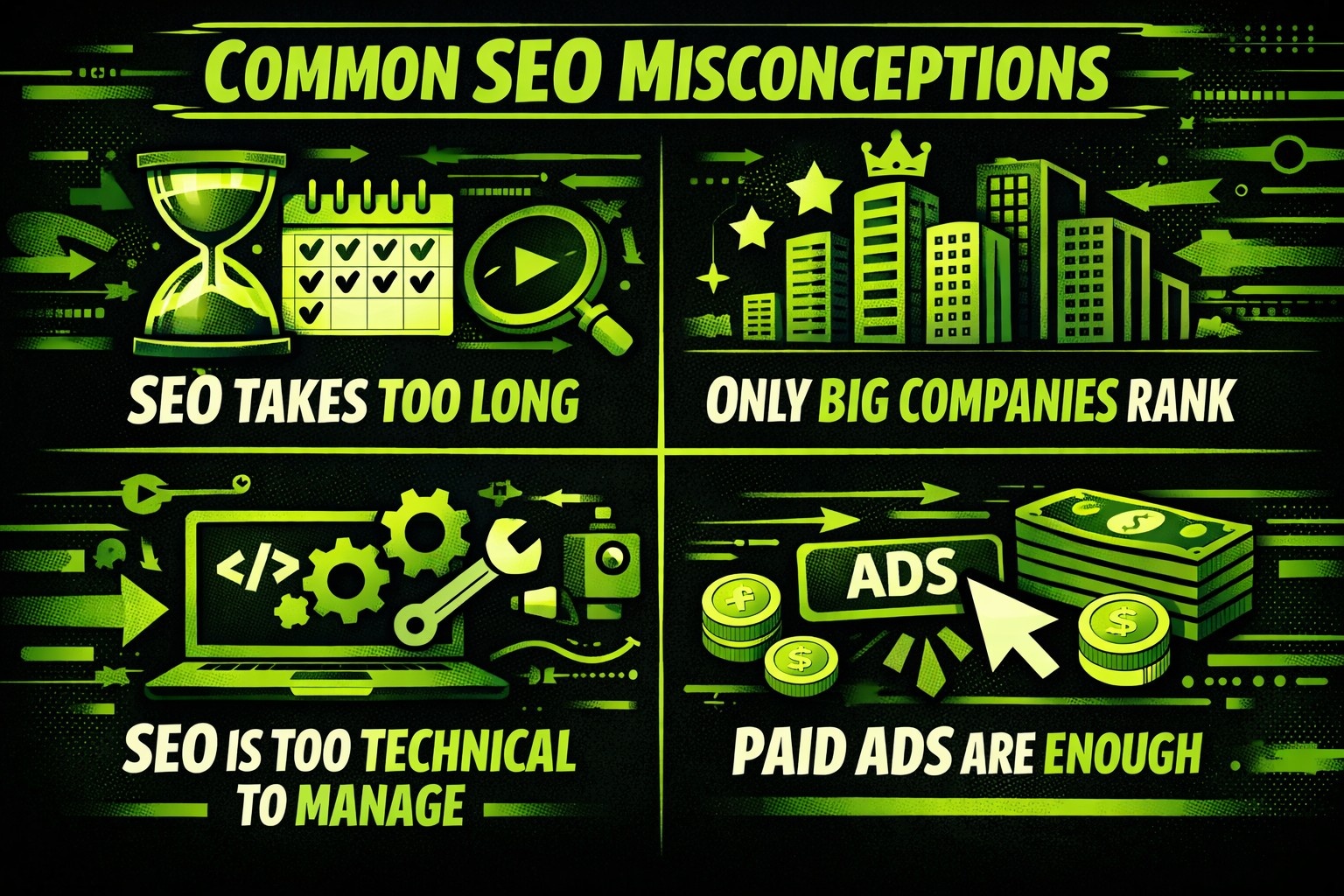
Common SEO Misconceptions That Hold Small Businesses Back
Many small businesses postpone SEO not because it does not work, but because of assumptions that are no longer accurate. These misconceptions often come from outdated advice, bad past experiences, or the belief that SEO is only for companies with large budgets and dedicated teams.
Some of the most common misconceptions include:
- SEO takes too long to matter. SEO is not instant, but it is also not invisible for months. Early improvements often show up as better site performance, higher-quality traffic, and clearer insights into what customers are searching for. Rankings follow once the foundation is in place.
- Only big companies can rank. Large brands have advantages, but search engines still prioritize relevance and intent. Small businesses regularly rank for local, niche, and long-tail searches where big companies are not focused or simply cannot be specific enough.
- SEO is too technical to manage. While technical SEO exists, most small business gains come from clear content, proper structure, and basic performance improvements. SEO does not require mastering every technical detail. It requires understanding what users need and making the site easier to use and understand.
- Paid ads are enough. Paid ads can drive quick traffic, but they stop the moment spending stops. SEO builds visibility that lasts, supports other channels, and reduces dependency on rising ad costs over time.
SEO does require patience, but the long-term benefits consistently outweigh the initial effort. More importantly, SEO does not demand perfection. Small, consistent improvements compound over time, and that steady progress is often what separates businesses that grow from those that stay stuck.
SEO as a Growth Foundation, Not a Tactic
SEO works best when treated as infrastructure, not a campaign.
It supports growth quietly in the background while other efforts come and go. As a business expands into new services, locations, or markets, SEO scales with it.
Pages rank faster. New content gains traction sooner. Authority compounds.
This makes SEO one of the few marketing channels that becomes easier over time instead of harder.
Conclusion: Competing Smart Beats Competing Loud
In a competitive online market, small businesses do not need to be louder. They need to be easier to find.
SEO provides that path. It connects businesses with people who are already searching, already interested, and already close to making a decision.
When done thoughtfully, SEO is not a technical burden. It is a practical growth tool that rewards consistency, clarity, and relevance.
For small businesses willing to invest in long-term visibility, SEO remains one of the most reliable ways to compete, adapt, and grow in a crowded digital landscape.