


Getting more SEO clients isn’t about blasting LinkedIn messages or sending the same pitch to everyone with a website. Most agencies already know how to do SEO. What they struggle with is getting the right people to trust them enough to start a conversation.
The truth is, SEO clients come from a mix of positioning, visibility, and proof. Not hacks. Not shortcuts. And definitely not promises you can’t keep. The agencies that grow consistently are the ones that make it easy for prospects to understand why they’re a good fit, what problem they solve, and what working together would actually look like.
This guide breaks down practical, realistic ways to attract more SEO clients without burning time on low-quality leads or turning your outreach into noise.
Selling SEO Gets Easier When You Know Who It’s For
One of the quiet killers of agency growth is being too broad. When your offer is vague, your message becomes interchangeable. Prospects can’t tell why they should talk to you instead of the next agency in their inbox.
Agencies that grow more consistently tend to be selective, even early on. They focus on companies that already invest in marketing, operate in competitive markets, or rely heavily on inbound demand. These businesses understand that SEO is a long-term lever, not a quick fix.
This kind of focus improves everything downstream. Your examples feel more relevant. Your sales calls are shorter. Your objections are easier to handle because you are not trying to convince someone who fundamentally does not need SEO yet.
Being selective is not about saying no to revenue. It is about reducing friction and increasing signal.
How Lengreo Turns SEO Into Predictable Growth
At Lengreo, we don’t look at SEO as a standalone service or a traffic experiment. We approach it as part of a broader growth system, where organic visibility supports real business goals like qualified leads, sales conversations, and long-term demand. Rankings matter, but only when they contribute to something measurable.
We start with understanding the market, the competitive landscape, and how a company actually generates revenue. From there, we build SEO strategies that align with sales processes, content direction, and technical reality. That’s why our work goes beyond keywords and audits and focuses on execution that moves the needle.
This approach has helped B2B, SaaS, and tech-driven companies use SEO as a reliable acquisition channel rather than a guessing game. By combining strategy, implementation, and ongoing optimization, we help businesses grow visibility that turns into opportunities, not just traffic.
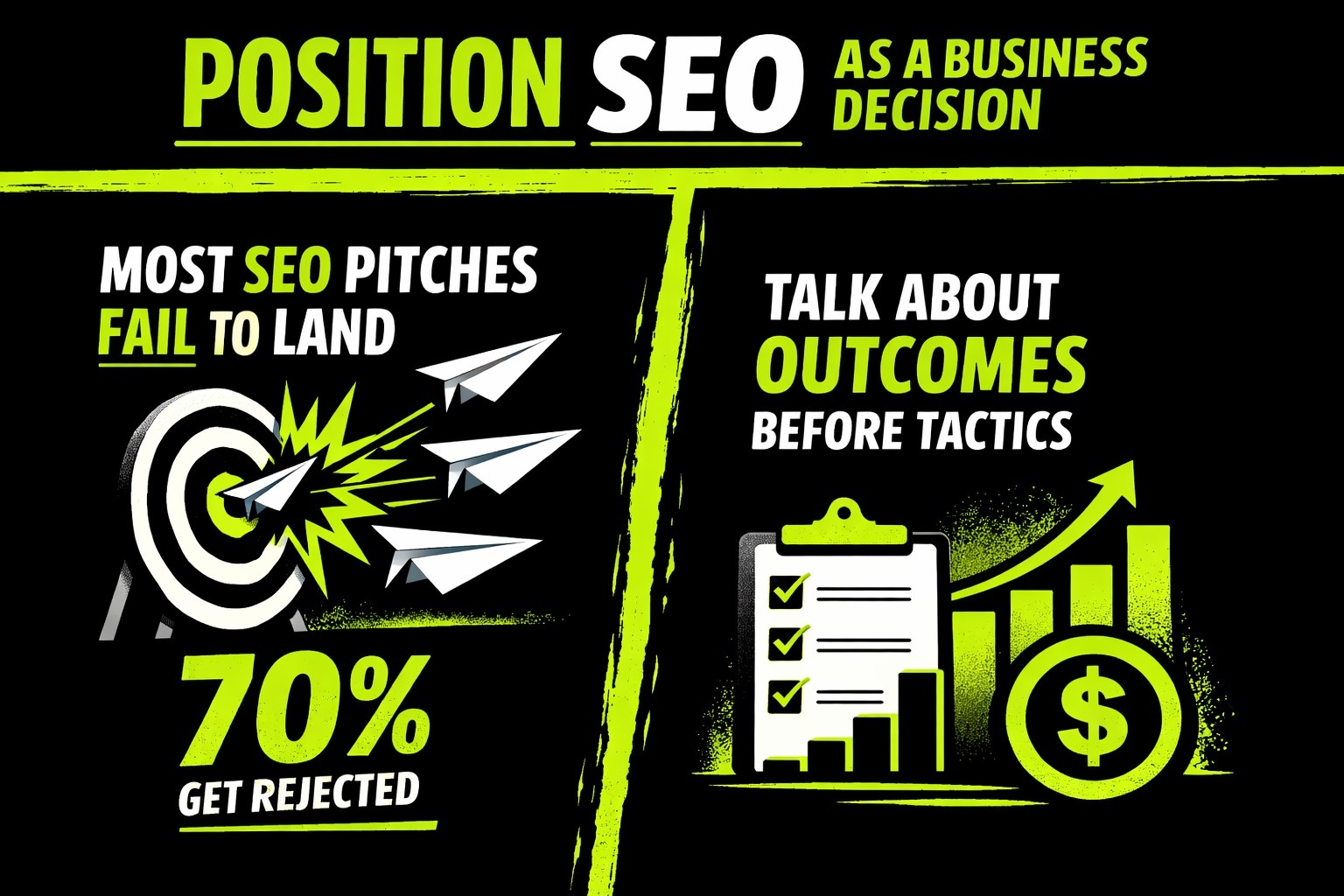
Position SEO as a Business Decision, Not a Service Line
Why Most SEO Pitches Fail to Land
Most prospects do not buy SEO because of the tasks involved. They buy it because they believe it will improve something meaningful for the business.
When a pitch leads with deliverables, tools, or technical checklists, the burden shifts to the prospect. They have to translate that work into value on their own. Many simply won’t bother.
Talk About Outcomes Before Tactics
Agencies that win more clients start the conversation in business terms. They explain how organic visibility affects lead quality, sales cycles, and long-term acquisition costs. SEO is framed as a growth lever, not a list of actions.
How This Changes Who Engages With You
This way of framing filters the audience naturally. Instead of attracting buyers who want instructions followed, you start attracting decision-makers who are looking for a strategic partner and long-term impact.
Proof Is the Shortcut to Trust
No matter how polished your pitch is, proof does more work than words.
Strong proof helps prospects answer three unspoken questions:
- Have you worked with companies like mine?
- Do you understand problems like ours?
- Can you explain results in a way that makes sense?
Good case studies are not about dramatic numbers. They are about clarity. What was wrong, what was done, and what changed as a result. Context matters more than scale.
Even smaller wins are useful if they are explained honestly. A realistic improvement that clearly ties back to business outcomes often feels more trustworthy than inflated growth claims with no explanation behind them.
If you wait until you feel established before documenting results, you slow your own sales cycle.
Use Free Audits as a Trust Builder, Not a Loss Leader
Free SEO audits are often misunderstood. Some agencies avoid them entirely. Others give away far too much.
Used correctly, an audit is not about fixing everything. It is about showing how you think.
A useful audit focuses on priorities, not volume. It highlights the issues that actually block progress and explains why they matter. It avoids overwhelming prospects with screenshots and jargon.
The goal is clarity, not completeness. When a prospect understands their situation better after speaking with you, trust starts forming naturally.
Audits work best when they support a conversation, not replace one.
Discovery Calls Should Feel Like Research
Many SEO sales calls fail because they turn into presentations too early. The agency talks. The prospect listens. Nothing meaningful is uncovered.
Strong discovery calls feel more like research sessions. The focus is on understanding goals, internal constraints, and past experiences. You learn what success actually looks like for the business and what has already failed.
What Discovery Should Actually Uncover
This stage is where critical details surface, often ones that never appear in a proposal brief:
- Development limitations
- Approval bottlenecks
- Budget expectations
- Internal politics
Why Good Discovery Makes Proposals Easier
When discovery is done properly, proposals feel obvious rather than persuasive. You are responding to what the prospect already told you matters, not trying to convince them of something new.
Be Honest About Implementation Early
SEO strategies often fall apart at the implementation stage. Clients agree with recommendations but struggle to act on them.
Agencies that address this early stand out. They explain how changes will actually be made, who is responsible, and where delays might happen. They are upfront about dependencies on internal teams or development resources.
This transparency reduces uncertainty. Prospects are more likely to move forward when they understand how ideas turn into action.
Clear implementation plans make SEO feel achievable instead of theoretical.
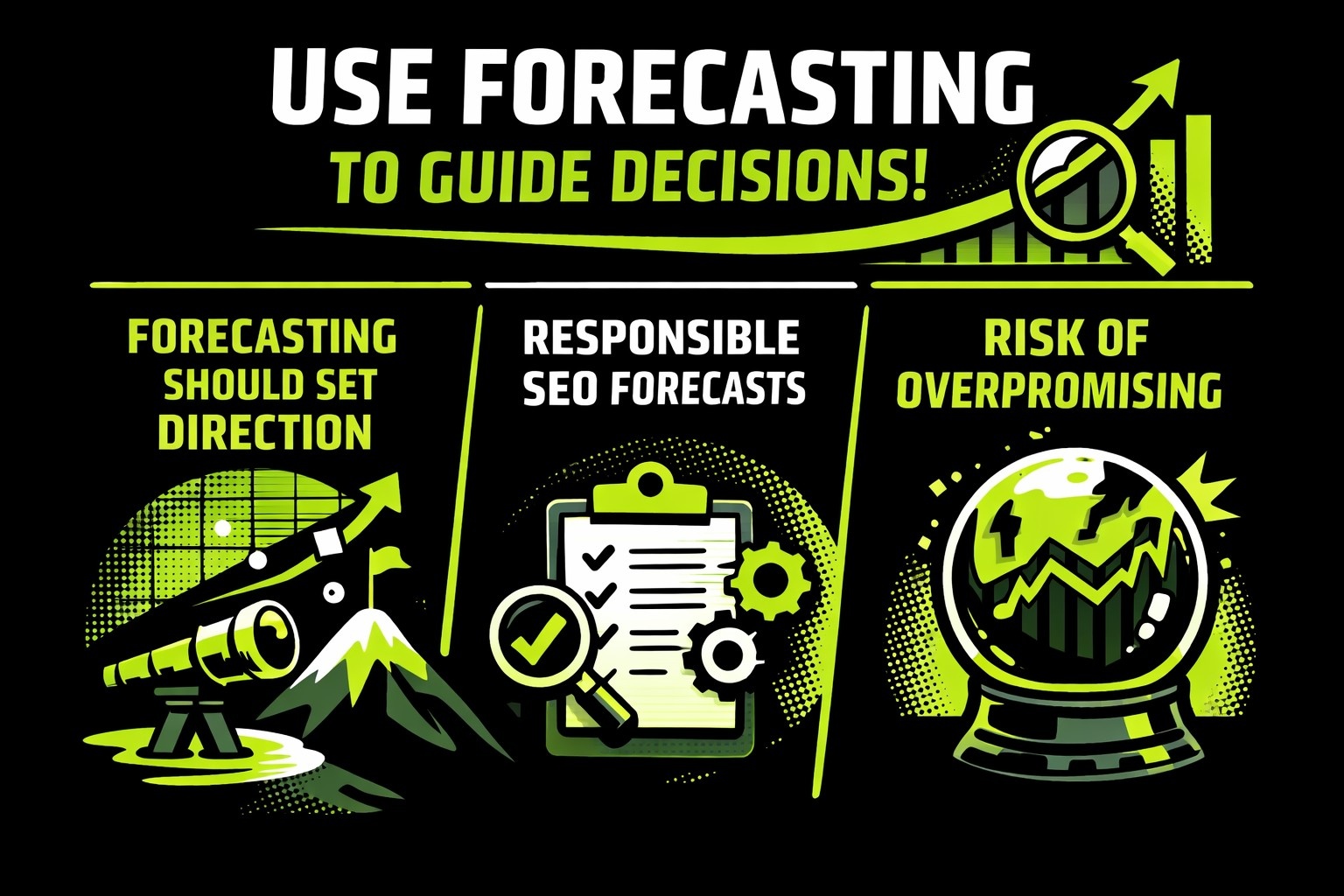
Use Forecasting to Guide Decisions, Not Promise Outcomes
Why Forecasting Should Set Direction, Not Certainty
SEO forecasting can be useful when it sets direction rather than expectations that cannot be controlled. Search performance depends on algorithms, competition, implementation speed, and market conditions, none of which are fully predictable.
Forecasts work best when they frame SEO as a strategic investment with potential upside, not as a fixed outcome that must happen on a specific date.
What Responsible SEO Forecasts Include
Strong forecasts explain assumptions clearly. They outline what needs to happen for growth to occur and what might limit it. Instead of locking into exact numbers, they present reasonable ranges tied to execution and time.
This approach keeps expectations realistic while still giving stakeholders something concrete to work with.
How Forecasting Supports Internal Buy-In
Clear forecasting helps decision-makers justify SEO investment internally. It gives leadership a narrative they can explain to finance teams, executives, or investors without overselling the channel.
When forecasts are grounded in logic rather than optimism, SEO decisions feel deliberate instead of risky.
The Risk of Overpromising
Overpromising may help close deals faster, but it almost always creates problems later. Missed expectations damage trust, even if the underlying work is solid.
Agencies that are honest about uncertainty tend to build stronger, longer-lasting relationships. Clients are far more forgiving of variability than they are of broken promises.
Competitive Context Makes SEO Feel Concrete
Many decision-makers struggle to engage with abstract SEO metrics. Rankings, crawl data, or traffic charts don’t always mean much on their own. Competitive context helps bridge that gap.
When SEO is framed through the lens of competitors, the conversation becomes clearer and more strategic. Instead of asking whether optimization is worth doing, stakeholders start asking what happens if they do nothing.
Competitive analysis helps surface things like:
- Where competitors consistently outrank the business in high-intent searches
- Which competitors are capturing demand the business is missing
- Where gaps exist that can realistically be closed
- How search visibility connects to market share and positioning
Showing these comparisons reframes SEO as market defense or expansion rather than a technical exercise. It becomes about protecting visibility, reducing risk, and taking advantage of opportunities that are already proven to exist.
This approach is especially effective with leadership teams who think in terms of positioning and risk, not tactics.
Outreach Works When It Is Thoughtful
Cold outreach is not dead. Bad outreach is.
Generic emails and copy-paste LinkedIn messages fail because they offer no reason to respond. They feel transactional and self-serving.
Effective outreach is targeted and relevant. It references something specific about the business and opens a conversation instead of pushing a pitch. It respects time and avoids pretending to know more than it does.
The goal of outreach is not instant conversion. It is starting conversations with people who are actually a fit.
Content Builds Trust Before the Sales Call
Why Content Still Attracts SEO Clients
Content remains one of the most reliable ways to attract SEO clients over time, but only when it reflects real experience. Generic advice blends in and is quickly forgotten. Practical insights stand out because they sound like they come from someone who has actually done the work.
When prospects read your content consistently, they start to understand how you think. They see how you approach problems, how you explain trade-offs, and what you prioritize. By the time they reach out, trust is already partially built.
Content does not need to be constant to be effective. It needs to be intentional. One strong piece that answers a real question can do more than ten shallow posts written just to fill a calendar.
Be Visible Where Your Clients Already Spend Time
Thought leadership does not require a massive following. It requires relevance and presence in the right places.
Participating in industry discussions, answering questions in professional communities, or contributing to events builds familiarity over time. Many strong agency relationships begin long before a formal sales call, often through repeated, low-pressure exposure.
Helping without immediate expectation builds credibility in ways no pitch ever can. When prospects finally need SEO support, they tend to reach out to the people who already proved they were useful.
Partnerships Multiply Reach Without Noise
Partnerships with complementary agencies can unlock warm introductions that convert far better than cold leads.
Web developers, paid media agencies, and consultants regularly encounter SEO needs they do not handle themselves. When trust exists, referrals follow naturally.
The key is alignment. Choose partners whose work you respect, because your reputation travels with them.
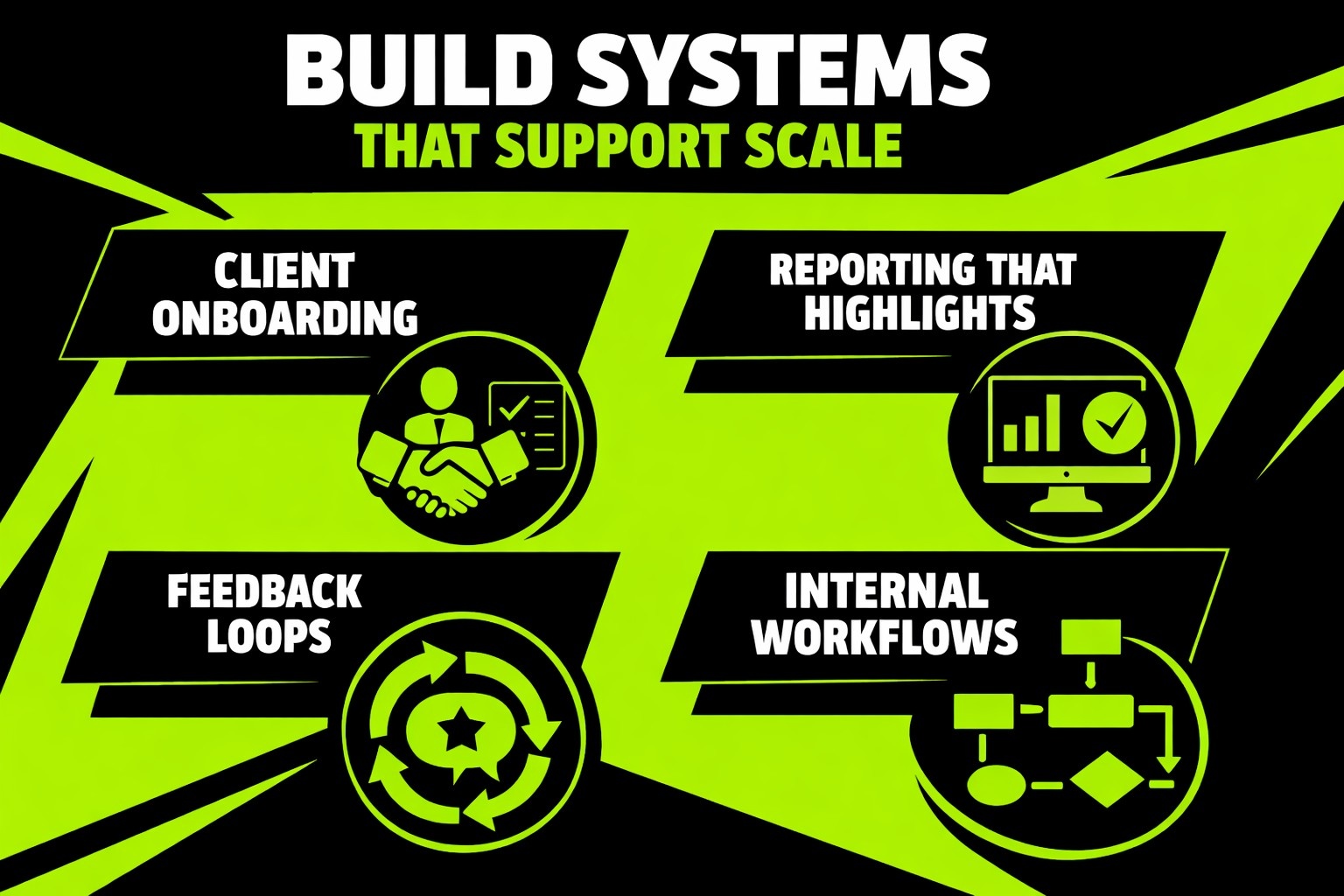
Build Systems That Support Scale Without Killing Trust
As client volume grows, manual processes start to break down. Reporting becomes messy, communication turns reactive, and important details slip through the cracks. None of this is visible at the beginning, but clients feel it quickly.
Scalable agencies invest early in systems that create consistency without removing the human element. The goal is not automation for its own sake, but clarity and reliability as the team grows.
Well-designed systems typically support areas like:
- Client onboarding that sets expectations clearly from day one
- Reporting that highlights what matters instead of flooding dashboards
- Feedback loops that surface concerns before they become problems
- Internal workflows that prevent missed follow-ups and delays
Clients do not want more data or more tools. They want clarity. Systems that make progress easier to understand help maintain trust even as the agency scales.
Final Thoughts
There is no single tactic that guarantees more SEO clients. Sustainable growth comes from alignment between who you target, how you position yourself, and how consistently you show up.
Agencies that succeed long term do fewer things better. They focus on fit, communicate clearly, and treat sales as problem-solving rather than persuasion.
Build trust first. The clients follow.