

Selling SEO is one of those things that sounds easy until you’re actually doing it. You know the value. You’ve seen the results. But the moment you try to explain it to a business owner who just wants more leads, you hit a wall.
Why? Because SEO isn’t a product they can see or touch. It’s long-term, a bit abstract, and often gets lumped in with vague promises or bad past experiences. So if you lead with technical jargon or a laundry list of tasks, you’ll lose them fast.
This guide is about flipping the script. It’s not about pushing services – it’s about helping potential clients want what you offer. And that starts with understanding how they think, what they care about, and how to meet them where they are.
What Does It Mean to Sell SEO?
Selling SEO is the process of helping businesses understand the value of improving their visibility on search engines and convincing them to work with you to achieve that. But it’s not just about explaining tactics like keyword research or link building. It’s about connecting those actions to real outcomes – more leads, more customers, and long-term growth.
You’re essentially building trust and showing potential clients how your expertise can move them from where they are now to where they want to be. The technical part matters, but the sale happens when they see the impact, not the input.
What This Looks Like in Practice: How We Do It at Lengreo
At Lengreo, we’ve learned that selling SEO has nothing to do with sounding impressive and everything to do with listening. Every client comes to us with different pressures on their plate – some are fighting for visibility, others are stuck paying for ads that barely move the needle. Instead of leading with packages, we start by learning what they’re actually trying to achieve.
That’s why our first step is never a contract. We usually begin with a custom audit, a small-scale strategy session, or even just a focused outreach test. The point isn’t to “pitch.” It’s to show up with something useful from the start and build trust through results, not promises.
We’ve worked with companies across industries – from SaaS and biotech to cybersecurity – and the thing that keeps the momentum going isn’t our dashboards or tools. It’s clarity. We integrate directly into our clients’ teams, bring real strategy to the table, and keep communication clear. It’s not about being another agency with reports. It’s about helping people win online in ways they can see and measure.
How to Actually Sell SEO Without Turning It Into a Pitch
If you’ve ever sat through an awkward SEO sales call or been the one giving it, you know how fast things can go sideways. The client tunes out, the technical terms start piling up, and by the end, you’re both a little confused about what just happened.
Here’s the better way. Below are practical strategies that will help you sell SEO services in a way that feels natural, collaborative, and focused on the client’s real goals.
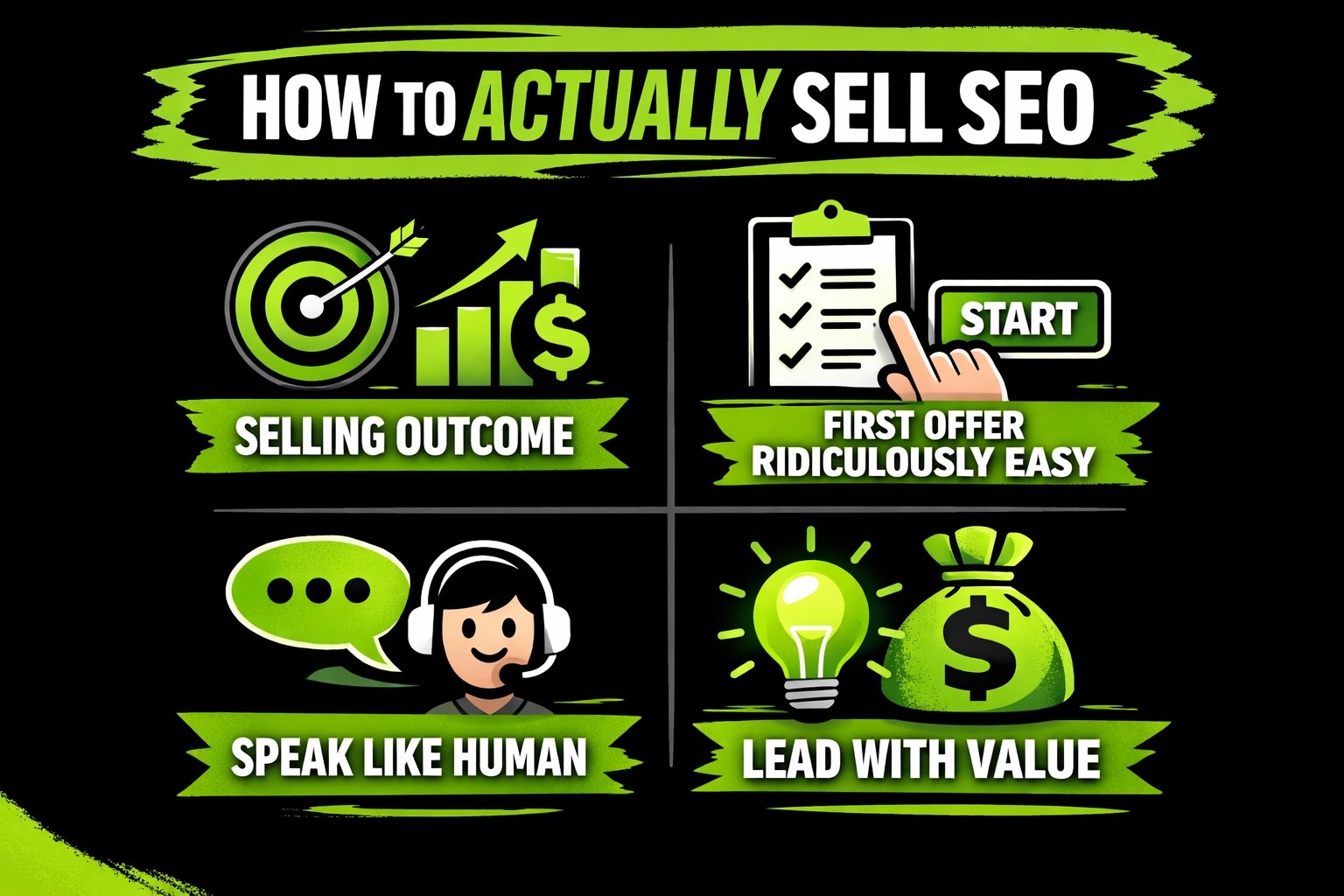
1. Stop Selling SEO. Start Selling the Outcome.
You’re not selling XML sitemaps, Core Web Vitals, or backlinks. You’re selling what those things enable – qualified leads, booked calls, trial signups, checkouts.
So when you pitch, lead with what your client actually wants:
- More high-value traffic that converts.
- A stronger pipeline of inbound leads.
- Less reliance on paid ads.
- Clear visibility into what’s working and what’s not.
This means taking the focus off what you’ll do and instead showing where you’ll take them. Think of it like selling a guided hiking trip. The client doesn’t care what kind of shoes you wear. They care if you can get them to the summit.
Try framing your conversations around:
- The pain they’re feeling now (wasted ad spend, stale traffic, low rankings).
- The goal they want to reach (more demos, higher margins, less churn).
- The path you’ll guide them through to get there.
Simple. Relatable. Outcome-first.
2. Make Your First Offer Ridiculously Easy to Say Yes To
A big part of the sales problem is friction. Asking someone to commit to a 6-month SEO retainer when they’re unsure if you even understand their business? That’s asking for ghosting.
Instead, start small. Offer an SEO audit, a 30-day growth sprint, or a “visibility blueprint” with actionable steps. Price it fairly. Make it clear there’s no long-term contract. Just value.
This does a few things:
- It gives the client a low-risk way to test working with you.
- It gives you a chance to show what you can really do.
- It naturally leads to the question, “What’s the next step?”.
You’re not selling SEO forever. You’re selling the next step forward, and that’s much easier to say yes to.
3. Speak Like a Human, Not a Plugin
Your client doesn’t want to learn SEO jargon. They want to trust you to handle it. But if they don’t understand what you’re saying, that trust disappears fast.
So ditch the jargon. Don’t say “We’ll fix your crawl budget issues.” Say, “Google’s not seeing all your pages. That’s costing you traffic.”
When you’re explaining what you do, skip the formal terms and use language that actually means something to your client. Instead of calling it a “technical SEO audit,” describe it as a check-up to figure out what’s blocking their traffic.
If you’re talking about optimizing for featured snippets, explain that it’s a way to leapfrog the competition and show up even above the number one result. And when schema markup comes up, just call it what it is in plain terms: extra information that helps search engines better understand what their site is about.
Keep your language simple, but not dumbed down. Clear beats clever.
4. Lead With Value, Even Before the First Call
Most people try to close the deal after the call. But if you want to build trust quickly, start showing value before you even speak.
Here’s how:
- Do your homework. Show up with notes about their site, competitors, rankings, or gaps.
- Send a personalized video walking through a quick win or missed opportunity.
- Reference a case study that matches their industry or challenge.
You’re not giving away the farm. You’re giving them a reason to believe you’re worth their time.
This positions you as someone who helps first, sells second. And that makes all the difference.
5. Use Case Studies That Don’t Just Show Numbers
Case studies work. But they shouldn’t just be a wall of metrics.
A good case study tells a story:
- Who was the client?
- What were they struggling with?
- What did you do that moved the needle?
- How did the result change things for their business?
Here’s what to highlight:
- “We helped a SaaS founder reduce their cost-per-lead by 60% and close more deals from organic traffic.”
- “Our SEO changes led to a 40% jump in trial signups in 3 months.”
- “We replaced a $5,000/month PPC budget with organic traffic that keeps delivering.”
The goal isn’t to impress. It’s to make your prospect say, “That’s what we need too.”
6. Qualify Leads Before You Burn Time
You don’t need to take every call. Some leads aren’t a fit, and chasing them wastes time for everyone.
Set up a basic qualification filter in your contact form or booking flow. Ask: “What’s your website?”, “What are your current marketing challenges?”, and “What’s your monthly marketing budget?”
This helps you spot bad fits early, prepare better for good ones, avoid pitching people who are just shopping around.
And when someone is a good fit, you’ll be able to tailor your conversation to exactly what matters to them.
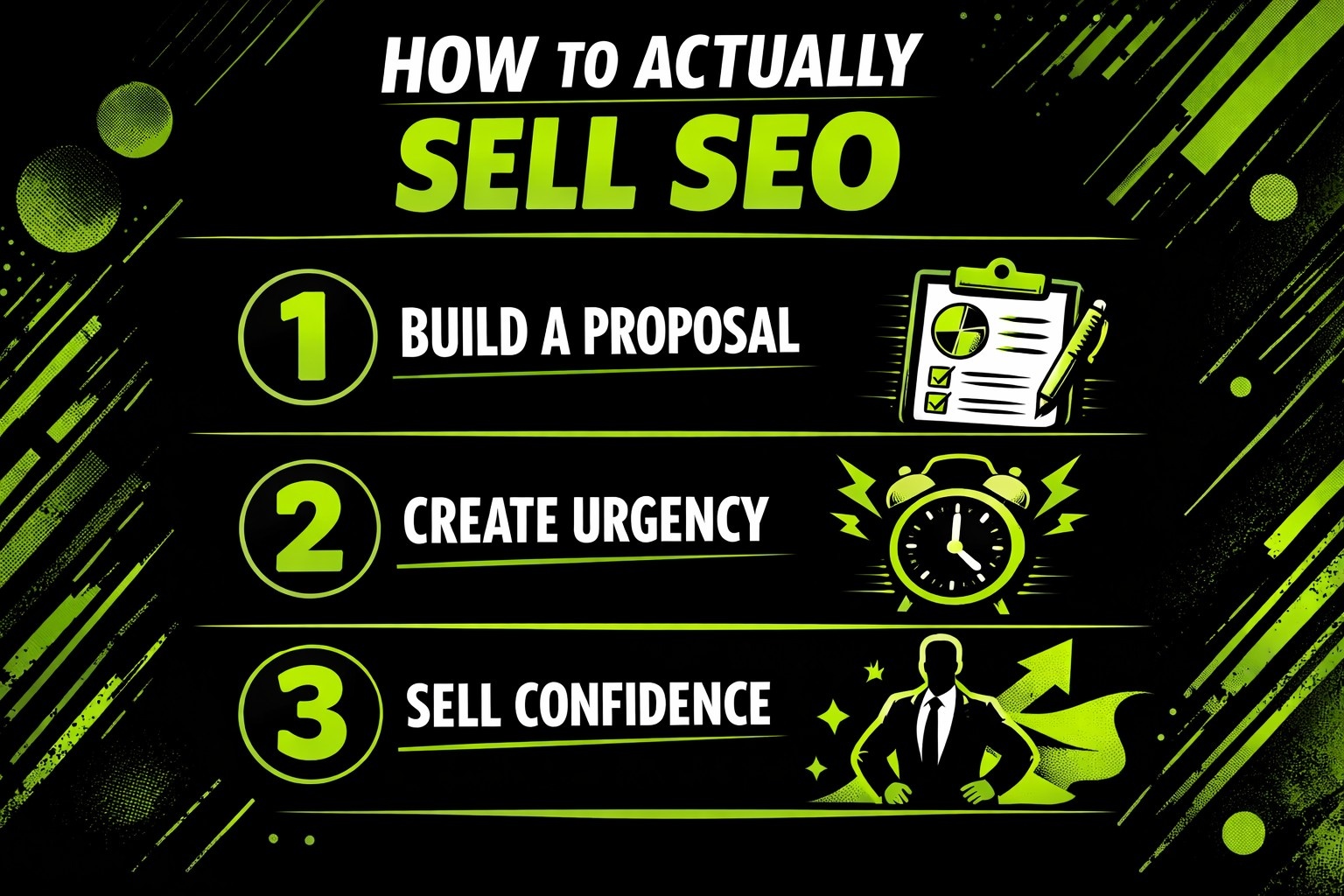
7. Build a Proposal That Doesn’t Feel Like Homework
Too many SEO proposals feel like a PDF version of a long meeting. That’s not what clients want. They want clarity, confidence, and a path forward.
Here’s what to include:
- A short summary of their current situation (based on your earlier conversations).
- The goals you’ll help them reach.
- Your suggested strategy (no fluff, just the key actions).
- A clear timeline and deliverables.
- Pricing options with room for scale.
- Simple, fair terms (and no weird fine print).
Make it easy to understand. Easy to say yes to. And if you want to go further, record a video walking through the proposal. It personalizes the experience and shows you’re serious.
8. Create Urgency Without Pressure
SEO is a long game, which makes it easy for clients to delay decisions. But delays kill deals.
The trick is creating urgency without being pushy. Try showing what their competitors are ranking for that they’re not, estimating the traffic and lead loss from inaction, and offering a limited-time bonus (like a free content piece or CRO audit).
It’s not about scare tactics. It’s about reminding them that waiting has a cost too.
9. Don’t Just Sell Services. Sell Confidence.
At the end of the day, people don’t buy SEO. They buy certainty. The feeling that they’ve finally found someone who understands their goals, has a clear plan, and will follow through.
So build that confidence by:
- Showing up on time, every time.
- Being clear about what’s included and what’s not.
- Admitting when something isn’t your specialty.
- Following up when you say you will.
- Keeping clients in the loop once the work starts.
Consistency is a quiet form of persuasion. Use it.
A Few Closing Pointers That Make a Big Difference
Before we wrap, here are a few small details that often get overlooked but can massively improve your SEO sales process:
- Build “before-and-after” visuals: A few clear snapshots of traffic lifts or site fixes help make your results easy to understand during calls or in proposals.
- Use client quotes with outcomes: Focus on feedback that mentions lead growth, conversion rates, or cost reduction, not vague compliments.
- Make follow-ups helpful: A message like “Here’s a quick fix you can try, even if we don’t work together” keeps the tone friendly and valuable.
- Mention limited availability: If your calendar is tight, say so. Scarcity creates urgency without pressure.
- Be upfront about fit: If it’s not right, say it. Honest no’s often earn more trust than forced yes’s.
Final Thoughts
You don’t need to turn into a slick closer or write long-winded sales pages. You just need to reframe the way you talk about what you do.
Start with the outcome. Speak like a person. Prove your value early. And make it easy for people to take that first step.
If you focus on helping instead of selling, the selling takes care of itself.