

SEO copywriting isn’t about tricking search engines or stuffing keywords into a page. It’s the practice of writing content that shows up in search and makes people stick around. When done well, it connects the dots between what users are looking for and what a brand actually offers. It’s not just writing with keywords – it’s writing with intent, structure, clarity, and purpose. The kind of writing that helps pages perform without sounding robotic.
SEO Copywriting: More Than Just Keywords on a Page
At its core, SEO copywriting is about shaping content that works – for both search engines and the people using them. That doesn’t mean stuffing pages with keywords or ticking off some imaginary SEO checklist. It means writing in a way that makes it easier for search engines to understand the topic, while also making the content useful, clear, and convincing for the reader.
The goal isn’t traffic for traffic’s sake. It’s visibility with intent. SEO copywriting helps content show up in front of the right audience by aligning with how people search – the language they use, the questions they ask, and the way they scan through a page. When it’s done right, it brings structure, hierarchy, and purpose to content. It’s not about sounding smart or gaming algorithms – it’s about helping users get what they came for and guiding them toward what matters next.
How Search Intent Shapes the Message
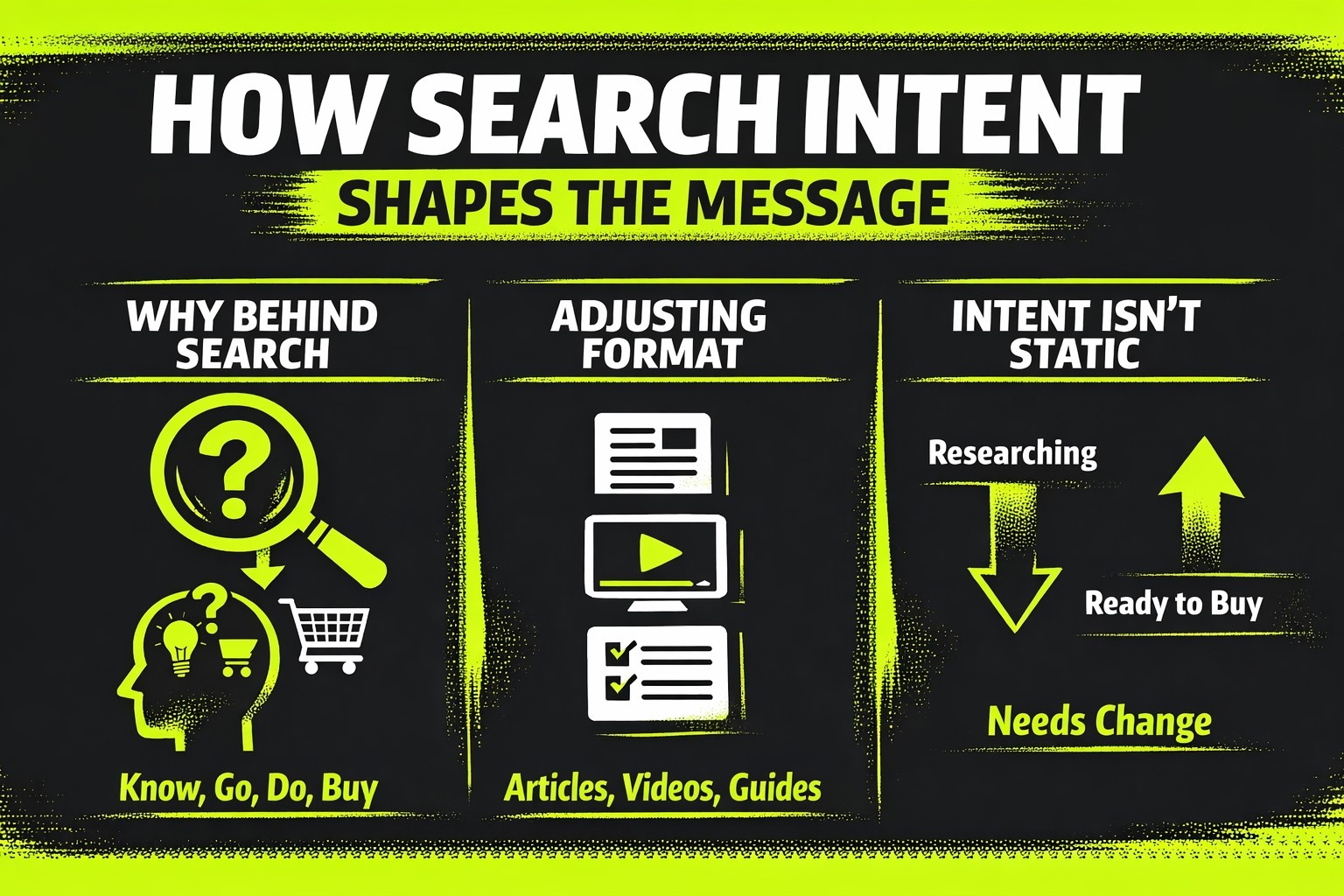
Not every keyword means what it looks like on the surface. Two people can search the same phrase and expect completely different outcomes. That’s where search intent comes in – and why it quietly runs the show in SEO copywriting.
Matching the Why Behind the Search
Search engines don’t just process words. They try to understand what the person behind the screen actually wants. If content misses that underlying reason, it rarely holds attention – even if it ranks. SEO copy that aligns with intent usually falls into a few clear patterns:
- Informational intent, where the user wants explanations or guidance.
- Comparative intent, focused on options, differences, and trade-offs.
- Transactional intent, where the user is close to a decision and needs clarity.
A broad query like “project management tools” suggests exploration. A more specific search such as “Trello vs Asana for small teams” signals a need for concrete answers. Good SEO copy adjusts before the first sentence is written.
Adjusting the Format and Voice
Intent doesn’t just shape the message. It defines how the content should look and sound. Format, pacing, and tone all shift depending on what the reader expects to find. Well-aligned SEO copy usually reflects this in a few ways:
- Clear structure for skimmers who want fast answers.
- Depth where needed, without overloading the page.
- Direct language when the reader is close to taking action.
Someone searching for quick clarification won’t tolerate filler. Someone evaluating options will look for confidence and balance. Understanding that mindset keeps the content focused instead of generic.
Intent Isn’t Static and Neither Is the Copy
Search behavior changes. A keyword that once surfaced blog posts can later favor landing pages or product-focused content. SEO copy has to move with that shift. Keeping content aligned usually means:
- Reviewing SERPs regularly to spot format changes.
- Updating structure or angle when intent shifts.
- Refining messaging instead of rewriting everything from scratch.
SEO copywriting works best as an ongoing adjustment, not a one-time effort. Pages that evolve with search intent tend to last longer and perform more consistently.
Why Lengreo Doesn’t Treat SEO Copy as Just Text
At Lengreo, we don’t write SEO content in isolation. It’s always part of a larger system – aligned with positioning, mapped to the funnel, and connected to how people actually search. Whether we’re building landing pages or scaling topic clusters, every piece is shaped by intent, not just keywords. That means we don’t chase volume for the sake of it – we build relevance where it matters.
Our SEO copywriting always works in tandem with technical SEO, competitive insights, and a broader content strategy. We look at what’s already ranking, what’s missing from the landscape, and how we can fill that gap with content that’s actually useful. It’s never about writing more – it’s about writing what works. We also integrate closely with our clients’ teams to match tone, product logic, and conversion goals.
You’ll see the same thinking across our case studies – whether it’s scaling traffic 22x for a biotech product, or helping a cybersecurity platform own critical keyword positions. Want to see how we think in real time? Check out our team on Instagram and LinkedIn. That’s where we share ideas, wins, and how we keep evolving our process.
How SEO Copy Differs From Regular Content Writing
Not all copy is built for search – and not all content that ranks is worth reading. Good SEO copy lives somewhere in between. It does more than inform or entertain. It moves, ranks, and converts. Here’s how it’s different from standard writing.
1. It Starts With Search Intent
Regular copy often begins with a brand message or a creative angle. SEO copy flips that. It starts by looking at what people are already searching for – the wording they use, the intent behind it, and what kind of results Google is favoring. That context shapes everything. If the content doesn’t match the user’s intent, it won’t matter how well it’s written – it simply won’t land.
2. Keywords Are Woven, Not Dumped
One of the easiest ways to spot bad SEO copy? Clunky keyword placement. Good SEO writing doesn’t shove keywords in – it blends them into sentences that still sound like something a person would say. The keywords guide the structure, sure, but they never override clarity. If the phrasing gets awkward, readers bounce. And search engines notice.
3. Structure Isn’t Optional
Headings, subheadings, short paragraphs, bullet lists – these aren’t just formatting tools. They’re part of how SEO copy communicates meaning fast. People scan more than they read, especially when they land from a search result. SEO-aware copy uses structure to guide attention, reduce friction, and make sure the message lands even if someone only reads 30% of the page.
4. Originality Still Matters
Some assume SEO writing is just about playing by the rules. In reality, it’s also about standing out in a crowded SERP. That means bringing something unique – a better angle, clearer examples, tighter explanations. Search engines aren’t looking for the most optimized copy. They’re looking for content that solves a problem better than the last result did. And that takes more than keywords.
Why SEO Copywriting Still Pulls Its Weight
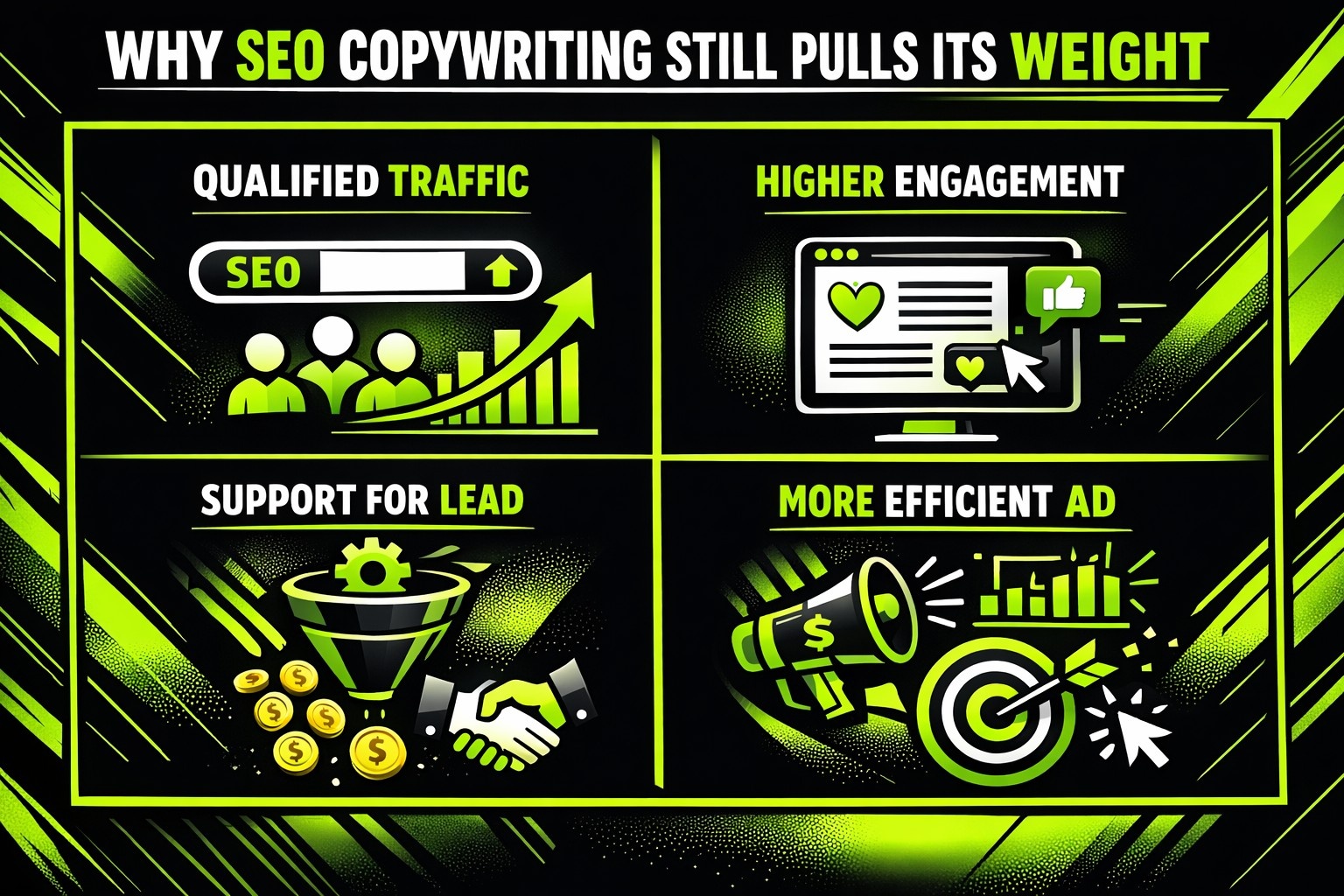
Not every content asset needs to rank – but when visibility matters, SEO copywriting earns its spot. It’s not about chasing traffic for traffic’s sake. It’s about writing that finds the right audience and gets them to take the next step. Here’s what strong SEO copy actually delivers:
- Qualified traffic that compounds over time: Pages that are built for search keep bringing in the right visitors without needing constant budget behind them.
- Higher engagement and lower bounce rates: Well-structured, user-focused content holds attention longer – which signals value to search engines and builds trust with readers.
- Support for lead generation and conversions: Good SEO writing doesn’t just inform – it nudges. Clear CTAs, logical flow, and aligned messaging help turn readers into leads.
- More efficient ad spend: The stronger the organic content foundation, the less pressure there is on paid channels. Some campaigns even convert better when paired with high-performing SEO pages.
- Scalable content that aligns with strategy: Unlike ad copy or social posts, SEO content can be mapped to strategic themes – whether that’s product awareness, demand capture, or long-tail discovery.
When done right, SEO copy isn’t just a way to rank. It’s a lever for growth.
How SEO Copy Supports Long-Term Marketing Goals
Some content works for a week and fades. SEO copy – when it’s aligned with real search demand – keeps doing its job long after it’s published. That’s what makes it valuable beyond short-term metrics.
It becomes part of the infrastructure. The kind of asset that supports multiple campaigns, attracts steady traffic, and backs up positioning over time. It’s not a quick win – it’s a compounding one. Here’s what strong, search-informed content contributes long term:
- Sustainable traffic that doesn’t rely on ongoing ad spend
- Reinforcement of brand authority across key themes and topics
- Support for email, social, and sales as a linkable reference point
- Improved discoverability as clusters of related pages build topical depth
- Flexibility to refresh and reframe instead of rewriting from scratch
This kind of copy earns attention slowly – but it holds it longer. It’s not just filling space. It’s shaping how a brand is found, remembered, and trusted over time.
Where SEO Copywriting Fits in the Bigger Picture
SEO copywriting isn’t a standalone fix. On its own, even the best-optimized article won’t carry a strategy. But when it’s tied into broader goals – demand generation, lead nurturing, product positioning – that’s when it starts pulling real weight.
It feeds into how people find the brand, how they move through the site, and what happens after that. Strong copy boosts search visibility, sure, but it also builds trust, frames value, and leads people toward a decision. It works best when it’s part of something connected – alongside paid campaigns, technical SEO, outbound, content distribution, even brand messaging.
Teams that treat SEO copy like a channel, not a tactic, tend to get the most from it. It’s not just about traffic – it’s about getting the right kind of attention and giving it somewhere to go. That’s where the real impact lives.
When SEO Copy Shouldn’t Be the Focus
SEO writing works best when visibility and discoverability are core goals. But not every page needs to climb the search rankings – and not every message benefits from being optimized for Google. Sometimes, there’s more value in skipping SEO entirely.
Some Pages Are Built for Action, Not Search
Landing pages for paid campaigns usually follow a different logic. They’re designed to match an ad, hit fast, and convert. Keyword optimization often gets in the way of clarity and momentum here. Instead of writing for algorithms, these pages prioritize sharp copy, emotional pull, and a tight call to action.
- Campaign-specific landing pages
- Lead magnets or one-pagers with limited shelf life
- Pages targeting returning users rather than new traffic
Not All Content Needs to Be Indexed
Internal tools, gated content previews, or highly personalized messaging – these don’t need to rank. In some cases, you don’t even want them visible in search. The goal isn’t reach – it’s relevance.
- Client dashboards or portals
- Email-only content
- Personalized outreach assets
- Press materials behind temporary URLs
Sometimes Speed Matters More Than Structure
There are moments when it’s better to publish fast than to optimize thoroughly – like timely announcements, reactive content, or limited promotions. SEO takes time. Not every message should wait for it.
- Product launch updates
- Industry reaction pieces
- Event-based content with a short lifespan
Knowing when not to optimize is just as important as knowing when to go all in. It keeps your strategy lean, your content honest, and your team focused on what matters. SEO copy has its place – but it shouldn’t be everywhere.
Conclusion
SEO copywriting isn’t about tricking search engines or gaming algorithms. It’s about writing that works – for people and for performance. The kind of writing that helps the right audience find you, stay with you, and take the next step.
Not every page needs to be optimized. Not every keyword is worth chasing. But when SEO copy is used intentionally – as part of a bigger strategy – it becomes a long-term asset. Something that supports growth quietly, consistently, and without constant reinvention. If there’s one takeaway, it’s this: good SEO copy doesn’t just rank. It earns attention. And more importantly, it knows what to do with it.