


Bidding on Google keywords sounds simple until you actually open an ad account and see all the options. Manual bids, automated strategies, match types, competition, Quality Score – suddenly it feels like you are making financial decisions with incomplete information. The good news is that keyword bidding is not about tricks or secret formulas. It is about understanding how the auction works, what you are really paying for, and how to make small, informed adjustments over time.
At its core, bidding is your way of telling Google how valuable a click is to you. The mistake many advertisers make is treating bids like a one-time setup instead of an ongoing conversation with the platform. Once you understand what drives costs and performance, bidding becomes less stressful and much more predictable.
How Keyword Bidding Fits Into Our Work at Lengreo
At Lengreo we approach keyword bidding as part of a broader performance system, not as an isolated Google Ads setting. Our role is to connect bidding decisions with the real mechanics that influence results – keyword intent, ad relevance, landing page behavior, and lead quality. When we manage paid campaigns, bidding is always tied to what happens after the click, because that is where cost efficiency is actually won or lost.
At Lengreo we help make keyword bidding more effective by aligning it with strategy, data, and execution across channels. We audit search intent, structure campaigns so bids have clean signals to work with, and improve pages and funnels so bids do not need to be pushed aggressively to perform. That combination allows us to keep bids grounded in value, reduce wasted spend, and scale campaigns in a way that stays predictable instead of reactive.
What Keyword Bidding Actually Controls
At a surface level, keyword bidding looks like a number attached to a search term. In practice, it controls how often your ad enters auctions and how competitive it is when it does.
When a user searches, an auction runs inside Google Ads. That auction weighs multiple factors at once, and your bid is only one of them.
Think of bidding as permission, not purchase. You are telling Google how aggressively you want to compete when the right opportunity appears.
The Google Ads Auction Explained Without Jargon
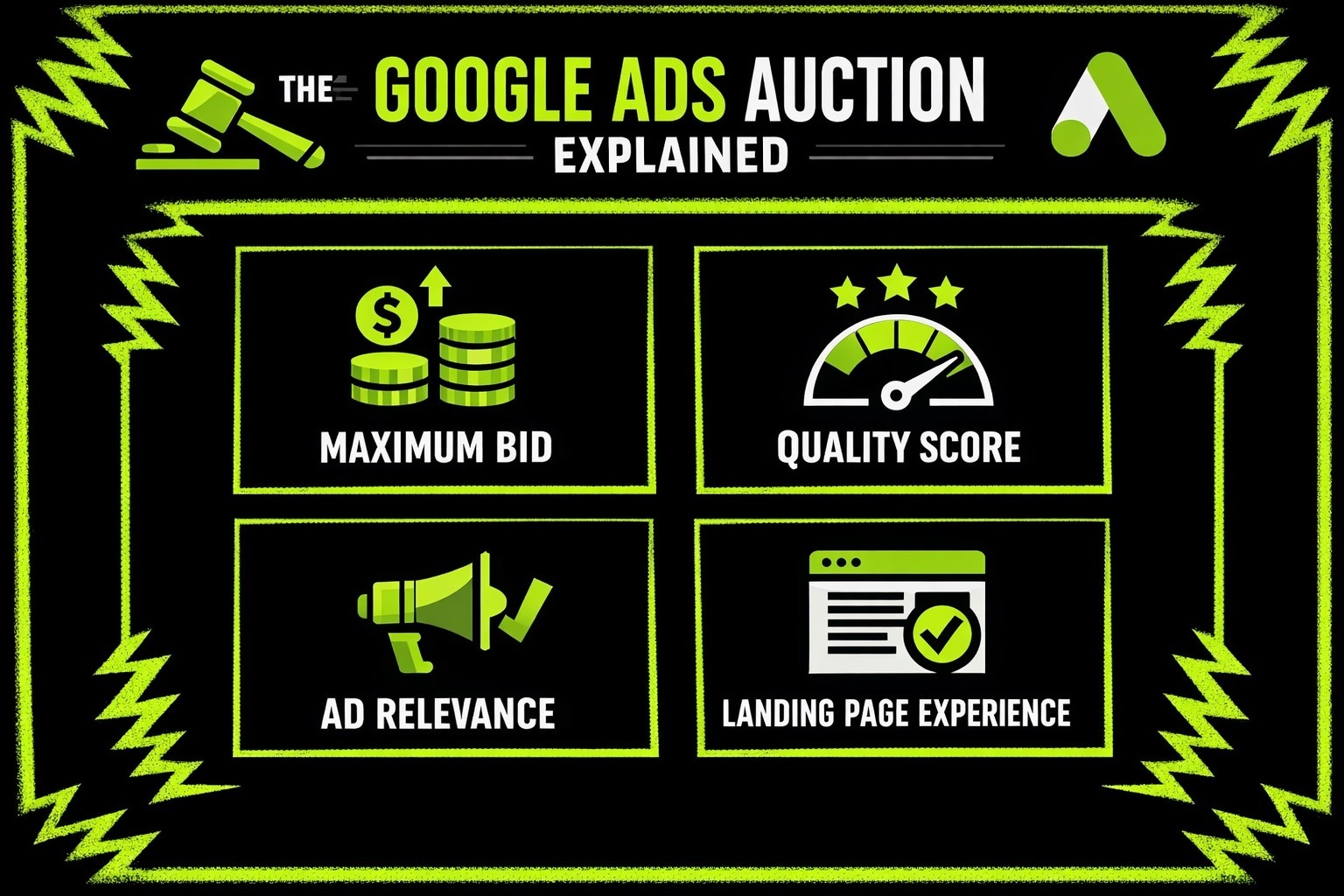
Every auction happens in milliseconds, but the logic is consistent. Google calculates Ad Rank for each eligible advertiser, then decides which ads appear and in what order.
The core inputs that shape Ad Rank
- Maximum bid
- Quality Score
- Ad relevance
- Landing page experience
- Contextual signals like device, time, and location
This explains why two advertisers bidding different amounts can see very different results. Relevance and experience act like multipliers. Money alone does not win.
Step 1: Decide What a Click Is Actually Worth to You
Before choosing a bidding strategy or setting numbers, you need a baseline. This step is about grounding bids in reality, not assumptions.
Start from business value, not CPC
Instead of asking “how much does this keyword cost,” ask:
- What happens after the click?
- How often does a click turn into revenue?
- What is an acceptable cost for that outcome?
A simple value chain to think through
If 1 out of 20 clicks converts, and a conversion is worth $200, then a $10 click may still make sense. Without this mental math, bidding decisions stay emotional.
Step 2: Choose the Right Level of Control for This Phase
Not every account needs automation immediately, and not every account should stay manual forever.
When manual bidding makes sense
Manual bidding works best when you are still learning:
- Which keywords attract the right intent
- Which ads resonate
- Where conversions actually come from
The hidden benefit of manual control
Manual bidding forces you to look at performance patterns instead of trusting averages. It slows you down in a good way.
When automated bidding becomes useful
Automation shines when:
- Conversion tracking is clean
- Volume is consistent
- Goals are clearly defined
A common mistake
Switching to automation before the account understands what a good conversion looks like. This often leads to confident overspending.
Step 3: Match Bidding Strategy to Search Intent
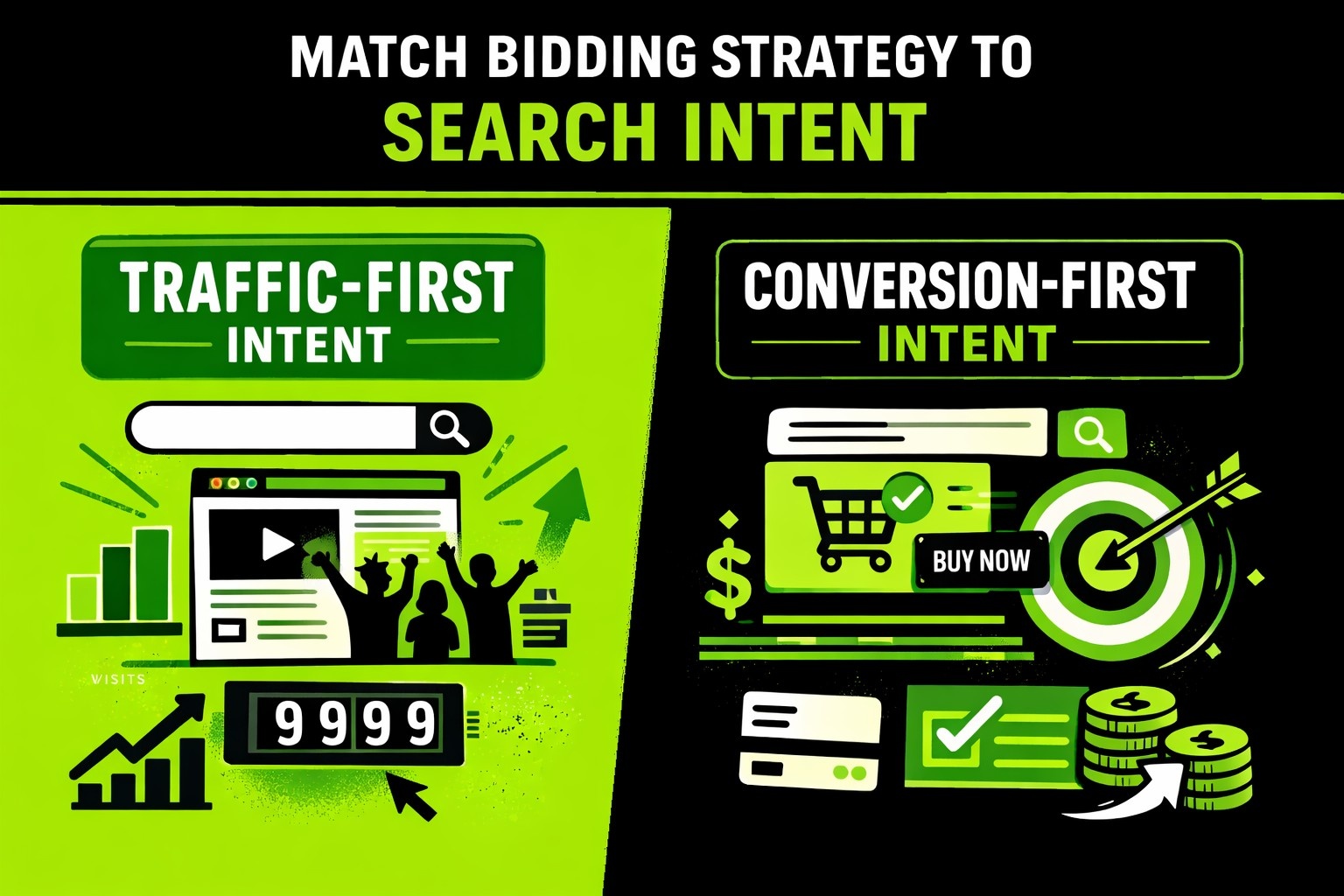
This is where many campaigns quietly break. The bidding strategy does not match what the user is actually doing.
Traffic-first intent
Traffic-first intent focuses on visibility and discovery rather than immediate returns. These searches usually come from people who are exploring, learning, or getting familiar with a topic before they are ready to act. At this stage, the goal is not to squeeze value out of every click, but to understand interest, test messaging, and see how users respond when they first encounter your offer.
Maximize Clicks
This works when discovery matters more than efficiency.
Use it if:
- You are testing keyword themes
- You want fast feedback
- Traffic itself has downstream value
Avoid it when every click must justify its cost.
Conversion-first intent
Maximize Conversions
Google prioritizes users most likely to convert, even if CPC increases.
Target CPA
You define what efficiency means.
| Strategy | Works Best When | Watch Out For |
| Maximize Conversions | Volume matters | Budget volatility |
| Target CPA | Cost stability matters | Limited reach if set too low |
Step 4: Structure Campaigns So Bids Can Work Properly
Even perfect bids fail inside poor structure.
What strong structure gives Google
- Clear keyword intent
- Predictable ad relevance
- Cleaner Quality Score signals
A high-control structure usually looks like
- Campaigns grouped by goal or product
- Ad groups built around tight keyword themes
- Ads written specifically for those themes
- Landing pages matched to intent
Why this matters for bidding
Better structure reduces wasted auctions, stabilizes CPC, and makes bid changes easier to interpret.
Keyword Selection Is Where Bidding Begins
No bidding strategy can save weak keyword choices. If the intent is wrong, the math never works, no matter how clever the bidding setup looks. This is why keyword selection sits at the foundation of every successful paid search campaign.
Keywords are not just triggers for ads. They are signals of mindset. A person searching to learn behaves very differently from someone searching to compare options or make a purchase. When those signals are ignored, bids end up fighting the wrong battle, and costs rise without meaningful results.
Understanding keyword intent levels
| Intent Type | Example | Bid Aggressiveness |
| Informational | how crm works | Low |
| Commercial research | best crm software | Medium |
| Transactional | crm software pricing | High |
| Navigational | hubspot crm login | Context dependent |
High-intent keywords justify higher bids because the user is closer to action.
Match Types Change How Your Bids Behave
Match types define how flexible your bids really are.
How match types interact with bids
- Exact match gives precision and predictability
- Phrase match balances scale and control
- Broad match relies heavily on smart bidding and negatives
Broad match without structure tends to inflate costs early. Exact and phrase match produce cleaner learning signals.
Negative Keywords Protect Your Budget Quietly
Negative keywords stop your ads from entering the wrong auctions.
Common negatives worth reviewing early
- Free
- Jobs
- Course
- Definition
- Review (when selling directly)
Removing bad traffic often saves more money than lowering bids.
Setting Initial Bids Without Overthinking
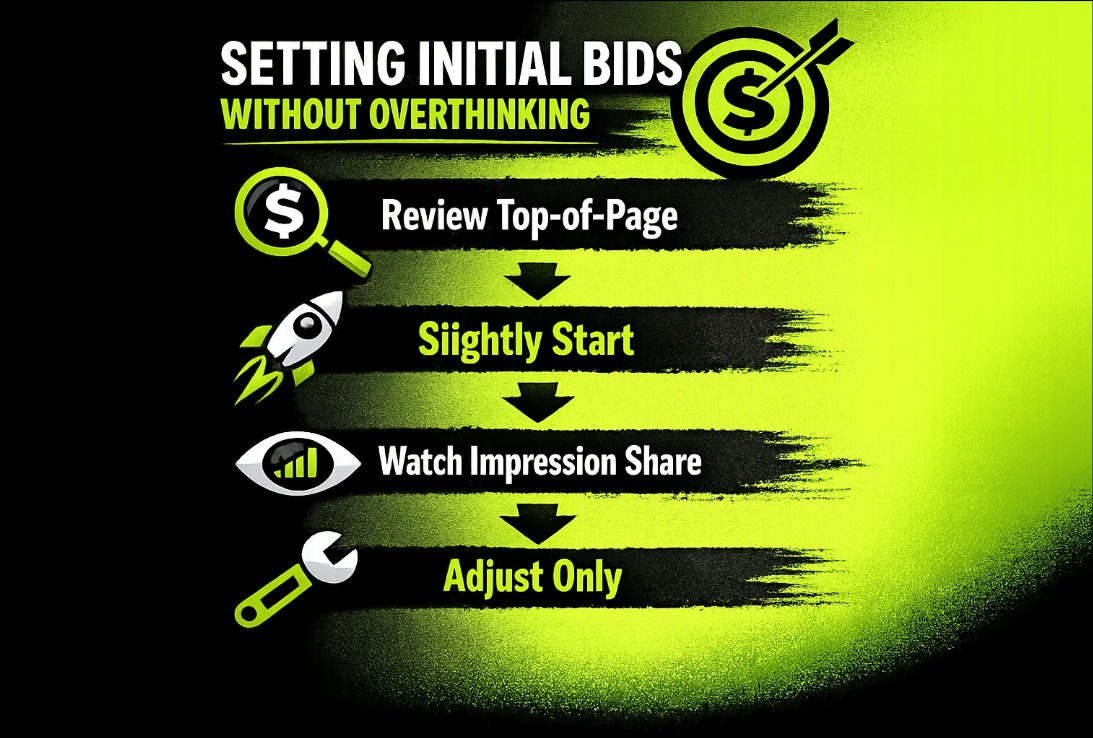
Early bids are about learning, not winning.
A safe starting framework
Review top-of-page bid estimates
Top-of-page bid estimates give you a realistic sense of the auction you are stepping into. They are not rules and they are not promises, but they show what other advertisers are roughly willing to pay to appear in prominent positions. Looking at these ranges helps you avoid starting too high out of impatience or too low out of caution. Think of them as context, not targets.
Start slightly below the midpoint
Beginning just under the midpoint is a conservative way to enter the auction without disappearing completely. It allows you to collect early data while keeping costs under control. If the keyword proves valuable, you have room to move upward. If it underperforms, you avoid paying a premium to learn that lesson.
Watch impression share and CTR
Early performance is less about conversions and more about visibility and engagement. Impression share tells you whether your bid is even competitive enough to be seen, while CTR gives a first signal of relevance. Together, they show whether the market is responding before you judge the keyword too harshly.
Adjust only after patterns appear
Resist the urge to change bids after a few clicks or a single bad day. Meaningful insights come from patterns, not moments. Waiting for consistent trends protects you from reacting to noise and helps you make changes with confidence instead of anxiety.
Stability early on helps both humans and algorithms learn faster.
Reading Performance Signals Like a Human, Not a Dashboard
Metrics are clues, not answers. They point you in a direction, but they do not explain themselves. The mistake many advertisers make is treating numbers as verdicts instead of symptoms. A dip in performance triggers panic, a spike triggers optimism, and neither reaction is very useful on its own.
Good bidding decisions come from context. A number only matters when you understand why it changed and what else changed around it. That is why experienced advertisers spend less time chasing individual metrics and more time looking for patterns across time, intent, and behavior.
Common patterns and what they usually mean
| Pattern | Likely Cause | Action |
| High CTR, low conversions | Landing page mismatch | Improve page |
| Low impressions, strong conversions | Bid too low | Increase slightly |
| Budget drains early | Low Quality Score | Fix relevance |
| Rising CPC, flat results | Weak intent | Re-evaluate keyword |
When Increasing Bids Actually Makes Sense
Increase bids when:
- A keyword consistently converts
- Impression share limits growth
- Competitors outrank you on high-intent terms
Increase in small steps so cause and effect stay visible.
When Lowering Bids Is the Smarter Move
Lower bids when:
- Costs rise without performance gains
- Search terms show weaker intent
- Budget disappears too early
Lowering bids is not retreat. It is prioritization.
Landing Pages Influence Bidding More Than You Think
It is easy to treat landing pages as something separate from bidding. One team works on ads and bids, another tweaks the website, and the two rarely meet in the middle. In reality, landing pages quietly influence how expensive every click becomes.
Google rewards satisfying outcomes. If users click your ad and quickly find what they were looking for, Google has less reason to charge you aggressively. If they hesitate, bounce, or get confused, your bids have to work harder just to stay visible.
Why Google Cares About What Happens After the Click
From Google’s perspective, a good ad is not just one that gets clicked. It is one that leads to a useful experience. That experience is measured indirectly through signals like engagement, relevance, and consistency between the search, the ad, and the page.
How landing pages affect auction dynamics
A strong landing page improves Quality Score, and Quality Score directly influences Ad Rank. This means two advertisers bidding the same amount can pay very different CPCs depending on what happens after the click.
In practical terms, a better page can:
- Reduce the price you pay per click
- Increase impression share without raising bids
- Stabilize performance across devices and times of day
This is why landing page work often delivers better results than constant bid changes.
Budget and Bidding Are a System, Not Settings
Budget controls how often your bids even enter auctions, which means it quietly shapes almost every outcome in your campaign. If bids decide how competitive you are, budget decides how long you get to stay in the game.
When budgets are too tight, ads stop showing early in the day, data becomes fragmented, and performance signals lose reliability. You may think a keyword is underperforming when in reality it simply did not get enough exposure to prove itself. On the other end, large budgets without focus can create the opposite problem – plenty of data, but noisy, inefficient spend that hides what is actually working.
Too low:
- Incomplete data
- Missed opportunities
Too high without focus:
- Inefficient spend
- Noisy signals
Budget should scale with clarity, not optimism.
A Sustainable Bidding Routine That Actually Works
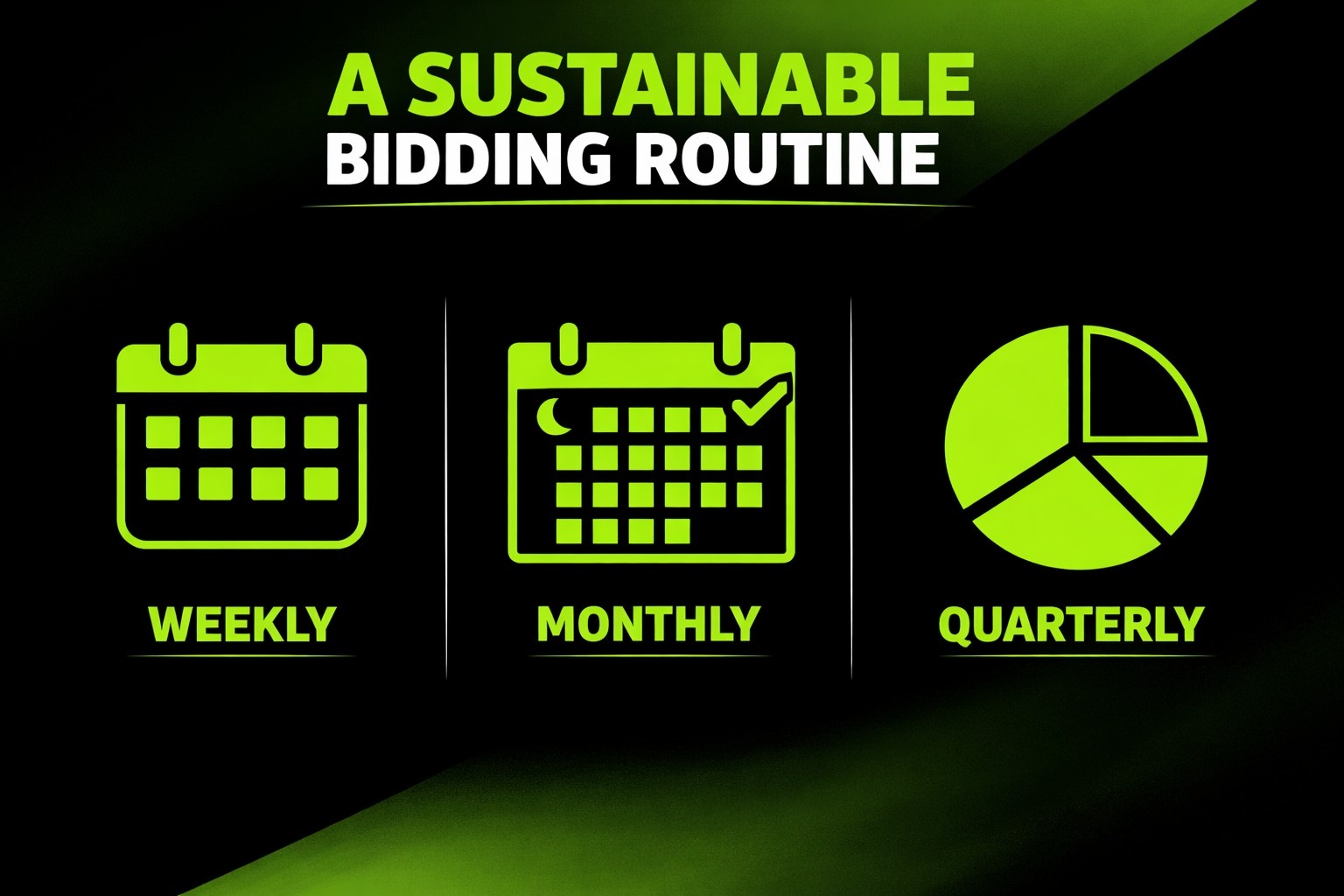
Weekly
- Review search terms
- Add negatives
- Check impression share
Monthly
- Adjust bids on proven keywords
- Pause chronic underperformers
- Review Quality Score trends
Quarterly
- Revisit goals
- Test bidding strategies
- Refresh ads and landing pages
Final Thoughts
Keyword bidding is not about beating competitors. It is about understanding value. Every bid reflects a judgment call about intent, timing, and relevance.
When you stop chasing positions and start optimizing decisions, bidding becomes calmer, cheaper, and more effective. The best-performing accounts are rarely aggressive. They are deliberate.