


SEO citations sound technical, but the idea behind them is simple. They’re about consistency, trust, and making sure your business looks real wherever people search for it.
When your company name, address, and phone number show up across directories, maps, and industry sites, search engines use that information to verify who you are and where you operate. Get it right, and citations quietly support your local visibility. Get it wrong, and they can create confusion that’s hard to undo.
In this article, we’ll break down what SEO citations are, why they still matter, and how to think about them without turning the process into busywork.
The Basic Idea Behind SEO Citations
At their core, SEO citations are mentions of your business information on other websites. Most of the time, this includes your business name, address, and phone number. You will often see this referred to as NAP.
Search engines use these mentions to confirm that a business actually exists, operates where it claims to, and presents consistent information across the web.
Think of citations less as a ranking trick and more as a verification system. When Google sees the same business details repeated across trusted platforms, it gains confidence. When details conflict or appear sloppy, that confidence drops.
Citations do not work in isolation. They support local rankings by reinforcing credibility, not by replacing strong content, reviews, or a solid website.
Why Citations Became a Local SEO Standard
Local search is messy by nature. Businesses move. Phone numbers change. Brands reformat names. Users submit edits. Directories pull data from other directories.
Search engines needed a way to decide which version of the truth to believe.
Citations became part of that solution. When multiple independent sources show matching information, it reduces ambiguity. This is especially important for map results, local packs, and location-based queries where accuracy matters more than clever optimization.
Citations are not about gaming the system. They are about removing doubt.
Turning Citations Into Real Local Growth with Lengreo
At Lengreo, we treat citations as part of the foundation, not a standalone tactic. They’re one of the first signals search engines use to decide whether a business is real, trustworthy, and worth showing locally. That’s why we never handle them in isolation or push mass submissions just to inflate numbers.
Our approach starts with accuracy and intent. We make sure business data is consistent, clean, and aligned across the platforms that actually matter for a given industry and region. From there, citations support broader local SEO work, including location-focused content, Google Business Profile optimization, and conversion-driven landing pages. Everything connects. Nothing is done “just for SEO.”
What sets us apart is how closely we integrate citation work into the bigger growth picture. We work with B2B, SaaS, and niche industries where trust and visibility directly affect lead quality. Instead of chasing every directory, we focus on the sources that reinforce credibility, drive real discovery, and support long-term rankings. The goal is not more listings, but fewer doubts – for search engines and for potential customers.
What Actually Counts as an SEO Citation
Not every mention of a business qualifies as an SEO citation. For search engines, a citation only works when it clearly connects a business to specific identifying details that can be verified.
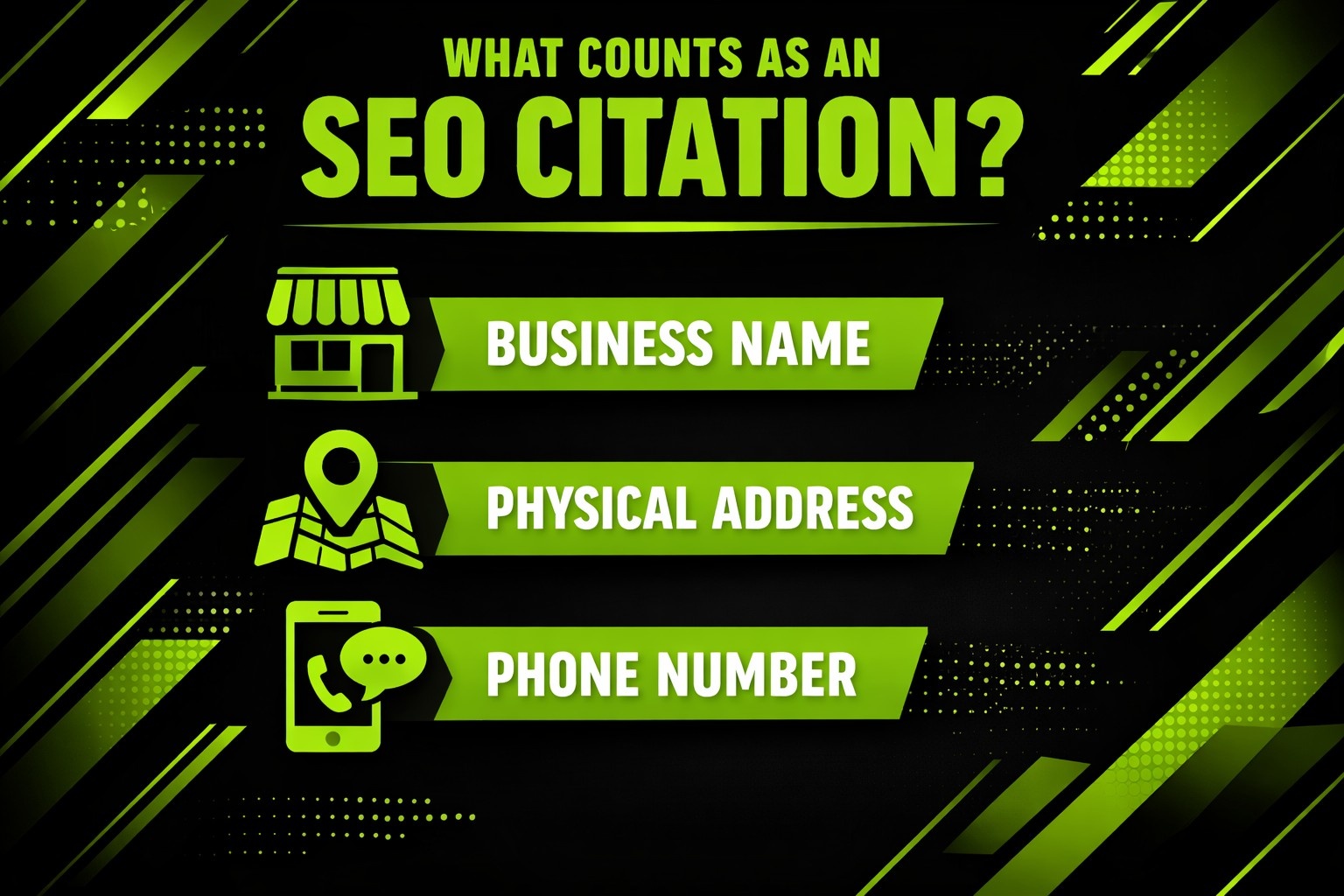
What Counts as a Citation
A proper citation usually includes:
- Business name
- Physical address
- Phone number
These three elements form what’s commonly known as NAP. When they appear together and remain consistent across platforms, search engines can confidently match the listing to a real business at a real location.
Many platforms also allow additional details such as business hours, categories, descriptions, photos, or a website link. These extras improve usability and conversion, but they support the citation rather than define it. The core identifiers are what make the citation work.
What Does Not Count as a Citation
Mentions that lack identifying business details are not considered citations in the technical SEO sense.
This includes:
- A blog post that mentions your brand without listing an address or phone number
- A social media mention with no business details attached
- A backlink that provides no contextual information about your location or identity
These references can still be valuable. They contribute to brand recognition, topical relevance, and authority signals. However, they do not function as citations because search engines cannot use them to verify who you are or where you operate.
In short, citations help confirm business identity and location. Brand mentions signal awareness and credibility. Both play a role, but they serve different purposes in SEO.
Structured Citations and Why They Exist
Structured citations appear in environments built specifically for listing businesses. These include business directories, mapping platforms, and review sites.
The format is predictable. Fields are labeled. Data is organized.
Examples include:
- Business directories
- Map services
- Industry-specific listing platforms
- Social profiles with business details
Structured citations are easier to create and easier for search engines to parse. That is why they usually form the foundation of a citation strategy.
Their value comes from consistency and coverage, not creativity.
Unstructured Citations and Why They Are Harder to Earn
Unstructured citations appear in places that are not designed as directories. These mentions happen naturally inside content.
Examples include:
- Blog posts
- News articles
- Interviews
- Forum discussions
- Press coverage
These citations may not follow a neat format. Sometimes only the business name appears. Sometimes an address is mentioned in passing. Sometimes a phone number shows up without context.
Unstructured citations are harder to control, but they often carry more contextual weight. They suggest that people are talking about the business, not just listing it.
From a trust perspective, this kind of mention feels earned rather than submitted.
Why NAP Consistency Is More Important Than Quantity
One of the most persistent myths around citations is the idea that more listings automatically lead to better rankings. In practice, that mindset often causes more harm than progress.
Search engines care far more about consistency than volume. A smaller set of accurate, well-maintained citations carries more weight than hundreds of listings that conflict with each other. When details don’t line up, trust erodes.
Problems often come from small differences that seem harmless at first. Abbreviations may be used inconsistently. Old phone numbers remain live on forgotten platforms. Addresses appear in multiple formats for the same location. Business names shift slightly from one listing to another. Each variation introduces uncertainty.
These inconsistencies create doubt, and doubt is the opposite of what citations are meant to resolve.
How Search Engines Actually Use Citation Data
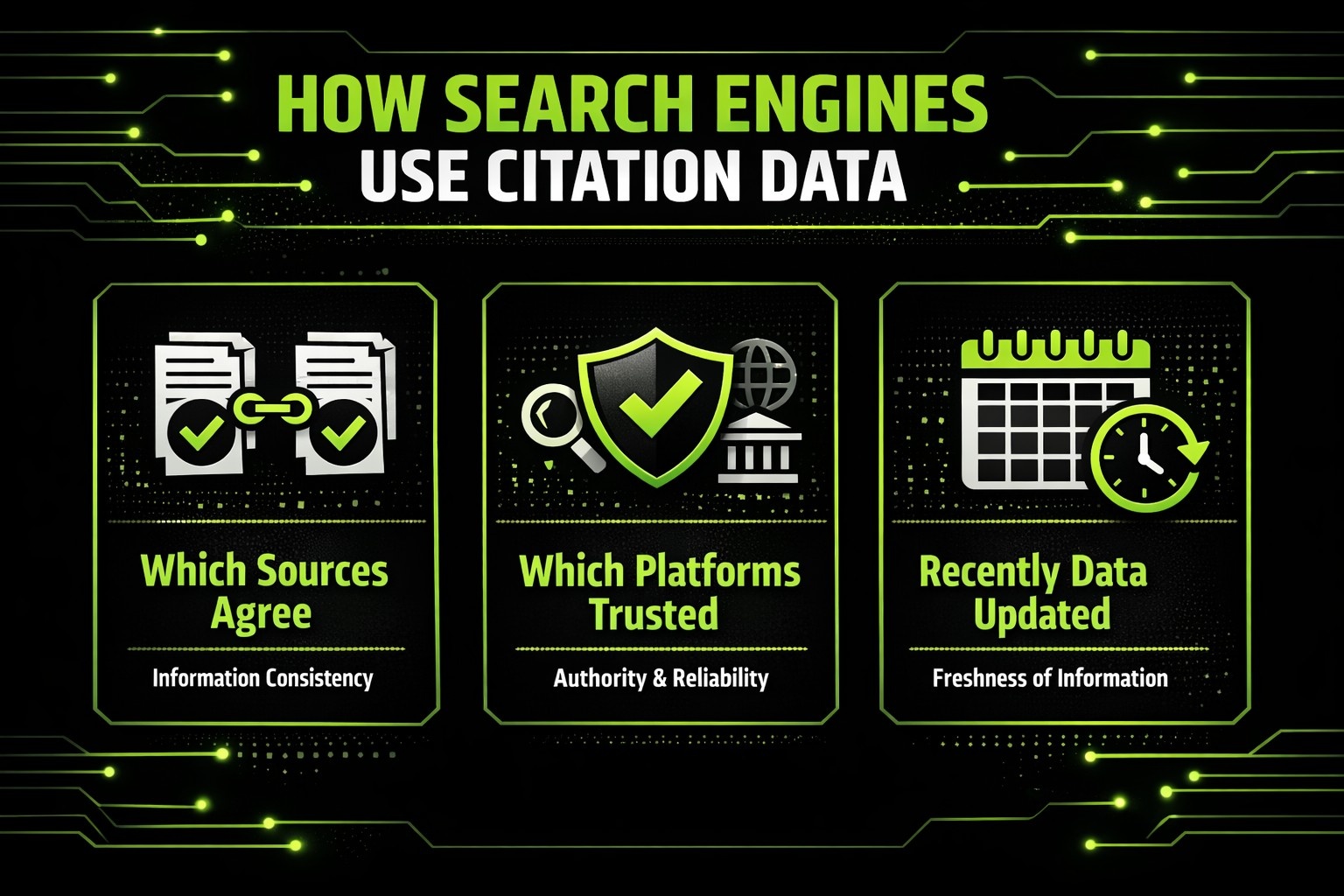
Search engines do not simply count citations. They evaluate patterns.
They look at:
- How often the same information appears
- Which sources agree with each other
- Which platforms are trusted
- How recently data was updated
- Whether listings remain stable over time
Citations help confirm entity identity. They reinforce location relevance. They reduce ambiguity between similar businesses.
They do not override poor user experience, bad reviews, or irrelevant content. They support clarity, not authority by themselves.
The Relationship Between Citations and Rankings
Citations influence local rankings indirectly. They are part of the trust layer, not the competitive edge.
Well-managed citations help search engines feel comfortable displaying your business. They rarely push a business ahead of a stronger competitor on their own.
If two businesses are otherwise equal, cleaner citations can make a difference. But citations will not compensate for weak reviews, poor location relevance, or a broken website.
This is why citations often feel invisible when they are done right.
Referral Traffic Is the Overlooked Benefit
While rankings get most of the attention, citations also serve real users.
Many people rely on specific platforms to discover businesses. Some check review sites before Google. Others use map apps or niche directories tied to their industry.
Listings on platforms people actually use can drive referral traffic. That traffic often converts well because users are already in decision mode.
This benefit disappears when businesses treat citations as a checkbox exercise rather than real listings meant for humans.
How Directory Dominance Creates Extra Visibility
Some directories consistently rank on page one for local searches, especially for service-based and location-specific queries. When that happens, those platforms become discovery layers of their own. If your business appears inside a directory that already ranks well, you gain visibility without having to rank directly as a standalone site.
This is sometimes called piggybacking, but it’s less about shortcuts and more about understanding user behavior. People often trust and return to the same directories when looking for local options. The approach only works when the directory is relevant and genuinely used. Low-quality or spammy directories rarely rank, and even when they do, they rarely drive meaningful traffic or trust.
Choosing Citation Sources That Actually Matter
Not all citation platforms deserve your attention, and trying to be everywhere usually backfires. A practical approach starts with major platforms that search engines already trust, then expands into industry-specific directories that align with what your business actually does.
From there, regional or local platforms can make sense if real users rely on them. The key is intent, not scale. Sites that exist only to sell listings or inflate numbers rarely add value. Relevance matters more than authority alone. A niche directory your customers actively use often delivers more benefit than a high-authority site no one visits.
The Role of Data Aggregators
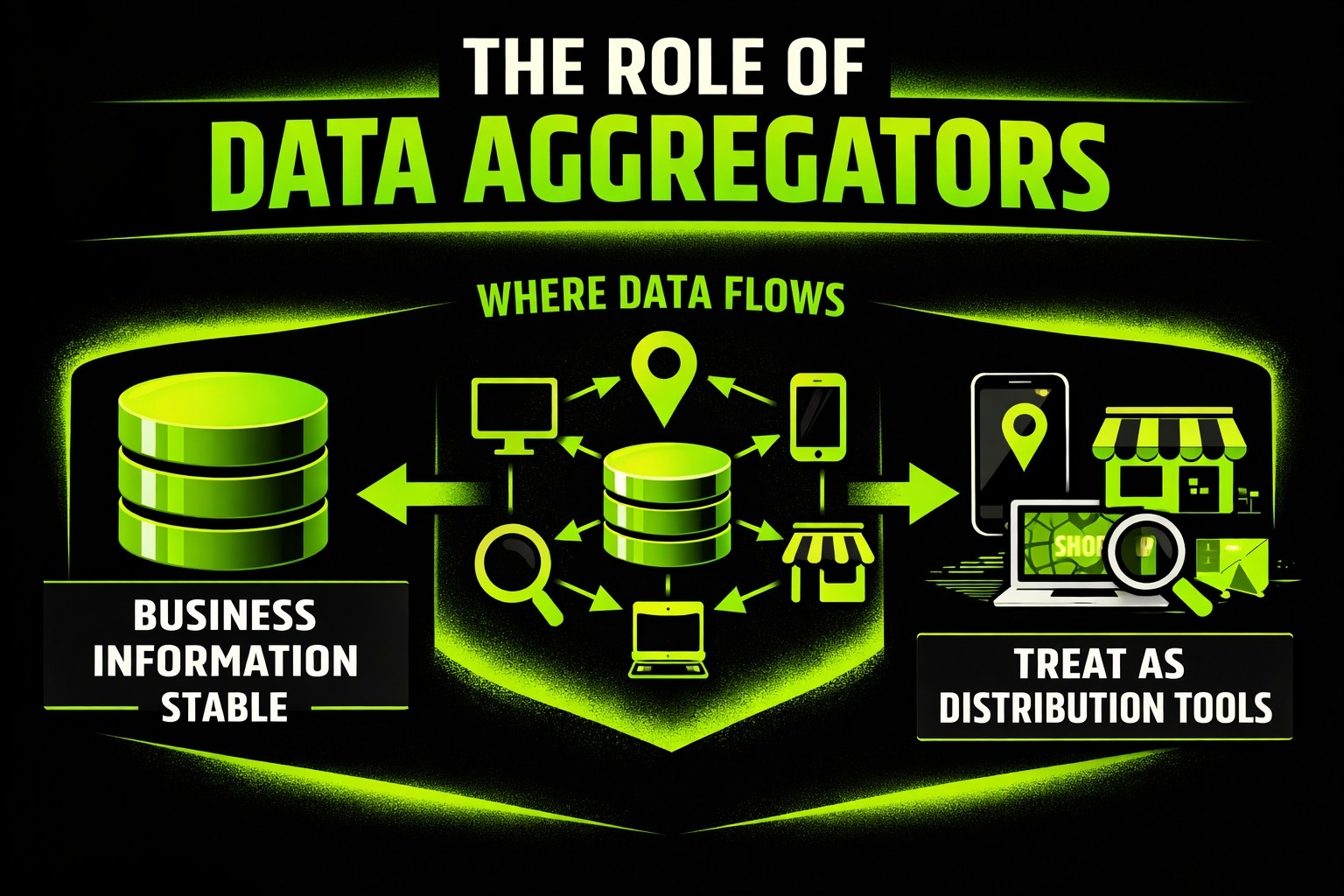
Data aggregators act as distribution hubs. They collect business information and feed it to multiple platforms.
This can speed up coverage and help standardize information, but it also introduces risk. Errors at the aggregator level can spread widely.
Aggregators work best when:
- Your core business information is stable
- You monitor where data flows
- You treat them as distribution tools, not set-and-forget solutions
They are useful, but they do not replace active management.
Citation Cleanup Is Often Harder Than Creation
Creating new citations is relatively easy. Cleaning up old ones is where most frustration lives.
Duplicate listings, outdated addresses, and legacy phone numbers tend to linger. Some platforms pull data automatically, reintroducing errors after fixes.
This is why early accuracy matters. Mistakes compound over time.
Cleanup requires patience, documentation, and follow-up. There is no instant fix, even with tools.
How Reviews Interact With Citations
Many citation platforms also host reviews. This connection matters.
Reviews reinforce credibility signals. They provide fresh content. They influence user decisions directly.
Search engines look at review patterns across platforms to assess business quality. Citation platforms without reviews still matter, but those with active feedback carry extra weight.
Ignoring reviews on citation sites weakens their value.
| Situation | How Important Citations Are | Why |
| Local businesses with physical locations | High | Citations help verify location and legitimacy for maps and local results |
| Service-area businesses tied to geography | High | Consistent location data supports local relevance and trust |
| New businesses establishing trust | High | Citations help search engines confirm the business exists |
| Businesses recovering from inconsistent data | High | Cleaning citations restores confidence and clarity |
| National brands without a local focus | Low | Rankings rely more on authority and brand strength |
| Businesses without a physical presence | Low | Location verification plays a smaller role |
| Sites with strong existing authority | Lower | Other signals already outweigh citation impact |
Understanding where citations truly fit helps avoid wasted effort and keeps your SEO work focused where it actually moves the needle.
Common Citation Mistakes That Cause Long-Term Problems
Most citation issues come from shortcuts taken early on. They usually seem harmless at first, but over time they create confusion that is difficult to fix.
Common problems include:
- Auto-submitting to every directory available, which spreads inconsistent data across low-quality platforms
- Ignoring duplicate listings, leaving search engines unsure which version is correct
- Changing business names casually, without updating older citations
- Letting outdated addresses or phone numbers persist after moves or rebrands
- Treating citations as one-time tasks instead of something that needs occasional review
Citations do not require constant attention, but they do require maintenance. Periodic checks help prevent small inconsistencies from turning into long-term trust issues.
Final Thoughts
SEO citations are not exciting. They are not trendy. They do not promise fast wins.
What they offer is reliability.
When done properly, citations quietly support your visibility by removing friction, reinforcing trust, and giving search engines fewer reasons to hesitate.
Treat them as infrastructure, not tactics. Get them right early, maintain them thoughtfully, and move on to the work that actually differentiates your business.
That is how citations are meant to work.