


Marketing insurance isn’t just about visibility – it’s about timing, trust, and making your offer feel like the obvious choice in a crowded field. Most people aren’t shopping for coverage every day, so when they are, your agency needs to show up ready with a message that speaks to them clearly and confidently.
That means going beyond brochures and boosted posts. The most effective strategies today are the ones built on genuine value, smart digital targeting, and clear positioning. In this article, we’ll walk through approaches that help your agency get noticed by the right people, connect on a human level, and stay relevant long after the first click.
What Makes Insurance Marketing Different
Insurance isn’t a product people get excited to shop for. It’s not a new gadget or a vacation deal. It’s something most people hope they never need, and that makes marketing it uniquely challenging. You’re not just selling coverage; you’re selling peace of mind, risk protection, and trust. And that trust has to be earned before a crisis hits, not after.
Unlike retail or SaaS marketing, where purchases can be impulsive or short-term, insurance often involves complex decisions, long-term commitments, and sensitive conversations about health, finances, or mortality. That means your marketing has to do more than grab attention. It has to educate, reassure, and build credibility – often before a lead ever fills out a form or picks up the phone.
In short, insurance marketing is less about persuasion and more about positioning. You’re not selling the lowest price. You’re helping someone make the best decision in a high-stakes situation. That’s what makes it different, and what makes doing it well so valuable.
Supporting Insurance Agencies with Strategy That Scales
At Lengreo, we work closely with insurance providers to build marketing strategies that actually deliver. We don’t believe in cookie-cutter solutions. Every agency has its own mix of strengths, audiences, and goals, so we start by understanding what’s already working, what’s not, and where there’s untapped potential.
Whether it’s improving local SEO, generating high-value leads through targeted outreach, or optimizing landing pages for better conversion, we focus on the parts of your funnel that drive real results. Our team integrates into your process, helps fine-tune your digital presence, and builds campaigns around what makes your offer credible and competitive.
Top Insurance Marketing Strategies to Help You Grow and Stand Out
Below is a structured breakdown of strategies that are most effective in today’s insurance landscape. These tactics work best when combined thoughtfully – each one supports the others, creating a full-funnel approach to attracting, converting, and retaining your ideal clients.
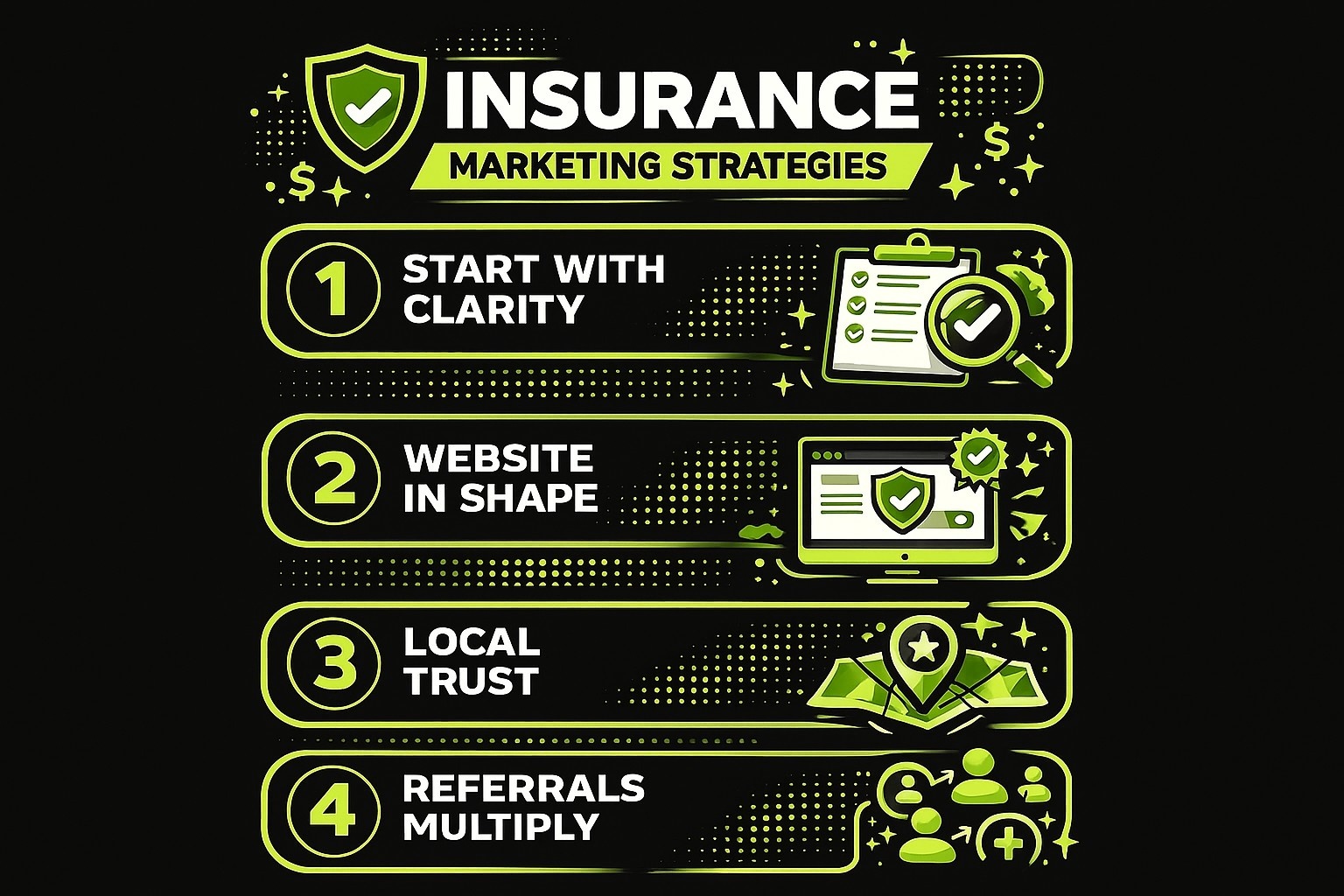
Strategy 1. Start With Clarity: Define Who You’re Really Trying to Reach
One of the biggest mistakes agencies make is assuming their audience is “everyone.” But in reality, not every homeowner, driver, or business owner is your ideal client.
Before you spend a dime on marketing, take the time to define your audience. Use actual data from your current client base and layer it with insight about who you want more of. Ask yourself:
- Where do they live?
- What life stage are they in?
- What types of policies are they most likely to need?
- What pain points do they face when shopping for insurance?
Once you build a few solid client personas, you’ll stop guessing what your messaging should be and start writing emails, ads, and web copy that lands.
Strategy 2. Get Your Website in Shape (It’s Not Optional Anymore)
Your website doesn’t need to win awards, but it does need to function like a real tool for your business. That means visitors should immediately understand what you offer, be able to navigate without confusion, and get where they need to go quickly, especially on mobile. If they want to contact you, it should be obvious how, whether that’s a phone number, a form, or a chatbot. And on the back end, your site should connect with your CRM or lead tracking setup so nothing slips through the cracks.
Beyond usability, the content needs to speak the language of your clients. Instead of vague service pages, aim for targeted, specific content like “Life Insurance for Freelancers” or “What Business Insurance Covers for Small Restaurants.” These pages do more than explain, they connect.
And if your site looks and feels the same as it did five years ago, that’s a red flag. A static website is just digital wallpaper. Build something that’s built to convert.
Strategy 3. Build Local Trust With Google Business and Reviews
Local SEO is your best friend, especially if you want to show up when someone types “insurance near me” or “home insurance in Austin.” The fastest way to boost visibility in those searches?
- Claim and fully complete your Google Business Profile.
- Add up-to-date info, photos, services, and office hours.
- Ask happy clients to leave reviews regularly.
- Respond to every review, even the awkward ones.
People trust what other people say, especially when it comes to something as personal as insurance. Your reviews aren’t just nice-to-haves; they’re conversion tools.
Strategy 4. Don’t Just Get Referrals. Multiply Them.
Referrals are gold, but relying on them to happen “organically” is a waste. You need to make them part of your marketing system.
Here’s how:
- Offer a small, clear reward for successful referrals (gift cards, service credits, etc.).
- Promote your referral program in emails, newsletters, and on your website.
- Make it easy to share via social or a quick link.
- Track who refers to whom, and follow up with both parties.
People are happy to refer you if they trust you and it’s simple. So take the friction out and give them a reason to speak up.
Strategy 5. Show Up Where People Spend Time: Social Media That Works
You don’t need to chase likes or try to go viral. What matters is showing up in the places where your audience already spends time and offering something that feels relevant. If you’re selling B2B policies, that might mean being active on LinkedIn. If you’re working with families or homeowners, it could be Facebook or Instagram. The platform isn’t the point – the connection is.
Think about the kinds of posts that actually make people stop scrolling. A short video that breaks down a confusing policy term. A quick story from a client who avoided a nightmare thanks to your advice. A reminder about storm season and how claims work. Or even something light that ties you to your local community – an event you sponsored, a charity you support, or just something that shows you’re human.
You don’t need to flood the feed. But when someone eventually decides it’s time to get a policy, you want your agency to be familiar, not a stranger. That only happens if you’ve been consistently present, even in small ways.
Strategy 6. Use Email Marketing to Stay in the Loop
Insurance is one of those things people forget about until they need it. Email helps you stay top of mind without being annoying.
Segment your email list so you’re sending relevant content to the right people. A first-time homebuyer shouldn’t get the same message as someone who’s been renewing for 10 years.
Good email ideas:
- Renewal reminders.
- Birthday greetings.
- Tips on lowering premiums or bundling policies.
- FAQs on coverage types.
- Local news that connects to insurance needs (like flood season prep).
Keep it personal, keep it short, and don’t just sell in every message.
Strategy 7. Create Landing Pages That Actually Convert
A landing page isn’t just another section of your website – it’s a purpose-built space designed to do one thing: turn a visitor into a lead. If you’re running ads for renter’s insurance, sending people to a generic homepage won’t cut it. You’re much better off directing them to a page tailored to that specific offer, with a clear headline like “Get Affordable Renter’s Insurance – Starting at $15/month.”
From there, the page should make the value obvious right away. Offer a brief intro that explains what’s in it for them, make it easy to take action with a quote form or calculator, and back it all up with trust signals like testimonials or ratings. Then make sure there’s no confusion about the next step, whether that’s booking a call, requesting a quote, or getting in touch.
The more targeted and relevant the page, the better it performs. Trying to make one page speak to everyone usually ends up resonating with no one.
Strategy 8. Tap Into Partnerships That Expand Your Reach
Partnering with businesses that serve the same audience but don’t compete with you is a smart move. Think:
- Mortgage brokers
- Real estate agents
- Car dealerships
- CPAs or financial planners
You can refer clients to each other, co-host webinars, share social media posts, or even collaborate on educational content.
Just make sure the partnership feels natural and mutually beneficial. Nobody wants to be part of a forced referral network.
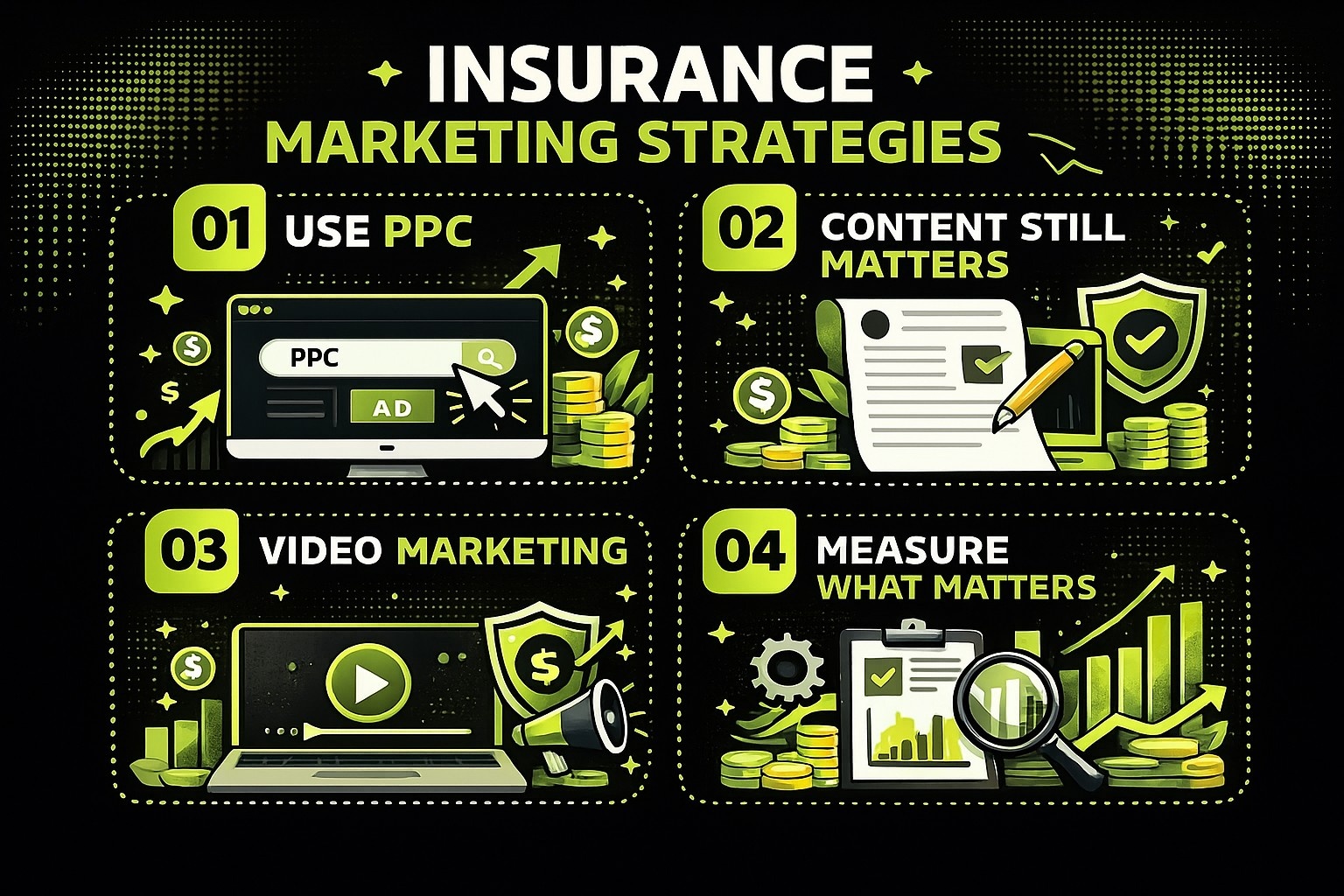
Strategy 9. Use PPC and Retargeting the Smart Way
PPC ads on platforms like Google or Facebook can absolutely work in your favor, if you’re intentional about how you use them. Trying to go head-to-head with massive insurance brands on broad search terms usually just burns your budget. A smarter move is to focus locally and narrow your targeting.
Think about who you really want to reach and what they’re likely to search for. That might mean focusing on a certain profession, a particular life situation, or a specific geographic area. The more dialed-in your keywords are to real, specific needs, the more likely you are to attract people who are ready to take the next step.
And don’t forget about retargeting. When someone visits your site but leaves without converting, a well-timed retargeting ad can bring them back into the conversation. It’s a quiet reminder that you’re still there – no pressure, just presence.
Strategy 10. Content Still Matters, Especially for SEO
Content doesn’t have to mean blogging every week. But you do need helpful, search-optimized content that answers questions real people are asking.
Here’s what performs well:
- “What does homeowners insurance cover in [city]?”
- “Life insurance for self-employed freelancers – what to know”
- “How to lower your auto insurance premiums legally”
Use tools to find what people are typing in. Write answers in plain language. Keep it scannable, include subheadings, and don’t over-optimize with weird keyword stuffing.
And yes, Google still rewards quality over quantity.
Strategy 11. Don’t Sleep on Video Marketing
Video is one of the most effective ways to break down the complexity of insurance while making your brand feel more approachable. It gives you a chance to explain tricky topics in plain language, introduce your team, and let potential clients get a sense of who they’re working with – without the pressure of a live conversation.
Whether you’re offering a quick breakdown of common policy questions, sharing a client success story, or giving a peek behind the scenes of how claims are handled, video builds familiarity and trust in a way that text alone often can’t.
These clips don’t need to be polished productions. As long as they’re clear, helpful, and human, they’ll do the job. Post them on your site, on social media, or wherever your audience spends time. What matters most is showing up in a way that feels honest and easy to engage with.
Strategy 12. Measure What Matters (Then Adjust)
Marketing without measurement is just guessing. You don’t need to track everything, but you do need a few key numbers:
- Conversion rates (per channel)
- Cost per lead
- Traffic sources
- Email open/click rates
- Customer lifetime value
Once you have a baseline, you can tweak campaigns, test new copy, or double down on what’s working.
Marketing isn’t static. Neither are your clients’ needs. Adapt accordingly.
Final Takeaway
Insurance marketing isn’t about chasing shiny trends. It’s about showing up consistently, offering real value, and building a reputation people trust when it counts.
The best strategies don’t just fill your pipeline once – they help you stay visible, stay relevant, and stay in business long-term. Whether you’re just starting out or looking to fine-tune what you’ve built, the key is to keep things real, specific, and client-first.
It’s not about being everywhere. It’s about being in the right places with the right message at the right time.