


Content creation is a strange mix of excitement and exhaustion. You pour hours into a blog post, webinar, podcast, or research piece, hit publish, watch it perform for a few days, and then it quietly slips into the background while you scramble to make the next thing. Most marketers will admit they feel guilty about how quickly their hard work gets buried.
Content repurposing is the antidote to that problem. It is not a hack or a shortcut, and it definitely is not about copying and pasting the same thing onto every platform. Instead, it is a smarter, more sustainable way of working. You take the knowledge, stories, or insights you have already created and reimagine them for different formats, audiences, and channels. When done well, it feels less like recycling and more like expanding your influence.
This guide breaks down how to repurpose content with intention and creativity. No fluff, no tired frameworks, no repeated advice. Just the strategies that genuinely help marketers get more from the work they are already doing.
Why Content Repurposing Matters More Than Ever
The demand for fresh content has reached a point where very few teams can realistically keep up. Algorithms expect daily or weekly output. Audiences consume content on half a dozen platforms. Video has exploded. And attention spans have become unpredictable.
Content repurposing helps you deal with all of that pressure without doubling your hours. When you adapt content across channels, you:
- Reach people who prefer different formats
- Reduce your reliance on constant ideation
- Maintain consistency across every stage of the customer journey
- Safeguard your reach against platform algorithm changes
- Get far more visibility from your top performing content
Think of it as creating a long running ripple effect. Instead of publishing once and hoping it sticks, you create multiple entry points into the same valuable idea.
How Lengreo Turns One Idea Into Many
When we talk about repurposing at Lengreo, we are not thinking about squeezing extra posts out of a random blog article. For us, it is about creating a system where strong ideas don’t vanish after one use. Most teams focus on producing more, but we focus on helping you get more mileage from the work you have already done. That shift alone removes a huge amount of pressure from marketing teams that feel like they are constantly behind.
Over the years, working with companies across SaaS, IT, biotech, cyber security, and other fast moving industries, we have seen the same thing happen again and again: brands invest time and energy into great content, only for it to disappear after a single campaign. A single interview might hold five months of insights. A webinar might contain three future blog posts, a podcast episode, and a stack of video clips. A case study might carry stories your social audience has never heard. Our job is to uncover those assets and turn them into formats that fit every channel where your audience actually spends time.
We approach repurposing the same way we handle everything else at Lengreo: with clear priorities, smart workflows, and a focus on results. We look at what is already working, where the gaps are, and how we can build a consistent content engine without overwhelming your internal team. Repurposing is not something we tack on at the end. It is something we design into the strategy from the start, because when your ideas keep moving, your brand stays visible, relevant, and easy to remember.
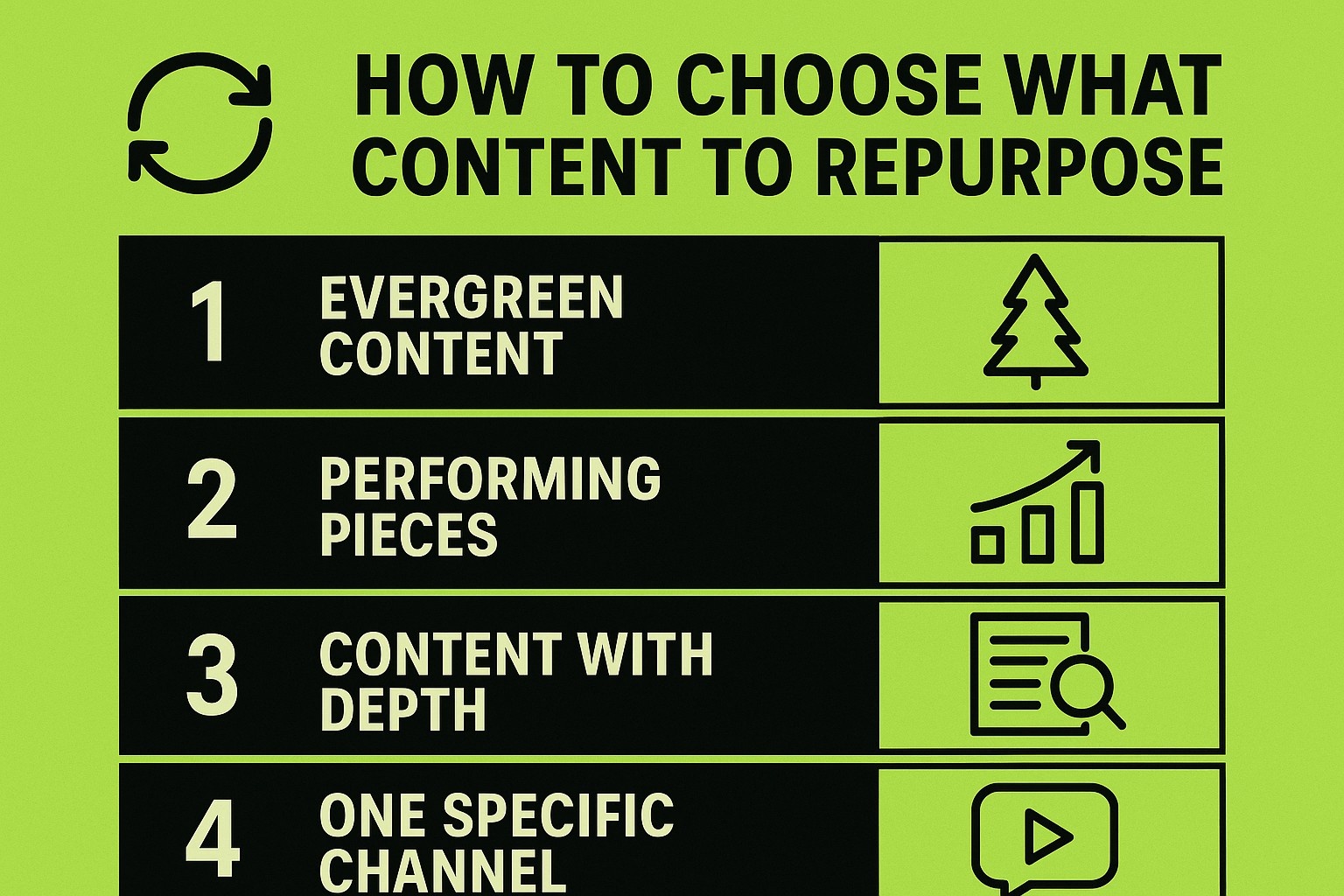
How to Choose What Content to Repurpose
Not every piece deserves a second life. Some topics fade quickly, others are too niche to stretch across multiple platforms, and a few simply don’t have enough depth to build around. Before you start splitting content into new formats, ask yourself a simple question: is this idea strong enough to live beyond its original version?
Here is how to figure that out.
1. Start With Evergreen Content
Evergreen pieces age slowly. They cover foundational skills, common questions, or broad industry themes that stay relevant long after publishing. These make excellent repurposing candidates because you can keep creating around them without worrying that the topic will expire next month.
2. Identify Top Performing Pieces
If something already brings in traffic, engagement, or conversions, that is your signal. High performance shows the idea resonates with your audience, so repurposing it usually delivers a strong return.
3. Look For Content With Depth or Original Insights
Interviews, webinars, research reports, and thought leadership pieces are packed with reusable material. They often include strong opinions, data, and stories that can be turned into many new assets without feeling repetitive.
4. Review Content Created for One Specific Channel
Many teams create rich content for a single purpose, like events, newsletters, internal meetings, or community updates. These pieces often never reach a wider audience, even though they have a lot of potential. Repurposing brings those hidden gems into the spotlight.
5. Choose Topics That Align With Current Goals
Your repurposing decisions should match your priorities. If SEO growth matters most, turn high value content into search friendly articles. If your focus is social media reach, extract insights that work well as posts or short videos. Aligning the content with your goals keeps your efforts focused and impactful.
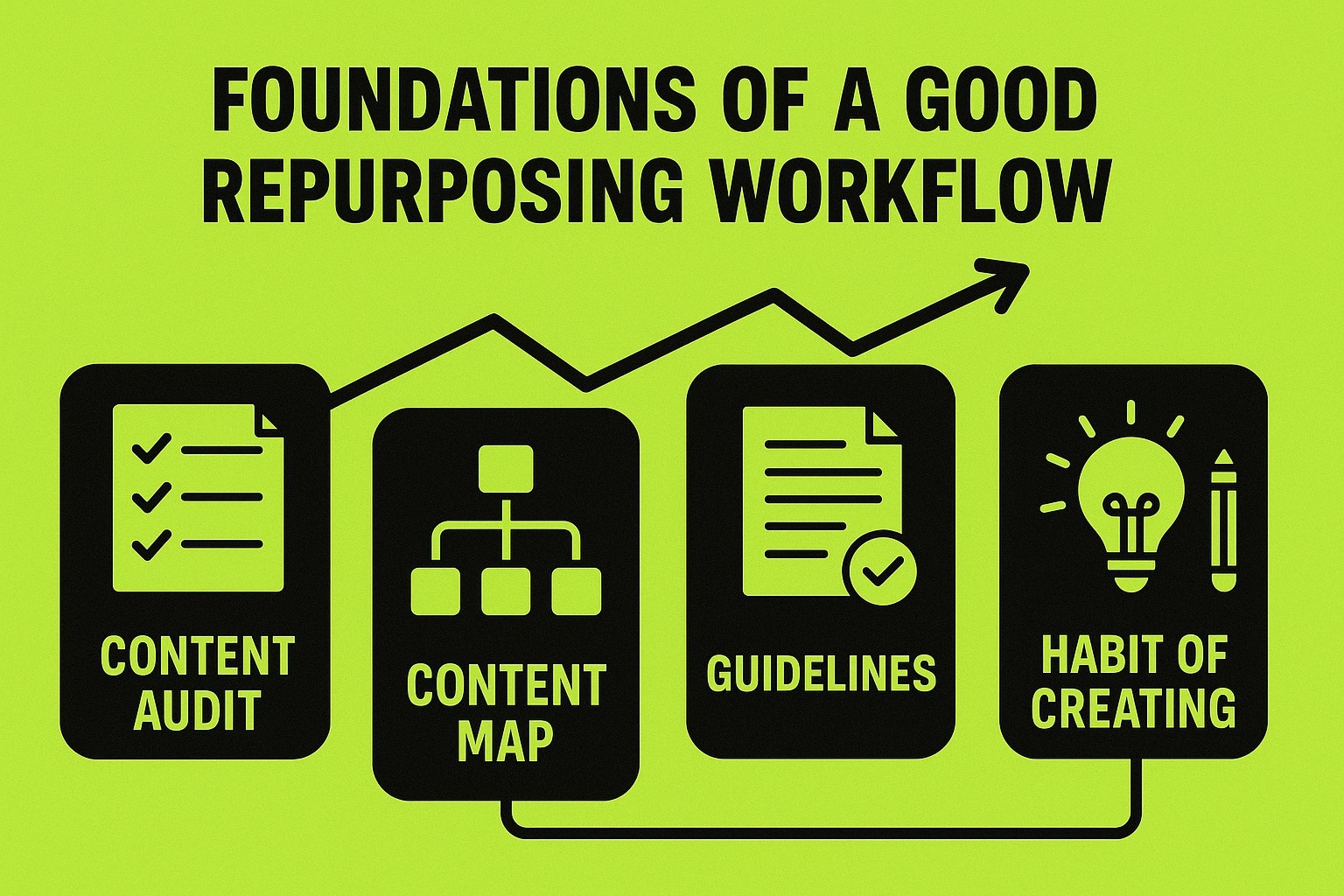
The Foundations of a Good Repurposing Workflow
You can repurpose content without a system, but it will feel disorganized. The teams who benefit the most treat repurposing as part of the creation process, not an afterthought.
A healthy workflow usually includes:
1. A Content Audit
Every few months, go through your library and tag pieces with repurposing potential. Note which formats each one could turn into. Over time, you will build a predictable pipeline.
2. A Content Map
This is a simple document where you track the root piece and every derivative asset. It helps you avoid duplication and ensures you repurpose the strongest ideas first.
3. Guidelines for How Each Platform Should Be Approached
Repurposing only works when the content feels native. A tweet should not read like a blog headline. A LinkedIn carousel cannot mirror a webinar slide deck. Each channel needs its own style rules.
4. A Habit of Creating Repurposable Content
This means planning interviews, webinars, or articles with repurposing in mind. Long, idea rich content produces more usable material.
Content Repurposing Strategies for Written Content
Written content is usually the easiest place to start. Most pieces contain structured ideas, quotes, frameworks, or examples that translate well into other formats.
Here are the most effective ways to adapt written content.
1. Turn a Blog Post Into a Series of Social Posts
A long post usually contains several ideas that can stand on their own. Pull out the most engaging moments and turn them into short updates for social channels. They do not have to summarize the whole article. Sometimes one sharp insight works better than a full recap.
What works well:
- short lessons or observations
- statistics
- contrarian takes
- before and after comparisons
- simple step by step tips
2. Convert Written Content Into a LinkedIn Carousel
Carousels encourage people to slow down and absorb each point. They also make it easier to turn complex ideas into visual, digestible pieces. You can adapt material like:
- frameworks
- lists
- research takeaways
- quotes
- mini case studies
Design each slide so it can stand on its own. Most people will not swipe unless the first slide captures their attention.
3. Build an Email Newsletter Summary
Your blog audience and your email list often contain different readers. A simple summary with a link back to the full post helps reach people who prefer consuming content in their inbox. Keep the tone conversational and highlight the most interesting parts. Avoid dropping in huge paragraphs from the article.
4. Create a New Blog Post From a Different Angle
Repurposing is not always about making something smaller. Sometimes the best move is to expand a single idea. Take one section from a long guide and turn it into a standalone article. Dig deeper into a claim, explore a follow up question, or look at the topic through a different lens. This strengthens your topical authority and improves your site structure for search engines.
5. Turn Written Content Into Short Video Scripts
If recording videos feels intimidating, use your existing articles as the foundation. Choose one takeaway or question and talk through it on camera. Short videos work well on platforms like TikTok, Instagram Reels, and YouTube Shorts, and they do not require studio level production. This is one of the simplest ways to get comfortable creating video content.
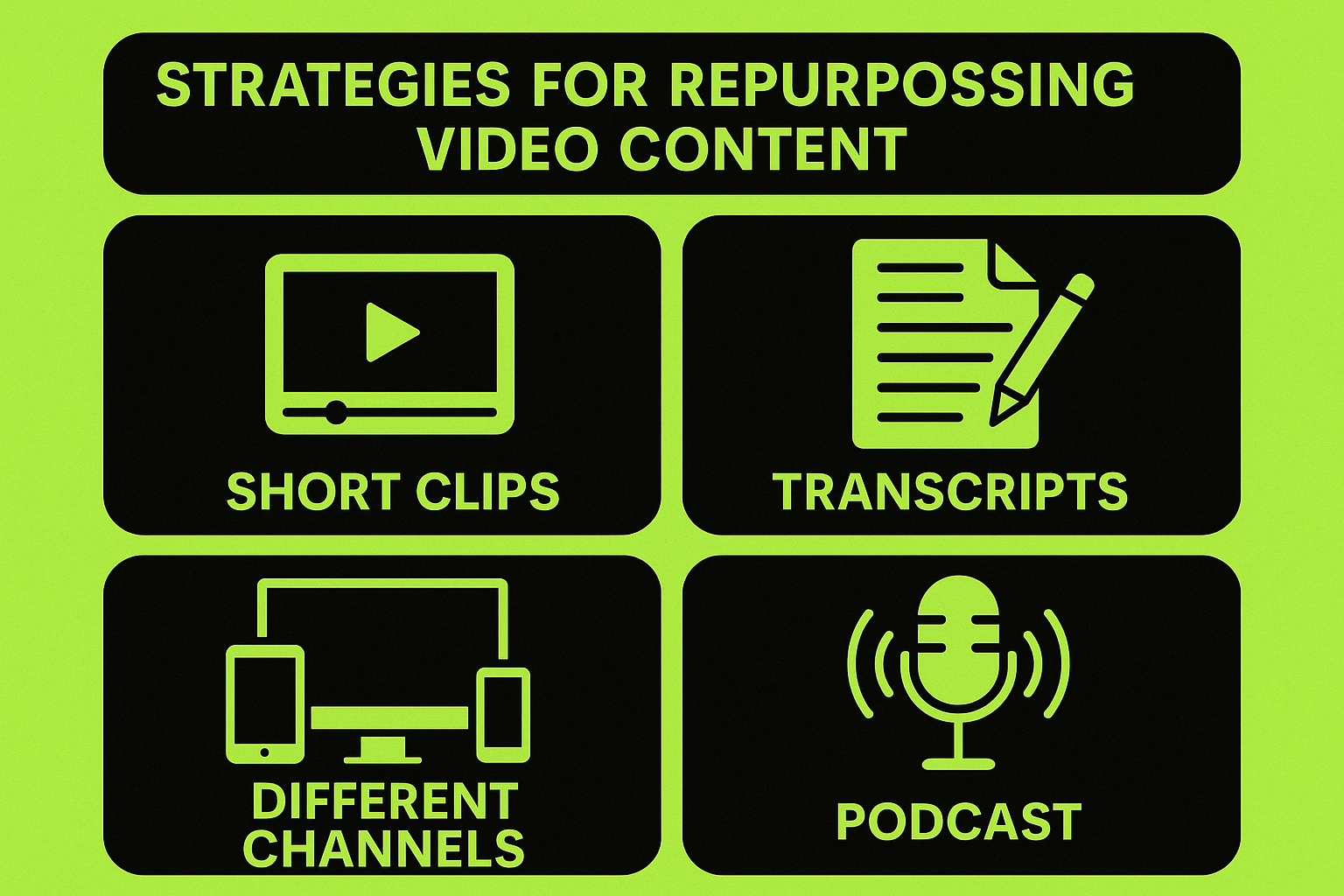
Strategies for Repurposing Video Content
Video content offers incredible flexibility. A single hour long webinar or 20 minute interview can fuel weeks of marketing assets.
Below are the most effective approaches.
1. Cut Long Videos Into Short Clips
Short clips work well because they feel like quick insights rather than promotional pitches. You can use them across different platforms, including:
- LinkedIn posts
- YouTube Shorts
- Instagram Reels
- TikTok
Look for moments where someone breaks down a concept clearly or delivers a strong, memorable point.
2. Use Transcripts To Build Written Content
Transcripts give you a head start on written content. Clean up the wording, add context, and shape everything into a well structured article. You can also pull out quotes for graphics or expand the transcript into several supporting blog posts. Some teams even build entire SEO clusters using transcripts as the raw material.
3. Republish The Video On Different Channels
If your webinar or interview lives on a private platform, move the recording to channels like YouTube, LinkedIn, or even a gated on demand page for lead generation. Just avoid uploading the entire thing without context. Add timestamps, a short summary, or a clear introduction so viewers know what to expect.
4. Turn Video Content Into a Podcast
A lot of webinars and interviews translate perfectly into audio. Releasing them as podcast episodes helps you reach people who enjoy listening while driving, exercising, or working. You do not need elaborate editing. Clean audio and a simple intro are enough to make it feel polished.
5. Use Video Screenshots As Visual Elements
Sometimes the most authentic content comes from small moments. Pause the video when the speaker is making a strong point, take a screenshot, and pair it with a short caption. It is simple, personal, and surprisingly effective for social engagement.
Repurposing Strategies for Live Events and Webinars
Live sessions produce some of the most valuable material for repurposing. They are full of real human moments, genuine questions, and spontaneous insights that rarely show up in polished content. They also tend to attract people who already care about the topic, which makes the content richer and easier to expand. Here are practical ways to turn those sessions into long lasting assets.
1. Turn Events Into Multi Format Content Kits
A single webinar can fuel almost every part of your content strategy if you treat it as a source, not a standalone event. You can turn it into a written recap for your blog, several social media posts that highlight key insights, a LinkedIn carousel that breaks down the main points, and multiple short video clips perfect for platforms like TikTok or YouTube Shorts. It can also become a feature in your newsletter, an on demand lead generation asset, a training resource for your team, or even a podcast episode if the conversation translates well to audio. Most teams only publish the replay and quickly move on, but the real value appears when you pull the session apart and give each idea its own space.
2. Restream The Event For More Reach
If your event originally took place on one platform, there is no reason to limit it there. Restreaming allows you to broadcast it to LinkedIn, Facebook, X, YouTube, or even your private community all at the same time. It is one of the easiest ways to expand your audience without increasing the workload. People follow brands on different platforms, so restreaming helps you meet them where they already are.
3. Use Audience Questions To Spark Future Content
The Q&A portion of a live event is always a hidden goldmine. Audience questions show you exactly what people want to learn, not what you assume they care about. Each question can turn into a short video, a social post, a dedicated blog article, or a thoughtful segment in your next newsletter. If multiple people ask the same thing, that is a sign you have a bigger content opportunity on your hands.
4. Turn Multiple Events Into Bigger Assets
If you host several webinars around the same theme, you can combine them into something more substantial. Bring the strongest insights together and create a downloadable guide, a small ebook, a multi part email series, or even a full resource hub on your website. People love curated collections because they make learning easier and feel more complete than independent, scattered pieces.
Repurposing Social Media Content Without Reposting
Social posts move quickly. They get attention for a day or two, spark a bit of conversation, and then drift into the background. Repurposing helps your best ideas live longer by reshaping them for different audiences and formats without repeating yourself. Here is how to approach it in a way that feels fresh every time.
1. Turn Twitter Threads Into LinkedIn Carousels
Threads already come with a natural structure. Breaking them into visual slides lets you highlight each point more clearly and gives the content a second life on a platform where people appreciate slower, more intentional reading.
2. Turn LinkedIn Posts Into Short Videos
If a LinkedIn post performs well, record a short video explaining the same idea in your own voice. Audiences often connect more with a real human talking through an idea than with another block of text. It also gives the content a more personal feel.
3. Turn Posts Into Newsletter Openings
A strong line from a social post can make a great introduction to a newsletter. It sets the tone, sparks curiosity, and creates a smooth bridge to your main topic. This works especially well for posts that touch on a relatable frustration, insight, or lesson.
4. Combine Related Social Posts Into a Longer Blog
If you have shared several short posts on a similar theme, bring them together and expand the ideas into a full blog article. This helps you build deeper content without starting from scratch and strengthens your authority on the topic.
5. Expand Social Discussions
Comments often reveal what people are genuinely curious about. When a post attracts a lot of questions or thoughtful replies, use that as your next content prompt. Create a new piece that answers the most common questions or explores the discussion more deeply.
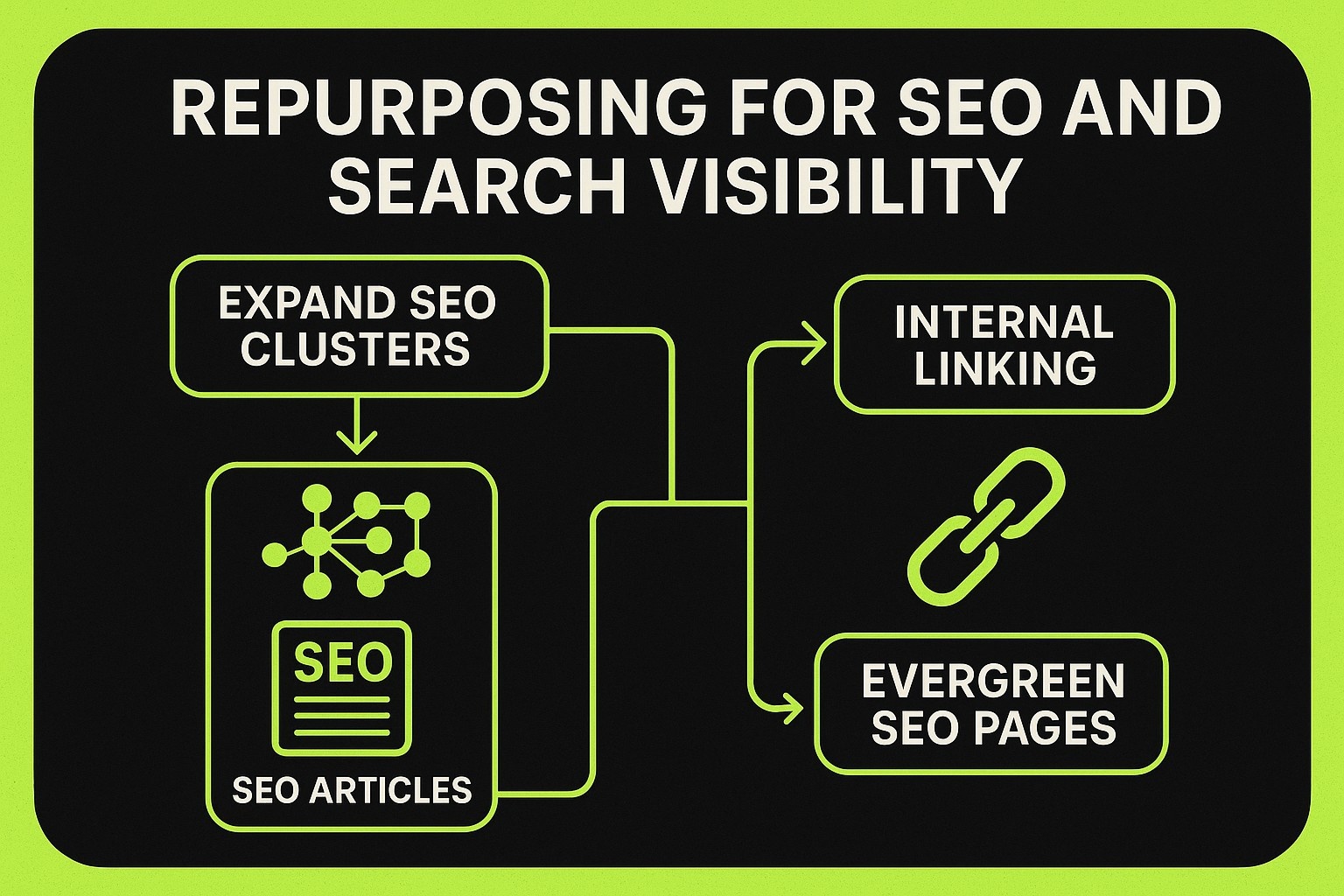
Repurposing for SEO and Search Visibility
Repurposing is not just about distribution. When you approach it thoughtfully, it can significantly strengthen your search presence. Many ideas that start as videos, social posts, or reports can become search friendly assets that help you build long term visibility. Here are a few practical ways to use repurposing to boost SEO.
1. Use Transcripts To Expand SEO Clusters
Interviews, podcasts, and webinars are full of natural language that mirrors how real people search. When you turn transcripts into structured articles, you naturally capture long tail search queries. This helps you build deeper topical clusters without having to write everything from scratch.
2. Transform High Performing Social Posts Into SEO Articles
If a social post sparks comments, shares, or debate, there is a good chance people are also searching for that topic. Take the core idea and expand it into a full article. This helps you meet existing demand and grow your organic traffic with content that has already proven its value.
3. Build Internal Linking Structures Around Repurposed Content
When you repurpose one strong idea into several pieces, you create natural opportunities for internal linking. Connecting those pieces strengthens your topical authority, helps search engines understand the depth of your content, and keeps readers moving through your site.
4. Turn Reports and Original Data Into Evergreen SEO Pages
Data heavy content is one of the most powerful assets you can repurpose. Research findings, survey results, and internal benchmarks can be turned into evergreen SEO pages that attract backlinks over time. People love citing original data, which helps boost your domain authority and widens your reach.
A Simple Repurposing System You Can Start Using Today
If all of this feels a bit overwhelming, start with a simple routine. You only need one strong piece of content to build a whole set of assets.
Here is a basic 10 step workflow:
- Choose one high value content piece.
- Identify three core ideas inside it.
- Turn each idea into a social post.
- Record one short video explaining one idea.
- Create a simple carousel using the main takeaways.
- Write a short email summary linking to the full piece.
- Pull out one quote and turn it into a graphic.
- Add an SEO optimized version of the idea to your blog.
- Share a behind the scenes note or personal comment around the topic.
- Save unused notes for future content.
Repeat weekly and you will have a consistent content engine without burnout.
Final Thoughts
Content repurposing is not about flooding the internet with recycled posts. It is about recognizing the value of your ideas and giving them a longer life. When you stop chasing constant production and start expanding what you already have, your work becomes more meaningful and much easier to sustain.
If you treat each piece of content as a seed instead of a one time output, you will always have something fresh to publish. And your audience will feel like you are guiding them, not repeating yourself.
When done well, repurposing becomes one of the most liberating habits in modern marketing. It lets you do more, say more, and reach more people, without feeling like you are trapped in a constant sprint. And that kind of freedom is something every marketer could use a bit more of.